Perhaps a magic carpet

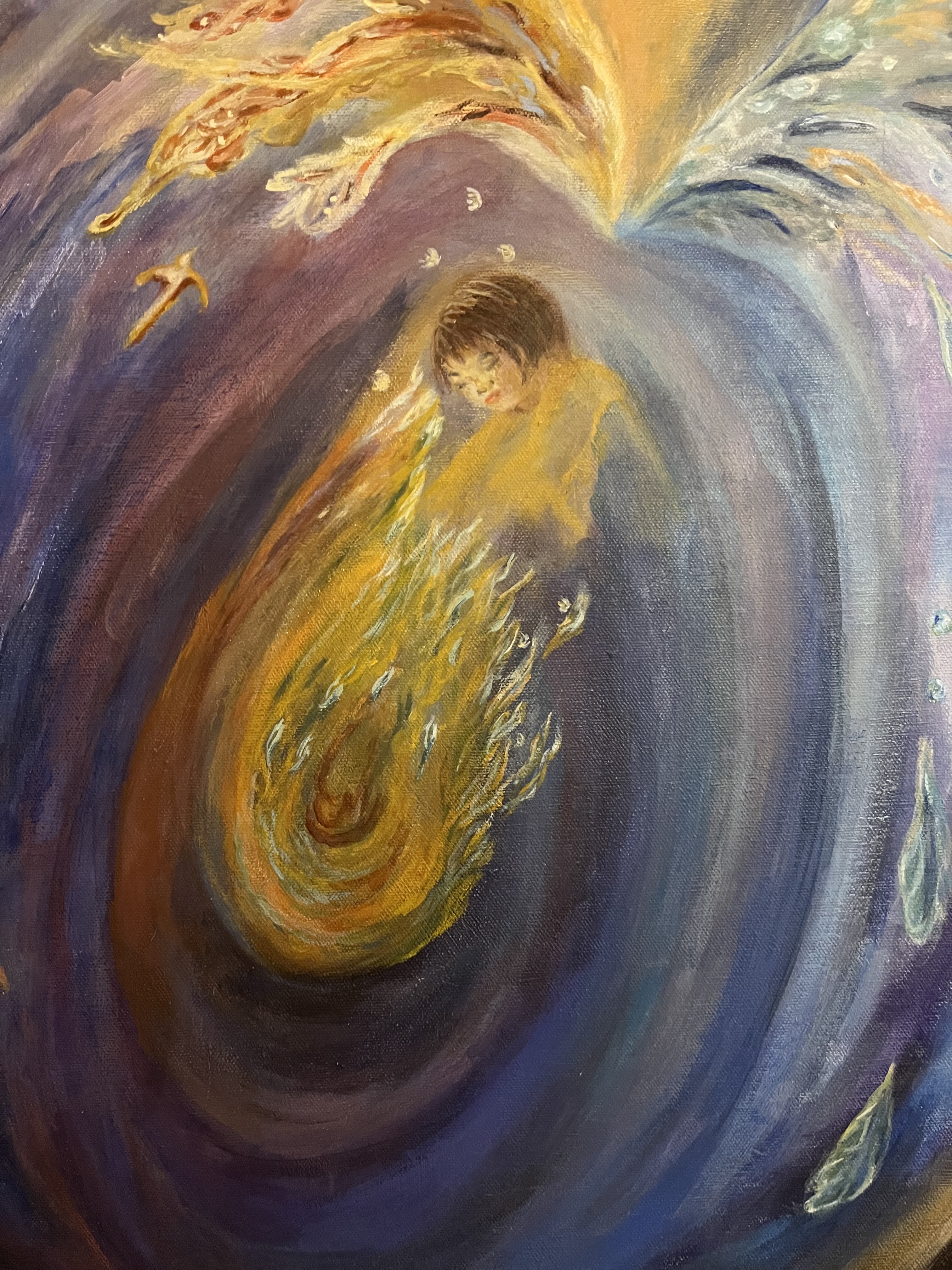
For tomorrow’s workshop with LIMBO, I thought of making use of textile as a medium for storytelling. I thought of how using canvas can sometimes be confronting and how facing a blank page can freeze us instead of invite us into the act of creation. So, I went back to my one of the first dummies I made and thought of how the use of simple unbleached cotton can be so freeing. Some of my favorite pieces are in that first dummy and are made from mixing different textiles and textures and coming to a point of joyful release. The thing I love about artmaking is the conversation that takes place between the medium and materials used and the person who is engaged in the act of making. (At least, this is how it works for me.)

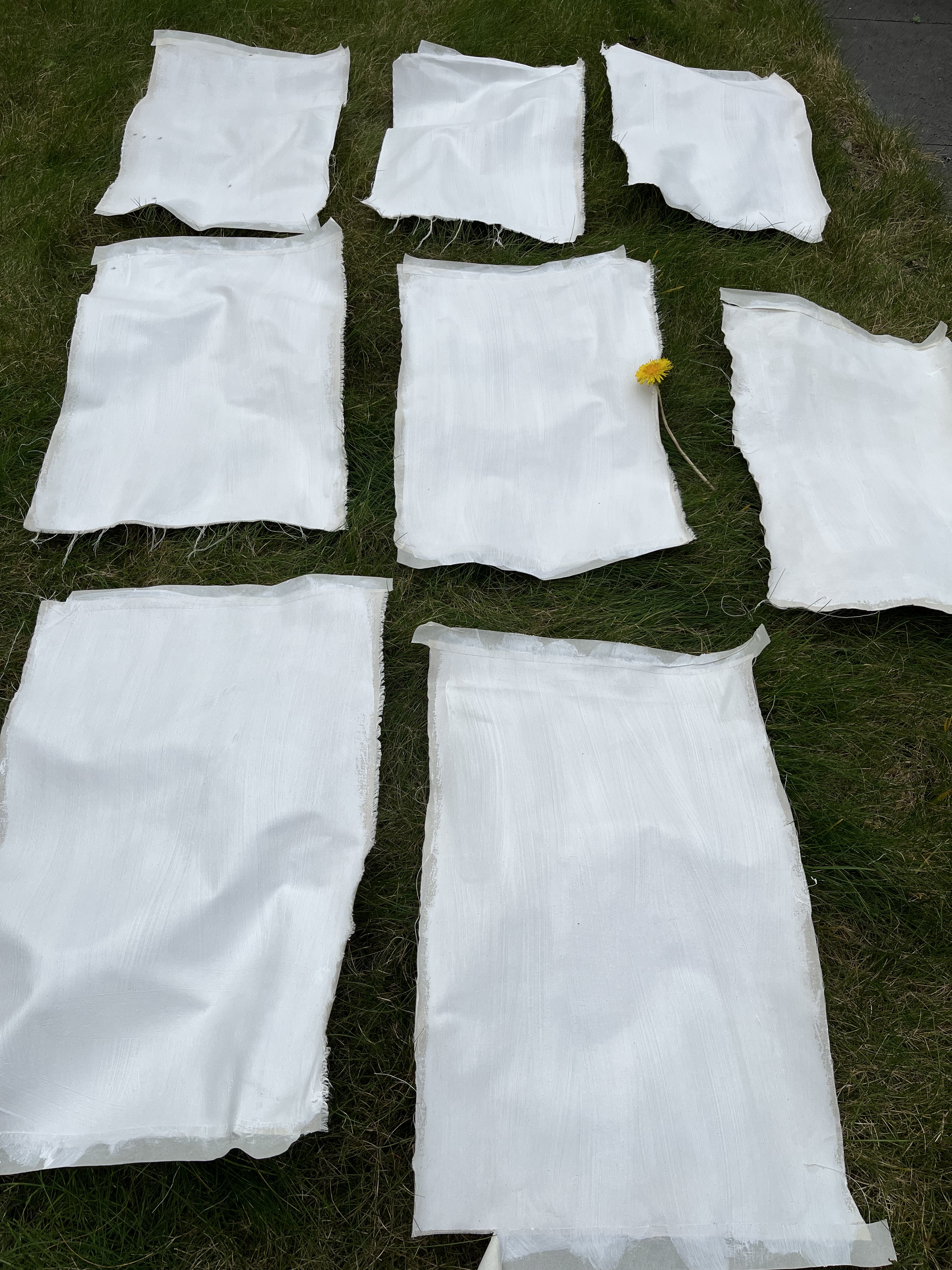
I love the intentional act of preparation which includes me engaging with the material first. It’s like this conversation I have for instance with this piece of cloth. Measuring them out, cutting them up, applying a layer of gesson, and laying them out to dry, had me thinking of how the participants are now part of my preparation. I may not know who shows up, I may not have spoken to them yet, but in this process of preparing they are already in my mind.

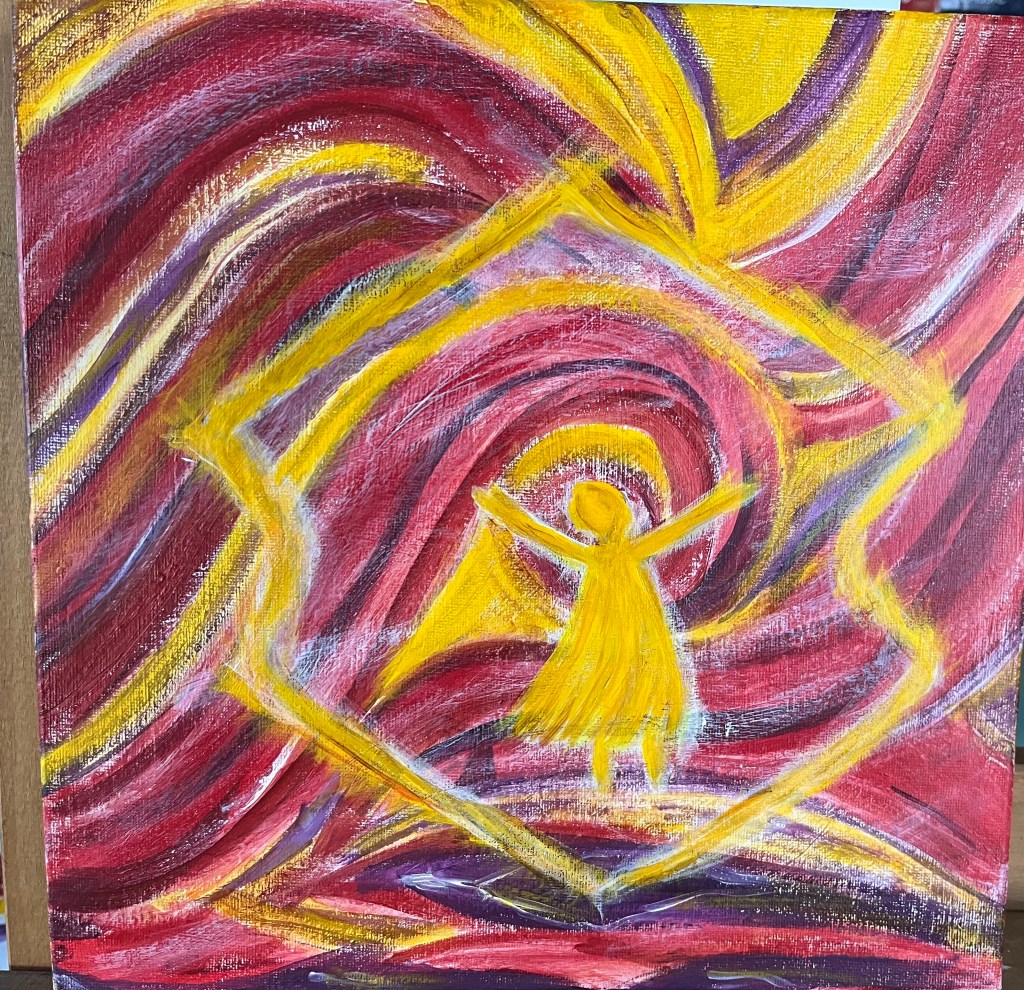
So why choose textile? Laying these pieces out on the grass to dry, I thought of Aladdin inviting Jasmin to climb onto the magic carpet and it made me think of how Jasmin might later have told this story to her descendants. Disney gives us a romantic version of the tale, but I wonder if the carpet was as intricate or as ornate as in the fairytale. It also makes me think of a princess confined in a seeming state of limbo and what it must mean to someone in that state to be invited to climb aboard a magic carpet. How did the teller of Aladdin come to this story? And what’s the real story? Is it about the genie? Is it about Aladdin? Or is it about the possibilities that unfold when we choose to climb onto the magic carpet?

This thinking lead me somehow to thinking about AI and creativity and the complex and necessary conversations that need to be had around theft of intellectual property and the indiscriminate use of it. It also had me thinking about what it means to make art and what makes art valuable to us and how the true value of art lies beyond monetary value.

All these thoughts pass through my mind as I prepare these pieces of cloth. What is useful to me as an artist? What is useful to me as a writer? What is useful to me as a person occupying a world that seems to grow more complex as time passes (or maybe I’m just getting older–haha.)

My thoughts on art and what makes something art are complicated because I tend to rebel against formal definitions. I like the idea of life as art which means an artist is someone who makes deliberate choices in the way they step out into life. The form–whether it is painting or sewing or sculpting or writing or cooking–the form is not important. What’s important is the artist’s choice to be deliberate. Perhaps I am making something for tomorrow, but I am present in this moment deliberately thinking on what I am making. It doesn’t matter what medium one uses, it is the deliberate action that goes into choosing that medium that differentiates the artist from the machine.

Thinking on this brings me to thinking about care which was presented to us by my LIMBO partner, Lana Jelenjev. An artist approaches and deliberates with care. Can a machine duplicate that approach and that care? Can another artist reproduce the same deliberation and care to the letter?

It’s a lot of thinking through. It’s all mulch and fertiliser for future work and clearly I still have lots of thinking to do. So, I decide to focus on the now and what I am preparing for.

I go back to the magic carpet and I think of how vehicles like the magic carpet are useful for people who may be going through periods of uncertainty. The magic carpet is an invitation to leave behind what binds you and keeps you from moving forward. It is an invitation to discover and remember and from that discovery and that remembering, create and hopefully in doing so, find your strength.

To you who reads this, go find your magic carpet. Climb aboard and discover for yourself where it takes you.

Blessings and peace. Agyamanac Unay.

Titles are a challenge

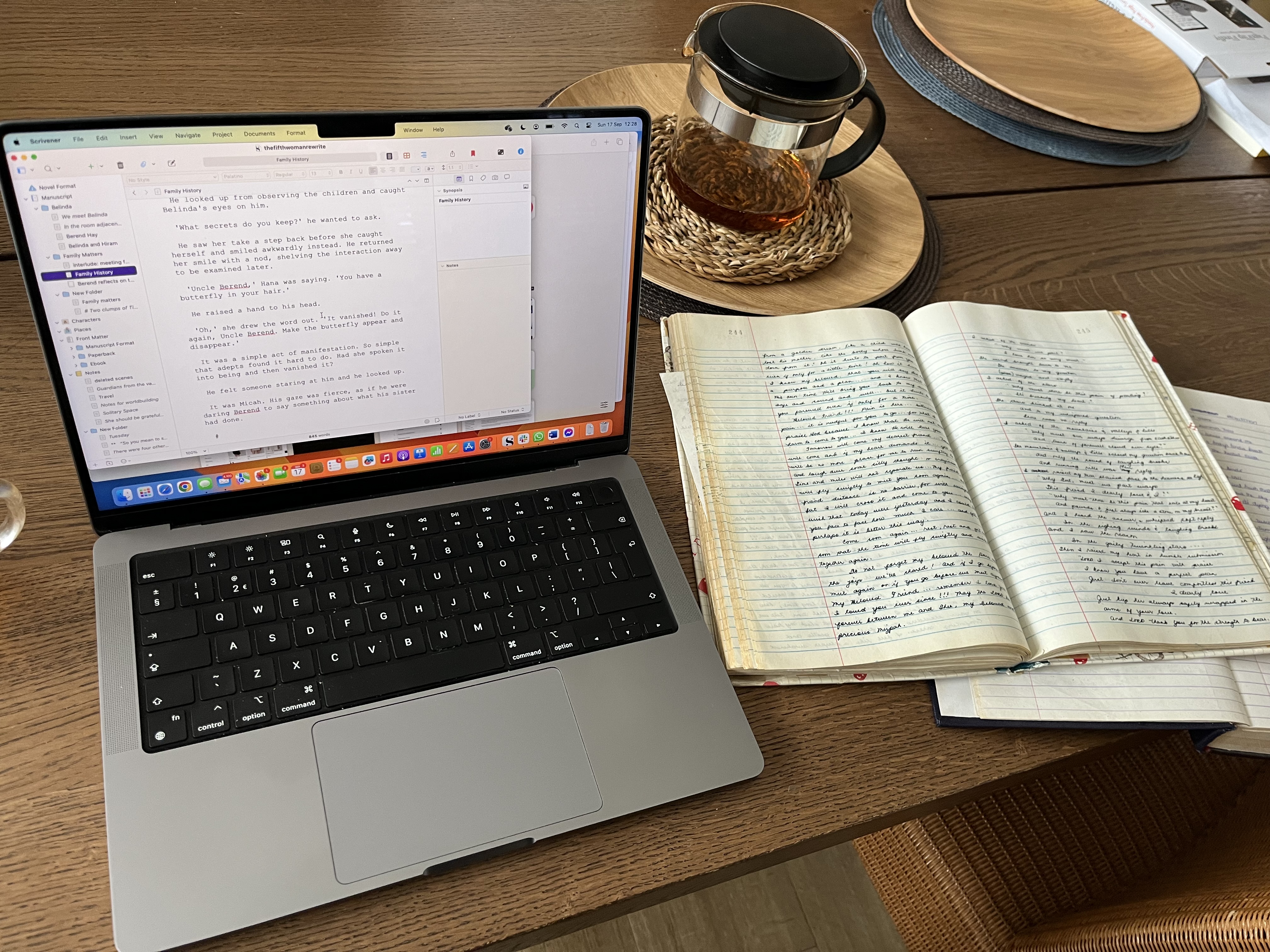
Titles are not my strong point. I am currently working on the second draft of a novel titled The Fifth Woman. Don’t ask me why…it probably just felt cool at that time or maybe I was just like: whatever. Let’s just call it this as a sort of jumpstart. So far, I haven’t found anything in the draft that talks about a fifth woman. It’s a pretty amazing feeling though to have been writing consistently everyday for the past two months as prior to that time, my brain often felt like a jumble of words and there was not enough quiet to properly focus on fiction. To my surprise, I have passed 15k on second draft and it looks like it’s still going.

Before I found The Fifth Woman, I had been writing away at The Cartographer novel which I’ve left stranded at 85k because the world was getting so big and unwieldy I had to step back from its noise for a bit.

Finding The Fifth Woman (first draft from end of 2021 before cancer struck) was like finding a gift because there was enough distance for me to appreciate and see where I’d gone off the rails with it ( characters with names like ‘this person’s dad’ and lazy shorthand place names ‘let’s just call this place wherever’ and I’ll call this form of transport something unpronounceable). Clearly, I was just in a rush to finish first draft. When I read it for the first time after regaining my focus, I thought it was someone else’s work, until I got to some place names and memory hit me…oh right. I wrote this while doing the Munabol online workshop for BIPOC kids. And then…Oh. This thing is long. It’s super-long. What is it? Is it a novel? Is it finished? (Yes. It was indeed a first draft clocked in at a little above 65k.) That was two weeks ago.

My current writing speed is an average of 1000 words a day (sometimes 1500), but at the end of a writing session my brain refuses to focus and I just want to go watch Formula one or something mindless for a while. (I have become quite the Formula One and bike racing addict. Tour de France, the Giro, Vuelta, and then there are the classics. Cobblestones! I can hardly watch but I still do anyway.)

I’ve noticed that there is a lot of messiness in my head the closer I get to the appointments for my bloodtest and immunotherapy. As I said to people closest to me, it’s quite weird because it doesn’t hurt, but I have an increasing aversion to being stuck with needles. It melts away once the bloodtest and immunotherapy week have passed and for most of the time I forget that I am under treatment. My oncologist tells me we are on this road for two more years and then we’ll see. It’s an interesting space to be in because no one really knows and I think that’s okay.

Just a little while ago, I bumped into an acquaintance who I hadn’t seen in a long while. Upon hearing about my diagnosis and about all the treatment things, she went: But you’re too young… (I won’t insert what was implied here because it took me aback). It’s one of those really odd responses that makes me want to laugh out loud. I know it’s well-intentioned and well-meant, but I remind people that I am not dead and I have no intention of dying anytime soon. I am completely in the land of the living and I believe I’ll still be here for as long as I am meant to be here. It’s the thought that comes to me when anxiety strikes: Peace. I remind myself. As my mother said to me at the start: you go ask God what he wants to do with you because until He’s done with you, you’re not done doing.

My mother, a cancer survivor, was diagnosed with metastasised cancer when she was 46. It had spread to her bones and she was given one year to live. Today, she’s 85. She laughs talking about it: ‘Actually,’ she says. ‘I decided I wouldn’t die because I didn’t want your Dad marrying someone else.’

There’s this thing about coming face to face with mortality. You come to understand what it means to be alive. I think about one of the participants to the workshop saying: this is my now.

It’s a pretty radical thing to say and to do. To be present in the now. To rest in this moment. To give as well as to take pleasure, to share in what is funny, what makes you laugh, what makes you cry, what warms your heart, what melts you–to choose to be here in now is such a powerful and radical act because it is the essence of being alive.

It’s easy to get pulled into the rat race. To think: I’ll make time for what matters and what makes me happy when I have more time. Time is an ephemera. It’s an illusion we create for ourselves. Time that matters is now. What am I doing now? How am I being present now? What am I sharing of myself now? What kind of memories and legacies am I putting in place now? It’s in this now moment that we are doing and creating and making and establishing connections and as I said to someone precious to me: humans and relationships are more important than things. Wealth, status and possessions you can replace. Connections, relationships and humans you cannot.

Perhaps it’s why I’ve become so invested in The Fifth Woman. Because it’s a messy novel about messy relationships. It’s about the now space versus the could be space. It’s about family and relationships and all the pressures that are exerted upon that precious space of simply being. It could be fantasy, but it could also be science fiction. I really do not know. I’m just writing it. In the now.

Blessings and Peace and Agyamanac Unay for reading.
Opening a door to story

In my personal preparation for LIMBO, I found myself thinking of how to open the door to story and how to create space for participants to immerse in the act of creation without feeling pressured to perform.

How do we support that limbo state? How do we cherish and protect it? And how do we, at the same time help participants to step into a future they create for themselves?

A realisation came to me that the sessions we are planning are not merely sessions of teaching participants how to work with various materials or tell stories. These aren’t the most important parts of those sessions. Producing something finished or something that can be exhibited or placed on display isn’t the goal. Rather the goal is to empower the participants so they can thrive in the liminal space that so many occupy.

Initially, I had thought to teach working with different mediums with the thought of developing or moving towards a goal.

But I thought of how as a writer among writers, I have sometimes observed how the act of telling story moves from being an act of pleasure to an act where the writer becomes pressured to deliver. These pressures placed upon the creative person can transform what was pleasure into obligation and the result of such obligation isn’t always beneficial to the person who creates or even to the creation itself.

So, how do we invite or open the door for participants to come in and share without pressure? How can I employ what knowledge I have gleaned from life in a way that removes or eases the pressure of creating to an expectation?

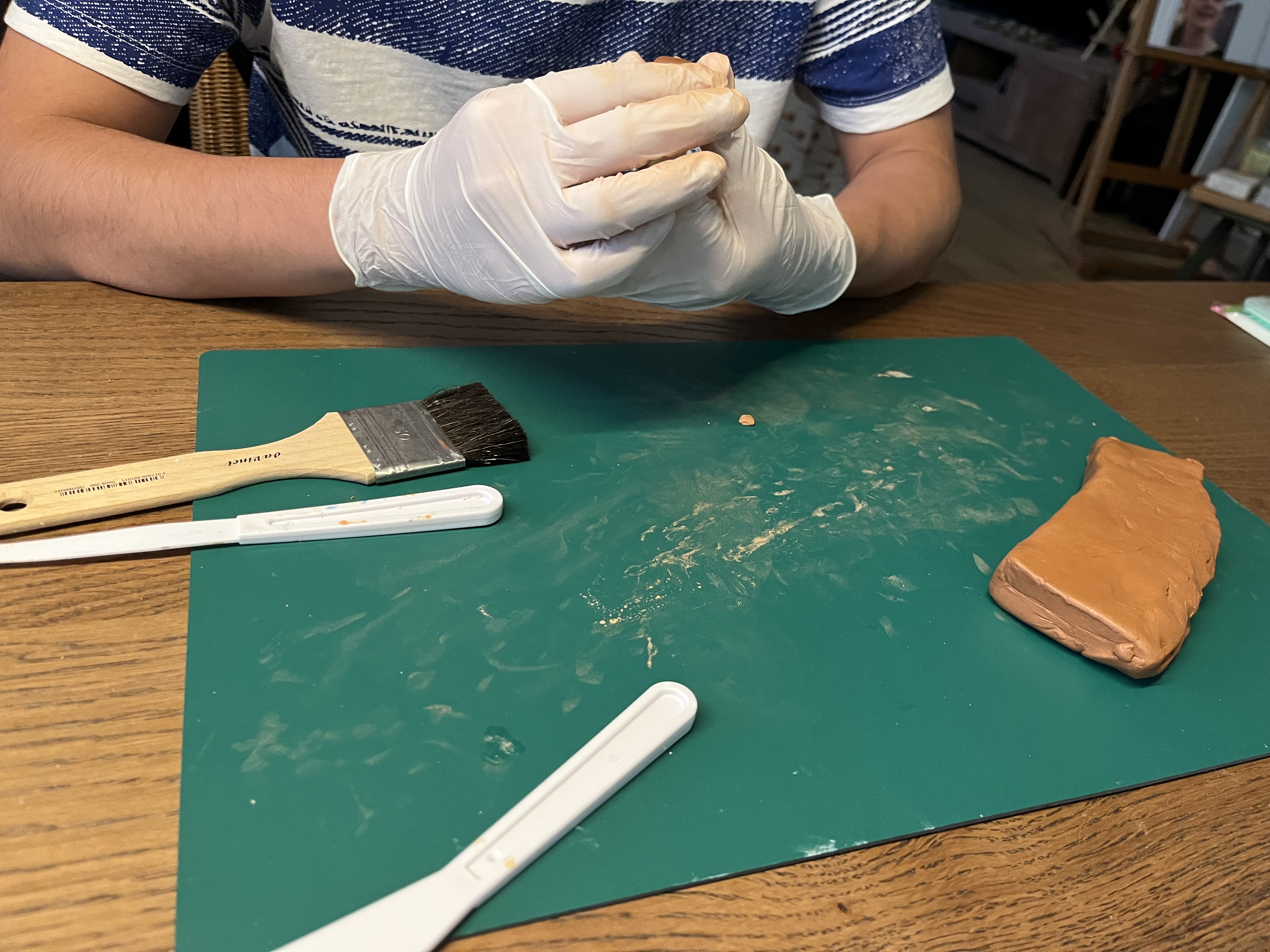
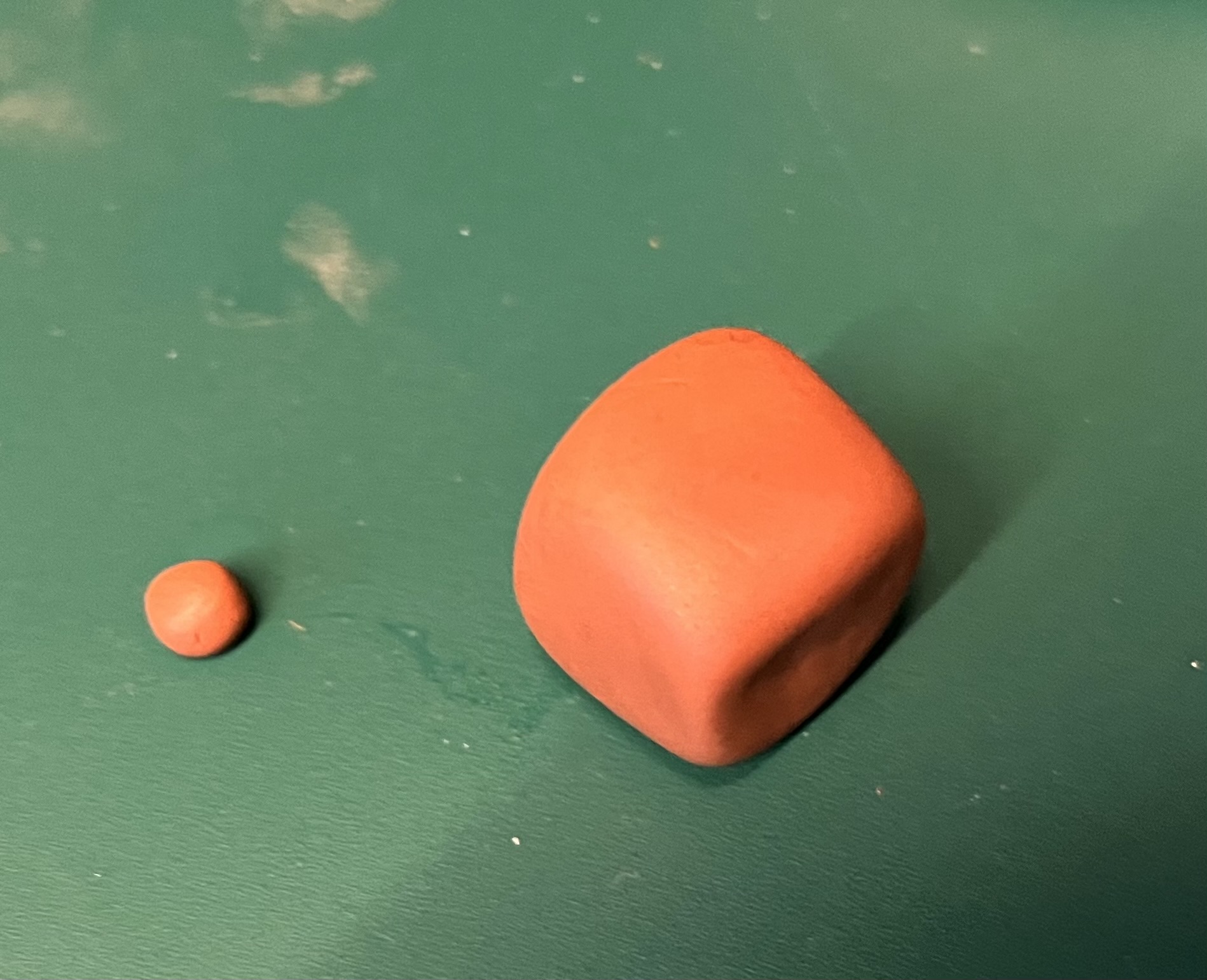
This afternoon, I asked my youngest son to sit down and work with me for a little while as I tried out one of the activities I had in mind. I asked him to treat the raw medium as if he were an archeologist who had time-traveled from the future. I asked him to bring out of this medium an artifact, and with that artifact to tell me something about the future world that he had envisioned.

I simply listened because I didn’t want to impose my interpretation on what he shared.

As his artifacts, he brought back with him a model of a cell and a pill designed to attack bad cells. He found this pill in the office of a family doctor and what it told him was that it was a medicine that was readily available and accessible for anyone who needed it. In his future world, incurable illness and disease no longer existed. 

By thinking of it in science fiction terms, my son is able to time travel back from his ideal future to share with me a story of what is alive inside him today, without the pressure of performing a perfect story or crafting a perfect artifact.

It doesn’t have to go anywhere. It doesn’t need to be published (although I did end up asking him if I could share it here and he said yes.

I realised that what drew me towards creating and giving workshops was in the connection that came from these kinds of sharing. It’s not important whether people end up publishing or not. What’s important is the stories that are shared and the space that is made for these stories. It’s also the wonder that happens when participants discover that there is space for what they have to share.

What can we do to open doors to story? It’s a question that I carry with me. In doing so, I hope to create space and make space for all those stories waiting to be told.

Blessings and peace.

A new season

Perhaps the most surprising thing is coming back to life. In the season when cancer was very much at the forefront of our lives, I made the choice to just let go of everything and focus on doing what needed to be done in the moment. Get through surgery, recover from surgery, go through radiotherapy, recover from radiotherapy, go through chemo, survive and recover from chemo. We are in a post-chemo period as my oncologist has determined that chemo is more harmful to me than helpful and so I have been taking immunotherapy once every four weeks for the past two months and will continue to follow this schedule of treatment for the next two years.

I think of how there are reasons for all circumstances that we encounter in life. We won’t always find ourselves in pleasant places. Finding ourselves in the midst of adversity, having to combat things like financial uncertainty, loss, uprootment, illness whether it be of ourselves or someone we love–what we make of that adversity can determine the story of our lives.

I said to my oncologist at the start of this entire trajectory: my life is not cancer and I do not want my life to be about cancer. My life is more than cancer and because I can, I determined in my heart that I would just keep living and being alive. (Also, my surgeon said: actually, except for those tumors, you’re super-healthy.)

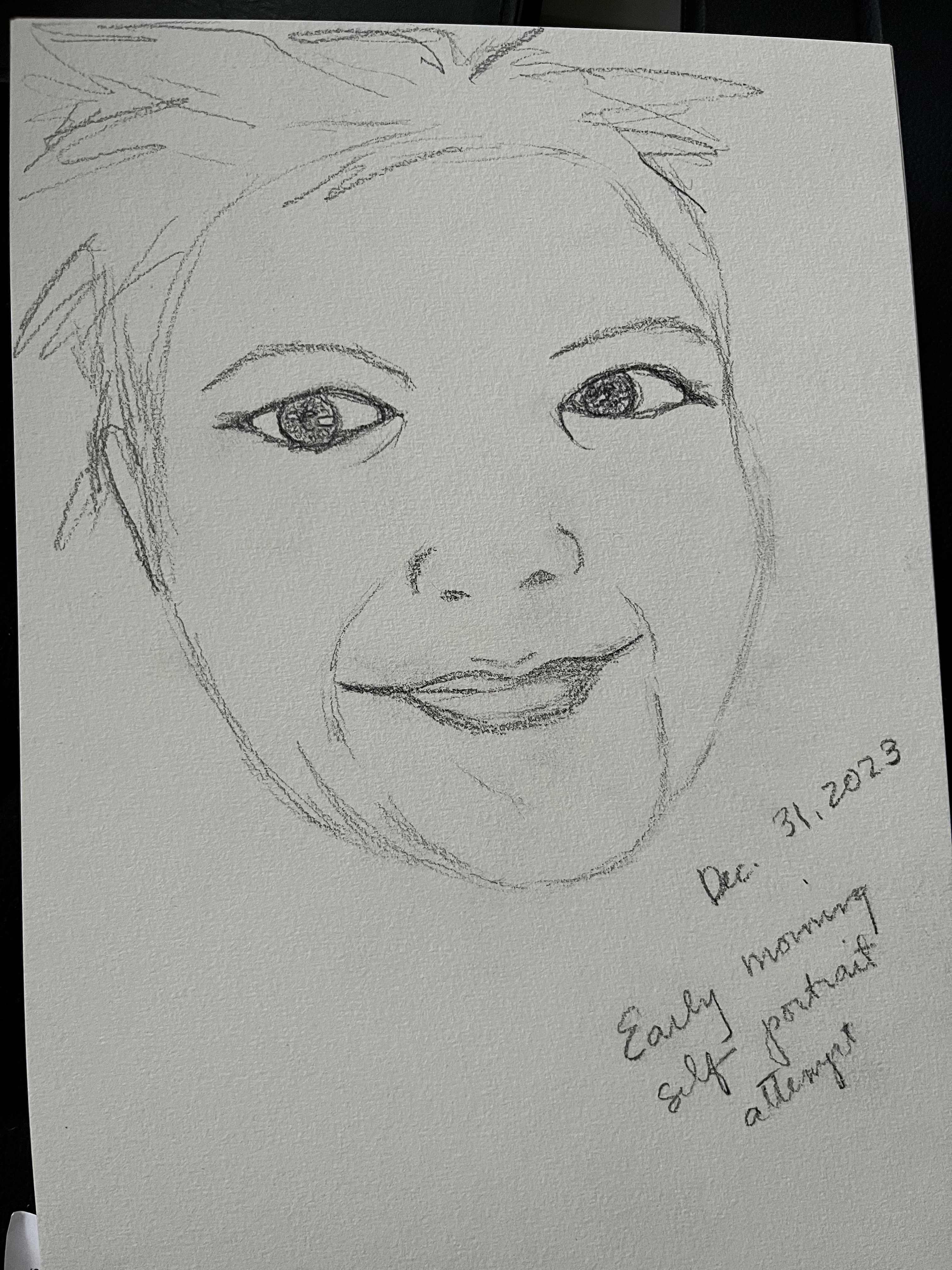
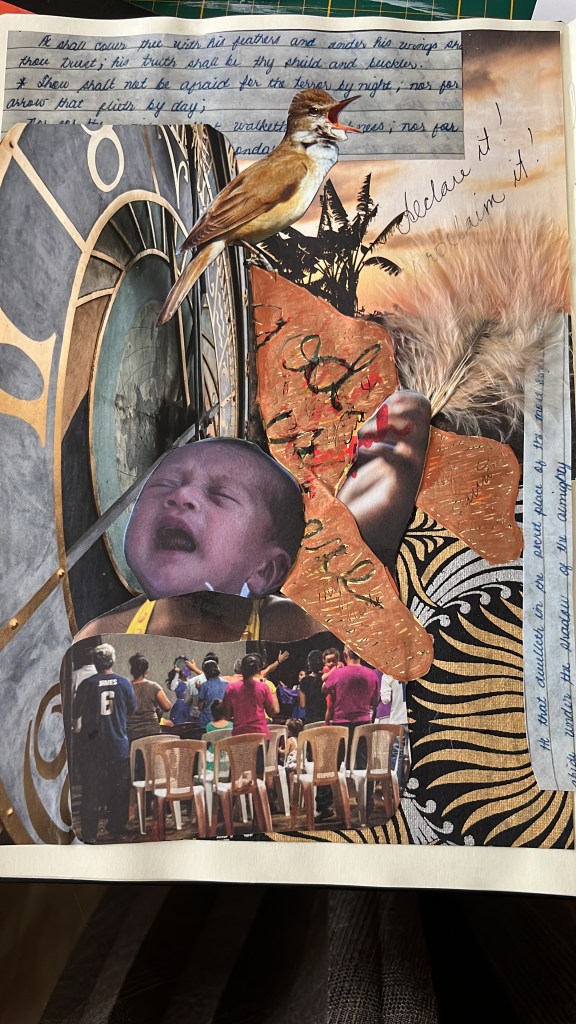
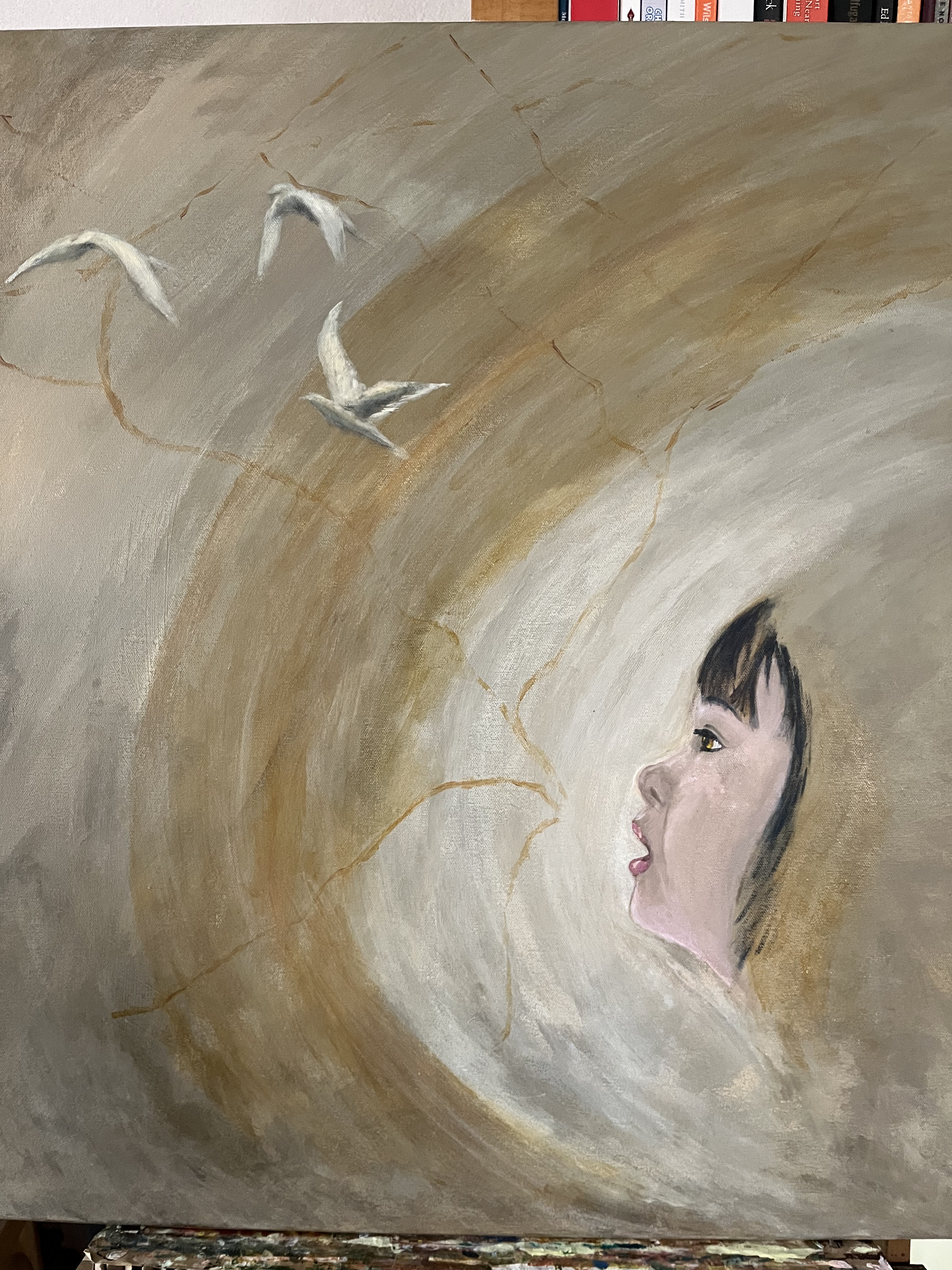
Where I am now offers me the chance to reflect on how I want to continue living. I lost words and stories while going through treatment. For a good while, I couldn’t even remember the names of characters or the titles of stories or even the words to describe a thing. I couldn’t piece words together to make a proper story even. But in that season, I learned to make pictures. To draw, to paint, to collage, to work with different mediums–something I’d never thought I could possibly do when I was so focused on writing words. I learned there are no boundaries in art-making and story making and the only thing that keeps us from making is because we think we can’t or we’re afraid we’ll make a mistake (or someone told us we aren’t talented or good enough at it).

This coming season, I will be taking part in LIMBO which is a wonderful life-giving project under the hat of the beautiful Fabian Holle. I can’t think of an adjective that fits them more than that word. Because Fabian is Fabian, it doesn’t surprise me that LIMBO has become this space that is also wonderfully life-giving and inspiring. Working together with my good friend, Lana Jelenjev, we hope to contribute, plant and water seeds, speak life and hope as we facilitate this season with LIMBO.

I’m thinking about all these processes as I prepare for a season with LIMBO. Thinking too about all the different things I’ve learned in the various seasons of my life and thinking of how story isn’t just about words you write on a page. Story is intertwined with life and art and making and sharing and composting and living. It’s crying and laughing and howling with rage and shaping a space in the world for what you have to share.

There are no borders between the different ways of telling or working through or sharing. There is no right or wrong way to go about sharing what has lived and lives and what you hope will continue to live inside and outside of you. There are no limits–not even the space to share is limited because there is enough space for everyone and if we think there isn’t, then we just have to enlarge our circles and make more space. We are limited only as we allow ourselves to be limited.

And yes, we live in a world that’s polarized, where hatred and malice abound. But we can expand the circles filled with light and kindness and love until there’s no more room for hate.

LIMBO occupies a special place in my heart and I invite anyone reading to visit the following links.

Framer Framed Presentation: LIMBO – queer exilic narratives (definitely read Fabian’s beautiful speech as well as the interview with LIMBO co-creators

May lovingkindness always surround you. Agyamanac Unay.

Last Night in Rotterdam

Last night I was on a panel celebrating the launch of De Komeet. It was a lovely evening hosted by The Base Bookspace and Bosch and De Jong in the Fenix Food Factory in Rotterdam. I’m mentioning the location specifically, because when I got to the place, I was just blown away by how cool it is to find a bookshop in a Food place. I wish I’d remembered to take pictures, but Trip Advisor has cool pics of the location in case you want to get an impression of what it’s like. I love that there is this independent bookshop in a space where people meet to have a bite and I totally made an agreement with writing friends to meet up at that place and do some writing together. ( I also had some amazing oesterzwam bitterballen so I am definitely going back for that too.)

She may not read it, but I want to send a shout-out to Lianne from The Base Bookspace for an amazing job as moderator. I think the space itself contributed a lot to that feeling of warmth and energy and safety. On panel were Vamba Sharif and Martijn Lindeboom who were both editors and contributors to the anthology, Shiantie Singh, Weegbree, and myself. We discussed SFF, what editors Vamba Sharif and Martijn Lindeboom hoped to achieve with this anthology, and also what our experience and hopes were as contributors to this anthology. My dream, as I shared it with those who’d come to the panel, was that we would in the future see a blurring of borders between genres so we move away from thinking in terms of labels.

I now find myself reflecting on how labels are more harmful than we think they are and how wanting to put labels on creative work is an outward expression of humanity’s need to be in control. We can’t always label or control creative expression, and this is why work that moves out of the expected or work that refuses to conform or submit to a particular label can be viewed by some as threatening. There’s a lot to unpack around how the fear of losing control and our discomfort with not being able to predict or control an outcome contributes to the increased polarisation we see in today’s society, but there are a lot of folks way smarter than I am who can do that. My job as a creative person engaging in different forms of art making and creation is simply to tell the story of how refusing to be bound to labels frees us to discover what’s truly joyful, what is truly kind, what it is that heals us where it matters the most and what can give us hope when the world brings hard things our way.

In the meantime, I have resumed writing again (thanks to my precious friend, Marielle). I admit that at one point I told her, I probably won’t write ever again because my sff brain seems to have gone with the chemo. But Marielle just kept on speaking out her hope that I would pick up the writing again and so I am writing again and Marielle is keeping me honest and writing. She may or may not read this blog as she’s pretty analogue, but I just wanted to put this out there.

I want to say thank you to the lovely people who showed up for the book panel. I may show up at a future panel for De Komeet, it all depends on proximity and energy. But in the meantime, I will try to update this blog as much as I can with thoughts on writing, art, reading and life.

Blessings and peace to all who read. Agyamanac Unay for reading.

Quick update and an invite

The update:

My family and I are in the middle of quite an intense season. Early 2022, I was diagnosed with stage 3 uterine cancer. Because the cancer was aggressive, we did not know what to expect, except that I needed major surgery and possibly more things after that. I had a complete hysterectomy in March 2022 followed by 27 sessions of radiotherapy and we hoped that that was that. Unfortunately, in the second half of 2022, we discovered that we were not done.

At that time, we were offered two options, take part in a clinical trial which offered the possibility of immunotherapy which isn’t standard treatment yet for ovarian cancer in the Netherlands, or go the traditional route which was chemotherapy and more chemotherapy. We opted for the clinical trial, got lotted in for six rounds of chemotherapy which seemed to have a hopeful result, except the results weren’t enough and my values just kept dipping so we had to keep postponing almost every other session. After six rounds, my oncologist looked at the results and decided to move me from the chemo arm of the trial into the immunotherapy arm of the trial.

In the midst of all these things, I somehow managed to send off two short stories–one for New Suns 2 (which I have been dreadful at promoting since chemo-brain is a real thing) and one for a Dutch anthology titled De Komeet. Hymne van de Overlevers is my first Dutch story ever and I am thankful for the patience of my editors and thankful to my awesome friend, Marielle who went through the final edits for me when brain fog meant I couldn’t even remember what my story looked like and couldn’t keep my characters names straight. (She thinks she did a minor thing, but trust me, it was major for me.)

My final round with chemotherapy was almost three months ago and I am waiting for immunotherapy to start. I have a tumor in my armpit which creeps me out a bit and we hope that with immunotherapy, this tumor will be brought under control. We don’t know if it will ever go away, but I am quite healthy (aside from this thing) and interestingly, the chronic hypertension for which I took daily meds to keep under control has been miraculously cured. I am no longer hypertensive. I just have cancer. A disease which I abhor utterly since I have lost a number of friends to this disease already. I hate cancer and I am sure God hates cancer more than I do.

In the meantime, my hair has started to grow out and thankfully the brian fog is less of a problem. I believe I can properly talk about my work again and recently, I have contemplated writing again. As usual, the question is: where do I start?

The fight against cancer is an ongoing one.

Where I’ll be at:

I have said yes to a number of things related to De Komeet. On May 29, I will be in Nijmegen doing a panel together with other authors at a convention called Novio Magica. It feels like forever since I’ve done anything related to science fiction and fantasy and I confess to feeling a bit shaky–it’s also been a while since I have been anywhere that isn’t hospital or church related, but I am looking forward to it. If you happen to be in the neighbourhood, do drop by and say hi.

How cool is it that they made a poster and my name is one of the names on it.

(*making a correction to this entry as the literal translation is uterine and not ovarian)

I dreamed

I dreamed that it was possible to invite people into a space and invite them to dream the past, the present, and the future. I dreamed it was possible to bring people of color from migrant groups in The Netherlands into this space and it would be possible to see their dreams enter the world. When I shared this dream, I didn’t know how it would happen or even what it would look like. I only had a vague idea of how to create that kind of setting and that kind of space.

I think back to the final day of the workshop and I think of the work coming from the hands of the writers around the table, and I find myself completely blown away. On the morning of the final day, when I asked participants to think about a story connected with personal items they’d brought with them, I did not expect that they would all write. After all, throughout the workshop, we’d used all kinds of different methods of story making. But this third day, they were all writing.

Before we did the first exercise, we read the Bridge Poem together. Hearing it read in chorus was just so powerful. It was like a presence entered that space and made it possible for us to reach that place where stories were waiting to be told. I’d brought along that quote from Alberto Rios and shared it with the writers after the first exercise.

“What surprised you?” I asked. “What did you discover?”

We were all in a thoughtful mood because the stories from that first exercise were so personal and moving.

“I didn’t know I had this story inside me,” one of the participants said.

“I didn’t realise that I remembered so much,” another replied.

Writing is also about remembering. Writing is also about being surprised by what you remember.

“What is it that you worry about and that keeps you from making or sharing your stories,” I ask.

“I worry about grammar,” someone says. “Because I want to post my stories on Facebook but when I do, people tell me right away that my grammar is wrong or what’s with your punctuation.”

I think about this thing–this grammar thing–the way in which the world can be so hung up on using perfect language and perfect punctuation as if that were the heart of what makes story. I think of all the things we forget when we jump on someone who is trying to share their story but tells it in a way that doesn’t align with how we think it’s supposed to be told. I think of how we are quick to say: your characters are wrong, your theme is wrong, your story is too bloated, your words don’t match. You are just wrong.

When we do that, we forget the most important thing. Someone who has taken the courage to share their story is someone who’s taken a risk. To tell a story is to come out of the shadows. To put your voice out into the world is to become visible. We forget that story often comes from vulnerable places. That it takes courage to share what’s vulnerable and painful and for writers coming from the margins, becoming vulnerable is risk.

I think about this as I reflect on the workshop. I think about the final exercise of the day. There I was saying: “this final exercise is optional. If you don’t feel like doing it, then you don’t have to.”

I had a moment of doubt where I wondered if I should ask writers to share and so I left it there in the middle until one of the participants raised their hand.

“I want to read my work,” they said.

And after that another one did. And another. And another. Until the circle was round.

These amazing writers who’d never attempted fiction before this workshop, they blew my socks off.

We shape the space in which stories are told. How we receive another person’s story determines the world into which the stories take their place. If we’re really serious about wanting to see more voices coming from the margins, we also need to think seriously about how we receive those voices.

Stand still. Respect the courage it takes to be visible. Speak your story into the world. In your response to the work, tread lightly.

workshop prep

Saturday will be the third and final session for the first iteration of the Invitation to Dreaming series. I am in the midst of preparing what’s called a draaiboek for Saturday. This is a useful tool that I highly recommend for people planning workshops. Basically, what I’ve done is create two different scripts for the day. One that’s detailed and one that’s bare bones. The barebones script is an approximate time schedule with lunch and breaks figured out while the detailed script includes notes and reminders to myself with highlighted notes on what it is that I want participants to take away with them. I’ve also written out my lesson plan so that I hear the words I want to say in my head. They may undergo transformation in the telling as I don’t do the workshop with a script in my hand, but the gist of it remains the same.

For this final day, I want participants to reflect on how the exercises we’ve used during the first two sessions are useful when we think of planning out a longer work and working over a longer period of time on a particular project.

Because not all of my participants may end up embracing a writing project, I want to emphasize that while they might not think of story making in terms of publishing professionally, they can also think of writing or creating and sharing stories as a form of legacy related to their journey as BIPOC and as members of a migrant community. We can never underestimate how valuable such sharings are for the younger generation or for the generations that follow. I am still very grateful that my Dad wrote lengthy letters to his children and that he decided to try and write a little about his personal history before he died. Knowing that I have that record that I can look back on now that he’s no longer here gives me this feeling of still being connected.

I have participants who are very interested in embracing writing or storytelling in some form. Some might want to embrace doing roleplay or theater type performances together, while others may go on to write their memoirs or continue to explore other kinds of fiction writing and that’s definitely something I want to encourage. These different types of making are beautiful and magical and transformative in power.

I feel very privileged indeed to be witnessing such flowerings and also to hear people say that they’d never imagined that writing a story was a possibility for them (even if they’d always wanted to)–well, that’s the reason why I felt and do feel it’s important to bring this workshop to communities.

During the communal worldbuilding exercise, one of the women said that it was hard to imagine in a science fiction way and that it was hard for them to envision a future world without thinking of politics. (Imagine me doing mental squee.) And then, this woman went on to share a story that was so damned good, I was like: what do you mean you can’t write science fiction?

In its naked self, story is about writing, sharing, telling what you see, what you envision and what it means to you. And the best stories are the ones that come from that place of feeling safe enough to be vulnerable. I have heard so much joy and laughter among the participants during the first two sessions and I want to continue to remind them that this is the joy you hang onto when you’re in that space facing your story.

I know there are many other things that go into stories, but on the journey, joy is one thing we need to take along with us. Hope, joy, and love, and also community.

thinking about the project of creating connections

In preparing for the final meeting in the workshop series, I find myself thinking around language, colonisation and alienation. A number of exercises in this final meeting are inspired by this clip where Ngugi wa Thiong’o talks about colonisation and alienation.

As I listen to Ngugi talk and as I reflect on ways to bring this to the workshop participants, I can’t help but reflect on how the project of alienation continues on to this day. I think of how conversations these days can quickly become angry or hurtful ones and how essential it is to create space where we can just be and become bridges to our own selves and to our own power and how important it is to create moments where we create true and deep connections with one another.

In discussing the format of the sessions with Hodan, we felt that an important part of workshop practice was to remind participants that the act of sharing, of opening up or of voicing out what you think or what you genuinely feel means we are taking a risk. We remind participants of how vulnerable we all are and how we need to shape the kind of space that we want to be in with each other and so, we try to create a space where there is mutual respect and kindness of each other’s differences.

Edouard Glissant’s work and Ngugi wa Thiong’o’s work have been important to me in preparing and developing this workshop and so it made me really happy to witness how an application of certain thoughts works out in real space.

Thus far, the workshop has been bilingual, but I would love to encourage participants to tap into other languages that they carry with them. It would be so great if that could happen, but if it doesn’t perhaps it’s something to think about more for the next iteration of this workshop.

For my next project, I am thinking of how this kind of workshop can be used to create dialogues that can transform our connection with one another. I’m discovering that I rather enjoy the challenge and this practice of life, art and activism give me joy.

Be the bridge to your own power and may you embrace joy in the work that you do.

Day Two

It’s the end of the second day of the workshop series. I’m thankful that we’ll have a few days before the third and final session as these two days have been quite intense. We had a number of new participants join the workshop today and so I had to think a bit on how to introduce them into the workshop without making the session feel repetitive for participants who’d attended yesterday.

Here’s what I learned: given a space where people feel safe and accepted, they will share amazing stories. By creating a safe space for others to tell their stories, I’ve created a space that feels safe and warm and loving for myself and created a space to which participants tell me they want to return to.

Removing the mystery around story creation and throwing out the myth of talent or giftedness opens the door for those who’ve felt uncertain about writing or telling their stories. The realisation that story can be as simple as taking a walk around the block and noticing things and talking about them is enough to free participants from uncertainty and the fear of even attempting story.

At the heart of today’s session was a moment of history making. I’d prepared a science fictional scenario. In it, I asked participants to create a history of that future world from the perspective of five groups of people who are often overlooked. It was a risky exercise since I was asking participants who had never engaged with science fiction before, to imagine or envision in a science fictional way. But just as yesterday, the workshop participants blew me away.

Next week, we’ll be holding the final session of this workshop series. I know I am being ambitious yet again. Who in their right mind gives fledgling writers and storytellers only 30 minutes to build a world and create a story?

The thing is…when you tell people to just have fun, they will take you at your word. There will be laughter, there will be lots of chatter, but in the end, they will blow your socks off and to me, that’s just magic.