I’ve been thinking about my sister in the in-between hours, all throughout the day. Perhaps it’s one reason why I felt somewhat agitated. It’s not until I took the time to sit down and think about the day that I realised it’s because I didn’t get to talk to my sister.
My sister and I were born almost exactly a year apart. Both of our birthdays fall in April. Hers falls earlier in the month and mine closer to the end of it. I think about my sister and the unexpectedness of her passing and what a gift it was that she was able to come to us and spend time with us in the months after Jan passed away. Little did we know that she would leave us too.
For a long time, I couldn’t put a name to what it was that I felt when my sister died. I was able to carry on after Jan’s passing, I was able to push through and still keep going, but when my sister died it was like the world stopped and I sank into a deep dark place. I’m not exactly sure how I got out of there, but time helps a lot and it helps when someone picks you up and says: you don’t have to do anything for a while, you just have to keep on living.
In the days when I was going through treatment, when chemo was rough and I didn’t want to even get out of bed, I thought of my sister saying: Come on, Rochita. Don’t just lie there. Fight.
And I would get up and I would make myself go downstairs and eat breakfast even if I didn’t feel like eating. I decided I wouldn’t die, but I would live.
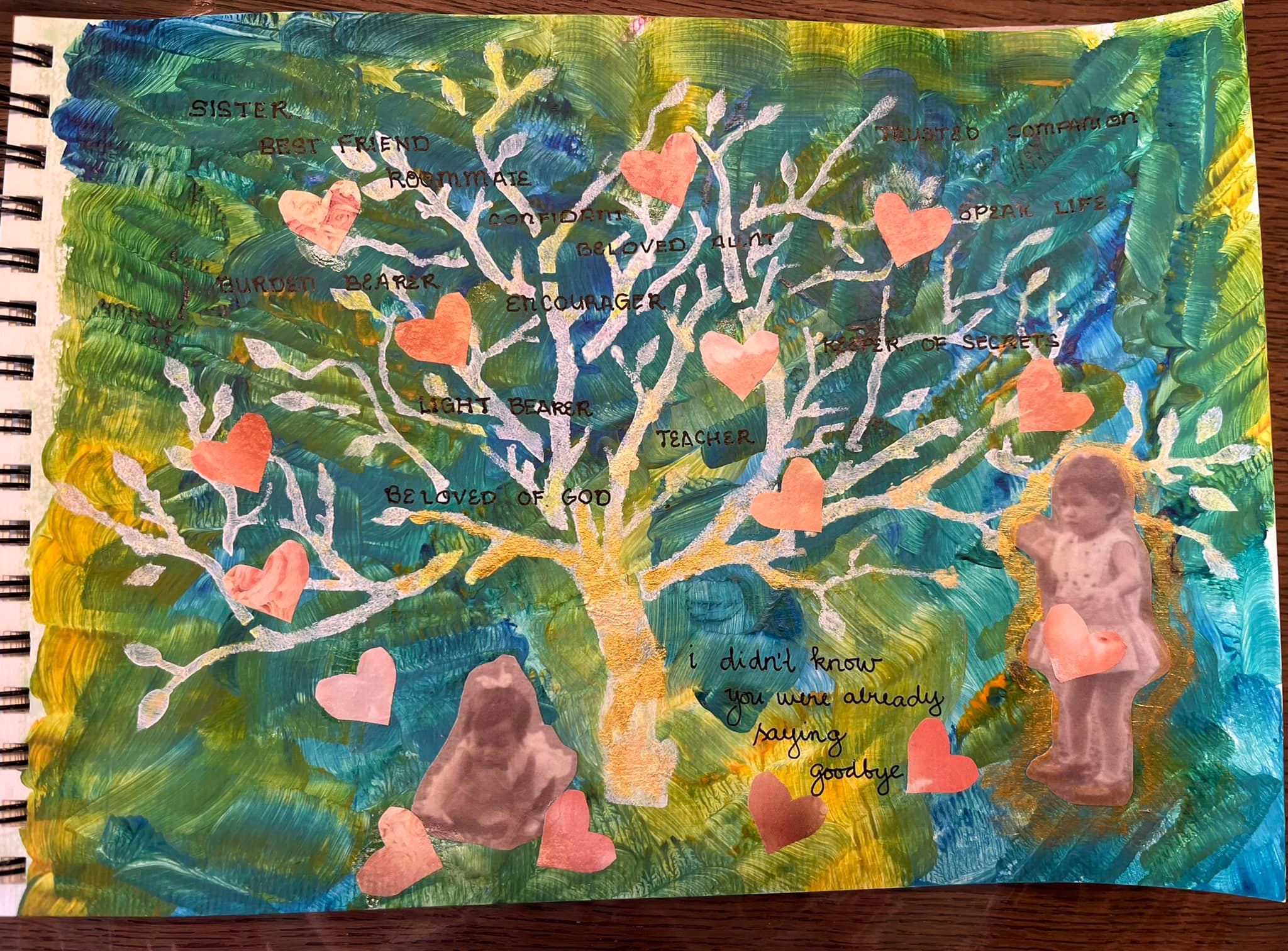
Because there was so little of a gap between us, my sister and I were often mistaken as twins when we were kids. And my Mom liked to dress us up in twin clothing. There are loads of black and white pictures of the two of us twinning. For a long time, there was just me and my sister. We had to wait another seven years before the first of my brothers was born. My sister and I were each other’s best friends and confidantes. We could fight like cats and dogs, but we were each others’ allies. (It’s kind of impossible to remain hostile when you’re sharing a room.)
I want to honour my sister today. To remember the sound of her voice and the way she smiled. I’m thankful my sons have memories of her. That they know who I’m talking about when I talk about Tita Weng.
In 2022, when I was preparing for surgery, I had a dream about my sister. We were playing together under a big tree in the garden, and I was so preoccupied with what I was doing that I didn’t notice that she’d stood up and walked away.
Today, I remember my sister whose light I carry with me.
So, I decided to take the challenge and keep on writing in Dutch. When Liang de Beer asked me if I would like to take a shot at writing something for Modelverhalen, I thought–let’s say yes. How hard can it be?
Well. I am here to tell you that writing in Dutch is hard and challenging. Dutch isn’t an easy language and I actually caught myself turning English words into Dutch by changing the spelling. I know. Thank goodness for the native Dutch speakers who live in my house and who are pretty tough when it comes to my use of the Dutch language.
Even if my story doesn’t make it into the anthology, I have learned so much from the process of being edited by Liang. From fuzzy first draft, through tangled experimental versions, to the draft that I ended up submitting today, I can see the process the story has gone through and how the draft I ended up submitting tells a more cohesive story than the draft I submitted first. (Plus, I also feel like I learned to use the language better than before.)
Writing in Dutch also made me realise that while I may still have a journey ahead of me, I actually do enjoy writing in Dutch. I like the rhythm and the sound of the language and I want do discover how to use it to tell the stories I want to tell.
I think about life and how life is a journey and a process and learning to write in Dutch is for me part of my journey and part of my process of becoming a better inhabitant of the Earth. I am learning too to be more patient with myself because process cannot be rushed and neither can you rush the journey. Perhaps this is why it takes about 100,000 words.
I’m thinking about process and journey as I also recently took another step in the journey towards becoming stronger. I recently signed up for a physiotherapy class which is focused primarily on cancer patients and the needs of cancer patients.
Back before my diagnosis and all the treatments that followed, I pushed my body to the limit and I could lift and carry and do a lot of things which my body can’t do as well as it used to. What’s often frustrated me is how I seem to just run out of energy even when my brain tells me: we have lots of things to do.
During the intake my physiotherapist gave me the word “doseren”. In translation, the goal is to learn how to budget and make use of my energy so I don’t end up constantly with a deficit. Not giving your body time to recover energy results in a constant deficit until you are no longer capable of doing anything. The objective of physiotherapy is to make sure that your energy level eventually gets back to the point it was before all the traumatic stuff happened to your body.
I learned this lesson during my second class. I had had a broken rest and wasn’t feeling in tiptop shape, but I still came to class. My physiotherapist observed that my energy was low and told me not to make use of the weighted vests. When I insisted that I could, she said: remember what I told you about doseren?
It was a humbling moment. I had to admit to myself that in that moment, if I took the weighted vest, I might be able to finish the class, but at the end of the class, I would not be able to do anything else. Acknowledging the limits of my energy, allowed me to recover well and the day after class, instead of taking my usual quickstep one hour walk, I decided to take a gentle half hour stroll.
I think of how we’re often focused on the goal–on getting there–on achieving something–on becoming whatever it is that we want to become. But I am learning that process is important. Maybe even more important than the goal.
I have this tendency to be so focused on getting somewhere, that I forget to pay attention to the things that matter most. Being rooted in now. Focusing on what my body is telling me. These are things that are easy to forget when life is going at its usual pace. In a manner of speaking, it’s a blessing to be taught to slow down.
I am in the process and I am learning and what I am learning is all helpful. Nothing in life is ever wasted.
Blessings and peace to you who read this and don’t forget to take time to be in the moment.
Today is my elder sister’s death anniversary. I considered posting about it on FaceBook which is the social media thing for a lot of Filipinos, but something in me rebels at the thought of remembering my Ate and having people put likes on the post. I know the intention is always good, but my insides just don’t feel in tune with doing that. (But still I’m writing this post because I didn’t want this day to pass without remembering her in some way.)
For a long while, I blamed myself for my sister’s passing. I thought: how could I not have seen it? She was here with me in the months after my husband died. How could I not have seen it? I blamed myself for being so preoccupied with my life and my sorrows at that time–if I hadn’t been so self-absorbed, I might have been able to do something. I don’t know what I blamed myself for not seeing. She spent three months with us and one month after she arrived back in The Philippines, I got a phone call telling me she was gone.
It wasn’t until about a year ago that I had the courage to ask my brother what the diagnosis was. It turns out my sister had sepsis. Something had entered her bloodstream and poisoned her. Sepsis goes so quickly that by the time it manifests, it can be too late.
The cancer I was diagnosed with is also something that doesn’t manifest. It doesn’t show up on blood tests unless you’re looking for it, and because I was pre-menopausal, what might have been warning signs could just as easily be pre-menopausal stuff. That it was found came about because I remembered my sister had a non-cancerous fibroid that was causing her some trouble and I wondered if that might be the same for me. When we sent the test away, we were perfectly confident it would be nothing–but it was something after all. A part of me wonders if it was still my Ate, looking out for me.
We measure grief in moments of time. How many days has it been? How many years? We light candles or we carry out rites of remembrance. We post pictures on social media, we try to find words for our grief.
And yet, for all that she’s no longer physically here, my sister is with me. When I am on the verge of giving up, it’s her voice I hear scolding me. She was really strict with me about not giving up. Ano ka ba? She would say. Okay, if that’s how you want to end up as. (The implication being that if I give up, it’s not her fault if I get called someone who gave up.) Even though she’s no longer here, she still remains my number one cheerleader.
Losing my sister was painful because of how sudden it was. It was painful because there was so much still left unspoken and undone. (We were still going to Paris. We were going to travel together. We were going to grow old and talk about all the books we had read.)
Sister relations are never simple. My relationship with my sister was complex. We were at times adversaries. I remember her banging on our shared bedroom door while I listened to Queen or to David Bowie–and I remember her telling on me. ‘Mom, Rochita’s listening to rock music again.’
But even so, she was also my staunchest ally and my most trusted friend.
Grief softens with time (they say). And it’s true, it does. The sharp edges are gentled. But the missing remains. When I think of my sister, I no longer feel as if I am held fast in that dark moment where the world has lost all meaning or context. I think of how she would want me to walk forward and to take on life and live it as ferociously as I can with as much courage as I can.
Today, as I remember my Ate, I make the decision once again to keep embracing life. Everyday, I make the choice to embrace life and live life. I am present here and I am present now. Now is when I can do what I need to do. Tomorrow will take care of itself.
Blessings and peace to you who read this. Agyamanac Unay for passing by.
Yesterday, I attended a workshop called Envisioning 2024 which was organised and led by my LIMBO partner, Lana Jelenjev. I didn’t make the first part of the session as I have students to teach but I was able to join the second half of the workshop in which we were led to think on what Flow and Boundaries mean to us and what kind of response thinking about Flow and Boundaries produces in our bodies.
Thinking on boundaries, I was surprised to discover how my feelings towards boundaries had shifted and changed and how I’d come to see boundaries like an embrace that keeps me from using up all that I am. Boundaries are there to protect and not restrict and so when someone tells me where their boundaries are, it also makes me see that this isn’t a rejection of myself, but it is the other person asking me to recognise what I can do to take care of them too.
I think of boundaries in terms of the culture that exists within the Filipino community where there is often a tendency to cross over and push beyond boundaries set by a person. ‘Sige na’, we tend to say or ‘kahit saglit lang’. It’s harder when the person pushing is an older person because respect for our elders is so ingrained in us that sticking to our boundaries can be made to feel like disrespect. I want to say here that it is not disrespect to say “these are my limitations”. And saying yes to every ask or crossing our own boundaries can be more harmful than helpful to us and to others.
During the course of my treatment, I’ve had someone ask me to be present at gatherings and in response to my “no”, I’ve sometimes been told that just showing my face should be enough and I should remember this is my community. It’s a response that isn’t worth an answer because it tells me enough about the person saying it. I do not always have to be present and if my absence means I am no longer part of the community, then perhaps the community never considered me part of it. It may sound harsh saying it like that, but my community and my family are those who understand why I can’t always be there. Why I can’t always say yes. Why retreating into my shell is necessary for me and how not being present is also part of my healing.
There is a beauty about the way in which the community I am in, right now, approaches this. An offer is made and it is up to the person who needs to come up and say: now, I need. Or now, I want to be present. Or now, I am ready to speak or to be in the group. It’s not that you are forgotten when you don’t speak or are not present–people do check-in from time to time just to ask how are you today. But the beauty of this is how it is absent of pressure that often leads to stress.
Thinking on this, my thoughts circle back to LIMBO and how much being in this space has enriched my understanding of the kinds of worlds that are possible if we allow ourselves to let go of existing learned systems. I think of communities where care is central–not just care for another but care for the self.
You don’t always have to have the answer. You don’t always have to solve the problem. You don’t always have to be present. You can always say: I hear you. I acknowledge your need. But in this moment, I need to not be present. In this moment, I don’t have the answer. I don’t know. I don’t have the answer. And maybe not knowing or not having the answer or not being able to do anything makes us feel vulnerable, but maybe this kind of honesty opens the door to the other so they too can be vulnerable and free.
Blessings and peace to you who read this and Agyamanac Unay for stopping by.
There’s a Dutch phrase that captures the emotion for what we have gone through–het laat mij niet in de koude kleren zitten. Which means that all we’ve gone through as a family, all I’ve gone through as a person, these things have not left me unchanged or unmoved.
It’s a good thing to be moved and to be changed because it means I am still alive. I am still feeling, I am still living and I am constantly in transition, evolving, changing, not standing still. I think about this as I find myself surprised at how this season, this moment of being in a state of limbo, has feed the creative in me. I write, because I love to write. I make music because I love to make music. I teach because I love seeing how those I teach bloom into their potential. And I make art because a lot of times, when I am making art, I find myself in conversation with my maker.
Before 2022, I never imagined I would be making art as I do today. Or that it would become so important to me or that it would help me talk about what I am going through or that it would be a pathway to growing and knowing myself better. (I used to say that I write because I can’t paint or draw and am basically useless at art.)
When I told my Mom about my diagnosis in 2022, her command was for me to go ask God what his purpose was with me. At that time, I had no words for writing anything. I couldn’t even speak about what I was going through. Imagine being a writer unable to write or say anything about the storm going on inside you?
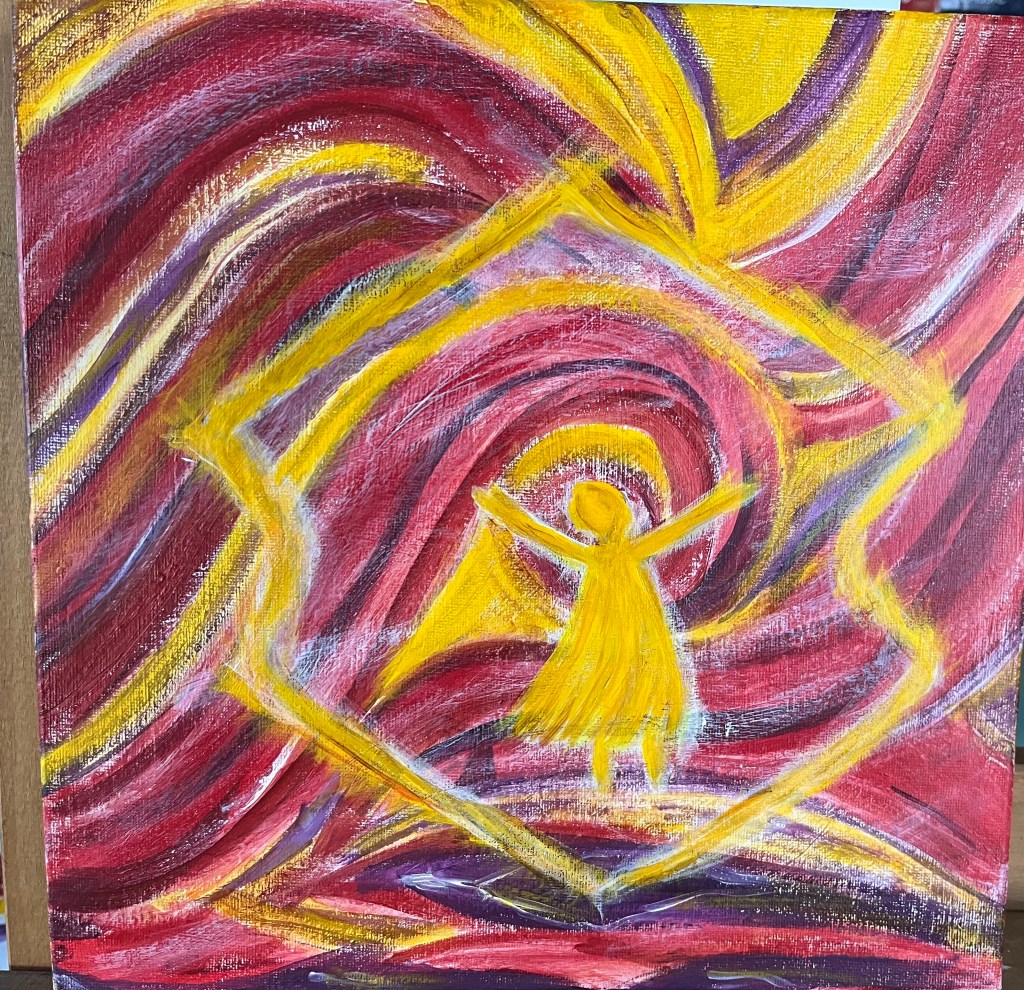
This was one of the first images I made which expresses what I was going through at the time. It was hope and agony and my soul just crying out. It was: God, if you really see me, then do something.
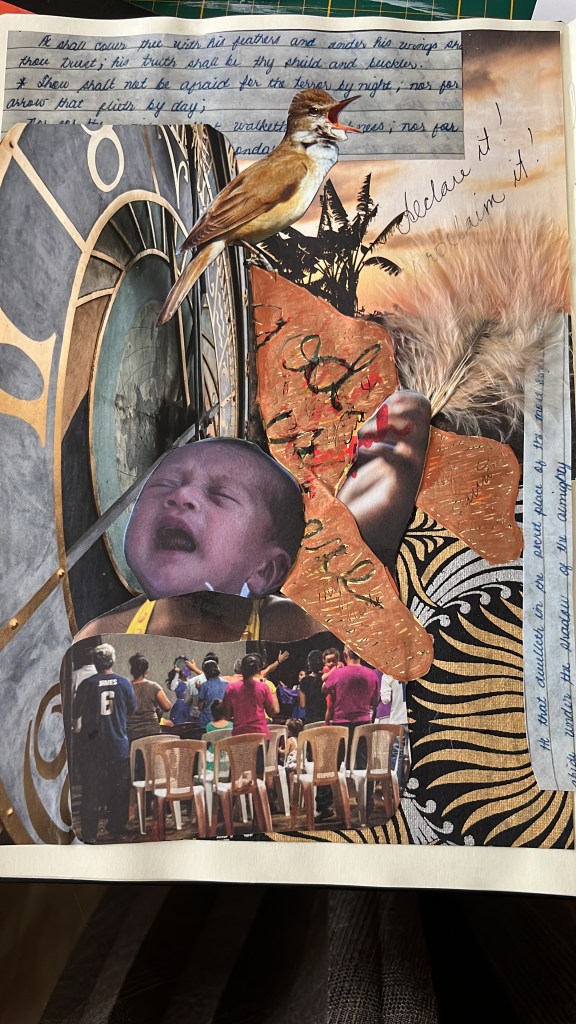
From that moment, telling the story of that time happened through images. Sometime in 2022, a friend proposed that I should try making use of acrylics. My first approach to painting was to simply splash color on the canvas. To try and put on the canvas or on paper what was in my head or in my heart at the moment.
This stormy canvas was just me saying: here I am in the middle of this storm and the storm is so big, I can’t even begin to describe it.
Making something visual happened because I had no words. But when you are without words for more than a year, and when you are engaging with art making almost everyday for a year, your work changes. One day, early this year, something told me that the way I was working was going to change and so was the art.
I think about the process of art making and how making art led me back to writing and how art that’s on the canvas tells a story just as the words on a page tell a story. We create because we have stories inside us that we want to share and stories will find their way out of the person bearing those stories. If not through words, it will be through other means of telling. (Just consider the plethora of youtube stories, audio stories, film stories..etc., etc.)
The more we engage with telling stories, the better we become at them. The more we engage with a certain medium, the better we become at that medium. Before my diagnosis, I would never have dreamed that I would someday tell stories through painting. After diagnosis, I thought I would never be able to tell stories through words again.
There are a lot of famous saying about life and art, but for the life of me, I can’t remember a proper one at the moment, but I do believe that art and life are intertwined. If anything, being diagnosed has made me more conscious of how important it is to live a life with purpose. To create marks with deliberation and care, to engage fully and be present in the moment, to look–really look, to really see and to also rest and be in the moment and allow moments to flow over me and change me and transform me so I can bring that back to whatever I am working on at the moment whether it is on art, on writing or my relationships.
I keep thinking of that friend who said to me “if only we knew how much time we had”. The truth is, we know. We know our time on this planet is not infinite. We know it, we just don’t want to acknowledge it.
I think about this as I contemplate the story of my life and I find myself wondering about the overall arch and how the completed story will read like or look like if it were in a book or hanging in a gallery. When we are in the process, we only see now. We only see this moment.
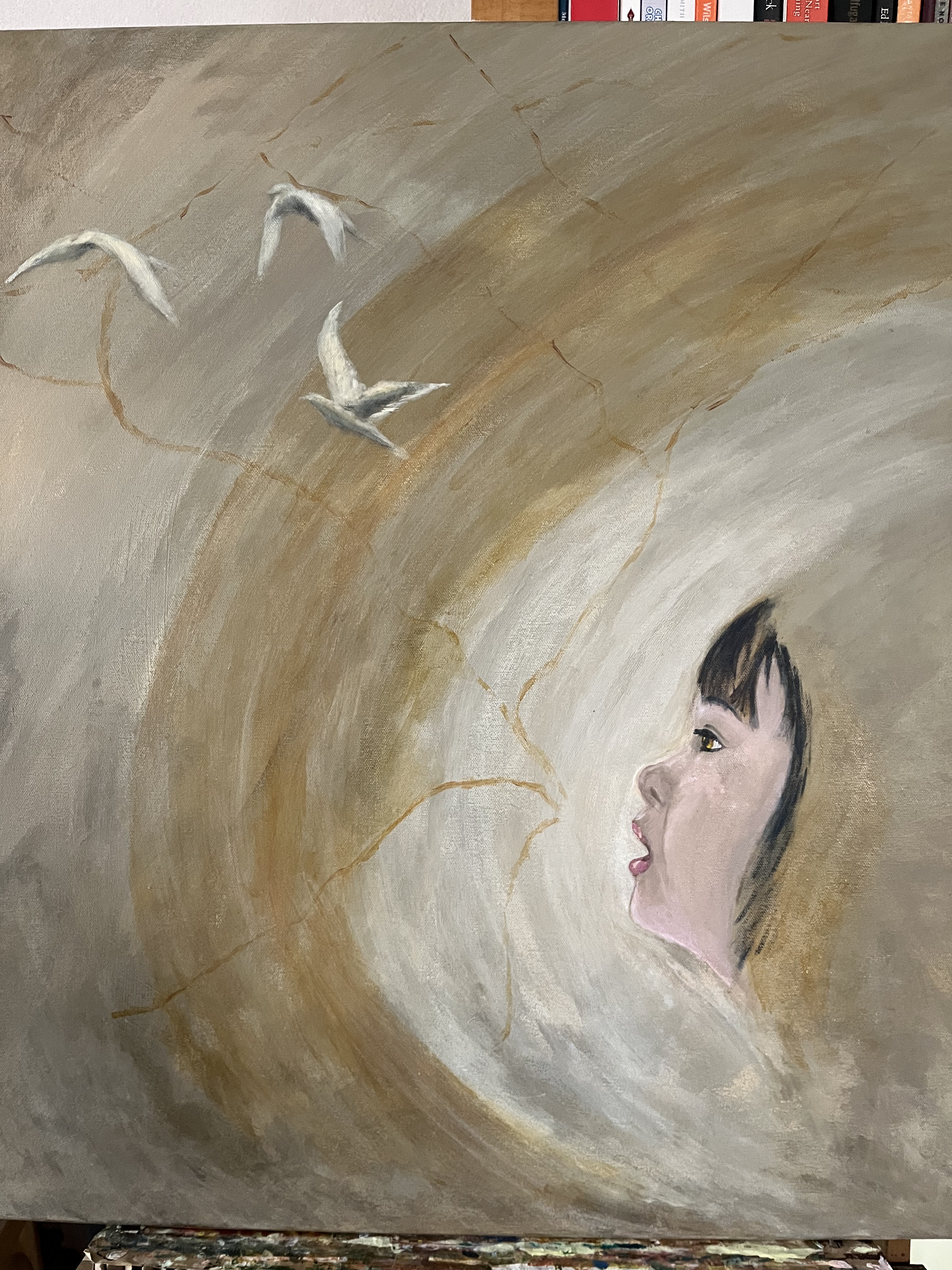
This is one of my latest works in progress (yup, I have more than one). I’ve been working on it for almost two months. I do a little work. I put it away. Think about it. Work on it some more. Right now, it’s missing one more element which I am thinking about.
I can honestly say that I don’t know why I am writing this or sharing this at this moment. It just felt good to do so. I don’t know what 2024 holds. I don’t even know what will happen tomorrow or next week or the weeks after that. Today, I am heading to the hospital. I am getting a CT scan. I am doing what I can to keep my body healthy. I am spending time with my kids and with my loved ones. I am writing. I am alive.
Blessings and peace to you who read this. Choose life.
I’ve recently found myself feeling quite restless. Perhaps it’s because the year is coming to a close, perhaps it’s because the novel I wanted to finish this year is stuck in second draft around the 30,000 word count (there’s still time to finish it though).
I am looking forward to 2024 when I hope to be able to attend the MILFORD writer’s retreat and spend time immersed in the writing (as well as catching up with good friends).
I find myself thinking of liminal spaces and how there’s this restless energy found in that space of being in-between. While it’s good to be in liminal space, to remain there for a long time can sometimes be more harmful than helpful for the creative spirit. I think of a passage from Stella Adler’s book where she writes about “life being out there” and how engaging with what is out there, engaging with life and with the world is what makes us grow and thrive as artists.
Energy that we cultivate in the liminal space has to find an outlet. As a person who was given a diagnosis and is in treatment, I can make a choice to remain in liminal space or I can choose to take the energy I’ve harvested from liminality and put it to use as I engage with the world and step out into life.
I ask myself: what do I want to do? How can I do it? What do I want to achieve? How can I get there?
For me, it starts by going back to the waiting page.
Life continues. I teach. I write. I make art. I make music. I share what I can. I mother my sons. I pick up the threads of life and make a decision to keep on living. Circumstances may change the course of our trajectory, but what matters is what we do and how we respond.
It’s strange how having written these words makes me feel more rooted somehow. I may not know and yet I know. And that’s enough for now.
Blessings and peace to you who read this and may you find strength in your own journey.
I’m thinking of borders and permeability in relation to art and writing, in relation to making and to being in the world and I also find myself looking at nature, looking at what the various sciences also tell us about how nature and the universe works.
Related to this, I have to think about various conversations I’ve had with friends and journey mates. One thing I wanted to share was this thought that the borders between practices are permeable and as beings whose strength lies in our ability to imagine, there are or should be no borders.
Glissant, writing about borders advocates for permeability–for moving past seeing borders as a means of defending or preventing, but rather as a way to mark that one is crossing from one country to another.
Translating that into the practice of making, it makes me think of how I am not bound to only one form or genre of practice. It also means that the doors to various genres and forms of making need to be permeable and to my mind, we also need to make the threshold less imposing and more inviting. (Open the door, break down the barriers or walls and say welcome.)
I’ve often had people tell me that they’re not really writers because they’ve never been published or because they’re just starting to express themselves in writing. I’ve also spoken with people who practice art but don’t dare call themselves artists because ‘well, there’s a study you have to do for that’ and also ‘my work isn’t as good as’ or my work isn’t worth it because I don’t have the right background’. (Did the first cave painter have the right background, I wonder.)
As humans, we tend to be fond of creating labels. We say: you are a writer, you are a visual artist, you are a painter, you are this, you are that. Even when it comes to being in the world, we like to employ these definitive and concrete labels and breaking away from those definitive and concrete labels is often viewed as strange or weird. (Actually, it’s often brushed aside or denied because it doesn’t fit into how people like to see things.)
But we can’t put limits or borders around the creative mind and we can’t put borders or limits around being in the world.
I articulated some of my thoughts in this message to the guerilla writers. I wrote: I feel that as beings we are fluid by nature–maybe born with certain body parts, but that doesn’t mean we are limited to those parts. Those parts don’t define us or speak of who we really are and to my mind remembering that fluidity, remembering that freedom to just be–while it can be scary at first, it is most certainly a source of joy and hopefulness.
One of the writers asked me if I could share my experience of this and so I talked about how I slowly came to recognise and embrace this fluidity for myself as well as my thinking on it. It was for me, the first time I was able to say to someone that I was born in a body that I’ve often felt awkward in, but which I embrace as being part of me. To put to words that feeling that the self that lives inside the body, that pure self is one that’s not bound to societal parameters or social constructs, it was scary but also freeing. Having done that, I found myself better able to say that I am simply as I am–a being in the world. Unbound, undefined, but very much joyful for having embraced this knowledge.
To you who are on the journey, I wish you love and the joyful embrace of self and work that isn’t constrained by borders.
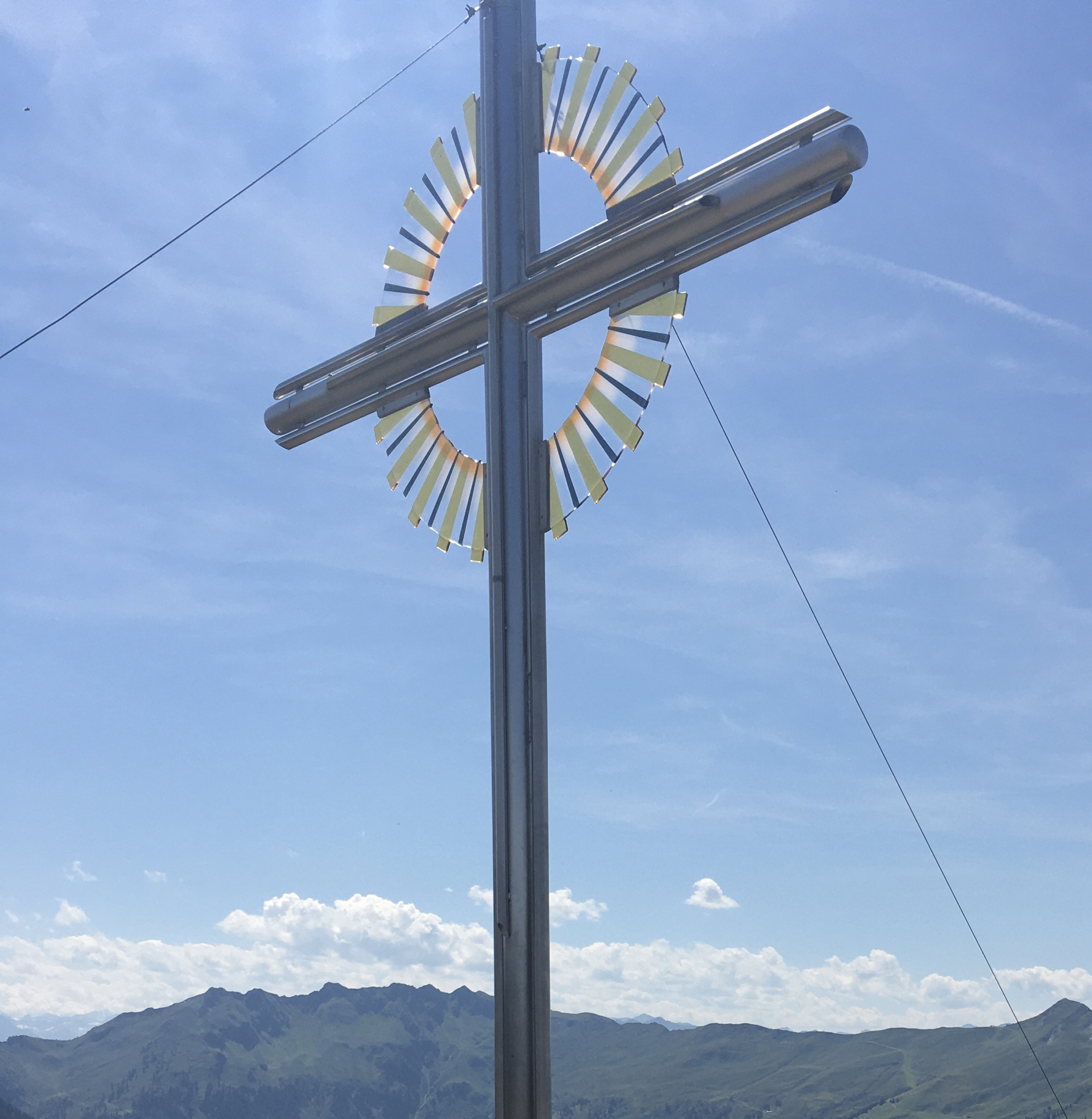
Summer break is over and we are getting back into the daily rhythm of things. During the break, we went hiking in Austria and regardless of my fear of heights, I managed to make the hike up to the peak of the mountain we were staying at. The hike goes up to 1900 meters above sea level and while there is a gravel road that winds around, we opted to take the paths that climb up through bush and forest growth. They might be a bit steeper when it comes to incline, but I’ve found that hiking through forest and bush is less energy consuming than taking the gravel roads. 1900 meters is a milestone for me as I only made it to 1200 meters when we attempted the climb last year. To be able to reach the top felt like such an accomplishment. I will admit that I had moments where looking down made me feel like I was about to leave my body.
It’s so weird to be having this fear when I grew up in the mountains. To be clear, climbing up mountains has never been the problem–it’s the getting down that has always been. I remember my elder sister getting quite exasperated because I would just sit at the top of the mountain trail leading down to school and crying until she came back up to hold my hand on the way down. Eventually, of course, one sort of decides to bury that fear and just make the journey downwards, but the fear never goes away. It lurks right there.
There was a brief moment during the downward climb when I did have a panic attack and just had to stop and breathe and allow the wave to wash over me. But it was okay. The world didn’t end. I could get up again after that and continue on the journey.
I think about the hike as I write this post and I think about art-making and storytelling and how when we are called to create, it sometimes feels like this giant mountain that we have to climb. Sometimes, the vision or the dream can feel huge and overwhelming if we think of word counts or scope or project descriptions.
There was this moment in the hike upward when the top felt unreachable–we were at that point where the top is just beyond your sight, but you’re almost there. I remember thinking: Okay, let’s just do this. Count ten steps. Just keep counting ten steps until you get there.
To you who are on the journey, don’t give up. Just keep counting steps until you get there.
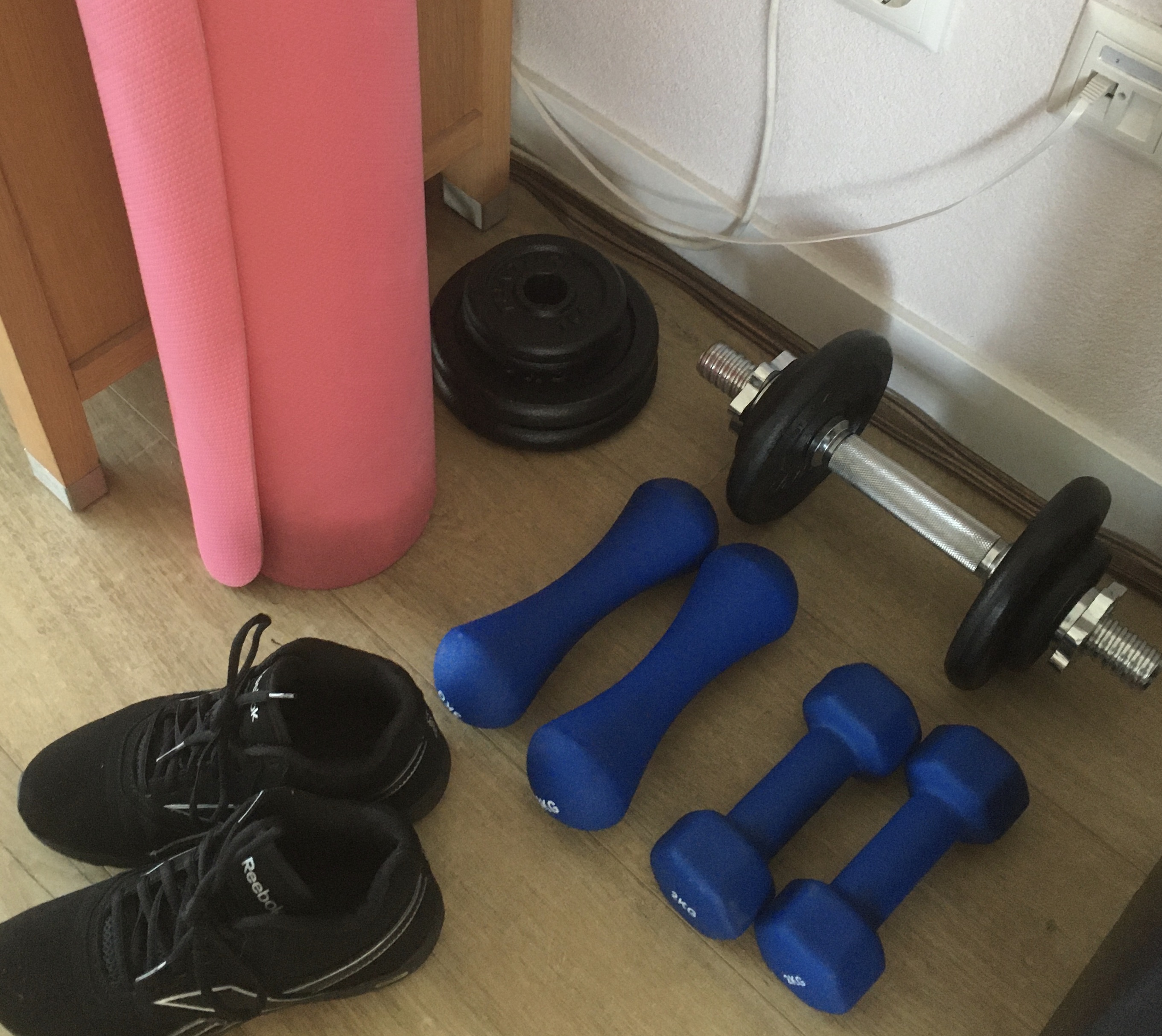
After Jan’s passing, eldest son gifted me with a set of weights and an exercise mat. I’d been contemplating a gym subscription but I just couldn’t seem to take that first step. So, when eldest son asked me what was on my birthday wishlist, I thought I’d ask for stuff for exercising at home. I thought: a mat would do or a pair of dumbbells. I remember expressly pointing out some things that I thought were student-level price. (He was also saving up for his own computer, so I didn’t want him to spend a lot.)
I was rather flabbergasted when the packages arrived. Apparently, he’d done some research and opted for his own (more expensive) choices instead of what I had pointed out to him.
In the first year, I shed a couple of pounds and started to feel stronger. When I flexed my arm, I could feel something that felt like muscle. So I took the plunge and signed up at our local gym. My goal: more muscle definition please and make me stronger.
In times when I’ve wrestled with anxiety, I’ve found that a good workout tends to keep the worst of it bay. I’m able to clear my mind for a while as I focus on just making it through a set number of reps and sets.
Today, I thought back to that time after he got his first job at a local supermarket. I think of the late nights and long hours that he pulled and how that was the year he told me that he didn’t need pocket money anymore. I remember how flabbergasted I was when I realised just how much he’d spent on my birthday present and I remember him saying that I should think of it as him investing in me.
The returns on Joel’s investment have come in as we now use that set each time we workout during the week. It’s fun, it gives some sort of structure to days where hours seem to blend into each other, and I guess I’m vain enough to be pleased that the muscle I’ve gained won’t fade during the lockdown.
( The 3 kilo dumbbells are a recent addition, and these shoes have been with me since I started working out 5 years ago. I have a 5 kilo disk on my birthday wishlist. I’ve read that weight training is important for women as we grow older as it helps maintain bone density and keeps our joints supple. What I can say is this: five years ago, I couldn’t run up and down the stairs, these days I can.)
We were celebrating one of the younger cousin’s birthday, when the announcement went live.
We had been expecting it, of course.
“Well,” said the only other aunt who had showed up. “I suppose this will go down in family history as the Corona birthday party.”
We sat there, sipping our tea and coffee, while Ministers Slob and Bruins made the announcement. The room grew dark as twilight fell.
“A shame,” the other aunt said. “There was sun this morning.”
We made the appropriate sounds of assent and laughed at the sign language for hamsteren (hoarding).
Youngest son showed off a picture he’d made earlier in the day of empty supermarket shelves.
On tv the Minister says all pubs and cafes will be shutdown for at least three weeks; classes are suspended, and any gathering that includes more than your own immediate family is discouraged. And in particular, no visits to the elderly because they are the most vulnerable.
“That’s it then,” sister-in-law said. “So, I guess you should all go home.”
#
I found myself thinking of absurdist movies and it may sound strange, but for a moment I couldn’t help but wonder if a director would jump out of somewhere shouting, “Cut”.
Of course, this didn’t happen.
#
In the morning, my sons and I walk to the nearest supermarket. We’re out of bread and cheese, and we haven’t got a gigantic freezer or any kind of stockpile.
So, we walk because classes are suspended and I think children (regardless of age) need some sort of physical movement. I also believe that fresh air is good for you.
Already, the youngest son wants to know what’s on the programme for today.
I propose a short piano lesson.
“Not too long,” youngest son says. “Or else I won’t have time for anything else.”
Eldest son scoffs at youngest son’s declaration, but I promise that all we’ll do is learn the second phrase of Fur Elise.
“What about a short writing session in the afternoon?” I ask.
Both boys perk up and look interested.
“Is this going to be like the workshop you’re giving?” eldest son asks.
“Uh,” I look at youngest son. “I’ll have to adjust it a bit, but it might be fun.”
“Why not?” Eldest son says.
#
Today we did two small writing exercises. Afterwards, I asked them if they would like to do this again tomorrow.
 From the Beloved Country
You must be logged in to post a comment.