some thoughts on boundaries and flow

Yesterday, I attended a workshop called Envisioning 2024 which was organised and led by my LIMBO partner, Lana Jelenjev. I didn’t make the first part of the session as I have students to teach but I was able to join the second half of the workshop in which we were led to think on what Flow and Boundaries mean to us and what kind of response thinking about Flow and Boundaries produces in our bodies.

Thinking on boundaries, I was surprised to discover how my feelings towards boundaries had shifted and changed and how I’d come to see boundaries like an embrace that keeps me from using up all that I am. Boundaries are there to protect and not restrict and so when someone tells me where their boundaries are, it also makes me see that this isn’t a rejection of myself, but it is the other person asking me to recognise what I can do to take care of them too.

I think of boundaries in terms of the culture that exists within the Filipino community where there is often a tendency to cross over and push beyond boundaries set by a person. ‘Sige na’, we tend to say or ‘kahit saglit lang’. It’s harder when the person pushing is an older person because respect for our elders is so ingrained in us that sticking to our boundaries can be made to feel like disrespect. I want to say here that it is not disrespect to say “these are my limitations”. And saying yes to every ask or crossing our own boundaries can be more harmful than helpful to us and to others.

During the course of my treatment, I’ve had someone ask me to be present at gatherings and in response to my “no”, I’ve sometimes been told that just showing my face should be enough and I should remember this is my community. It’s a response that isn’t worth an answer because it tells me enough about the person saying it. I do not always have to be present and if my absence means I am no longer part of the community, then perhaps the community never considered me part of it. It may sound harsh saying it like that, but my community and my family are those who understand why I can’t always be there. Why I can’t always say yes. Why retreating into my shell is necessary for me and how not being present is also part of my healing.

There is a beauty about the way in which the community I am in, right now, approaches this. An offer is made and it is up to the person who needs to come up and say: now, I need. Or now, I want to be present. Or now, I am ready to speak or to be in the group. It’s not that you are forgotten when you don’t speak or are not present–people do check-in from time to time just to ask how are you today. But the beauty of this is how it is absent of pressure that often leads to stress.

Thinking on this, my thoughts circle back to LIMBO and how much being in this space has enriched my understanding of the kinds of worlds that are possible if we allow ourselves to let go of existing learned systems. I think of communities where care is central–not just care for another but care for the self.

You don’t always have to have the answer. You don’t always have to solve the problem. You don’t always have to be present. You can always say: I hear you. I acknowledge your need. But in this moment, I need to not be present. In this moment, I don’t have the answer. I don’t know. I don’t have the answer. And maybe not knowing or not having the answer or not being able to do anything makes us feel vulnerable, but maybe this kind of honesty opens the door to the other so they too can be vulnerable and free.

Blessings and peace to you who read this and Agyamanac Unay for stopping by.
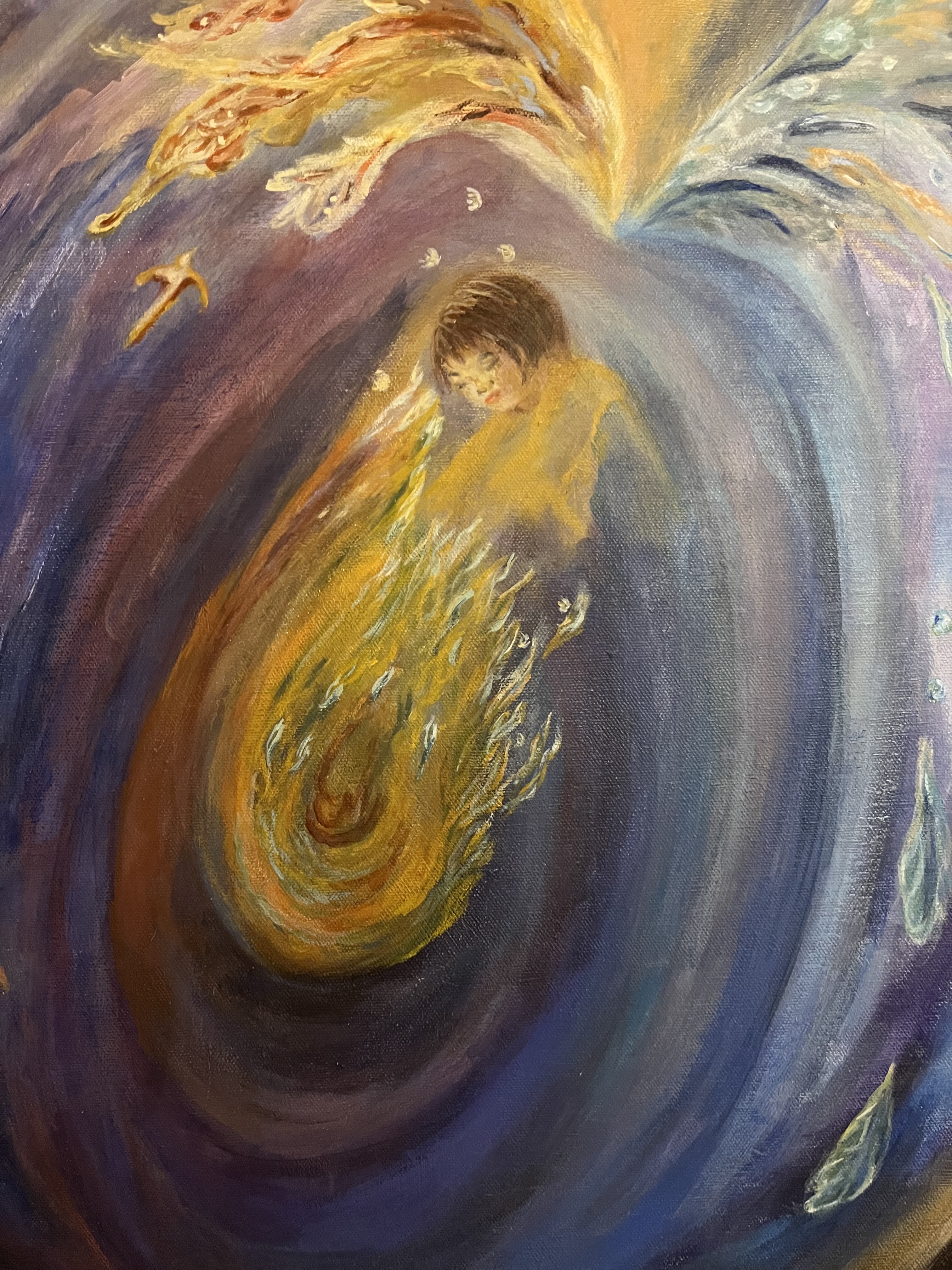
Fluidity and freedom

After the first LIMBO of 2024, I find myself eager to see how future LIMBO’s will unfold. We started the first LIMBO with some discussion and reading and from that discussion and reading we went on to write our own letters inspired by some readings from The Letter Q: Queer Writers Notes to their Younger Selves. For those interested, some of these letters are available on poets.org.

The letter writing was a divergence from the workshop theme/plan which I had in mind, but in coming to LIMBO, I felt what was important was to find out first where the discussion would lead us. Every announced aspect of the session was a placeholder for what might come up as being more important or beneficial to the participants at the moment. I think the fluidity of conducting meetings in this way might be more helpful/fruitful than creating a set program with activities we nudge participants towards. I think of how participants might come up and say: can we do this instead? Or can we work together on something? I’m curious as to that last part as I do want to try something at a future meeting.

For me, LIMBO is an ongoing process and it’s one that I find quite joyful. I do wonder how workshop culture would change if we shifted our approach and started asking ourselves: what is it that those coming to the workshop need in this moment? Is it be possible to make room for a different approach and would a consumer-minded society be willing to embrace a workshop that doesn’t clearly label itself from the get-go?

For all the complexity that comes with it, I find LIMBO to be freeing. No doubt there will be difficult moments but LIMBO is about working together to hold and keep this space wherein we can all just be (as one of the participants so beautifully put it) just be human.

Here’s a challenge that mirrors what we did: Read one or two letters from the Letter Q out loud. Give yourself 30 minutes and write a letter to yourself: could be your younger self, your present self or your future self. No editing. No passing judgment on yourself. Just write. Afterwards, read out loud. Ask yourself: what surprised you?

Blessings and peace to you who read and may you find yourself joyfully surprised.

Bucketlist

There was a time when I was a struggling university student that I used to go with a girlfriend to one of the high-end shops in Ayala. My girlfriend was tiny and fair-skinned and looked like a princess and while she had to make do with her allowance (just like I had to) it was quite obvious that she was from a well-to-do family. In the Philippines, fairness is associated with wealth and my darker complexion as well as my non-fairylike appearance made that people tended to associate me as coming from a lower economic bracket. Not that I cared. But well…anyway…my girlfriend liked window-shopping and so we would window-shop at those high-end stores.

We had a planned dialogue, my girlfriend and I. She would try something on, come out of the changing room and ask me what I thought and I was supposed to say that I wasn’t quite sure if it was really her thing. Of course, she would later on squee about how much she liked it but as we were struggling students, just being able to see what it looked like on her was just as good as buying things.

During one of these outings, she proposed making a list of things to buy. She showed me her list and said I should write one too. To humor her, I also made a list of things which included a watch from some upscale brand. We later parted ways and as tends to happen, we lost touch.

I have to laugh today because I just sat down to write a bucket list (entirely different from the list of things to buy…but it had me thinking of her). She had a pretty long list by the end of one year and I never found out if she went back to buy anything.

The bucket list I’m making seems to keep on growing and I find myself wondering how many people have bucket lists and what happens to those lists should they go uncompleted?

Just this week, I had a long talk with my GP. It was a great talk because we talked about my diagnosis and the implications of where I am in right now. One of the things she said to me was that I had the happy characteristic of being someone who was able to see the good in life no matter the circumstance. I suppose it’s true. I can’t control or change the circumstances, so I don’t really see the point or the use of crying or complaining about it (although I do sometimes grumble about it).

In the meantime, I’ve started on my bucket list and it’s already got thirty things on it. I think of something someone said to me–this is someone who went through a cancer scare and had the works and is now clean. He told me that his partner made a portrait of him while he was in hospital. It was a portrait in pencil, but his eyes staring out from the portrait are striking and full of life. He said to me that his partner had said: Oh, your eyes are good. They’re full of life. You’re going to be okay. I think to myself: but look, I am still full of life, aren’t I? And I think: I am still okay.

Today, I am preparing for tomorrow. Today, I am writing a list. Today, I have the energy to go out and bring things away. Today, I can pick up groceries and cook and prepare for the weekend. Today, I can be present for my youngest son who is still at home. Today, is full of possibility and there is still a lot of today left.

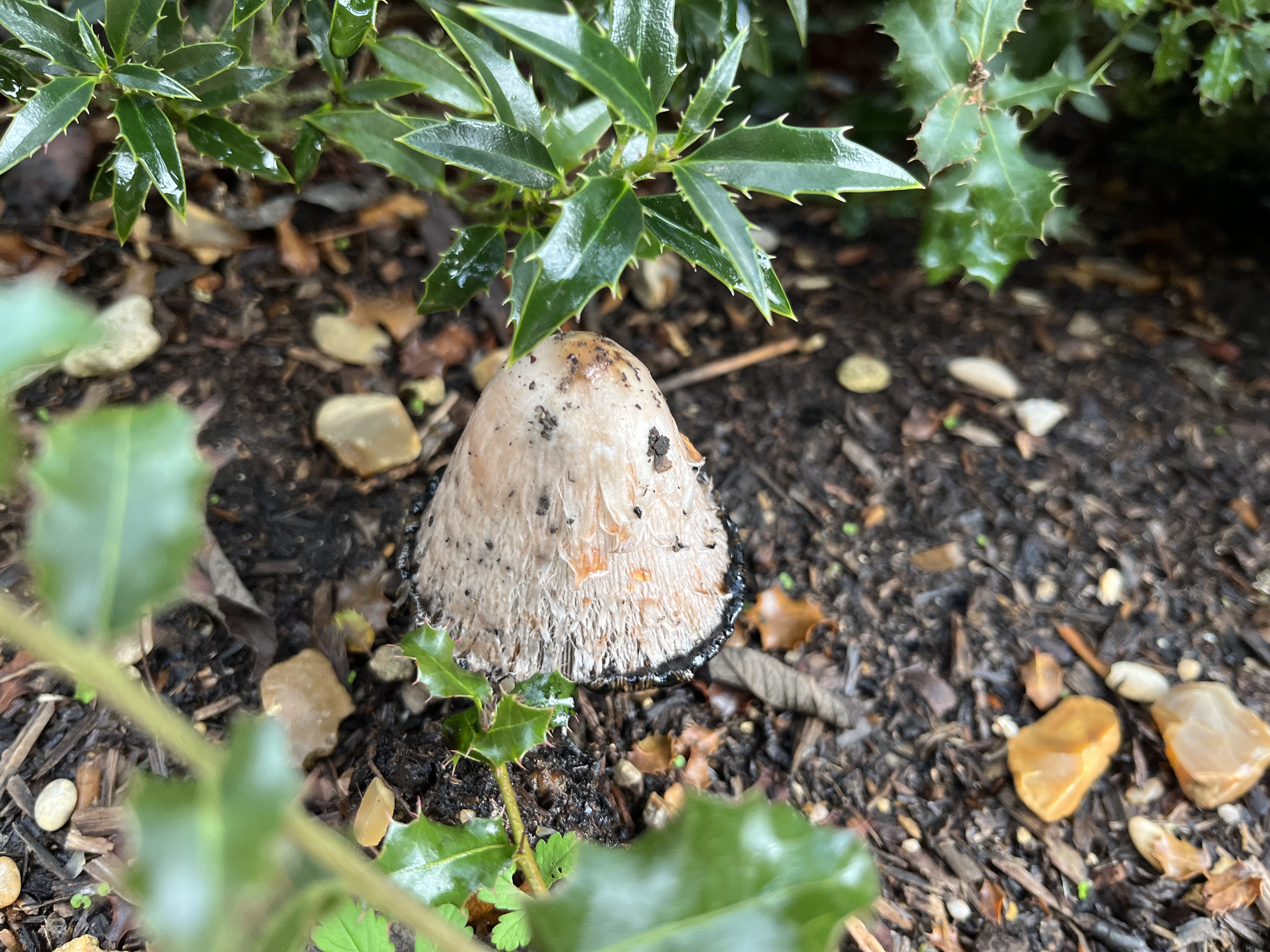
So, today I decided to share on here a close-up detail from one of my paintings. I liked this unexpected detail because it made me think of how while we only see the now moment, we don’t know how today affects everything that unfolds around us. So, let’s just keep on living and doing all that we can today.

Blessings and peace and Agyamanac Unay for reading.

Alive and working

In the lead up to our first LIMBO of the year, I wanted to try a different approach. One that’s more loose and which means also posting to the group more in the lead up to the Sundays. I think of how providing material to think on could become a basis for discussion before we go on towards the work of collaborative or individual creation. This time, I want to focus on the questions around writing and creation of story, character and world. I think of ways in which we tell story and where our stories come from and how sharing our works and our words with one another is an act of affirmation and also an act of recognising and taking and making space in the world. If we can encourage confidence and voice so people can stand up and say: this is what I sound like and will you listen to me? I feel that we will have already done some of what we are meant to do.

These past weeks, I have also been thinking on and off about a piece I’m supposed to be writing in Dutch. It’s an interesting process to be writing in Dutch. Understanding that some of what I say and how I say will give me away to the reader and tell them that I am not a natural-born Dutch person. I think of how the tongue stumbles and wrestles with language and how language can be a stumbling block at times, how it can at times be a wall, but how it also can be a bridge if we can let go of wanting perfection. For the recipient it means being willing to listen even when the syntax or the grammar doesn’t sound as a “real Dutch person” would say it. But on my part it also means a willingness to be vulnerable and admit that I really don’t know how to write everything as it’s meant to be written, but this is the meaning that I want to get across. It’s kind of funny to be going through this process as for a long time I fought against writing in Dutch. It was this weird feeling of: I’ve already had to do my best to write English really well and now I have to work at writing in yet another language. But unlike when I was younger, I find myself less resistant to the process. I suppose it’s a certain knowledge that comes with age.

I wonder when do we become more than a person living in a country? When do we make that transition into being part of a country? And what does this mean for my identity as Filipino? I am still Filipino. Philippines is still home to me. But I am also Dutch and The Netherlands is also home to me. So, it is possible to be two things at the same time and to occupy two identities at the same time. To be Dutch and Filipino. To be at home here and there.

These are some of the things going through my head as I write and work on things that I want to work on. My thoughts are still quite messy, but I like messiness. Life is always more interesting when there is some messiness in it. I remember my sister and I joking with one another about how our chaos was order to us because we knew just exactly where things were and because in the search for misplaced objects, we sometimes stumbled upon the most interesting things. I wonder what my sister would think of life and its messiness at the moment and I wonder how she would feel in LIMBO space. I think she would have fit right in and in a sense I take her with me when I enter that space. Ah. She would have loved it. She would love the space, the participants and everything that LIMBO represents. A space for people to just be and where just being is enough.

One day at a time. I take life, one day at a time. I dream and I plan and I do what I can. One day at a time. Everything else will unfold as it’s meant to unfold and in this knowledge there is peace.

Blessings and peace to you who read this and may 2024 bring you good things.

Hello 2024

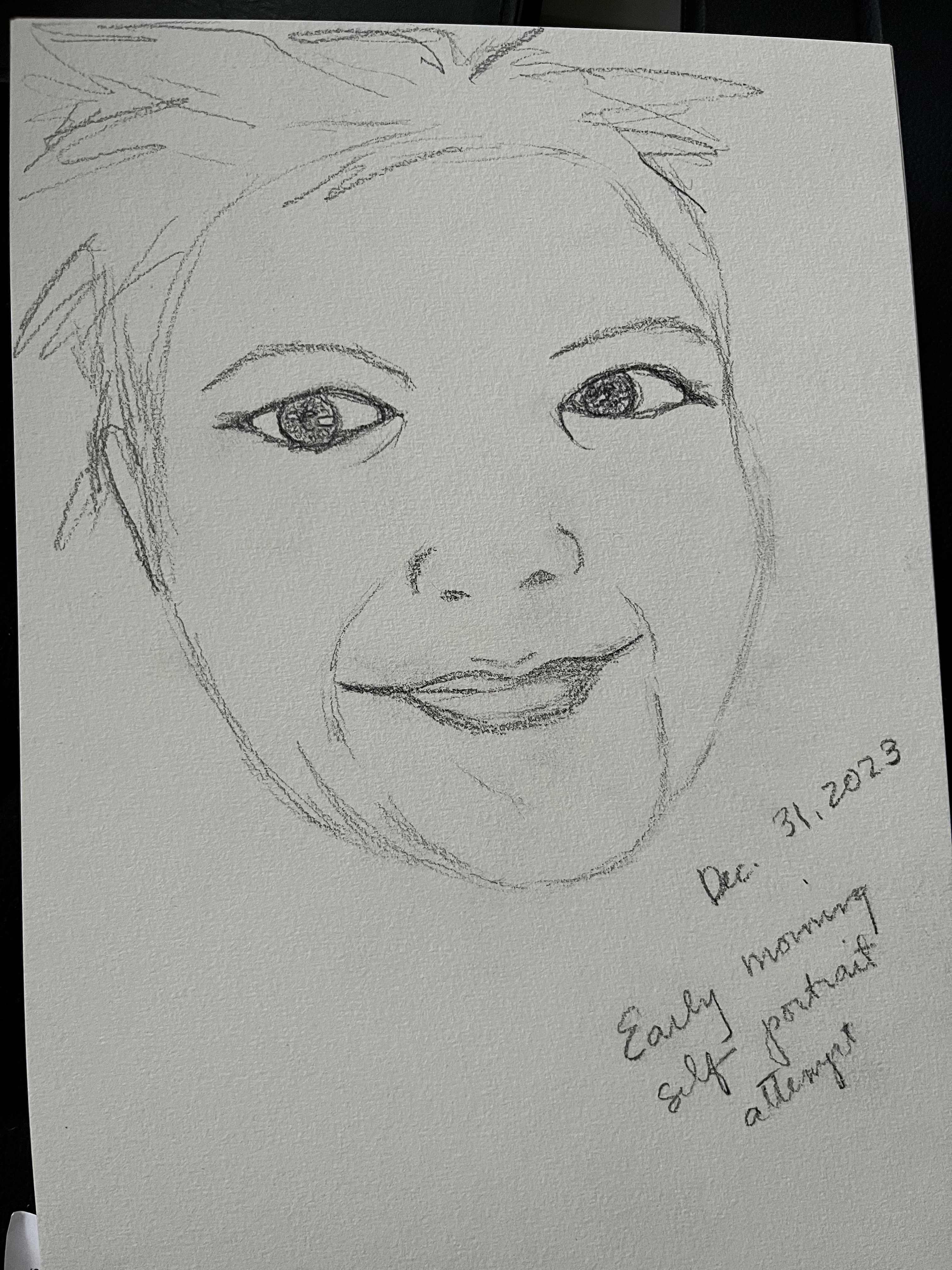
I am learning how to do freehand protraits–relying less on a grid and training my eyes and my pencil. I still need to work on proportions, but the results have been surprising. Did you know that turning a picture upside down will actually help you focus more on shapes and lines and will give you a more satisfying rendition than if you are looking directly at a thing? For most of 2023, I had to practice at home by myself as my energy would often run out and I would end up having to skip art classes.

Towards the end of 2023 though, I was able to attend five art classes (what luxury). It became important to me to go to class with a goal. What is it that I’m struggling with, right now? What questions can I ask and how can I put the answers to practice when I am unable to attend class?

There are so many similarities between making art and writing and life and the parallels fascinate me. Because we often start out with a draft–with an idea of where we would like to go–or in my case, I sometimes find myself caught up in an emotion and I let that emotion move my body and take me to what comes out on the canvas. I suppose I am very much a pantser on canvas as I am a pantser with words. Portraiture though is teaching me the discipline of looking and seeing and translating what I see in lines and shadows and angles on the page. We don’t know what we’re making until we see the finished project and even then, it can be tempting to keep tweaking. For the artist, the art is learning when it’s time to stop. There is no such thing as perfection in art, simply the question of: have I managed to convey what I wanted to convey? And does the meaning the viewer attaches to the image make me say: Oh…that interpretation works just as well.

It is satisfying though when you get your meaning across and it’s the same with working with words. Stories work when they mean something to the maker and to the person reading or receiving the story. And in this way, stories become an act of co-creation. The writer creates the world, the characters and the story, but the reader attaches meaning to it and the art becomes the ability to draw the reader in and invite them to create together with the writer.

I’m not a very good fanfiction writer but I find myself in awe of writers of fanfiction who expand the universe and the worlds of stories that have captured their imagination. To have a fanfiction made of your work is, I think, the best possible compliment an artist can hope for. Why? Because it means you’ve made something that has become full of meaning for another person to the extent they wish to co-create with what exists.

Life itself is an act of co-creation. We co-create together with God and with our fellow inhabitants of the earth and together we weave this massive story that is the story of humanity. And it sucks a lot at times. It makes us cry and feel frustrated at times. It makes us angry. It moves us. It makes us want to hit out and hurt someone sometimes. It makes us decide to take action. Co-creating means, we don’t just let life happen. We decide to take part in life becoming.

Reading back, I think this is what 2024 is shaping up to be for me. I spent 2022 trying to stay alive, trying to recover, trying to survive. My 2023, had me learning how to deal with setbacks. It had me on a path of discovering what it was that I really wanted to keep on doing. Here I am in 2024, still alive. I am present. I am doing what I need to do, here and now…bedhead and all.

Agyamanac Unay for stopping by. May peace and love be with you.

A restless time of year

I’ve recently found myself feeling quite restless. Perhaps it’s because the year is coming to a close, perhaps it’s because the novel I wanted to finish this year is stuck in second draft around the 30,000 word count (there’s still time to finish it though).

I am looking forward to 2024 when I hope to be able to attend the MILFORD writer’s retreat and spend time immersed in the writing (as well as catching up with good friends).

I find myself thinking of liminal spaces and how there’s this restless energy found in that space of being in-between. While it’s good to be in liminal space, to remain there for a long time can sometimes be more harmful than helpful for the creative spirit. I think of a passage from Stella Adler’s book where she writes about “life being out there” and how engaging with what is out there, engaging with life and with the world is what makes us grow and thrive as artists.

Energy that we cultivate in the liminal space has to find an outlet. As a person who was given a diagnosis and is in treatment, I can make a choice to remain in liminal space or I can choose to take the energy I’ve harvested from liminality and put it to use as I engage with the world and step out into life.

I ask myself: what do I want to do? How can I do it? What do I want to achieve? How can I get there?

For me, it starts by going back to the waiting page.

Life continues. I teach. I write. I make art. I make music. I share what I can. I mother my sons. I pick up the threads of life and make a decision to keep on living. Circumstances may change the course of our trajectory, but what matters is what we do and how we respond.

It’s strange how having written these words makes me feel more rooted somehow. I may not know and yet I know. And that’s enough for now.

Blessings and peace to you who read this and may you find strength in your own journey.

There is strength in uncertainty

Tomorrow marks session number four for LIMBO. For this next group of workshops, I want to think about character creation and the various ways in which we can employ character to occupy and transform the world around us. What do we learn from creating character? How can we make use of these learnings as we engage with the world around us? What insights can we gain from the act of creating characters and interacting with them?

Transformation is an attractive theme in this season of uncertainty. We don’t know what comes next. We don’t know where we are going. We don’t know how things will unfold. Even the world around us is filled with uncertainty. We find ourselves in a world where conflict and wars awaken traumas and make us even more uncertain and fearful.

Perhaps the space we are creating is a temporary escape–an ephemeral space where we can immerse in something else other than what is going on outside. For a while, we are taken away from the worries and the pressures and the stress and we can be here together in space where it is safe to just be as we are. We are in Now.

I think about this as I prepare and I think too about words like miracle, life, living and now. None of the doctors I’ve spoken to wants to speak in certainties. And so, I think of how the true miracle is that I am alive right now. Life is the miracle. Now is the miracle.

It’s from this knowledge that I can gather the strength that I need for the work that I want to do. I want to carry hope with me because the world around us is chaotic and hope is the one thing that will carry us through the uncertainty of the road we are all traveling.

My thoughts, for now, are unfinished. But I hope the sentiment shines through. I hope that you who read this may find for yourself a place of strength and hope for the road ahead.

Blessings and peace to you who read this.

Reflecting on what was and what is now

Today, I think of my father standing in the only hospital in Banaue, right after an armed conflict between the government forces and the NPA. (This incident took place during the martial law period when my dad was the only doctor in the mountains.) I think of him being made to choose: Doctor, if you treat one of theirs, we will shoot you. And my father, who was the only doctor in the mountains at that time said to these men: I don’t see government military or NPA, all I see are wounded in need of care. You can shoot me, if you want, but who will take care of your wounded?

And he took care of all the wounded, and in that space of time when he was taking care of their wounded, while they were waiting for him to do his work, the hospital compound became neutral ground.

We are grieving. We grieve for the ones who suffer the consequences of war. We grieve for those who are lost, for those who suffer, for those who have lost. We grieve for what is broken. We grieve for the innocent and for the loss of innocence. We grieve for the brokenness that is in the world.

I think of these things as I prepare for LIMBO, and I think of how we keep spaces safe and how we hold space for those who are vulnerable and need this space. I don’t have much power but I have now and I can ask: What do you need now? What do you need today? How can I help or facilitate or support in such a way that this need is met in this moment that I am with you?

From this point of beginning, I can think in possibilities. I think of mapping the world we dream about, of making visible what is strong and resilient and hopeful and beautiful inside each one of us. I think of how, in a world where conflict has become the norm, liminal spaces are necessary spaces.

Of course, we knew that when they left the hospital, some of my father’s patients continued on with their conflict. We heard their guns in the distance and we knew there were places where it was not safe. But for a moment, when they were in the hospital compound, there was peace.

I want to walk in my father’s footsteps. To say: I am here to serve. If you leave this space feeling stronger, feeling more hopeful, feeling a little more able to face what life throws at you, feeling more connected than disconnected, then that’s good enough for me. I wish I had the power to right all the wrongs in the world, to heal the pains and the illnesses, to bind up what is broken. I don’t have that power, but I can say: I am here in this now. I am also here for you.

This post is more of a personal reflection than one that offers solutions. Because all things in life are connected, because art and life flow seamlessly into and through one another, it becomes inevitable that this too makes its way into my own work.

May lovingkindness surround you and may peace be with you who read these words.

*Having written this, I am thinking of how my father’s stance was an act of resistance. In choosing not to take a side but to address the problem, he opened a path to neutral ground.

Perhaps a magic carpet

For tomorrow’s workshop with LIMBO, I thought of making use of textile as a medium for storytelling. I thought of how using canvas can sometimes be confronting and how facing a blank page can freeze us instead of invite us into the act of creation. So, I went back to my one of the first dummies I made and thought of how the use of simple unbleached cotton can be so freeing. Some of my favorite pieces are in that first dummy and are made from mixing different textiles and textures and coming to a point of joyful release. The thing I love about artmaking is the conversation that takes place between the medium and materials used and the person who is engaged in the act of making. (At least, this is how it works for me.)

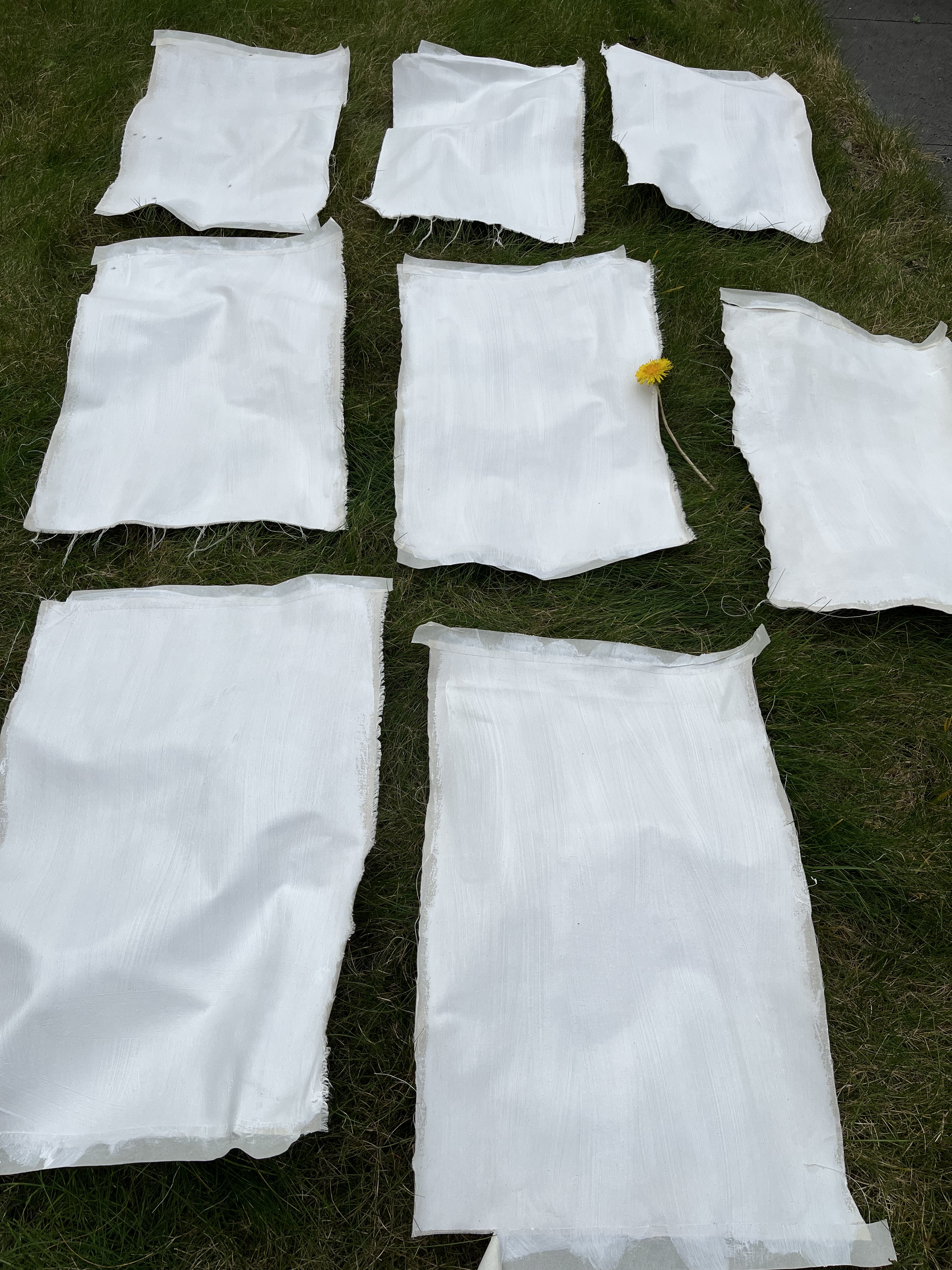
I love the intentional act of preparation which includes me engaging with the material first. It’s like this conversation I have for instance with this piece of cloth. Measuring them out, cutting them up, applying a layer of gesson, and laying them out to dry, had me thinking of how the participants are now part of my preparation. I may not know who shows up, I may not have spoken to them yet, but in this process of preparing they are already in my mind.

So why choose textile? Laying these pieces out on the grass to dry, I thought of Aladdin inviting Jasmin to climb onto the magic carpet and it made me think of how Jasmin might later have told this story to her descendants. Disney gives us a romantic version of the tale, but I wonder if the carpet was as intricate or as ornate as in the fairytale. It also makes me think of a princess confined in a seeming state of limbo and what it must mean to someone in that state to be invited to climb aboard a magic carpet. How did the teller of Aladdin come to this story? And what’s the real story? Is it about the genie? Is it about Aladdin? Or is it about the possibilities that unfold when we choose to climb onto the magic carpet?

This thinking lead me somehow to thinking about AI and creativity and the complex and necessary conversations that need to be had around theft of intellectual property and the indiscriminate use of it. It also had me thinking about what it means to make art and what makes art valuable to us and how the true value of art lies beyond monetary value.

All these thoughts pass through my mind as I prepare these pieces of cloth. What is useful to me as an artist? What is useful to me as a writer? What is useful to me as a person occupying a world that seems to grow more complex as time passes (or maybe I’m just getting older–haha.)

My thoughts on art and what makes something art are complicated because I tend to rebel against formal definitions. I like the idea of life as art which means an artist is someone who makes deliberate choices in the way they step out into life. The form–whether it is painting or sewing or sculpting or writing or cooking–the form is not important. What’s important is the artist’s choice to be deliberate. Perhaps I am making something for tomorrow, but I am present in this moment deliberately thinking on what I am making. It doesn’t matter what medium one uses, it is the deliberate action that goes into choosing that medium that differentiates the artist from the machine.

Thinking on this brings me to thinking about care which was presented to us by my LIMBO partner, Lana Jelenjev. An artist approaches and deliberates with care. Can a machine duplicate that approach and that care? Can another artist reproduce the same deliberation and care to the letter?

It’s a lot of thinking through. It’s all mulch and fertiliser for future work and clearly I still have lots of thinking to do. So, I decide to focus on the now and what I am preparing for.

I go back to the magic carpet and I think of how vehicles like the magic carpet are useful for people who may be going through periods of uncertainty. The magic carpet is an invitation to leave behind what binds you and keeps you from moving forward. It is an invitation to discover and remember and from that discovery and that remembering, create and hopefully in doing so, find your strength.

To you who reads this, go find your magic carpet. Climb aboard and discover for yourself where it takes you.

Blessings and peace. Agyamanac Unay.

Titles are a challenge

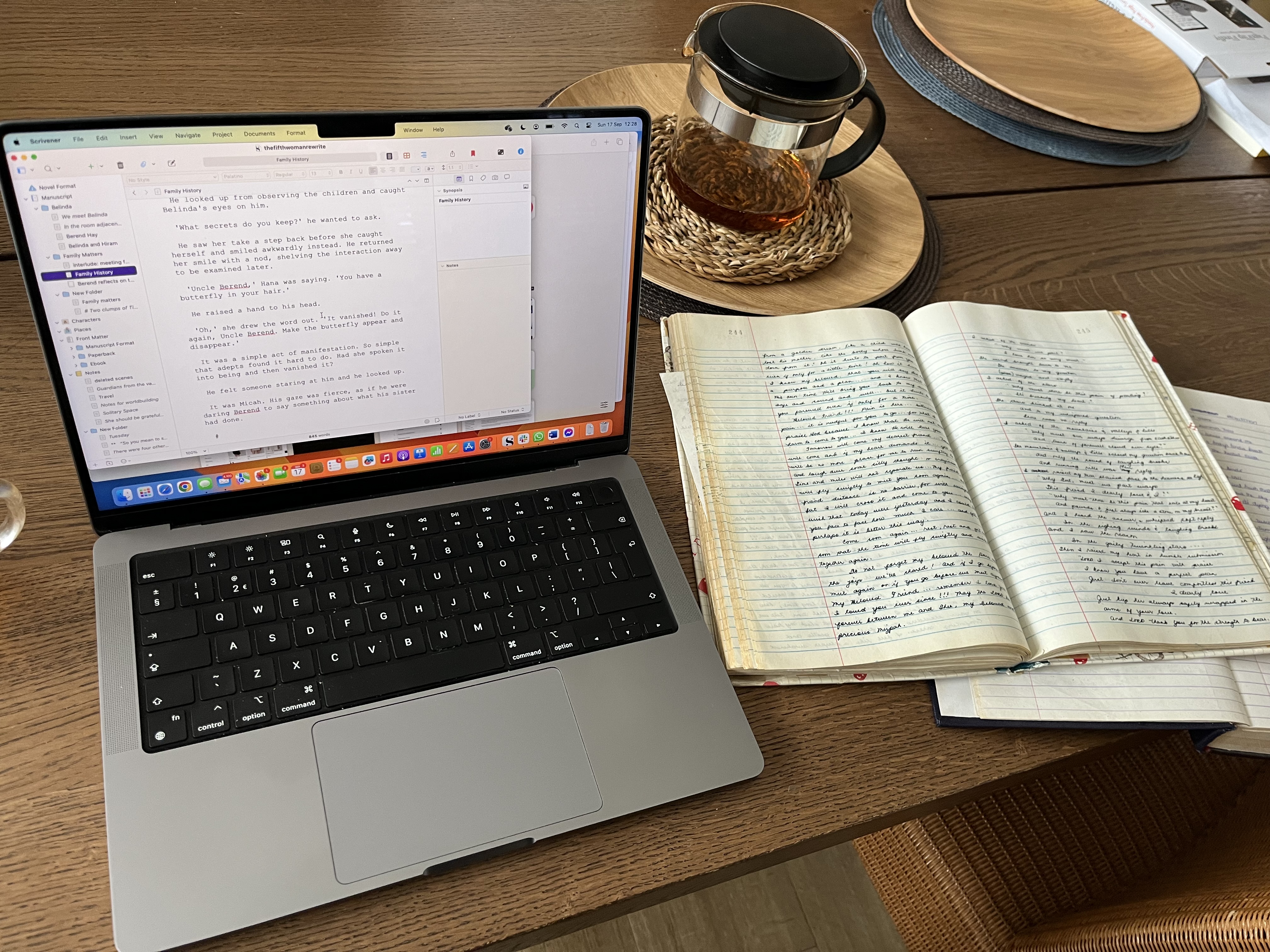
Titles are not my strong point. I am currently working on the second draft of a novel titled The Fifth Woman. Don’t ask me why…it probably just felt cool at that time or maybe I was just like: whatever. Let’s just call it this as a sort of jumpstart. So far, I haven’t found anything in the draft that talks about a fifth woman. It’s a pretty amazing feeling though to have been writing consistently everyday for the past two months as prior to that time, my brain often felt like a jumble of words and there was not enough quiet to properly focus on fiction. To my surprise, I have passed 15k on second draft and it looks like it’s still going.

Before I found The Fifth Woman, I had been writing away at The Cartographer novel which I’ve left stranded at 85k because the world was getting so big and unwieldy I had to step back from its noise for a bit.

Finding The Fifth Woman (first draft from end of 2021 before cancer struck) was like finding a gift because there was enough distance for me to appreciate and see where I’d gone off the rails with it ( characters with names like ‘this person’s dad’ and lazy shorthand place names ‘let’s just call this place wherever’ and I’ll call this form of transport something unpronounceable). Clearly, I was just in a rush to finish first draft. When I read it for the first time after regaining my focus, I thought it was someone else’s work, until I got to some place names and memory hit me…oh right. I wrote this while doing the Munabol online workshop for BIPOC kids. And then…Oh. This thing is long. It’s super-long. What is it? Is it a novel? Is it finished? (Yes. It was indeed a first draft clocked in at a little above 65k.) That was two weeks ago.

My current writing speed is an average of 1000 words a day (sometimes 1500), but at the end of a writing session my brain refuses to focus and I just want to go watch Formula one or something mindless for a while. (I have become quite the Formula One and bike racing addict. Tour de France, the Giro, Vuelta, and then there are the classics. Cobblestones! I can hardly watch but I still do anyway.)

I’ve noticed that there is a lot of messiness in my head the closer I get to the appointments for my bloodtest and immunotherapy. As I said to people closest to me, it’s quite weird because it doesn’t hurt, but I have an increasing aversion to being stuck with needles. It melts away once the bloodtest and immunotherapy week have passed and for most of the time I forget that I am under treatment. My oncologist tells me we are on this road for two more years and then we’ll see. It’s an interesting space to be in because no one really knows and I think that’s okay.

Just a little while ago, I bumped into an acquaintance who I hadn’t seen in a long while. Upon hearing about my diagnosis and about all the treatment things, she went: But you’re too young… (I won’t insert what was implied here because it took me aback). It’s one of those really odd responses that makes me want to laugh out loud. I know it’s well-intentioned and well-meant, but I remind people that I am not dead and I have no intention of dying anytime soon. I am completely in the land of the living and I believe I’ll still be here for as long as I am meant to be here. It’s the thought that comes to me when anxiety strikes: Peace. I remind myself. As my mother said to me at the start: you go ask God what he wants to do with you because until He’s done with you, you’re not done doing.

My mother, a cancer survivor, was diagnosed with metastasised cancer when she was 46. It had spread to her bones and she was given one year to live. Today, she’s 85. She laughs talking about it: ‘Actually,’ she says. ‘I decided I wouldn’t die because I didn’t want your Dad marrying someone else.’

There’s this thing about coming face to face with mortality. You come to understand what it means to be alive. I think about one of the participants to the workshop saying: this is my now.

It’s a pretty radical thing to say and to do. To be present in the now. To rest in this moment. To give as well as to take pleasure, to share in what is funny, what makes you laugh, what makes you cry, what warms your heart, what melts you–to choose to be here in now is such a powerful and radical act because it is the essence of being alive.

It’s easy to get pulled into the rat race. To think: I’ll make time for what matters and what makes me happy when I have more time. Time is an ephemera. It’s an illusion we create for ourselves. Time that matters is now. What am I doing now? How am I being present now? What am I sharing of myself now? What kind of memories and legacies am I putting in place now? It’s in this now moment that we are doing and creating and making and establishing connections and as I said to someone precious to me: humans and relationships are more important than things. Wealth, status and possessions you can replace. Connections, relationships and humans you cannot.

Perhaps it’s why I’ve become so invested in The Fifth Woman. Because it’s a messy novel about messy relationships. It’s about the now space versus the could be space. It’s about family and relationships and all the pressures that are exerted upon that precious space of simply being. It could be fantasy, but it could also be science fiction. I really do not know. I’m just writing it. In the now.

Blessings and Peace and Agyamanac Unay for reading.