Opening a door to story

In my personal preparation for LIMBO, I found myself thinking of how to open the door to story and how to create space for participants to immerse in the act of creation without feeling pressured to perform.

How do we support that limbo state? How do we cherish and protect it? And how do we, at the same time help participants to step into a future they create for themselves?

A realisation came to me that the sessions we are planning are not merely sessions of teaching participants how to work with various materials or tell stories. These aren’t the most important parts of those sessions. Producing something finished or something that can be exhibited or placed on display isn’t the goal. Rather the goal is to empower the participants so they can thrive in the liminal space that so many occupy.

Initially, I had thought to teach working with different mediums with the thought of developing or moving towards a goal.

But I thought of how as a writer among writers, I have sometimes observed how the act of telling story moves from being an act of pleasure to an act where the writer becomes pressured to deliver. These pressures placed upon the creative person can transform what was pleasure into obligation and the result of such obligation isn’t always beneficial to the person who creates or even to the creation itself.

So, how do we invite or open the door for participants to come in and share without pressure? How can I employ what knowledge I have gleaned from life in a way that removes or eases the pressure of creating to an expectation?

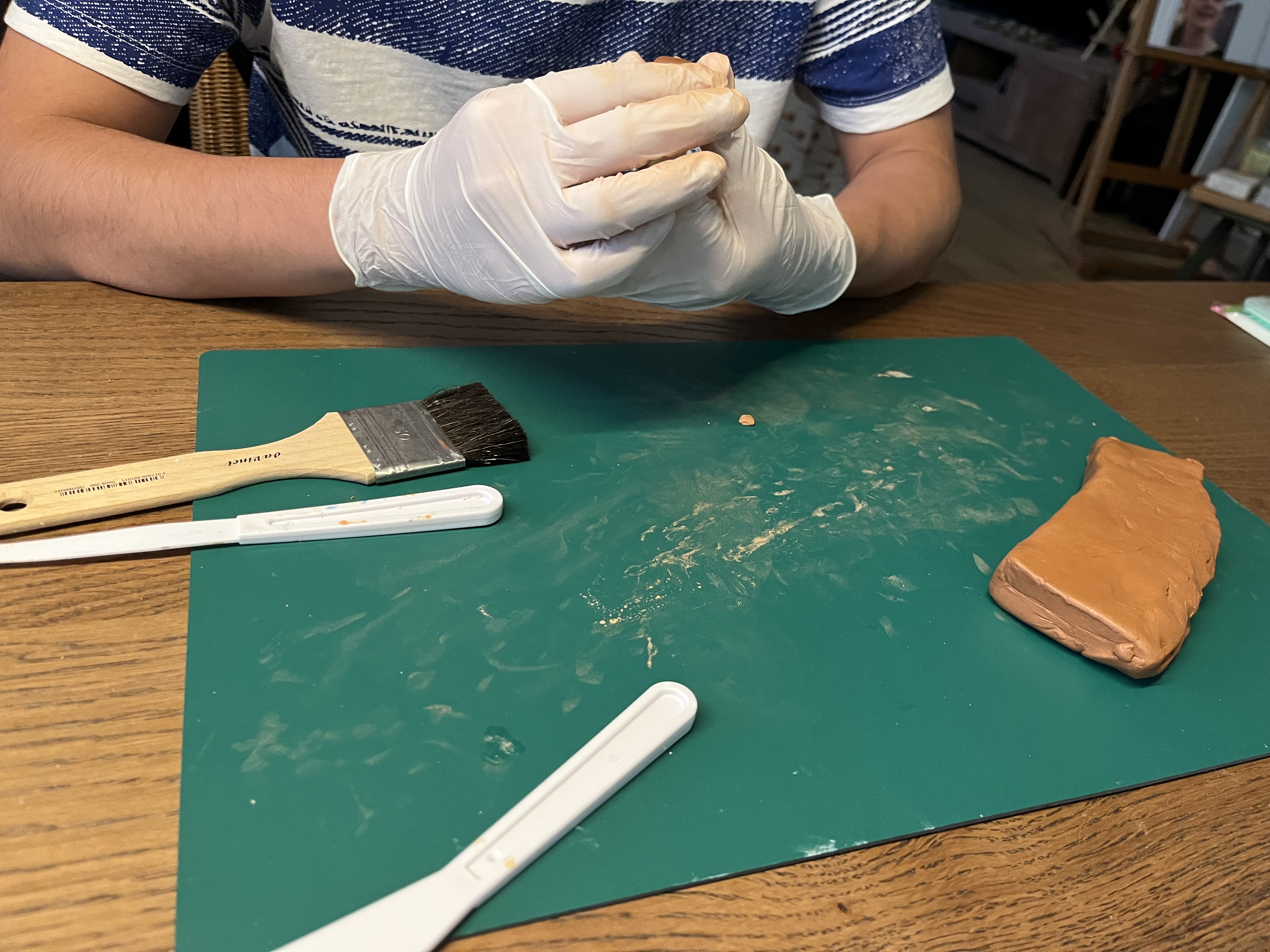
This afternoon, I asked my youngest son to sit down and work with me for a little while as I tried out one of the activities I had in mind. I asked him to treat the raw medium as if he were an archeologist who had time-traveled from the future. I asked him to bring out of this medium an artifact, and with that artifact to tell me something about the future world that he had envisioned.

I simply listened because I didn’t want to impose my interpretation on what he shared.
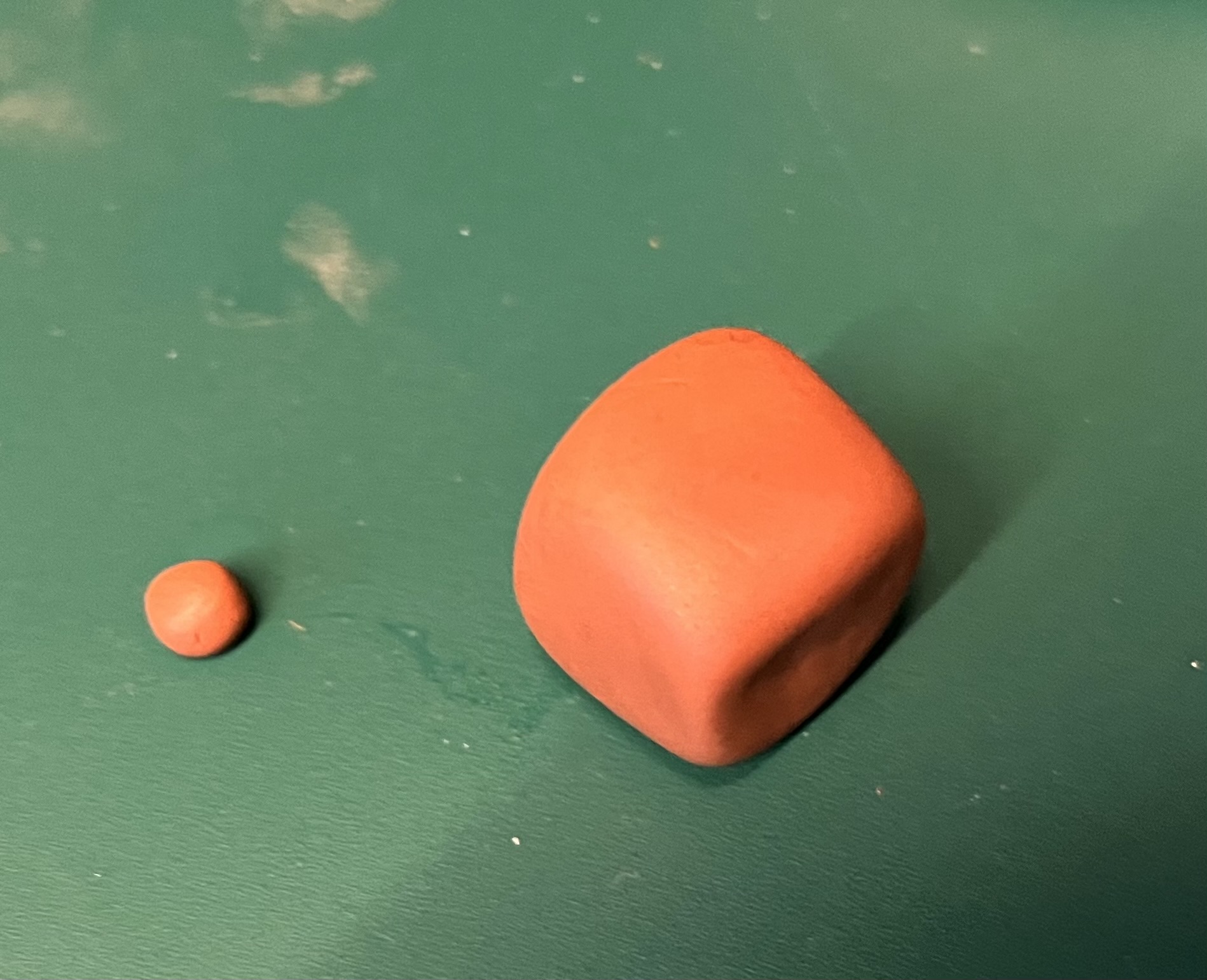
As his artifacts, he brought back with him a model of a cell and a pill designed to attack bad cells. He found this pill in the office of a family doctor and what it told him was that it was a medicine that was readily available and accessible for anyone who needed it. In his future world, incurable illness and disease no longer existed. 

By thinking of it in science fiction terms, my son is able to time travel back from his ideal future to share with me a story of what is alive inside him today, without the pressure of performing a perfect story or crafting a perfect artifact.

It doesn’t have to go anywhere. It doesn’t need to be published (although I did end up asking him if I could share it here and he said yes.

I realised that what drew me towards creating and giving workshops was in the connection that came from these kinds of sharing. It’s not important whether people end up publishing or not. What’s important is the stories that are shared and the space that is made for these stories. It’s also the wonder that happens when participants discover that there is space for what they have to share.

What can we do to open doors to story? It’s a question that I carry with me. In doing so, I hope to create space and make space for all those stories waiting to be told.

Blessings and peace.
A new season

Perhaps the most surprising thing is coming back to life. In the season when cancer was very much at the forefront of our lives, I made the choice to just let go of everything and focus on doing what needed to be done in the moment. Get through surgery, recover from surgery, go through radiotherapy, recover from radiotherapy, go through chemo, survive and recover from chemo. We are in a post-chemo period as my oncologist has determined that chemo is more harmful to me than helpful and so I have been taking immunotherapy once every four weeks for the past two months and will continue to follow this schedule of treatment for the next two years.

I think of how there are reasons for all circumstances that we encounter in life. We won’t always find ourselves in pleasant places. Finding ourselves in the midst of adversity, having to combat things like financial uncertainty, loss, uprootment, illness whether it be of ourselves or someone we love–what we make of that adversity can determine the story of our lives.

I said to my oncologist at the start of this entire trajectory: my life is not cancer and I do not want my life to be about cancer. My life is more than cancer and because I can, I determined in my heart that I would just keep living and being alive. (Also, my surgeon said: actually, except for those tumors, you’re super-healthy.)

Where I am now offers me the chance to reflect on how I want to continue living. I lost words and stories while going through treatment. For a good while, I couldn’t even remember the names of characters or the titles of stories or even the words to describe a thing. I couldn’t piece words together to make a proper story even. But in that season, I learned to make pictures. To draw, to paint, to collage, to work with different mediums–something I’d never thought I could possibly do when I was so focused on writing words. I learned there are no boundaries in art-making and story making and the only thing that keeps us from making is because we think we can’t or we’re afraid we’ll make a mistake (or someone told us we aren’t talented or good enough at it).

This coming season, I will be taking part in LIMBO which is a wonderful life-giving project under the hat of the beautiful Fabian Holle. I can’t think of an adjective that fits them more than that word. Because Fabian is Fabian, it doesn’t surprise me that LIMBO has become this space that is also wonderfully life-giving and inspiring. Working together with my good friend, Lana Jelenjev, we hope to contribute, plant and water seeds, speak life and hope as we facilitate this season with LIMBO.

I’m thinking about all these processes as I prepare for a season with LIMBO. Thinking too about all the different things I’ve learned in the various seasons of my life and thinking of how story isn’t just about words you write on a page. Story is intertwined with life and art and making and sharing and composting and living. It’s crying and laughing and howling with rage and shaping a space in the world for what you have to share.

There are no borders between the different ways of telling or working through or sharing. There is no right or wrong way to go about sharing what has lived and lives and what you hope will continue to live inside and outside of you. There are no limits–not even the space to share is limited because there is enough space for everyone and if we think there isn’t, then we just have to enlarge our circles and make more space. We are limited only as we allow ourselves to be limited.

And yes, we live in a world that’s polarized, where hatred and malice abound. But we can expand the circles filled with light and kindness and love until there’s no more room for hate.

LIMBO occupies a special place in my heart and I invite anyone reading to visit the following links.

Framer Framed Presentation: LIMBO – queer exilic narratives (definitely read Fabian’s beautiful speech as well as the interview with LIMBO co-creators

May lovingkindness always surround you. Agyamanac Unay.

I dreamed

I dreamed that it was possible to invite people into a space and invite them to dream the past, the present, and the future. I dreamed it was possible to bring people of color from migrant groups in The Netherlands into this space and it would be possible to see their dreams enter the world. When I shared this dream, I didn’t know how it would happen or even what it would look like. I only had a vague idea of how to create that kind of setting and that kind of space.

I think back to the final day of the workshop and I think of the work coming from the hands of the writers around the table, and I find myself completely blown away. On the morning of the final day, when I asked participants to think about a story connected with personal items they’d brought with them, I did not expect that they would all write. After all, throughout the workshop, we’d used all kinds of different methods of story making. But this third day, they were all writing.

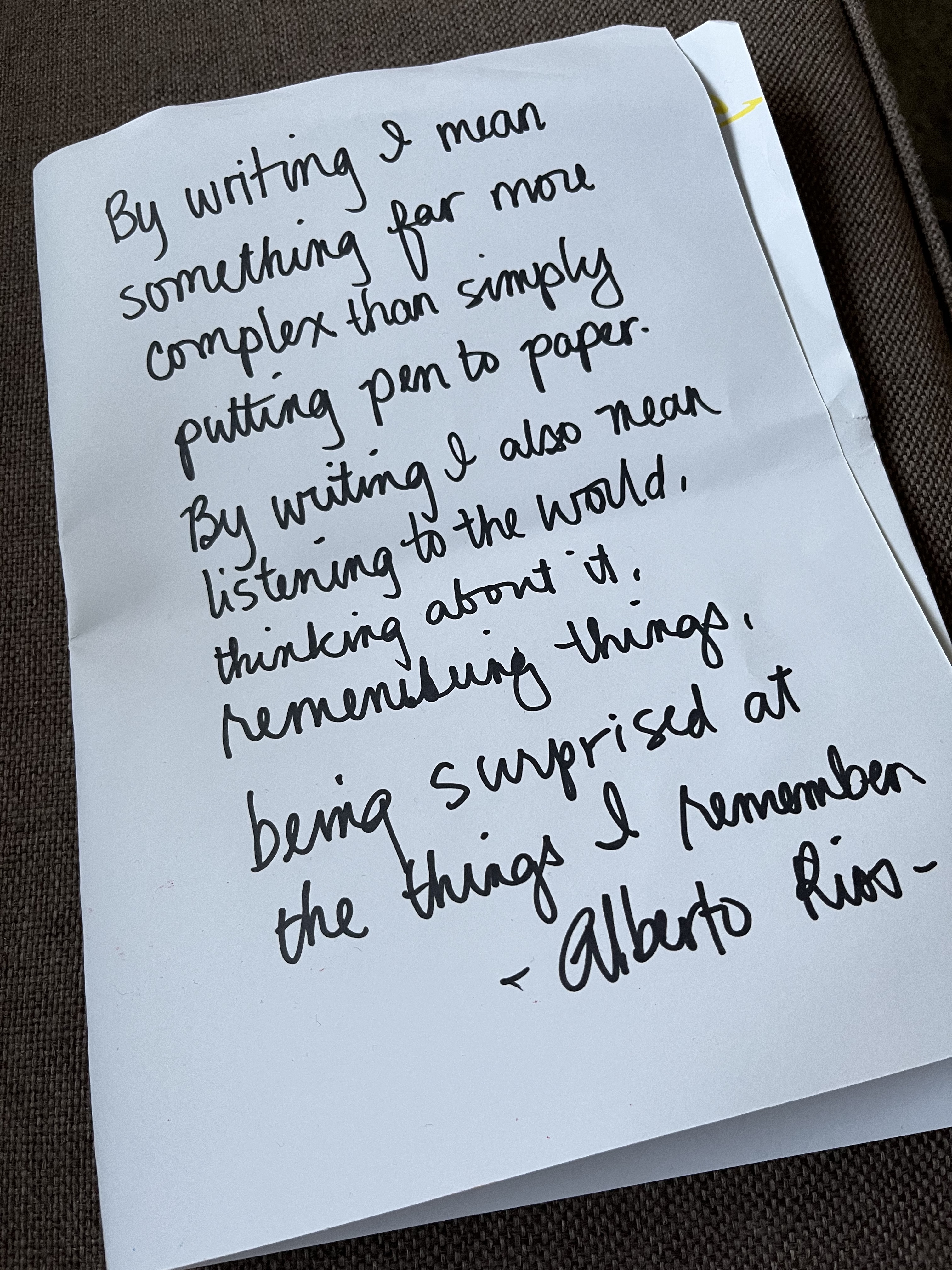
Before we did the first exercise, we read the Bridge Poem together. Hearing it read in chorus was just so powerful. It was like a presence entered that space and made it possible for us to reach that place where stories were waiting to be told. I’d brought along that quote from Alberto Rios and shared it with the writers after the first exercise.

“What surprised you?” I asked. “What did you discover?”

We were all in a thoughtful mood because the stories from that first exercise were so personal and moving.

“I didn’t know I had this story inside me,” one of the participants said.

“I didn’t realise that I remembered so much,” another replied.

Writing is also about remembering. Writing is also about being surprised by what you remember.

“What is it that you worry about and that keeps you from making or sharing your stories,” I ask.

“I worry about grammar,” someone says. “Because I want to post my stories on Facebook but when I do, people tell me right away that my grammar is wrong or what’s with your punctuation.”

I think about this thing–this grammar thing–the way in which the world can be so hung up on using perfect language and perfect punctuation as if that were the heart of what makes story. I think of all the things we forget when we jump on someone who is trying to share their story but tells it in a way that doesn’t align with how we think it’s supposed to be told. I think of how we are quick to say: your characters are wrong, your theme is wrong, your story is too bloated, your words don’t match. You are just wrong.

When we do that, we forget the most important thing. Someone who has taken the courage to share their story is someone who’s taken a risk. To tell a story is to come out of the shadows. To put your voice out into the world is to become visible. We forget that story often comes from vulnerable places. That it takes courage to share what’s vulnerable and painful and for writers coming from the margins, becoming vulnerable is risk.

I think about this as I reflect on the workshop. I think about the final exercise of the day. There I was saying: “this final exercise is optional. If you don’t feel like doing it, then you don’t have to.”

I had a moment of doubt where I wondered if I should ask writers to share and so I left it there in the middle until one of the participants raised their hand.

“I want to read my work,” they said.

And after that another one did. And another. And another. Until the circle was round.

These amazing writers who’d never attempted fiction before this workshop, they blew my socks off.

We shape the space in which stories are told. How we receive another person’s story determines the world into which the stories take their place. If we’re really serious about wanting to see more voices coming from the margins, we also need to think seriously about how we receive those voices.

Stand still. Respect the courage it takes to be visible. Speak your story into the world. In your response to the work, tread lightly.

workshop prep

Saturday will be the third and final session for the first iteration of the Invitation to Dreaming series. I am in the midst of preparing what’s called a draaiboek for Saturday. This is a useful tool that I highly recommend for people planning workshops. Basically, what I’ve done is create two different scripts for the day. One that’s detailed and one that’s bare bones. The barebones script is an approximate time schedule with lunch and breaks figured out while the detailed script includes notes and reminders to myself with highlighted notes on what it is that I want participants to take away with them. I’ve also written out my lesson plan so that I hear the words I want to say in my head. They may undergo transformation in the telling as I don’t do the workshop with a script in my hand, but the gist of it remains the same.

For this final day, I want participants to reflect on how the exercises we’ve used during the first two sessions are useful when we think of planning out a longer work and working over a longer period of time on a particular project.

Because not all of my participants may end up embracing a writing project, I want to emphasize that while they might not think of story making in terms of publishing professionally, they can also think of writing or creating and sharing stories as a form of legacy related to their journey as BIPOC and as members of a migrant community. We can never underestimate how valuable such sharings are for the younger generation or for the generations that follow. I am still very grateful that my Dad wrote lengthy letters to his children and that he decided to try and write a little about his personal history before he died. Knowing that I have that record that I can look back on now that he’s no longer here gives me this feeling of still being connected.

I have participants who are very interested in embracing writing or storytelling in some form. Some might want to embrace doing roleplay or theater type performances together, while others may go on to write their memoirs or continue to explore other kinds of fiction writing and that’s definitely something I want to encourage. These different types of making are beautiful and magical and transformative in power.

I feel very privileged indeed to be witnessing such flowerings and also to hear people say that they’d never imagined that writing a story was a possibility for them (even if they’d always wanted to)–well, that’s the reason why I felt and do feel it’s important to bring this workshop to communities.

During the communal worldbuilding exercise, one of the women said that it was hard to imagine in a science fiction way and that it was hard for them to envision a future world without thinking of politics. (Imagine me doing mental squee.) And then, this woman went on to share a story that was so damned good, I was like: what do you mean you can’t write science fiction?

In its naked self, story is about writing, sharing, telling what you see, what you envision and what it means to you. And the best stories are the ones that come from that place of feeling safe enough to be vulnerable. I have heard so much joy and laughter among the participants during the first two sessions and I want to continue to remind them that this is the joy you hang onto when you’re in that space facing your story.

I know there are many other things that go into stories, but on the journey, joy is one thing we need to take along with us. Hope, joy, and love, and also community.

7 minutes

I had a conversation while at the hairdresser’s about the work that I do and how my work involves writing, the teaching and encouragement of writers, and how that sometimes also includes one on one coaching. My hairdresser told me about how they’d always enjoyed writing and how as a child they used to write essays and little stories and how they enjoyed the act of escaping away into a fictional setting.

Someday, I would like to write a book, my hairdresser said. But I keep thinking that writing means I need to carve out lots of time to write and I don’t know that I have the patience to sit down for long stretches of time just to write.

She then went on to tell me of how she’d made this resolve to take along a journal during her holiday with the intent of doing some sort of travel journal.

Except, she said. At the end of the day, I would find myself quite overwhelmed by everything that I needed to write down. I just didn’t know where to start or how to write it down anymore.

It was a story that I recognised from others who were just learning to embrace writing as a practice.

I recently gave a fresh notebook to a young and upcoming writer and her first response was to say that she would take time to write thoughtful things in it.

To which I said: write everything in it. Write even your mundane grocery list in it. Write a to-do list or any random scribbling.

She said: Oh, then I’ll look for the perfect pen.

And then, she looked at me because I was shaking my head and she said with a laugh. I know what you’re going to say. Don’t wait to find the perfect pen. Any pen will do.

And we laughed together because she already knew what my next words would be: Just write.

In embracing the practice of writing, I think of the 7 minute rule. I don’t know if it’s a rule, really. It’s something that just came to mind and something that feels handy. 5 minutes feels too short and 10 minutes feels too long. But 7 minutes feels somehow just right. So, I gave the same advice to my hairdresser as I give to new writers who feel daunted by the idea of finding time to write. I said: find 7 minutes. Just 7 minutes. It can be shorter, it can be longer, but set your phone for 7 minutes if you’re sitting somewhere in between moments. Say to yourself: Okay. It’s 7 minutes. Just write.

It doesn’t have to be brilliant. It doesn’t have to be poetic. It can be mundane. It can be anything. But just take 7 minutes to write. You just might be surprised.

Signal boosting: Other Futures

One of the projects that’s near and dear to my heart is the Other Futures Festival. We weren’t able to push through with the previous festival due to covid, but this year, the festival is pushing through and will take place on the 5th and the 6th of November, although I believe there is an art exhibition which has a longer run date. Do check out the Other Futures site for details. (Click on the link and it will take you there.)

Brigitte van der Sande, who is the founder, artistic director and mover behind Other Futures is an inspiring force and her energy and passion for the work is contagious. I wanted to write a bit about Brigitte because her presence and her encouragement are important to my own practice. She doesn’t know this, but at a time when I was uncertain about how to move forward, her invitation and her belief in what I could do helped me to remember how much I love my practice and how much I love the work that I do. There are people in this world who inspire us and who have this gift of propelling us forward. For me, Brigitte is one of those important people.

Recently, Brigitte introduced me to Ellen van Neerven and Rafeif Ismail and we are working on a workshop for Other Futures. Ellen and Rafeif’s work resonates with me. To meet kindred spirits from the other side of the world is a privilege and I believe that this work of encouraging a multiplicity of voices is important and essential to the breaking down of walls and borders–indeed to the creation of new kinds of being and making.

The workshop we’re giving is scheduled for the 6th of November. Ellen and Rafeif will be present via internet connection and I will be present in the space where the workshop will be held.

To you who are on the journey, I hope you will embrace those other futures. 😉 (see what I did there?) And yes, do check out the site.

to be unconstrained

I’m thinking of borders and permeability in relation to art and writing, in relation to making and to being in the world and I also find myself looking at nature, looking at what the various sciences also tell us about how nature and the universe works.

Related to this, I have to think about various conversations I’ve had with friends and journey mates. One thing I wanted to share was this thought that the borders between practices are permeable and as beings whose strength lies in our ability to imagine, there are or should be no borders.

Glissant, writing about borders advocates for permeability–for moving past seeing borders as a means of defending or preventing, but rather as a way to mark that one is crossing from one country to another.

Translating that into the practice of making, it makes me think of how I am not bound to only one form or genre of practice. It also means that the doors to various genres and forms of making need to be permeable and to my mind, we also need to make the threshold less imposing and more inviting. (Open the door, break down the barriers or walls and say welcome.)

I’ve often had people tell me that they’re not really writers because they’ve never been published or because they’re just starting to express themselves in writing. I’ve also spoken with people who practice art but don’t dare call themselves artists because ‘well, there’s a study you have to do for that’ and also ‘my work isn’t as good as’ or my work isn’t worth it because I don’t have the right background’. (Did the first cave painter have the right background, I wonder.)

As humans, we tend to be fond of creating labels. We say: you are a writer, you are a visual artist, you are a painter, you are this, you are that. Even when it comes to being in the world, we like to employ these definitive and concrete labels and breaking away from those definitive and concrete labels is often viewed as strange or weird. (Actually, it’s often brushed aside or denied because it doesn’t fit into how people like to see things.)

But we can’t put limits or borders around the creative mind and we can’t put borders or limits around being in the world.

I articulated some of my thoughts in this message to the guerilla writers. I wrote: I feel that as beings we are fluid by nature–maybe born with certain body parts, but that doesn’t mean we are limited to those parts. Those parts don’t define us or speak of who we really are and to my mind remembering that fluidity, remembering that freedom to just be–while it can be scary at first, it is most certainly a source of joy and hopefulness.

One of the writers asked me if I could share my experience of this and so I talked about how I slowly came to recognise and embrace this fluidity for myself as well as my thinking on it. It was for me, the first time I was able to say to someone that I was born in a body that I’ve often felt awkward in, but which I embrace as being part of me. To put to words that feeling that the self that lives inside the body, that pure self is one that’s not bound to societal parameters or social constructs, it was scary but also freeing. Having done that, I found myself better able to say that I am simply as I am–a being in the world. Unbound, undefined, but very much joyful for having embraced this knowledge.

To you who are on the journey, I wish you love and the joyful embrace of self and work that isn’t constrained by borders.

the writer’s notebook

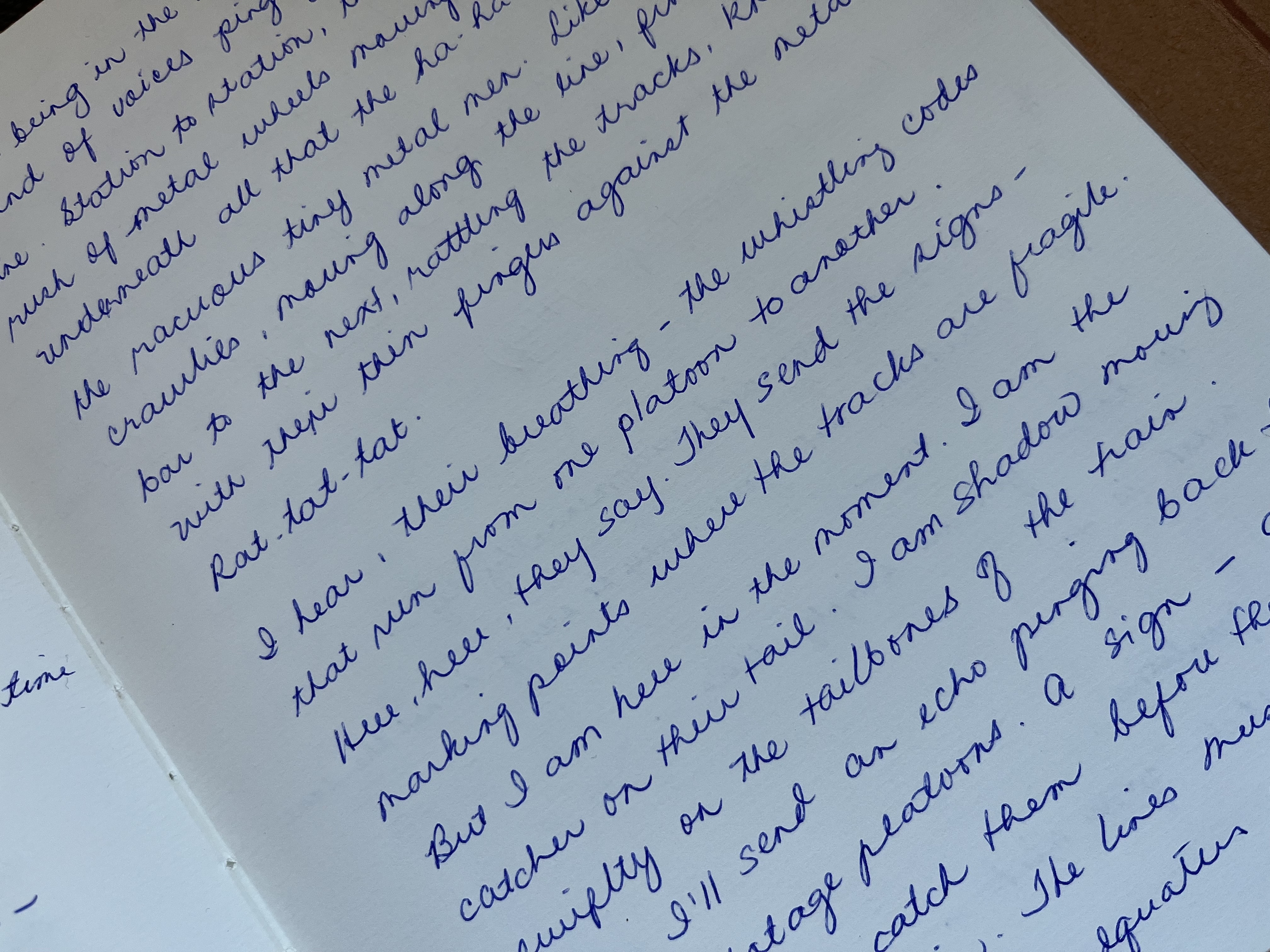
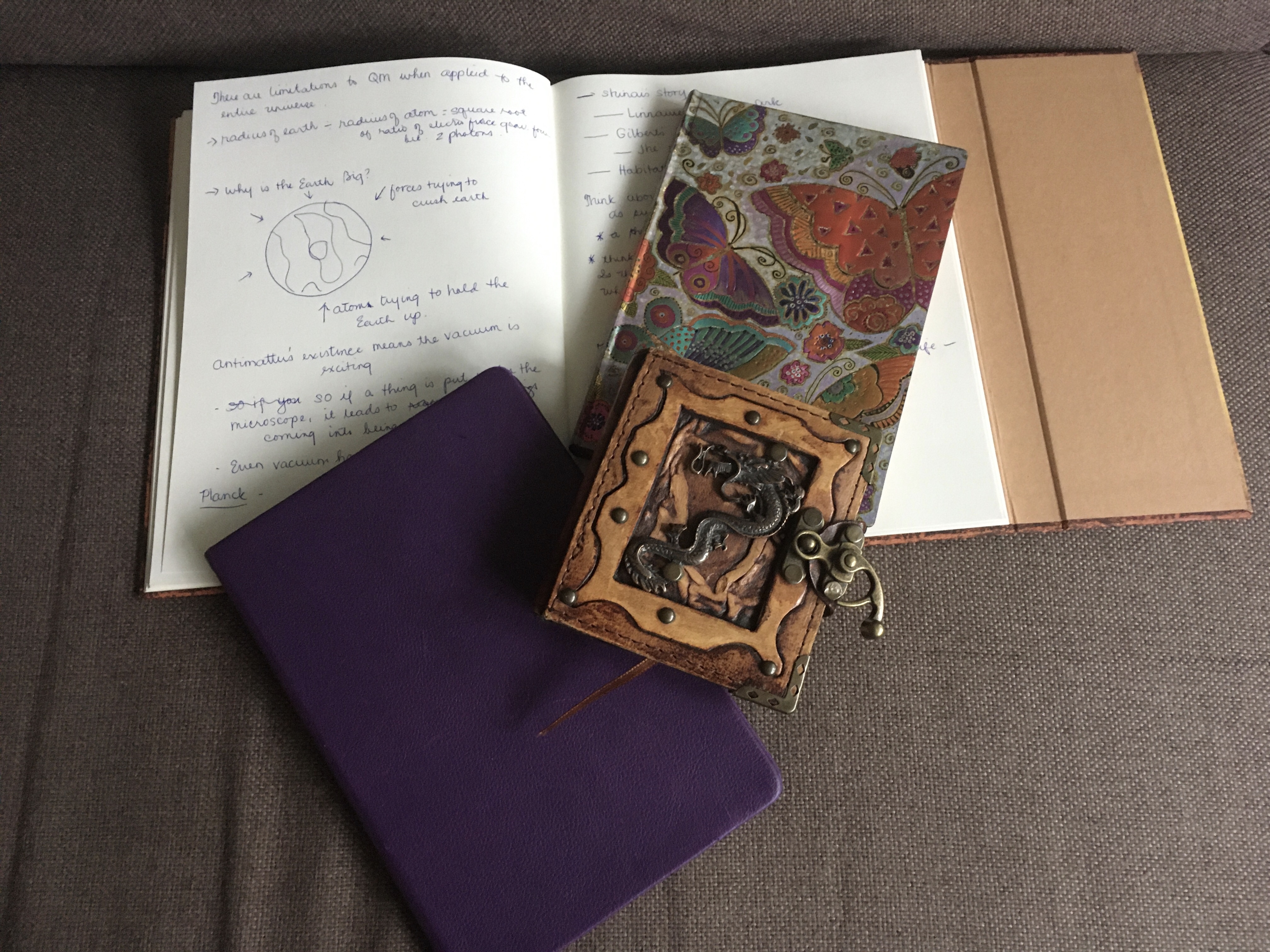
I’ve returned to making use of my physical notebooks–to writing down notes and thoughts longhand, and to thinking through projects, as well as taking notes from lectures or books that I’ve been attending or reading. My favourites are unlined notebooks with thick paper and while a lot of it is note-taking and recording of thoughts and possible scenarios, I also unabashedly include mundane lists for daily tasks or groceries or things to remember. I also like to draw diagrams because visuals help me a lot and that act of capturing something in a drawing even if I’m not great at it, helps me as I process through to what I want to say or write about.

I shared this process with the nibling during our once-a-week scheduled convo and as the nibling is a budding artist, I decided to send them a couple of journals like mine as I totally get how attention can drift when you’re listening to a lecture online and sometimes diagramming the lectures or drawing a weird head speaking the lecturer’s words will help make things more interesting.

I also showed them some of my awkward attempts at visualising stuff from inside my head which was funny and fun to do. As I said to them, I have all these images in my head, but I’m not good at drawing, so I write because I want to get them out of my head onto the page.

Anyway, the notebook is a hodgepodge. It’s not neat or academic. It’s more of a collection of all the things that catch my attention–things I obsess about–subjects I hunt down as I try to figure out what it is my brain is obsessing about.

I’m thinking again about Jeremy Kamal talking about how we may think we’re obsessed with the apple until we find ourselves obsessed by a fire hydrant or a firetruck and then as we track these obsessions we realise that what we’re really obsessed with is the color red.

It’s a thought I’ve taken with me in my process and the truth in those words is reflected in the search and the resulting pieces. For instance, in a recently completed piece, I thought I was obsessed with black holes, when in fact, what I was obsessed with was grief and saying goodbye. This is something that had me sitting back a bit as it’s something I still struggle with although it is true that time takes the sharp edges away.

What is personal to us or what comes from that place where our emotions reside can be scary, but as Kiini Ibura Salam in her book, Finding Your Voice, says it can also be the place where some of our strongest work comes from (I am saying it as I understood it). I am thinking of this as I work on various pieces and the notebooks help a lot as I find that creating diagrams of my thoughts or simply just wrestling with ideas using actual pen and paper does help me find some resolution or some direction when it comes to what I am working on.

I find myself thinking too about the instrument to body connection and what it represents or what it means for makers–writers, visual artists–all of us who make things. Perhaps, it’s this connection–the slowing down of process, the taking time to reflect and think and be in the moment with the work in progress that has made me feel less anxious and more capable of believing in what it is that I want to bring into the world.

During one of the lectures I recently attended, the speaker spoke of how what’s important isn’t having or finding all the answers, but rather finding the questions that we want to ask. This speaks too to what Jeremy Kamal has said about finding what it is you’re obsessed with.

As we enter the fall season, I’ve started working together with various makers. Writers and artists. Thinkers and creators whose work excites me and makes me see how the boundaries between the worlds of making are more porous than we imagine them to be. There is a lot waiting to be discovered and a lot of questions waiting to be asked. For the time I have been given and the opportunities that arise, I am truly grateful.

To you who are on the journey, don’t be afraid to ask questions. As has been said: curiosity is the mother of invention.

Some of my most recent notebooks. The smallest one fits easily in any purse, the purple one is already full, the open one is the current notebook but I am close to the end of it, so I have a new one waiting for when the current one is full.

mindset and some messy thoughts

A number of initiatives I’ve been involved with have led me to reflect on the communal and collaborative nature of creative work.

Think about it. Art doesn’t truly come alive or serve its purpose without the interaction with the viewer. The written word, fiction or non-fiction, doesn’t gain power until readers interact with it. The worlds that we imagine and bring into being don’t come alive until readers or viewers respond or react to those worlds.

How much of the work that we do is individual and how much of what we create is the product of collaboration–whether conscious or unconscious. We talk about stories with our peers, we discuss our works in progress, we brainstorm, we go away to write it down, we come back with our drafts to brainstorm some more before we finally go and put our name under it and send it away. One name may appear under that story, but before that the work goes through a process that is communal and collaborative.

For us who engage with story, we may think that stories are born inside our heads, but what comes to us also emerges from our histories which are interwoven with the histories of others. They come from all the connections and experiences we’ve had in life and the stories that we tell speak to that longing for connectedness.

I’m thinking of decolonial practice and I want to say here that decoloniality is different from decolonisation just as coloniality and the colonisation project are two different things. Walter Mignolo in this interview gives a clearer explanation of the difference which is far better than anything I could come up with, so if you’re reading this, I suggest that you go check out the interview. But in particular, I find myself struck by this point where he talks about decoloniality as a delinking from the overall structure of knowledge in order to engage in an epistemic reconstitution.

Mignolo elaborates further by talking about how we need to reconstitute our ways of thinking, languages, ways of life and being in the world. It’s a really great interview and one that pushes the reader to thought.

So, going back to story making and the workshop practice, I found myself thinking about polarisations and I wondered how much of that is born from a feeling of no longer being connected. How much of that comes from feeling alien in the communities we live in? How much of polarisation takes place because we feel unheard, unwanted, excluded and pushed away?

It makes me think of the tendency of hurt beings to crawl into their selves, to lick at the wounds and because of that hurt we lash out–whether it is as an act of anger or self-protectiveness, a determination that comes from: I am not heard anyway, so what should I care what you think about me…whatever space it comes from, it feels to me that this thought is something to reflect on.

What would happen if instead of focusing on individual story, we decided to gather as our ancestors did. What would happen if we decided to create spaces where we would give each other time to speak and tell each other what the world looks like to us. Would we meet? Would we find those spaces where we can breathe and recognise that we are still connected and the neighbour who lives next-door to you isn’t an alien, but is someone who (as Shylock says) bleeds when you cut them.

I remember thinking about this when I was still new to The Netherlands, how distances in a neighbourhood felt sharper because of the seasons. How in the winter months we hardly ever knew about what was going on with our next door neighbours because we were cloistered indoors (Granted I always felt the need to flee indoors to where it was warm and cozy, but it might have been different for those born in this country, I don’t know.) It felt startling to me because even if we didn’t hang out in the streets, there was never a day when we didn’t see our neighbours in the Philippines. We talked to each other over the fences, or when we encountered one another in the street…a big difference from here where the impulse is to dive into the warmth of your car or your home once cold weather strikes.

But, is it this kind of distance that creates polarisations? It feels to me like a cop-out to use the seasons as an excuse. Although, I find myself thinking that the extremes in weather and the urgency of climate change reflect the extremes in how people interact these days and that to me emphasises the urgent need for change.

Today, I live on the edge of a city and the neighbourhood we are in is one where messages are exchanged through WhatsApp. Where initiatives are made for neighbours to work together. I’ve had neighbours knock on my door asking where I got my blinds, for instance.

This post is quite messy–pretty much like my handwritten journal is messy. But messy thoughts are essential to process. Without that messiness, we can’t work towards solutions and messiness is necessary for us who are involved with making. Conversations, particularly when struggling with complex matters, become inevitably messy. It’s why listening and paying attention and thinking through are important.

In this age of social media, the trigger response has become our go to. We are quick with the retort, swift to condemn, immediate and hard in our judgement when perhaps thoughtfulness and listening would serve us better.

If we also understand that community includes not just humans, but also the leaves of grass, the algae in the sea, whales and porpoises, dung beetles, all those other creatures great and small. If instead of viewing the world as being there for us to occupy or to exploit, if we saw the world as this place we’re meant to nurture and protect, if we saw each other as fellow inhabitants and if we treated each other and the world as we wish to be treated, how would things change?

And so, the journey continues. Think messy thoughts. Embrace them. Be well.