On Reading Kate Elliott’s The Witch Roads while travelling

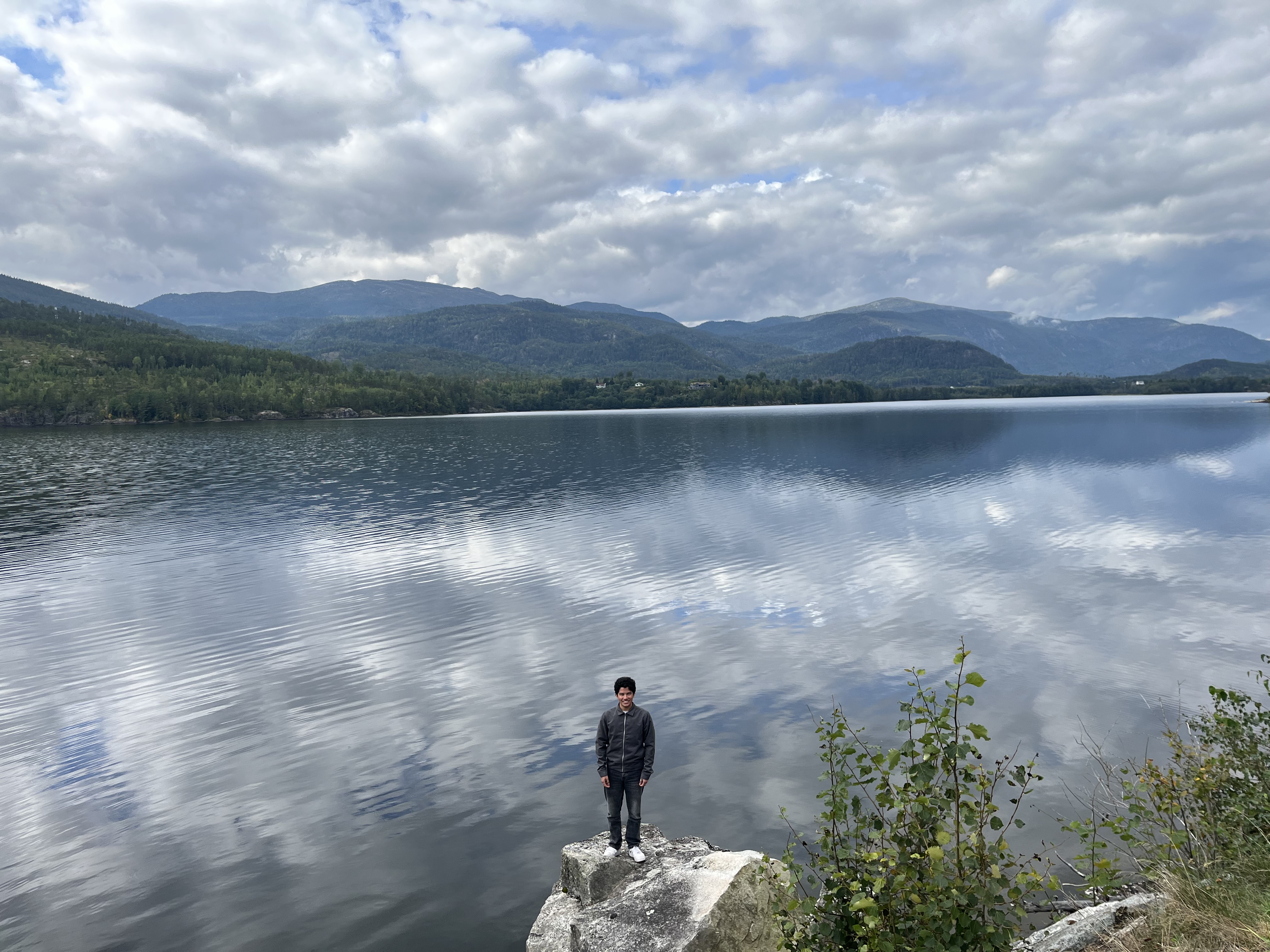
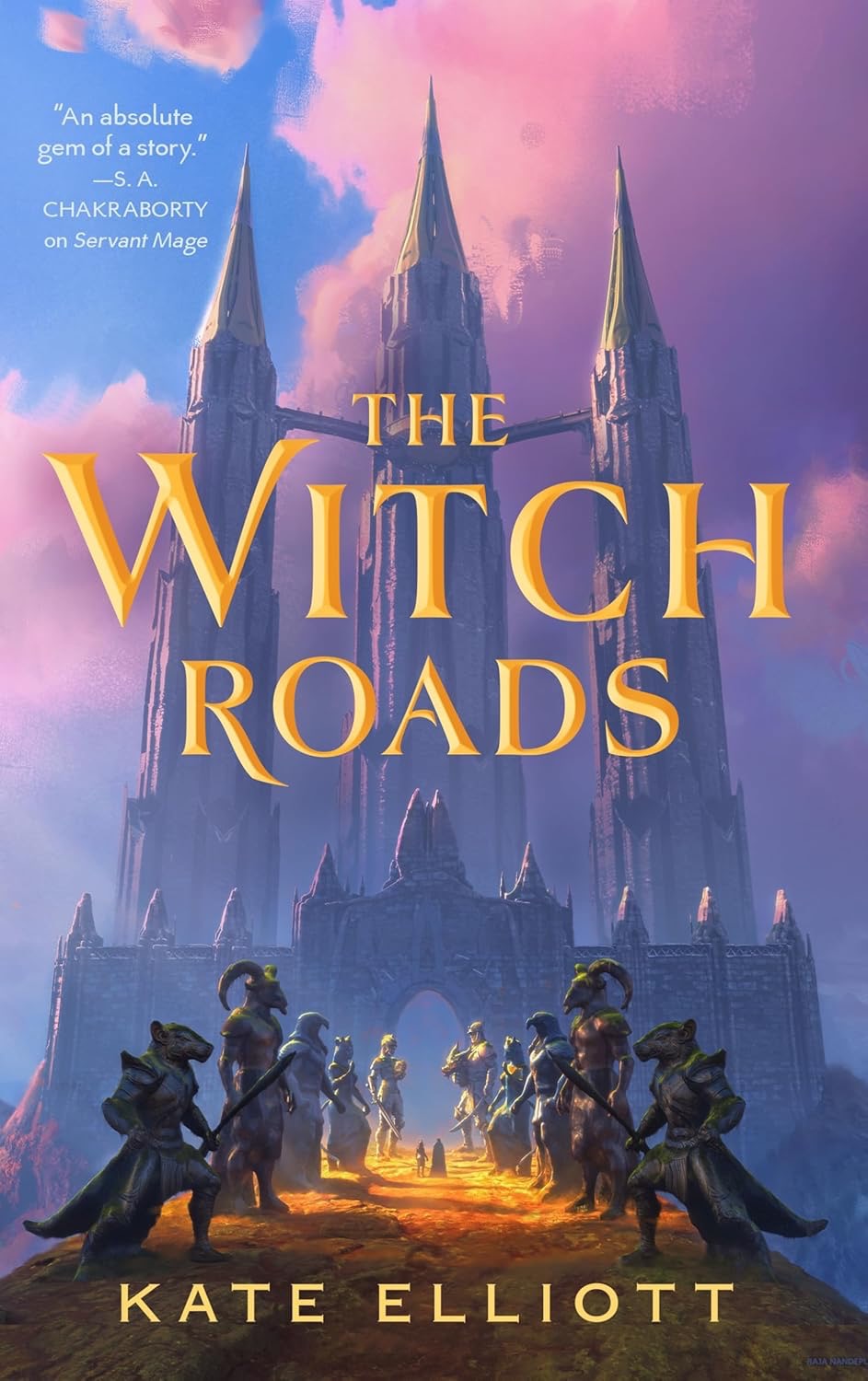
I read Kate Elliott’s The Witch Roads while travelling in Norway and I feel like this was the perfect companion book for my travels as each time I looked up at the mountains or hiked a path, I would think about Elen and her crew travelling through the lands of the Tranquil Empire. Of course, the roads we walked and the paths we hiked were not at all as rough or as challenging as say the crossing Elen and company make at Grinder’s Cut (also there is no pall in Norway). But still, it gave me a sense of satisfaction to observe how time passes when your main form of transportation are your legs. Of course, there are also carriages and horses in this book, but the pace of travel is perfectly done and also a perfect way for the reader to get to see and know this world and its perils (mind you, it’s not just all peril. There is also sense of wonder in walking through this world). I found myself quite enchanted by the pacing of this novel which wasn’t a quick read because I had so much going on that I also had to keep putting it down. I’ve had some books where I eventually give up because I have to start all over again, but this wasn’t a problem with The Witch Roads. Picking up where I’d left off wasn’t a problem with this novel. Rather, it felt like picking up the thread of a journey once again and going: Oh, yes. We did this yesterday and so we’re going onwards.

If I’m giving the impression that The Witch Roads is a tame read, let me disillusion you. The Witch Roads is far from tame. There is an imperial prince and there is a haunt. There is danger because the company must stay wary not only of possible ambush, but also they need to stay wary of spores and the pall. There is magic and there is all kinds of love, from filial love to love born of allegiance to the kind of love that transcends. There are also lots of secrets and I feel like there is even more intrigue and danger waiting in book two.

There are so many deep and speaking lines in this novel. I thought I should post some of them, but I’m just gonna say: go read the book and highlight your favourites.

The Witch Roads is not just Elen’s journey or the haunt’s journey or the Prince’s journey, it’s also Kem’s journey and there’s something so beautiful about how Kate Elliott weaves all these things together and by the time I reach the end of this novel, I find myself thinking again about the question of who is the centre and where is the centre and from whose perspective narratives take place and it’s beautiful how Kate Elliott reveals the ways in which this journey has changed the different characters in different ways. Bringing them to places where they understand theirselves and those around them better.

Yesterday, I was at the Bryggen’s Museum, observing tapestries made by the tapestry artist Ragna Breivik (currently on exhibit at the museum). While observing the loom on which she worked and thinking about all the different threads and shadings and the amount of detail and work that went into making tapestries that continue to speak to this day, I thought of the way Kate Elliott’s work does this kind of tapestry making with her words where all the little threads come seamlessly together forming a story with different shades of meaning and texture.

The Witch Roads gives us a world that’s rich and full. Complex characters, each with their own path and their own priorities. We get the narratives around inequalities and the different relations that exist between different strata in society within the world but these are done not in an intrusive or shouty way. Thread by thread, shade by shade, with intention, Kate Elliott gives us this world that is rich and full peopled by complex characters who we can identify with and love.

For all that this first book ends with a foreshadowing of what might come in book two, book one leaves me feeling satisfied. I’m a bit impatient to know what happens next (of course), but there’s a lot to reflect on and think on about the first book and I’m very happy about making the choice to pick up this novel and read it (even though I tend to try and not read unfinished series).

On the dedication page, Kate Elliott writes about how The Witch Roads duology reignited her love for writing during a rough period when she wondered if she should just quit. I am so thankful she decided to keep on writing and I hope she will continue to do so because the world is a better place for having her books in it.

The Witch Roads is published by Tor Publishing Group.

Important note: I purchased my own copy of this novel, as I have done with most books that I write about. Reviews or thoughts on these books appear as time and energy permit.

My father’s unfinished memoir

My youngest brother sent me a message, asking if I’d read my father’s unfinished memoir. I told him I hadn’t been able to because in the chaos following my father’s unexpected death, we lost track of his documents. After this reply, my brother told me he’d found it, but it wasn’t finished and it needed editing. I am thinking and processing some of what I’ve read so far and am in touch with other members of the family as I seek to fill in the blanks.

I remember asking my father lots of questions about his parents. He’d say that we would sit down and talk about it some time. Except, that never really happened. My grandma told me that they’d been part of the resistance during the Japanese occupation. I’d often wondered if it was just a story or if it really happened.

In his memoir, my Dad writes vividly about that period. His account relays the complexity of growing up in that time with an awareness of the work his parents were doing while at the same time living alongside the presence of the Japanese soldiers. There are moments of quiet, like the period before his parents were discovered and they were forced to flee from hideout to hideout while the Japanese hunted for them. My Dad doesn’t dramatise and yet there is drama. It’s also an absorbing read because of the level of detail that he remembers. Names of resistance fighters, their commanding officer, places where they hid, and the locality where they eventually were able to find refuge. Nico on bluesky makes a comment about this being a historical document and I think that it could be described as such. The curious person in me wants to book a flight to The Philippines and go do research. Instead of doing that, I decide to patiently read some more.

My father writes about life after the war. About moving locations until they settle in Gingoog City. My grandfather builds a practice. My grandmother works as a respected teacher. Their home life seems to be a stable one. And then, in the year that he finishes high school, his parents break up for good. He writes about the break-up quite dryly. It’s a mutual decision. His parents have decided that it’s time for them to live separate from one another. It turns out that my grandfather was a womaniser. All throughout, my grandmother looked the other way, but this last adventure (my father writes) was the straw that broke the camel’s back. My grandfather leaves them. He leaves my grandmother and his three sons and goes away. My father doesn’t know where he’s gone and he loses touch with his father until much much later when he finally tracks him down in Zamboanga city where his father has a thriving surgical practice. It’s there that he meets his father’s other family.

My Dad’s younger half-sister tells me a story of my father showing up at their house one day. Just out of the blue. He’s there. My Dad, demanding that he see his father and telling his father that he is going to med school and as he is unable to pay for his tuition, he feels his father must pay for his tuition. She’s very insistent about how her mother impresses on Lolo that he must pay for the tuition of his son. After all, they have the money to pay for it.

It’s quite something to think about this after reading about my father working at different odd jobs. He is fifteen or sixteen at the time and when his mother’s younger brother comes across him working instead of studying. He is then brought to meet his maternal grandfather who tells him he should study and it is his grandfather who makes him apply for Ateneo de Agusan.

I want to know what happened in between the break-up and my granduncle finding him. I think about my grandmother’s proud nature. I think about her younger sister telling me that my grandmother was very stubborn and had married my grandfather against her father’s wishes. It feels plausible that my grandmother might have hidden the break-up from her family until it’s found out.

I recall someone telling me that my grandfather couldn’t remain where he was. That he had to move away because of how people viewed their break-up and because of all the things that were said. In that time period, it was, of course, a scandal. In present day Philippines, separation is still viewed as a scandal. I remember someone saying to my sister once that divorce was a sin. My sister, who holds a masters in Theology, answered quite sharply: “Where in the Bible does it say so, because I can point you to multiple passages that contradict what you’re saying.”

My father mentions my grandfather two more times in his account. One when his father comes to visit him after my Dad loses one of his patients and the second time when my grandfather comes to Banaue to die.

My grandfather’s death feels like a punctuation.

I think about memory and pain and wonder. Perhaps when a memory is too painful, we decide to overlay those hard memories with something easier for us to live with.

I also think about myth making and how myth can tell us a truth that a factual and chronological narration of facts cannot.

Beyond all expectation, I find myself writing about family; about my father and his parents and about the life that he lived. In conversation with someone, I speak about my father’s life of faith and how in the end the overarching theme in my father’s life is that of grace. He became who he was not because he was exceptional or special. He became who he was because he found grace for living.

I’m not sure how to go on from here. I do think that we are all in a constant process of transformation. We don’t stand still. We change as our lives are touched by other lives and we change too in the process of touching other lives. When we make the choice to live with intention, it is just like that.

In a way, reading my father’s memoir is like hearing his voice speaking from the other side. I have so many questions, I say to that voice. But you’re not here to answer them.

A voice in my head says: What if the answers aren’t as important as the process of asking? If you keep asking how and why and what does it mean, and when you acknowledge that you don’t know all the answers, but are also searching, then perhaps you’ll find better answers than the ones that exist today.

I’m going to end this here. I’ve just heard that the English version of Hymne van de Overlevers has gone live on Philippine Genre Stories. In English, it’s titled Hymn to Life. Clicking here will take you there, if you want to give it a read.

May joy accompany you on the journey and maraming salamat for passing by.

How we conceive a familial history

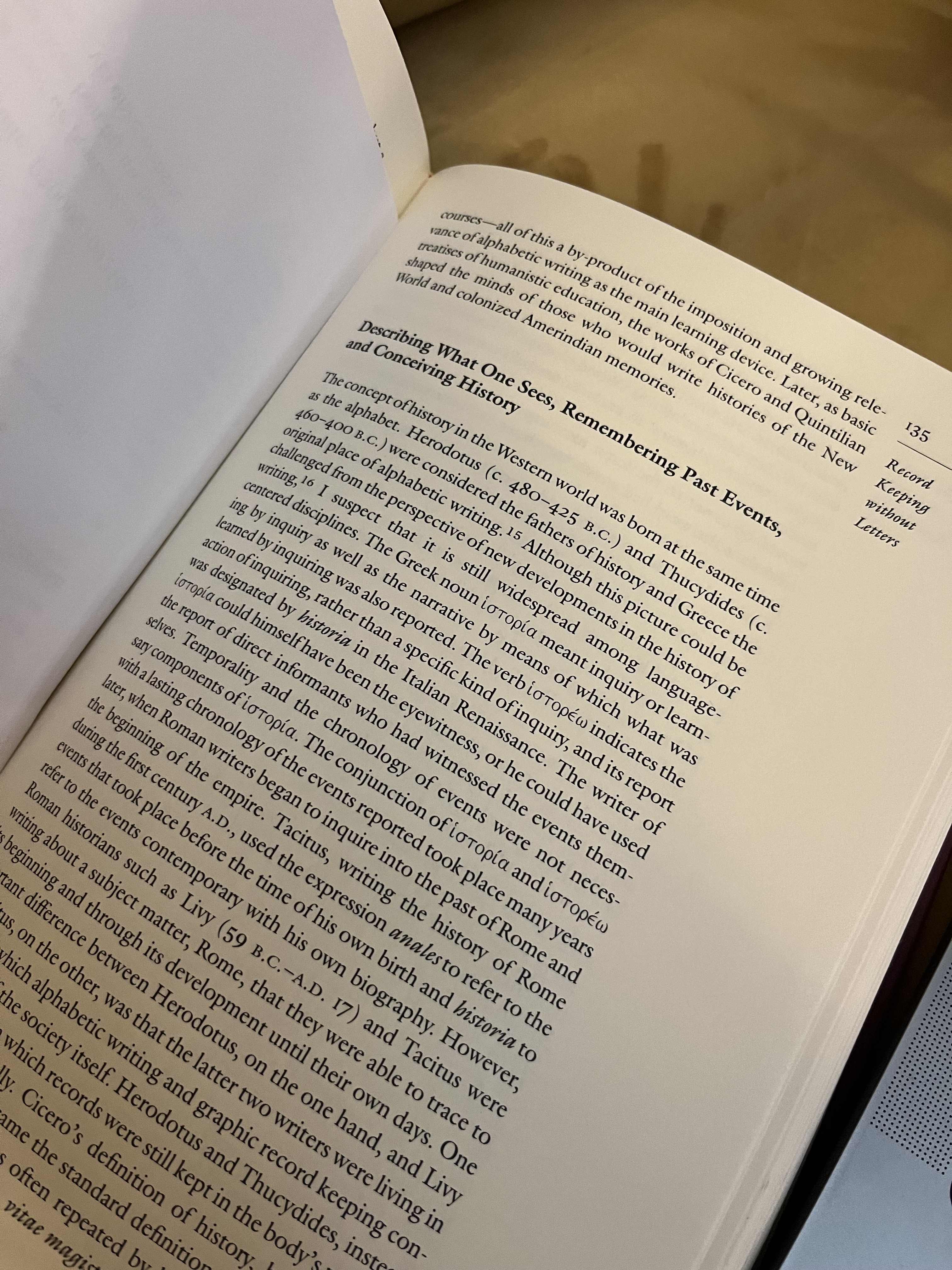
In The Darker Side of the Renaissance, Walter D. Mignolo quotes Isidore in the chapter on Record Keeping without Letters. He quotes this from Isidore: For among the ancients, without exception, only those who were witnesses and who had seen the things they narrated wrote history, for we understand what we have seen better than what we know by hearsay.

I had a conversation with a cousin who is older than I am, who might know more about the history of my grandparents. They might know more, not just because they are older, but they might know more because of how they were situated in physical proximity to my grandfather. My cousins lived in Cagayan de Oro and this cousin tells me that our grandfather visited them often and the story they tell about my grandfather is one of a gentle and kindhearted giant of a man. Someone whose visits they looked forward to and whose presence was very much welcomed.

Our family was located far from where the rest of my father’s family lived. In fact, we were located on the opposite end of the archipelago. My sister and I grew up in the mountains of Ifugao, my brothers were born there too, and we spent our childhood blissfully unaware of any drama that might be taking part in that place that could just as well be another country. We were far from where my grandmother was located. Also far from where my grandfather and his second family lived. Back then, the trip from where they were to where we were would have been almost the same as traveling from The Netherlands to the Philippines. By Filipino standards, it still is a costly trip.

My cousin tells me that my Dad, being the youngest, was his mother’s favourite and so he didn’t receive the same kind of harsh corporal discipline that his elder brothers received when they were growing up. My memories of my grandma are those of a rather strict lady. I thought at that time that it was because she had Spanish blood and Spanish people are strict (right?). She was always affectionate towards our Dad and the affection was reciprocated.

The story of familial relation unfolds differently when told from the perspective of my cousin who tells of the horror that came with growing up in the proximity of my grandmother. According to this account, my grandmother was more than strict. Indeed, she was quite unreasonable, more than demanding, and even cruel. Any sign of enjoyment when she was visiting with them, was punished with a lengthy sermon that would end only after one of my cousins was punished for an imagined wrongdoing.

My cousin relates this to me from her perspective. We didn’t see, she tells me. We didn’t know what our grandmother was really like. And so, she wants to relate what we never witnessed or experienced for ourselves because of distance. The grandmother she knew and the grandmother I knew seem to be two different people.

A memory arises from a time when my grandmother took me with her to visit her younger sister in Manila. She was fussy about my comfort and then when we arrived at her sister’s house, she was devastated to find out that she’d forgotten to pack extra underwear for me. I think I must have thrown some kind of a tantrum (I was a bit of a handful as a child) and she just didn’t know what to do or how to get me out of the bathroom as I kept on blaming her for not knowing that kids are supposed to have clean undies everyday. She was strict, but not more strict than my own mother and she didn’t spank me for throwing a tantrum. She waited and then made me do what she wanted me to do. (Just as my mom would have done.)

By the time my grandmother came to live out her days with us, she had been gentled by years. She had had had a stroke, but she was recovering even though she wasn’t very mobile. She loved telling stories about the past while I massaged her legs and listened eagerly.

I loved hearing her talk because my Dad didn’t tell us very much.

Later, when we were much older and after my grandma was no longer with us, my Mom tells us an entire story of how she would warn my Dad each time my grandma came to visit: Bantay ka! (watch out). Your Mom isn’t going to lay a finger on one of my kids.

None of us ever experienced such harsh punishments or treatments as those described by my cousins. We might have been subjected to some nagging, but our mother would send us out to play and even though we were scolded by my grandmother, I always had this idea that it was because she wanted the best for us. Did this have to do with how my mother stood between us and her? Was it because of the close bond between her and my father? Or are these things that I have imagined because there is a lot I do not know.

I can remember the sound of my grandmother’s voice whenever she called out to my Dad.

“Nonoy,” she would say.

Now that I have children, I recognise that tone of affection that one reserves for one’s own children, and in particular, for the youngest one.

For a long time, until my grandfather came to visit, my sister and I believed my grandmother was a widow. And then, when we found out that there was a grandfather, we thought he must have done some dastardly crime because no one spoke about him.

I suppose this speculation was natural considering how we grew up far from anyone belonging to my father’s family, in our defence, we only ever met him once.

My sister and I met our grandfather for the first time when he was already sick. By the time he came to visit us in Ifugao, he was dying. But he came to see us, or perhaps he came to see my father. No one spoke about why he’d come; not even afterwards, so I can only speculate. Did he come to mend broken bridges? I don’t know.

In my mind, I see my grandfather as a tall man with a gaunt and lonely face trying to connect with us kids. I can still see him towering over us, trying to win us over by showing us his magic slippers.

This memory is overshadowed by whispers and a feeling of tension. It seemed as if we saw him only that one afternoon, but I’m sure it must have been more than that one afternoon. I remember my mother trying to keep my father from going away to the city on an errand and my father’s stubborn insistence on going and how while my father was gone, my grandfather died.

My mother talked about how she had to have a casket made. It must have been a while before my father arrived because I remember visiting the carpenter’s shop and the carpenter explaining to me how he was making a casket for my grandfather. I thought I should feel properly sad, but I didn’t know how to feel about the tall stranger with magic slippers who now lay in a casket in our living room while the voices of visitors filled our living room. I felt uncomfortable and impatient for my father to return.

It’s interesting what kinds of snapshots the mind retains. I see one of myself frozen in the moment when my father arrives. The house is teeming with people, but the living room is in the shadows. I am standing on the stairs looking down onto the porch as my father climbs up toward my mother. He doesn’t look up to where I am, all that is him is focused on my mother and then a sound breaks from him. After my sister died, I understood what that sound was and what kind of deep grief that sound contains.

Is this the memory that colours my recollection of my father’s pain?

Did I imagine my father’s feelings towards my grandfather? I know we hardly spoke about him and when I did try, he tended to be quite abrupt. Was he in pain because he wasn’t there when his father died? Had he left because he didn’t know what to say after so many years of not seeing each other? Had something been left unsaid or undone? I can only speculate.

The person writing about my father’s life writes from the perspective of someone who spent time in conversation with my Dad, long after the pain had been healed. Their conversations took place after a transformation had taken place. It gives me peace to know that my father was no longer angry. He was no longer in pain. He had reconciled his grief and pain and he had become the beautiful self everyone remembers–a man filled with compassion, gentled by time, always present and in service of those who needed him.

If we are to take Isidore at his word, then it means I can only write what I have seen and what I have understood from that seeing. As Mignolo writes, Isidore wasn’t concerned with the distinction between a narrative of witnessed events (which will become past events from a future perspective) and a narrative of the narrative of witnessed events.)

Again, Mignolo quotes Isidore: Things that are seen are reported without any ambiguity. This discipline pertains to grammar, for only the things deemed worthy of memory were written down.

These entries are (for me) a way of processing. Thinking about family history as I think on what I am reading. Blessings and peace to you who read this and Daghang Salamat for passing by.
History in episodes

I’m chatting with a person who’s writing about my father’s life while reading this section called Describing what one sees, Remembering Past Events, and Conceiving History in Walter D. Mignolo’s The Darker Side of the Renaissance: Literacy, Territoriality and Colonization. I am seated in the lounge of the Royal Library of The Hague and it’s nice and cool with the small sounds coming from different occupants of the library. In a corner of this lounge, someone is snoring. The seats are comfortable and conducive to a siesta and I am seated on a comfy sofa with my belongings around me–it’s kind of like being at home but being able to focus in a way that’s more library-like (if you know what I mean, you know what I mean). I think about history–family histories–the things that are said and that aren’t said–what we pick up without words having to be said and how we carry these histories with us and how we don’t speak about the painful or dark parts of familial pasts.

Reading Mignolo, I reflect on how histories are made and passed onward from generation to generation. Mignolo writes about histories being kept in the body memory, of histories being transmitted orally. And somehow, I find myself thinking of history that we keep in our bodies.

Recently, a friend of ours spoke of finding out that the father she’d grown up with wasn’t her biological father and the pathway to connecting with her biological family from the side of her biological father all came down to taking a DNA test that matched her with a niece who for some unknown reason decided to also take a DNA test. This connection eventually led to her finding the sister who had been searching for her for a long time.

A whole puzzle with unmatched edges fell into place. Character traits she’d wondered about finally made sense, once she spoke to her sister. Conversations that were cut-off mid-sentence. Hints of something secret–dates that didn’t match. Unspoken tensions that she somehow registered. She had this feeling that maybe there was something hidden, but it wasn’t until it was time to clear out her mother’s attic that she discovered the secret of her paternity.

In an age where histories are being re-shaped, re-written and erased, it feels urgent to think about the position from where histories are being told. Who is telling this history? Under what terms is that history being told? In what form and in what shape and with what words or means is that history being put in place?

It feels necessary too to keep a record of what is happening in the world around us as we keep a record of our own histories.

I think about my father and I wonder what he would say about the ongoing conflicts in the world today. I want to think he would also feel urgency and the need to speak out against injustice. The truth is, I don’t know what his response would be were we in conversation today. That’s because my last memory of him is one of heated conversation where we disagreed on what was just and what was unjust and how we left it in the middle as something we would come back to later on.

Familial history often feels episodic. When we talk about memories and things that happened in the past, we remember in bits and pieces and then we look to each other for confirmation.

I’m going back to reading Mignolo. I want to think about memory and the fallibility of memory and how we tend to remember people in a different light once they are no longer in the world.

Blessings and peace to you who read this. May you find joy in the journey.

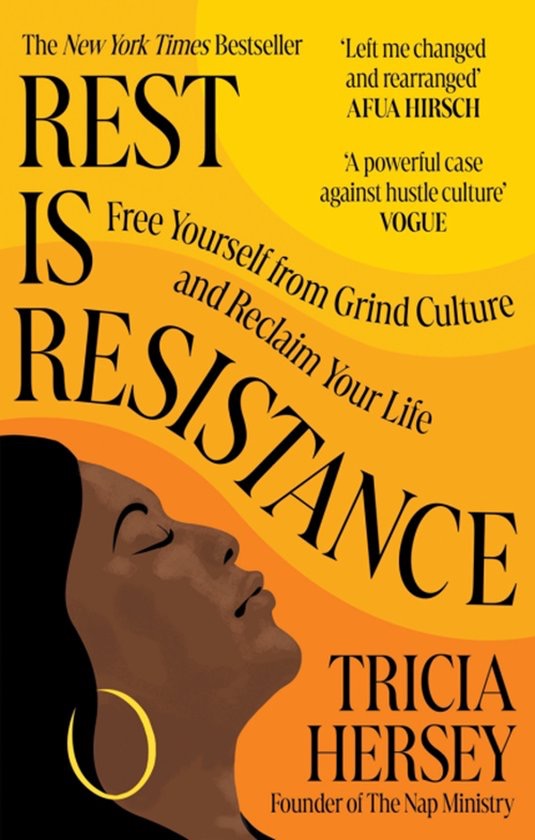
Downtime and Tricia Hersey’s Rest is Resistance

It’s the first proper week of my summer break and I have to admit that I’m really enjoying the time to just chill and do whatever I want. Downtime is a great period to relax and reflect–do a little bit of dreaming, think about lessons learned, about the work that’s been done and what it means. I also find myself thinking on how to encourage a younger generation of activists and collaborators because community work can eat you up if you don’t get the support and the rest that you need.

I recently shared a book with one of my dear friends and a fellow collaborator. It’s a book that came across my timeline and the title of the book drew my attention because it speaks to something I hear coming from workers in different spaces.

“I am tired.”

“I feel like I need more sleep.”

“I want to recharge.”

I hear different variations on this theme of needing rest. So when Rest is Resistance by Tricia Hersey came across my timeline, I felt moved enough to put it into my basket.

Hersey’s book is a quick read, but it is a good read. Reading it, I found myself thinking of how easily a body can be trained to forget about rest. For instance, when I first moved to The Netherlands, I still practiced siesta time (like we do in The Philippines). My in-laws were rather shocked/surprised and I was shocked/surprised to find that Dutch people do not do siesta unless you’re old or sick. I had to un-learn siesta pretty quick because being caught in siesta resulted in that disapproving look that made me feel like I had committed a crime. Nowadays, I’m like: I do not care…I will siesta if I feel like I need a siesta.

Hersey’s story about her father–his life of work, in service to God, in service to family, in service to community, reminded me so much of my father. My father was the youngest of three brothers, all three who were raised by my grandmother who became a single mother when her husband left them for someone else. There are many ways to justify a man leaving his wife and family. My Grandma was quite a character and I have been told repeatedly by other people that living with my grandma was hard for my grandpa and so when he met this lovely young woman who became his second wife, it was understandable that he chose to leave my grandma. I know how much my Dad valued my grandma and how much his Dad’s leaving hurt him. I don’t doubt my Dad had heard all the reasons. He didn’t blame the woman his Dad left them for, but it didn’t make his pain less and it doesn’t make his pain invalid.

All throughout his life, my Dad was determined to be there for us, even as he also lived his life in service to the community and in service to God. He was a doctor, and a lot of times, he would be opening the door to patients when it was way past midnight. Later on, he organised medical missions to places where medical care was inaccessible. Free clinics for those who couldn’t afford it. He was always on the go.

On the day he died, he was preparing for another medical mission.

I think of how the life of my father was punctuated by constant movement. He was so invested in providing for us and protecting us. He wanted to keep my Mom free of stress and worry. He was taking care of so many people and so many things, he didn’t tell us he had a heart condition.

I thought of how the pattern of my life ran similar to my Dad’s because my Dad was my hero and I wanted to be just like him. So, I almost never said no to anything. I found it hard to refuse help. I found it hard to set boundaries and to say: I can’t or until here and that’s it. Then I had a burnout where my body literally refused to function. Then, Jan died. Then, the diagnosis happened. And I was forced to rethink my life and say “no, I cannot”. “No, I don’t have the energy for that.” “No, I have to prioritise something else first.”

It took my body breaking down for me to re-learn rest.

The funny thing is–once you come face to face with it, you understand that the human body isn’t meant to keep going like an engine. Rest and sleep are essential to the recovery process. When I was going through treatment, I thought of how the emphasis is often on the parts of us that are sick or that carry disease. So, I thought to myself. So, there’s this small nodule somewhere. But it’s not everywhere. I can’t do much about the nodule, but the parts of my body that are well, can be made stronger. Can be made stress-resistant, can be helped to be healthier. So, no one knows how much time I’ve got, but no one else on earth knows that either. So, what I can do is be as alive as I can be right now. When my body was weak from chemo, I remembered what gives life to the body is not the body itself, rather there is that source that is beyond human explanation. We are, after all, more than these vessels we occupy and the spirit that is inside us travels on a path undefinable and unconfined by human parameters.

After my last treatment, there was moment where I could feel life gaining momentum. I was working more, I had more energy, I was more focused. I thought: I can do this. Oh, I can do that. Oh, yes. But I also felt this jealous guarding of my alone time–the downtime. Time to recuperate. Time to gather my thoughts. Time to be alone with a book. Time to nap. Time to tune in to that other space–to that other timeless space where dreaming happens.

A lot of what Hersey writes about is recognisable. My hope is that those who read it won’t just read it as this best-selling book where after reading it, they can put a checkmark beside the title. Read that. Liked it. Next book. (That would so defeat the purpose of it.)

I am reminded that my body is a vessel that carries me through life. I can’t accomplish what I want to do with this life, if I’m not taking care of my body and taking time to rest, recuperate and dream.

Writing this, I am reminded again of The Sabbath and Heschel’s thoughts on time and how time is like this cathedral we live inside of. Time isn’t going anywhere. We just need to dwell here and be here and do what we need to do where we are right now.

Maraming salamat for reading. May blessings and peace go with you as you journey on.

Fruits of my write-a-thon

If you’ll look at the sidebar (or if you’re on the phone, it’s probably going to be the footer), you’ll notice that I’ve posted two lovely badges from the Clarion West Write-a-thon. It’s been a while since I felt up to participating in the write-a-thon, but this year felt like an important year. I wanted to find a way to write about books again. For some reason going back to the bookblog felt too raw. The place she left behind is still right there and I had a jolt when I realised that it’s been nine years since we last talked about books.

Every memory I have of me and my sister is related to us reading books together, arguing over who would read what book first, complaining about how slow the other person was at finishing a book (no backtracking allowed), arguing over what kinds of books were best, discussing the pros and cons of a book, disagreeing over characters and how things unfolded in a book–and a really bad phase when I was so snobbish about my sister’s love of romance books that I got her some of those body rippers for a present. (She really hated me for that and I regretted it a lot because it wasn’t a very loving thing to do.)

I couldn’t understand the appeal of Mills & Boons romances with men treating women like trash and women still going back to those kinds of men because of ‘melt’. We argued about that too and discussed alternative endings where women would look down their noses at those men and say: ‘I am perfectly fine on my own and who needs love if it means being treated like you are less than just because.’

So, when I got my reading mojo back and tentatively started reading novels again, I missed being able to send her an email and ask her what she thought. I imagined us having face time conversations about details in books that we noticed. What we liked and what we didn’t like and what we wished were different or what we wished we could see more of.

Perhaps it was my sister nudging this bright idea towards me from where she now lives. Why not just blog about the books I was reading alongside blogging my thoughts on the work I was doing? Why not make that a write-a-thon goal alongside revisiting The Cartographer and finding out what I needed to do to make it work this time? Make it not too stressful because writing a thousand words a day might not be doable after not writing for a long time.

It took me reading and writing about Nisi Shawl’s book to find a way to keep the conversation going with my sister. In some way, Everfair unlocked that space where I could write without feeling pressured to review. It was like writing to my sister and trying not to give away spoilers about this novel I’d read. I loved it so much and wanted so much to talk about it with her that I wanted her to read it too. I might give away bits and pieces but not all because she would really scold me if I did that in the real. Writing about Everfair connected me to that part belonging to my sister and the history of books between us.

In between EverFair and preparing for LIMBO’s booklet event, I decided to go read other books on my reader. Long train rides are really great for catching up on reading. I finished R.S.A. Garcia’s The Nightward in less than a week while traveling back and forth to Amsterdam. I finished reading Martha Wells’s City of Bones even quicker because i was traveling almost everyday. Along the way, I noticed how my reading speed seemed to be improving along with my ability to keep focus. (I do have notes and plan to write that reading post sometime soon.)

Perhaps one of the realisations I’ve had is how when we love to read, we tend to take it for granted. I started reading at an early age, so did my sister. I never imagined that I would be not able to read until chemo affected my ability to focus and hold onto things I’d read. I had to learn to be kind to myself and also I grieved a little bit because I didn’t know if I’d get my reading mojo back. Now, reading feels like a miracle. It’s something I’m so thankful for and it’s a reminder not to take things for granted.

I didn’t realise that today was the last day of the write-a-thon until I got the email. It was also stunning to get the mail telling me that a good friend had pushed my write-a-thon goal way past my original funding goal. I am incredibly moved.

During the worldbuilding workshop that I gave for the Springschool Co-creation Lab, I talked about the potential of science fiction to help us think around possibilities. How science fiction at its very best challenges us to think of different ways of being in the world. Science Fiction has this potential for us to dream of different kinds of worlds, different ways of being in community and in relation to and with one another.

It’s my hope that we continue to encourage one another not just to think about how to write great stories, but more importantly to think on how we can create small movements that could lead to change in the spaces we move in. Let’s encourage each other to keep asking questions, to think of different ways of being in the world, to question why we do what we do when we do them and to live and create with intentionality.

Thank you for passing by. Maraming salamat and may blessings and peace be with you.

*Big shoutout to my dear friend, Vicki, who pushed me way past my writeathon goal. Thank you so so much.

**If you want to help us achieve 100%, the fundraiser is still open. Click on this sentence to visit the writeathon page.

How is it Wednesday already?

Weirdly, I find myself thinking about the phrase ‘time flies’ and how there must be a better phrase to express how quickly we move through time. As Treebeard from LOTR says: us two-legged creatures are always rushing about and wanting to hurry things up.

And so, I find myself in Wednesday and thinking of how my Monday and Tuesday were so quickly filled with things like seeing my youngest son to the airport. I still keep seeing him as this curly-haired mischievous toddler, only now he’s taller than I am. He still is curly-haired and thankfully, he is still mischievous.

Yesterday, I was looking through some old photos from when the boys were little beings. I came across pictures of us taking picnics in our backyard. I thought of that one summer when we couldn’t take a holiday, so we set up the tent and our eldest spent the better part of a week camping. I sent these pictures to my eldest and he sent me a message saying how those were some of the best times ever.

We think it’s giving our kids everything that will make them happy, but I don’t think they noticed how our holidays were always truncated–not two weeks away like other families but one mid-week (which was more within our budget). Once, we managed to score a great midweek at this out of the way holiday park with a whirlpool bathtub. That was a feast for the boys. I think I stressed about how to get there, but now that I look back, I can’t help but smile. Good times.

On Tuesday, I had my regular CT-scan and they also took some blood. Bah. I know this is all part of it and I did sign up for this trial, but I am looking forward to when these appointments become more of a quarterly or twice yearly thing. (Here I am thinking again about time)

I want to write about Sunday’s celebration, but at present, I’m finding it hard to find the right words. I think about why I feel I should write about it and realise that this is a thing I have put upon myself. And so, it’s something I can let go of. I recognise that some things aren’t meant to be written about so quickly. I can move back and forth in time, thinking on this and that. Dipping into a book, thinking again, writing down notes, going back in memory. Breathing. Listening to my heart. Paying attention to what’s going on in the body and in the spirit. Time isn’t rushing forward. It’s just there waiting for me to step into it.

I breathe again.

I hope that you who read this will step into that pocket of time where you can breathe. Listen. Pay attention. And then breathe again. Blessings and peace. Maraming salamat for stopping by.

I wish it were Sunday already

It’s been quite a hectic week as we head towards the closing event for the LIMBO workshops. FramerFramed is hosting LIMBO for this event and Maison the Faux has invited LIMBO to make use of their podiums. When we first talked about this closing event, we thought of creating a similar atmosphere to the LIMBO workshops–intimate and cozy, with time to check in individually and converse. But as the programme bloomed and volunteers raised their hands, we now have a full-blown programme complete with a Waacking Dance Workshop and a pole dance presentation from one of LIMBO’s participants.

I do hope that there will be space for cozy conversations as being in FramerFramed does mean that it’s always possible to wander away from the main space for a tete-a-tete.

I heard back from one of the PhD students who visited LIMBO sometime ago with the hope of creating a space with a similar vibe to LIMBO. I remember that we had a lovely call where we talked about possibilities and what can be done to make the space feel welcoming and safe and how presence and intentionality are key elements to such spaces. It was lovely to hear about the success of their project and also to hear that this particular student was able to complete their thesis. I’m hoping we meet again as I would love so much to hear what it was like for them and also to compare notes.

LIMBO’s future is a bit up in the air at the moment as the last grant request wasn’t successful, but I’m sure that whether it’s in this form or another form, LIMBO will continue on and the people who make up the community will find ways to keep meeting and supporting one another.

I also think it’s good for facilitators and organisers to have room to self-reflect, to recuperate and to think on what kinds of spaces we might want to be in and how we would like to continue working and supporting communities in the future.

While I am looking through the fiction work that I have on my drive, my main thought at this period is thematising and gathering together the nonfiction writing that I’ve done. Part of which is almost done as I finally managed to divide the themes into five sections. There remains the matter of collecting the pieces that belong with each theme and then perhaps editing/expanding/completing them.

There have been times when I’ve felt like I was less than because I haven’t completed my novel yet. I sometimes felt that my voice was of less value than the voices of those who had won awards or been recognised as great authors. But a beloved friend of mine sent me such a heartwarming message reminding me that it’s not writing a bestselling book that makes our voices matter in the world. Dear reader, I cried listening to that audio message.

I was reminded of the joy that blossoms in my heart when I hear someone share a story or a poem or a piece of art accompanied by story. There was this one woman who shared how they’d never imagined they would be able to write and express themselves because they’d constantly been told their grammar was always wrong. I was like: “screw grammar. That part you can worry about if your objective is getting published. But now, at this point where you only want to share a story, just write.”

Often, we believe that we can’t because we’re told we haven’t mastered the language well enough. But I can testify to how if you can write in the same way that you would say it, a good editor will help you polish and refine your work so what you want to say comes across in the way you meant it. Don’t use chatgpt or whatever google translate. It won’t get your meaning across. Write it in your own words. We keep talking about decolonisation, but we still keep wringing ourselves into spaghetti forms to fit into something we are not.

Let language (esp the English) flow in the way it flows in your head. When I’m writing in the space of my stories, I’m not thinking English the way USians or British people think or write English. I’m thinking and writing English the way I hear the people in my head speak it. And that’s English that reflects the different influences on my tongue. Like how my son will say: You have a very Filipino accent. But my brother will say: your accent is no longer Filipino. And a Dutch friend says: Oh, you sound American. Lol. Yes. I have a mongrel tongue and I also do have a tendency to absorb the way friends who have grown up in different non-white settings speak. Those are the people on my tongue and in my ears. So yeah. It’s different.

At the first workshop I gave for LIMBO, I said to the participants–as we all do not come from the same language stream, don’t make yourself write in English. Don’t make yourself write in Dutch. Write in the language that comes to you naturally. We will understand the emotion. And we always do.

Anyway, I was intending to write about LIMBO’s upcoming booklet launch and somehow this post has turned into an all out discussion of me with myself as I think about writing. During the Spring School Co-creation Lab at the VU (Vrije Universiteit Amsterdam), I asked Saba Hamzah who is a Yemeni poet to read to us from work she’d written. It was a memorable moment to be listening to her read a piece she’d written in the three languages in which she lives. Yemeni, Dutch and English. To me such work is a reflection of the world we live in. We are multi-language, multi-culture, multi-faceted. Our work reflects that too. (Please click on Saba’s name to get to her website.)

Thank you for taking time to read this “hak op de tak” post. May you find joy in the small moments of everyday.

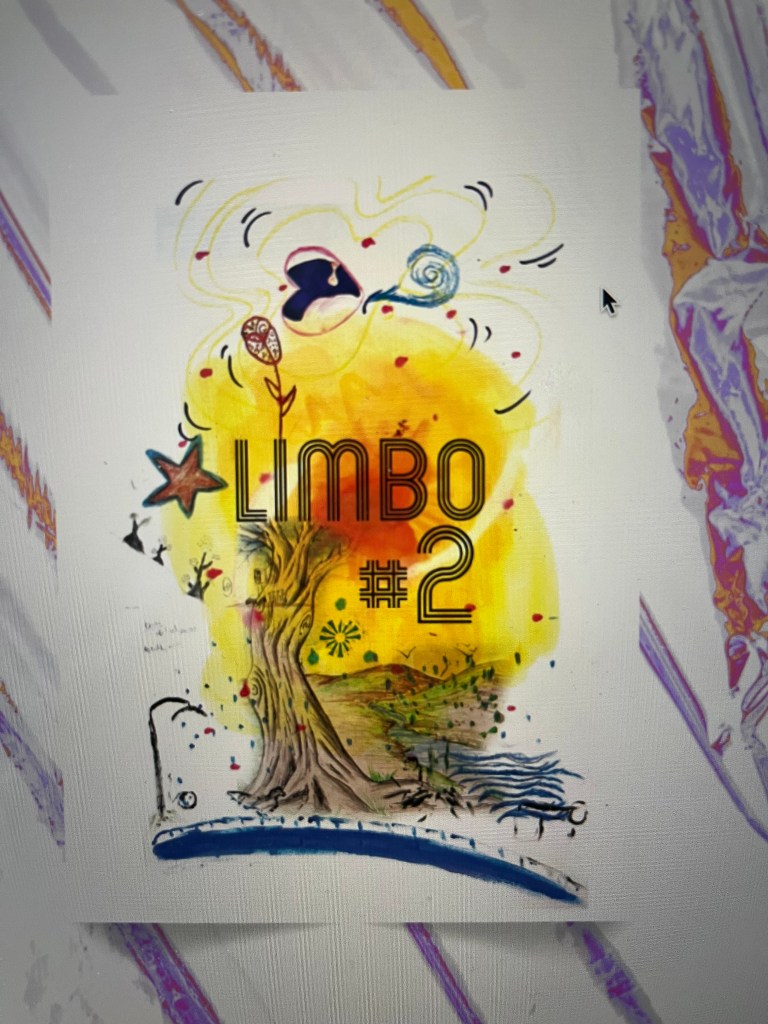
LIMBO’s booklet launch is this coming Sunday, 20th of July. Click on the image to get to the announcement.

This cover for LIMBO’s second booklet was designed by the wonderful visionary artist Ariya.

**I’ve picked a new book to read and possibly write about. Check the sidebar.

Some thoughts on Nisi Shawl’s Everfair

If you’ve taken the time to come visit my blog, it must mean that you enjoy discovering new works and reading almost as much as I do. Nisi Shawl’s Everfair was published in 2016, but at that time I was going through some challenging stuff. I made a note of it and somewhere along the timeline, I bought the e-book. But as happens in life, it took me until this year to get around to reading it. I’ve since found out that there is a book 0.5. and other books as well. It probably means there are things that have happened before this book that I might not be aware of, but it doesn’t take away from the joy of reading volume one.

What to say beyond simply saying: buy this book or read this book?

I want to say that Everfair is not an easy read. It’s not the kind of book that you just breeze through. It’s also not a lighthearted summer read. It’s the kind of novel that takes you on a journey–a journey that happens in a timeline that’s historically different from ours. Along the way, you decide to make notes. You might put the book down for a while, to take a breath of air, but then it calls you back and you keep on reading. It’s the kind of book where you look up from its pages and scan the clouds because there might be air canoes floating up there. The attention to detail is amazing.

In the beginning, it took me a while to sort out the personages. I tend to be a bit forgetful, but Nisi does a great job of reminding us who this character is and where we first met them. I found it pretty intriguing to witness the transformation Thomas undergoes (for instance). And I like how things are not always explained.

One of the joys of this novel is how Nisi Shawl gives us characters we can root and feel for. Characters we care about and it is those characters who we travel with and through whose eyes we see the world as it changes and evolves. It’s interesting to think about how Nisi Shawl makes use of riding cats (for instance) because in a manner of speaking we are riding the novel as we discover and learn more about Everfair. The politics of the Mote was interesting to me as well as the politics and the power struggles that take place inside and outside of Everfair. There is spionage and adventure enough to thrill the heart of anyone who loves spy novels. Relationships are never simple even personal relationships. I love how Nisi brings nuance to all these things. I found myself thinking on where and how I would draw a line where relationships are concerned. (I’m not gonna spoiler but you will find out when you read the book.)

Afterwards, I found myself still thinking on the questions around loyalties, allegiances, friendships and relationships. What makes us loyal to places and people? How do we determine loyalties? What about the dynamics that exist in friendships? And is it possible to have real friendship when there is a power imbalance? Those sorts of questions rise to mind when I think about Everfair.

Everfair would not be Everfair if it didn’t acknowledge the historical conflicts that took place in and around the Congo of our timeline. The conflict first with the Belgians, then with countries interested in what can be mined or taken from the Congo, and then the war that breaks out when King Mwende makes this decree where all who are foreigners must leave and return to their own countries. (How different would the world have been if the Belgians had been defeated in their mission to colonise the Congo?)

Everfair also speaks to ongoing discussions in the real world where the line “go back to your own country” has become a go to phrase when someone says something we don’t agree with. And while my kneejerk reaction was the same as King Mwende and I was like: ‘yes, go back to your own country.’ Nisi Shawl asks us: what do we really mean by that? What does it mean to be of a country? And how do we determine that?

I love how King Mwende with the help of Queen Josina (one of my favorite characters) realises that saying “leave and go back to your own country” is not the solution and that war is waste–primarily a waste of human life.

Nisi Shawl creates this world that isn’t utopian even though it starts with a utopian dream from those who first founded of Everfair. I like how Nisi doesn’t back down from knotty problems that occur when you’re trying to build a nation that’s home to and for everyone regardless of race, regardless of creed. It takes a while (for example) for one of the characters (Daisy) to come face to face with her own prejudices, her privilege and assumptions.

I’ve sometimes read books with relationships that feel forced, as if the author doesn’t understand how queer relationships or mixed race relationships work, but just wants to include them. Nisi does such a beautiful job at showing us not just how these relationships unfold but also how there is a lot of work that goes into making such relationships successful. Nisi doesn’t take a shortcut or take the easy way out. Yes, these relationships are complex, but Nisi also gives us joy.

Reader, I’m pretty sure that if you wanted me to tell you about historical things and what genre this novel might belong to, you would just head over to Amazon.com or google for one of the many reviews far more in-depth than this. I thought I would write this as if I were writing a letter to my sister who also loved reading books like these. I wish she could have read Everfair along with me.

If you enjoyed reading this topsy-turvy response to Nisi Shawl’s Everfair, I hope you’ll consider helping me reach 100% of my Clarion West Writeathon goal. There’s a button on the top right of this page that will lead you to my page.

Thank you for reading. And may joy accompany you on the journey.

Some thoughts on Maison the Faux’s The Tail

The Clarion West Write-a-thon started two days ago and so I thought I’d write about a performance/installation that I visited this week.

On Wednesday, I went to FramerFramed to see and imbibe of Maison the Faux’s installation/performance of The Tail. The installation will remain in FramerFramed up to the 17th of August, but if I understand correctly, the last live performance was yesterday.

Disney has taken Andersen’s tale and turned it into this romanticised fairytale, wiping it clean of all the things that have been labeled as not child-friendly and replacing the true ending with a fairytale (and more commercial) happy ending.

In Andersen’s tale, the Little Mermaid’s transformation comes at a great cost and with great suffering and (spoilers) unlike in the Disney Version, Andersen’s Little Mermaid doesn’t have a happy ending. There has been some discussion around whether the romantic version where the Little Mermaid sacrifices herself for true love by throwing herself into the waves and becoming the foam we see on the water is the ending that Andersen had in mind or whether he was made to rewrite a darker ending to one that would be more palatable as a fairytale.

I had to think about this because during the performance of The Tail, one of the personages repeats the line “do you want it darker” as a refrain to a song. If indeed you want it darker, there are darker possibilities to Andersen’s The Little Mermaid.

But The Tail is more than a retelling of Andersen’s The Little Mermaid. It goes way beyond that. It is an intensely immersive and engaging performance which made me think not just about the fairytale that inspired this installation. It made me think about the pressures that are put on queer and trans bodies to conform to an expectation. What does it mean to be in the body? What does it mean to embody and for the body to be grounded in the self? For whose sake do we transform when we choose to do so? I also like that there is no prince in this telling. It’s a great reminder that transformation isn’t to win the approval of anyone.

One of the aspects that I found effective as well as immersive was the way in which The Tail is presented. We (the audience) follow the personages from stage to stage. I thought this was a really good way of drawing in the audience and making them feel more part of rather than simply as bystanders watching. In a manner of speaking, the audience becomes a player too by becoming part of the world occupied by the three who are on the podium. One of the disadvantages of this though is how it makes it kind of challenging when you’re not as tall as most people.

At one part of the performance, the players enter an enclosed podium. I’m pretty short, so I couldn’t see a lot of what was going on when they were at the entrance. I tried raising my phone up high, but all I could get were the heads of people crowded around the door. So, I decided to distance myself a bit. (There’s something to reflect on doing that as well.) From the distance, I saw that the screens around this enclosed podium give those outside a view of what’s going on inside. The small circles around this enclosure were actually peepholes through which viewers can look and catch a glimpse of what’s going on in there. Reflecting on it, I rather liked this construction where the world outside can’t see all, as it felt to me like a silent narrative running alongside the narrative that is revealed to us.

As I sit here thinking about The Tail, I recognise how everything that was in place was done with intention. It’s this kind of intentionality that makes The Tail a joy to contemplate on.

Maison the Faux’s installation can still be viewed at FramerFramed up to the 17th of August. If you do get a chance to witness a live performance of this installation elsewhere, I highly recommend going because this review can’t capture the feeling of being there in the middle of it.

I hope you enjoyed reading this short reflection on this performance/installation. As I write this, the sun has just come out and I’m writing in its light. May your week be filled with light and joy and blessings always.