Fruits of my write-a-thon

If you’ll look at the sidebar (or if you’re on the phone, it’s probably going to be the footer), you’ll notice that I’ve posted two lovely badges from the Clarion West Write-a-thon. It’s been a while since I felt up to participating in the write-a-thon, but this year felt like an important year. I wanted to find a way to write about books again. For some reason going back to the bookblog felt too raw. The place she left behind is still right there and I had a jolt when I realised that it’s been nine years since we last talked about books.

Every memory I have of me and my sister is related to us reading books together, arguing over who would read what book first, complaining about how slow the other person was at finishing a book (no backtracking allowed), arguing over what kinds of books were best, discussing the pros and cons of a book, disagreeing over characters and how things unfolded in a book–and a really bad phase when I was so snobbish about my sister’s love of romance books that I got her some of those body rippers for a present. (She really hated me for that and I regretted it a lot because it wasn’t a very loving thing to do.)

I couldn’t understand the appeal of Mills & Boons romances with men treating women like trash and women still going back to those kinds of men because of ‘melt’. We argued about that too and discussed alternative endings where women would look down their noses at those men and say: ‘I am perfectly fine on my own and who needs love if it means being treated like you are less than just because.’

So, when I got my reading mojo back and tentatively started reading novels again, I missed being able to send her an email and ask her what she thought. I imagined us having face time conversations about details in books that we noticed. What we liked and what we didn’t like and what we wished were different or what we wished we could see more of.

Perhaps it was my sister nudging this bright idea towards me from where she now lives. Why not just blog about the books I was reading alongside blogging my thoughts on the work I was doing? Why not make that a write-a-thon goal alongside revisiting The Cartographer and finding out what I needed to do to make it work this time? Make it not too stressful because writing a thousand words a day might not be doable after not writing for a long time.

It took me reading and writing about Nisi Shawl’s book to find a way to keep the conversation going with my sister. In some way, Everfair unlocked that space where I could write without feeling pressured to review. It was like writing to my sister and trying not to give away spoilers about this novel I’d read. I loved it so much and wanted so much to talk about it with her that I wanted her to read it too. I might give away bits and pieces but not all because she would really scold me if I did that in the real. Writing about Everfair connected me to that part belonging to my sister and the history of books between us.

In between EverFair and preparing for LIMBO’s booklet event, I decided to go read other books on my reader. Long train rides are really great for catching up on reading. I finished R.S.A. Garcia’s The Nightward in less than a week while traveling back and forth to Amsterdam. I finished reading Martha Wells’s City of Bones even quicker because i was traveling almost everyday. Along the way, I noticed how my reading speed seemed to be improving along with my ability to keep focus. (I do have notes and plan to write that reading post sometime soon.)

Perhaps one of the realisations I’ve had is how when we love to read, we tend to take it for granted. I started reading at an early age, so did my sister. I never imagined that I would be not able to read until chemo affected my ability to focus and hold onto things I’d read. I had to learn to be kind to myself and also I grieved a little bit because I didn’t know if I’d get my reading mojo back. Now, reading feels like a miracle. It’s something I’m so thankful for and it’s a reminder not to take things for granted.

I didn’t realise that today was the last day of the write-a-thon until I got the email. It was also stunning to get the mail telling me that a good friend had pushed my write-a-thon goal way past my original funding goal. I am incredibly moved.

During the worldbuilding workshop that I gave for the Springschool Co-creation Lab, I talked about the potential of science fiction to help us think around possibilities. How science fiction at its very best challenges us to think of different ways of being in the world. Science Fiction has this potential for us to dream of different kinds of worlds, different ways of being in community and in relation to and with one another.

It’s my hope that we continue to encourage one another not just to think about how to write great stories, but more importantly to think on how we can create small movements that could lead to change in the spaces we move in. Let’s encourage each other to keep asking questions, to think of different ways of being in the world, to question why we do what we do when we do them and to live and create with intentionality.

Thank you for passing by. Maraming salamat and may blessings and peace be with you.

*Big shoutout to my dear friend, Vicki, who pushed me way past my writeathon goal. Thank you so so much.

**If you want to help us achieve 100%, the fundraiser is still open. Click on this sentence to visit the writeathon page.

How is it Wednesday already?

Weirdly, I find myself thinking about the phrase ‘time flies’ and how there must be a better phrase to express how quickly we move through time. As Treebeard from LOTR says: us two-legged creatures are always rushing about and wanting to hurry things up.

And so, I find myself in Wednesday and thinking of how my Monday and Tuesday were so quickly filled with things like seeing my youngest son to the airport. I still keep seeing him as this curly-haired mischievous toddler, only now he’s taller than I am. He still is curly-haired and thankfully, he is still mischievous.

Yesterday, I was looking through some old photos from when the boys were little beings. I came across pictures of us taking picnics in our backyard. I thought of that one summer when we couldn’t take a holiday, so we set up the tent and our eldest spent the better part of a week camping. I sent these pictures to my eldest and he sent me a message saying how those were some of the best times ever.

We think it’s giving our kids everything that will make them happy, but I don’t think they noticed how our holidays were always truncated–not two weeks away like other families but one mid-week (which was more within our budget). Once, we managed to score a great midweek at this out of the way holiday park with a whirlpool bathtub. That was a feast for the boys. I think I stressed about how to get there, but now that I look back, I can’t help but smile. Good times.

On Tuesday, I had my regular CT-scan and they also took some blood. Bah. I know this is all part of it and I did sign up for this trial, but I am looking forward to when these appointments become more of a quarterly or twice yearly thing. (Here I am thinking again about time)

I want to write about Sunday’s celebration, but at present, I’m finding it hard to find the right words. I think about why I feel I should write about it and realise that this is a thing I have put upon myself. And so, it’s something I can let go of. I recognise that some things aren’t meant to be written about so quickly. I can move back and forth in time, thinking on this and that. Dipping into a book, thinking again, writing down notes, going back in memory. Breathing. Listening to my heart. Paying attention to what’s going on in the body and in the spirit. Time isn’t rushing forward. It’s just there waiting for me to step into it.

I breathe again.

I hope that you who read this will step into that pocket of time where you can breathe. Listen. Pay attention. And then breathe again. Blessings and peace. Maraming salamat for stopping by.

I wish it were Sunday already

It’s been quite a hectic week as we head towards the closing event for the LIMBO workshops. FramerFramed is hosting LIMBO for this event and Maison the Faux has invited LIMBO to make use of their podiums. When we first talked about this closing event, we thought of creating a similar atmosphere to the LIMBO workshops–intimate and cozy, with time to check in individually and converse. But as the programme bloomed and volunteers raised their hands, we now have a full-blown programme complete with a Waacking Dance Workshop and a pole dance presentation from one of LIMBO’s participants.

I do hope that there will be space for cozy conversations as being in FramerFramed does mean that it’s always possible to wander away from the main space for a tete-a-tete.

I heard back from one of the PhD students who visited LIMBO sometime ago with the hope of creating a space with a similar vibe to LIMBO. I remember that we had a lovely call where we talked about possibilities and what can be done to make the space feel welcoming and safe and how presence and intentionality are key elements to such spaces. It was lovely to hear about the success of their project and also to hear that this particular student was able to complete their thesis. I’m hoping we meet again as I would love so much to hear what it was like for them and also to compare notes.

LIMBO’s future is a bit up in the air at the moment as the last grant request wasn’t successful, but I’m sure that whether it’s in this form or another form, LIMBO will continue on and the people who make up the community will find ways to keep meeting and supporting one another.

I also think it’s good for facilitators and organisers to have room to self-reflect, to recuperate and to think on what kinds of spaces we might want to be in and how we would like to continue working and supporting communities in the future.

While I am looking through the fiction work that I have on my drive, my main thought at this period is thematising and gathering together the nonfiction writing that I’ve done. Part of which is almost done as I finally managed to divide the themes into five sections. There remains the matter of collecting the pieces that belong with each theme and then perhaps editing/expanding/completing them.

There have been times when I’ve felt like I was less than because I haven’t completed my novel yet. I sometimes felt that my voice was of less value than the voices of those who had won awards or been recognised as great authors. But a beloved friend of mine sent me such a heartwarming message reminding me that it’s not writing a bestselling book that makes our voices matter in the world. Dear reader, I cried listening to that audio message.

I was reminded of the joy that blossoms in my heart when I hear someone share a story or a poem or a piece of art accompanied by story. There was this one woman who shared how they’d never imagined they would be able to write and express themselves because they’d constantly been told their grammar was always wrong. I was like: “screw grammar. That part you can worry about if your objective is getting published. But now, at this point where you only want to share a story, just write.”

Often, we believe that we can’t because we’re told we haven’t mastered the language well enough. But I can testify to how if you can write in the same way that you would say it, a good editor will help you polish and refine your work so what you want to say comes across in the way you meant it. Don’t use chatgpt or whatever google translate. It won’t get your meaning across. Write it in your own words. We keep talking about decolonisation, but we still keep wringing ourselves into spaghetti forms to fit into something we are not.

Let language (esp the English) flow in the way it flows in your head. When I’m writing in the space of my stories, I’m not thinking English the way USians or British people think or write English. I’m thinking and writing English the way I hear the people in my head speak it. And that’s English that reflects the different influences on my tongue. Like how my son will say: You have a very Filipino accent. But my brother will say: your accent is no longer Filipino. And a Dutch friend says: Oh, you sound American. Lol. Yes. I have a mongrel tongue and I also do have a tendency to absorb the way friends who have grown up in different non-white settings speak. Those are the people on my tongue and in my ears. So yeah. It’s different.

At the first workshop I gave for LIMBO, I said to the participants–as we all do not come from the same language stream, don’t make yourself write in English. Don’t make yourself write in Dutch. Write in the language that comes to you naturally. We will understand the emotion. And we always do.

Anyway, I was intending to write about LIMBO’s upcoming booklet launch and somehow this post has turned into an all out discussion of me with myself as I think about writing. During the Spring School Co-creation Lab at the VU (Vrije Universiteit Amsterdam), I asked Saba Hamzah who is a Yemeni poet to read to us from work she’d written. It was a memorable moment to be listening to her read a piece she’d written in the three languages in which she lives. Yemeni, Dutch and English. To me such work is a reflection of the world we live in. We are multi-language, multi-culture, multi-faceted. Our work reflects that too. (Please click on Saba’s name to get to her website.)

Thank you for taking time to read this “hak op de tak” post. May you find joy in the small moments of everyday.

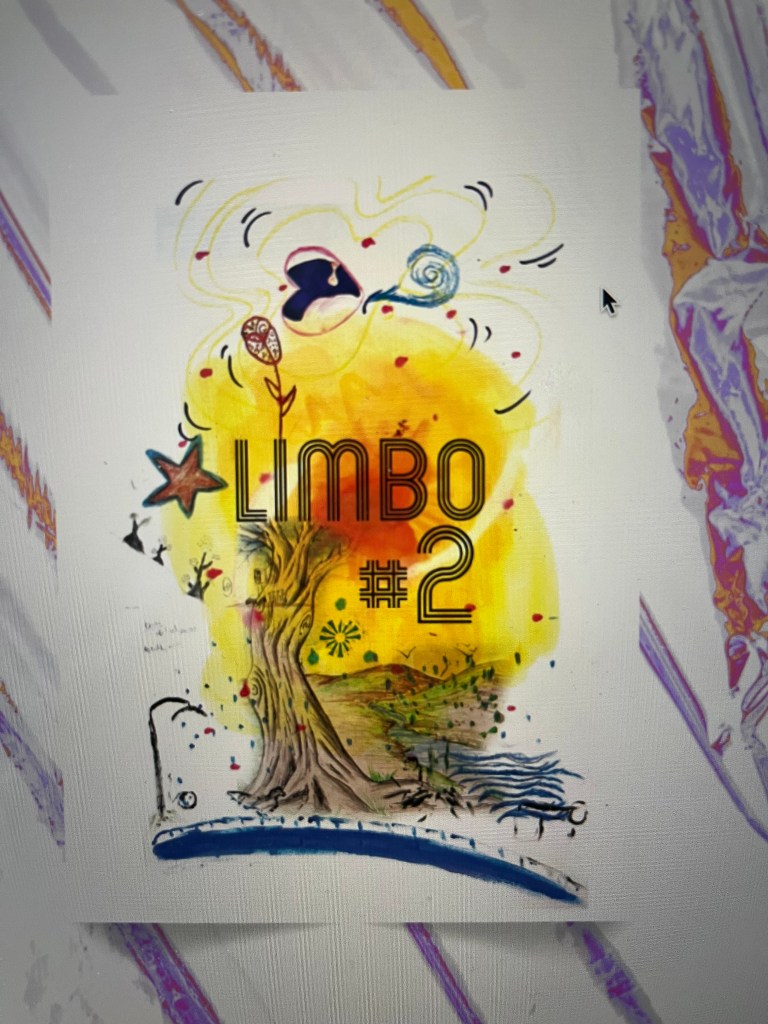
LIMBO’s booklet launch is this coming Sunday, 20th of July. Click on the image to get to the announcement.

This cover for LIMBO’s second booklet was designed by the wonderful visionary artist Ariya.

**I’ve picked a new book to read and possibly write about. Check the sidebar.

Some thoughts on Nisi Shawl’s Everfair

If you’ve taken the time to come visit my blog, it must mean that you enjoy discovering new works and reading almost as much as I do. Nisi Shawl’s Everfair was published in 2016, but at that time I was going through some challenging stuff. I made a note of it and somewhere along the timeline, I bought the e-book. But as happens in life, it took me until this year to get around to reading it. I’ve since found out that there is a book 0.5. and other books as well. It probably means there are things that have happened before this book that I might not be aware of, but it doesn’t take away from the joy of reading volume one.

What to say beyond simply saying: buy this book or read this book?

I want to say that Everfair is not an easy read. It’s not the kind of book that you just breeze through. It’s also not a lighthearted summer read. It’s the kind of novel that takes you on a journey–a journey that happens in a timeline that’s historically different from ours. Along the way, you decide to make notes. You might put the book down for a while, to take a breath of air, but then it calls you back and you keep on reading. It’s the kind of book where you look up from its pages and scan the clouds because there might be air canoes floating up there. The attention to detail is amazing.

In the beginning, it took me a while to sort out the personages. I tend to be a bit forgetful, but Nisi does a great job of reminding us who this character is and where we first met them. I found it pretty intriguing to witness the transformation Thomas undergoes (for instance). And I like how things are not always explained.

One of the joys of this novel is how Nisi Shawl gives us characters we can root and feel for. Characters we care about and it is those characters who we travel with and through whose eyes we see the world as it changes and evolves. It’s interesting to think about how Nisi Shawl makes use of riding cats (for instance) because in a manner of speaking we are riding the novel as we discover and learn more about Everfair. The politics of the Mote was interesting to me as well as the politics and the power struggles that take place inside and outside of Everfair. There is spionage and adventure enough to thrill the heart of anyone who loves spy novels. Relationships are never simple even personal relationships. I love how Nisi brings nuance to all these things. I found myself thinking on where and how I would draw a line where relationships are concerned. (I’m not gonna spoiler but you will find out when you read the book.)

Afterwards, I found myself still thinking on the questions around loyalties, allegiances, friendships and relationships. What makes us loyal to places and people? How do we determine loyalties? What about the dynamics that exist in friendships? And is it possible to have real friendship when there is a power imbalance? Those sorts of questions rise to mind when I think about Everfair.

Everfair would not be Everfair if it didn’t acknowledge the historical conflicts that took place in and around the Congo of our timeline. The conflict first with the Belgians, then with countries interested in what can be mined or taken from the Congo, and then the war that breaks out when King Mwende makes this decree where all who are foreigners must leave and return to their own countries. (How different would the world have been if the Belgians had been defeated in their mission to colonise the Congo?)

Everfair also speaks to ongoing discussions in the real world where the line “go back to your own country” has become a go to phrase when someone says something we don’t agree with. And while my kneejerk reaction was the same as King Mwende and I was like: ‘yes, go back to your own country.’ Nisi Shawl asks us: what do we really mean by that? What does it mean to be of a country? And how do we determine that?

I love how King Mwende with the help of Queen Josina (one of my favorite characters) realises that saying “leave and go back to your own country” is not the solution and that war is waste–primarily a waste of human life.

Nisi Shawl creates this world that isn’t utopian even though it starts with a utopian dream from those who first founded of Everfair. I like how Nisi doesn’t back down from knotty problems that occur when you’re trying to build a nation that’s home to and for everyone regardless of race, regardless of creed. It takes a while (for example) for one of the characters (Daisy) to come face to face with her own prejudices, her privilege and assumptions.

I’ve sometimes read books with relationships that feel forced, as if the author doesn’t understand how queer relationships or mixed race relationships work, but just wants to include them. Nisi does such a beautiful job at showing us not just how these relationships unfold but also how there is a lot of work that goes into making such relationships successful. Nisi doesn’t take a shortcut or take the easy way out. Yes, these relationships are complex, but Nisi also gives us joy.

Reader, I’m pretty sure that if you wanted me to tell you about historical things and what genre this novel might belong to, you would just head over to Amazon.com or google for one of the many reviews far more in-depth than this. I thought I would write this as if I were writing a letter to my sister who also loved reading books like these. I wish she could have read Everfair along with me.

If you enjoyed reading this topsy-turvy response to Nisi Shawl’s Everfair, I hope you’ll consider helping me reach 100% of my Clarion West Writeathon goal. There’s a button on the top right of this page that will lead you to my page.

Thank you for reading. And may joy accompany you on the journey.

Some thoughts on Maison the Faux’s The Tail

The Clarion West Write-a-thon started two days ago and so I thought I’d write about a performance/installation that I visited this week.

On Wednesday, I went to FramerFramed to see and imbibe of Maison the Faux’s installation/performance of The Tail. The installation will remain in FramerFramed up to the 17th of August, but if I understand correctly, the last live performance was yesterday.

Disney has taken Andersen’s tale and turned it into this romanticised fairytale, wiping it clean of all the things that have been labeled as not child-friendly and replacing the true ending with a fairytale (and more commercial) happy ending.

In Andersen’s tale, the Little Mermaid’s transformation comes at a great cost and with great suffering and (spoilers) unlike in the Disney Version, Andersen’s Little Mermaid doesn’t have a happy ending. There has been some discussion around whether the romantic version where the Little Mermaid sacrifices herself for true love by throwing herself into the waves and becoming the foam we see on the water is the ending that Andersen had in mind or whether he was made to rewrite a darker ending to one that would be more palatable as a fairytale.

I had to think about this because during the performance of The Tail, one of the personages repeats the line “do you want it darker” as a refrain to a song. If indeed you want it darker, there are darker possibilities to Andersen’s The Little Mermaid.

But The Tail is more than a retelling of Andersen’s The Little Mermaid. It goes way beyond that. It is an intensely immersive and engaging performance which made me think not just about the fairytale that inspired this installation. It made me think about the pressures that are put on queer and trans bodies to conform to an expectation. What does it mean to be in the body? What does it mean to embody and for the body to be grounded in the self? For whose sake do we transform when we choose to do so? I also like that there is no prince in this telling. It’s a great reminder that transformation isn’t to win the approval of anyone.

One of the aspects that I found effective as well as immersive was the way in which The Tail is presented. We (the audience) follow the personages from stage to stage. I thought this was a really good way of drawing in the audience and making them feel more part of rather than simply as bystanders watching. In a manner of speaking, the audience becomes a player too by becoming part of the world occupied by the three who are on the podium. One of the disadvantages of this though is how it makes it kind of challenging when you’re not as tall as most people.

At one part of the performance, the players enter an enclosed podium. I’m pretty short, so I couldn’t see a lot of what was going on when they were at the entrance. I tried raising my phone up high, but all I could get were the heads of people crowded around the door. So, I decided to distance myself a bit. (There’s something to reflect on doing that as well.) From the distance, I saw that the screens around this enclosed podium give those outside a view of what’s going on inside. The small circles around this enclosure were actually peepholes through which viewers can look and catch a glimpse of what’s going on in there. Reflecting on it, I rather liked this construction where the world outside can’t see all, as it felt to me like a silent narrative running alongside the narrative that is revealed to us.

As I sit here thinking about The Tail, I recognise how everything that was in place was done with intention. It’s this kind of intentionality that makes The Tail a joy to contemplate on.

Maison the Faux’s installation can still be viewed at FramerFramed up to the 17th of August. If you do get a chance to witness a live performance of this installation elsewhere, I highly recommend going because this review can’t capture the feeling of being there in the middle of it.

I hope you enjoyed reading this short reflection on this performance/installation. As I write this, the sun has just come out and I’m writing in its light. May your week be filled with light and joy and blessings always.

Sitting with the discomfort

I’m thinking again today about Aminata Cairo’s visit with us in LIMBO and the talk she gave about what it means to hold space for one another and how while we long for safe spaces, even such spaces can be fraught because of how we are. So, how do we hold space for one another? How do we make it possible for us to continue to be in community and to share space and make it feel safe and joyful and loving for all who share the space?

It’s something I’ve been thinking on as recent conversations keep pointing me in this direction, including one where I inadvertently created some discomfort because I wasn’t intentional. I think about intentionality and mindfulness and how these words are more than buzz words. I mean, the wellness industry has hijacked mindfulness so the word has kind of become one of those buzzwords–it’s not wrong usage, but its meaning has kind of diluted.

To be mindful is to be present in the moment and therapists often use being mindful to refer to therapy techniques such as meditation. Often when we speak of mindfulness, we think: Oh, let me do breathing exercises or let me do grounding work or let me be present in my body. And people then say: I’m practicing mindfulness. These are all great things to do but mindfulness isn’t just that.

To be mindful is to be conscious of how our words and our actions ripple and echo in spaces. Our actions and words, even the emotions we express if done without intention can hurt even when hurt or harm is the farthest from our minds. I tend to be less mindful when I’m tired or when I’m in a hurry or when I’m distracted. It’s why I try to put away my phone when I know I’m going to meet people. It’s okay if I don’t get that selfie. I was fully present and focused on the person I was meeting. (Although I’m kicking myself now because I should have thought about asking for one, but I just didn’t think about it.)

So what happens when discomfort arises in communal spaces? How do we resolve the discomfort? I think the best starting point is to start from knowing where the other person is coming from. Was it intentional? Or was it simply thoughtlessness? It helps when we raise the point and say: hey, could you be a little more mindful about this matter?

How do we respond when we cause the discomfort?

In a conversation with a very good friend, we talked about the discomfort that arises when we feel that something is happening and we can’t put our finger on it. It’s similar to discomfort that arises when white people enter spaces meant for people of colour and proceed to take the lead or take a positions of leadership even when they are not asked to do so. What do we do about that discomfort?

The question I would ask is: are we able to live with that discomfort? Can we put it aside and still be our full self in the space? If we can’t, do we feel safe enough and seen enough to open a conversation about it? For the person faced with this kind of honesty, the question becomes how do we receive it? Because honestly, it’s not enough to say I’m sorry. Sorry is just a first step, the next step is doing better. (Hence, self-examination.) As I say to my son, making mistakes is inevitable in life. What’s important is what we do when we make them and whether we learn from them or proceed to just do them all over again. And sometimes self-examination means removing yourself from the space and allowing people space to breathe. I know, it feels drastic. But it’s not for others to appease me if I am the cause of discomfort. It’s my job to do the work so I can be in community again.

I’m writing as I process these things because I want to make space in my head to write about Maison the Faux’s The Tail (not giving away spoilers) and I also want to make space to write about Nisi Shawl’s excellent Everfair. I’m 40% in! And as one of my dear friends said with a laugh: “Rochita, this is how I know you are reading on a kindle reader because you don’t tell me what page you’re on but you’re telling me you’re so many percent into a book.” (You can laugh now. Times have certainly changed.)

If you’d like to sponsor me during the Clarion West write-a-thon, here’s the link:

Blessings and peace and thanks again for dropping by.

(I actually inserted that button because I have no graphics for the page and wordpress won’t let me embed the page.)

Returning to the world of the Body Cartographer

Sometime in August, the English version of the story published in De Komeet is going up on Philippine Genre Stories. I’m very grateful to Mia Tijam for her patience with me as replies have been often delayed. I have a tendency to think I have done things and find out I haven’t. Chemo-brain sounds like an easy excuse, but this tendency is common with a lot of people who’ve gone through chemotherapy. It gets better with time and the longer you’re away from the last chemotherapy treatment, the more clarity you get as well. So I am very thankful for the gentle nudges and the patience coming from editors during the period I was in treatment as well as the period of recovery.

The publication of this story works like a jumpstart of sorts. I started thinking about the works in progress that I still had on my drive and when the call to join the Clarion West Write-a-thon landed in my inbox, I carefully considered whether I would be able to do it. A conversation I had with Marielle (Wegbree)made me think that the write-a-thon would give me an easy way to slide back into writing with some accountability. I thought that I could at least do some book reviews on the blog as a measure of how much work I was doing. But in the process, I found myself returning to my one drive. I had this idea that the drafts I’d been working on were still quite messy.

My first thinking was to go back to writing in the world of Raissa and Anghe. But somehow I found myself pulled back into the Body Cartographer’s world. (If anyone wants to read Song of the Body Cartographer, it’s still available online.) After my first round with radiation therapy, I started working on this long piece again except somehow it felt almost confronting. Mainly because it starts with the main character waking up after a moment of crisis, after a near death experience that changes her so much that she is no longer exactly as she was. Yep. I wrote those parts before I was diagnosed and continuing to write those parts felt too close, I had to put it away.

But now, six months after being declared in remission and after being told that the last treatment worked, I find myself drawn back into that world and I recognise the place my main character is at. Having a deeper understanding of what it takes to recover from crises and how life-altering that can be helps me to also see where I was making the journey to recovery too smooth for my character. But I also see how this crises doesn’t define my character. It has to become part of her life if she’s to really live her life. And I am reminded again of my oncologist telling me: you are more than cancer.

We are more than the physical challenges that we face. We are more than the crises we have had to overcome. We are more than our traumas and our illnesses. We are more than that. And so I want my main character to reach that realisation too because loss has been very much a part of this character’s life but those losses do not define her. Instead, I hope that she emerges stronger and more herself.

I’m thinking about worlds today because I’m going back to the team I’m working with and I think we are going to set world parameters or at least I hope we are. I would very much like to get away from the D&D model and I am hoping that this is a shared vision. If it’s not then I have to think on whether I’m okay with that and how to go about that. Of the games that I’ve played, the one that appeals the most to me is a game built on Belonging outside Belonging. I love it for the spontaneous creativity that it gives rise to–and yes unpredictable silliness which even if you know it’s silly, you just go with it because it is fun to be silly with friends.

So I suppose July is building up to be a month of lots of thinking and reading and writing happening. Something I would not have been able to predict a couple of months ago when I was down in the dumps about not being able to write. I am evidence that the Recovery and Balance programme pays off in spades.

Finally, if you’d like to support my quest to raise funds for Clarion West, please feel free to visit my fundraising page and press the donate button. I would love for us to go over our combined goal as that means more support for the workshop and the writers who will be going there. WordPress doesn’t seem to support embedding my page, but here’s the link to it:

https://givebutter.com/2025cw-writeathon/rochitaloenenruiz

Thanks so much for taking the time to read. I am quietly surprised when I discover people have read what I write here. I hope it offers some food for thought, some inspiration or anything that you can take with you on the journey. Blessings and peace and thank you for dropping by.

Thinking about co-creation

Traveling to and from destinations is helping me catch up with my reading list. I find it sometimes surprising when I recognise how much traveling I’m doing. I live very close to a train station and from here it’s easy to catch a train to Amsterdam or Utrecht or Rotterdam or The Hague. I haven’t been to The Hague in a while and my library card has lapsed, but I want to return to writing and reading in the Royal Library sometime late in July after the projects I’m involved with have moved into the summer holiday phase. I also want to think more around what I want to do when the season starts up again. What is necessary to me? What do I want to keep on doing? What do I need to let go of and what do I need to prioritise?

I’m currently working together with a team that was put together with the goal of creating a table top rpg. It’s a process that’s new to most of us, but one of our team is an experienced Game Master and that helps the process along as we think around gameplay and building something that is interesting, fun and hopefully thought-provoking. We’ve been thinking around themes that we want to see as well as the kind of world and stories we hope to explore.

It’s a process that I needed time to wrap my head around as perhaps the biggest difference between writing alone and writing in the team is the work of coming to agreement. There’s also the process of making space for how we will not always agree and how we are fine with that.

We might fall into thinking that co-creation is some harmonious zen process. It can be, but by large it depends on the size of the team, it depends on the kinds of participants and the dynamics in a group, it depends on a lot of factors so co-creation can be as zen or as gnarly and messy as all get out, but it needs to be what it needs to be and there is no way to go around that and effectively co-create. I realise that going through the gnarly mess is a good thing. It’s good when we are able to show our faces to each other, to say: I don’t agree with you on this and I don’t want things to go in this direction and I actually would like to go elsewhere. When that kind of freedom exists, that holds a promise of something extraordinary coming into being.

Co-creation is a process that takes time because when we are creating together, it means we have to give a little and be willing to compromise in order to reach our common goal. I don’t think it can be hurried along and I think the best thing we take away from such engagements is how creating together allows us to quickly move away from surface and shallow niceties into spaces where we feel safe and seen and where we know that just because our thoughts and ideas are not shared by everyone, it doesn’t mean they are of lesser importance.

[Some questions I’m thinking around in relation to the work and the projects I’m working on: Do we want to build community? Do we want to share stories? Do we want to heal ourselves? What do we need and what do we want and how do we get there?) ]

At the heart of it, co-creation has to do with relationships. It’s related to how we’re entangled and connected to one another. If we are open and ready to make space for ideas and ways of thinking that are not the same to how we think and if we are willing to let go of control or if we are willing to step into the gap when we recognise a gap. Does this then mean that there is no space for individuality or for the individual choice?

I like to think that there can be room for both. That we can share and compromise and adapt while leaving space and room for ourselves to do and to create and to work around what speaks to us individually. I think that leaving space for individuals to come to terms with what works and what doesn’t is necessary if we want to come to satisfying conclusions.

I’m ruminating on this because creating world in a team feels very actual to the discussion around co-creation and I also am interested in how that translates into community building and creating together outside of fiction spaces.

Where ttrpg is concerned, we can try to think of directions in which we want players to go towards, but we can’t control or predict and while we can prepare for some scenarios, it’s quite possible that players will go towards outcomes we don’t expect or even want and that’s perfectly fine. I like to think that’s a good thing because there should definitely be room for insights and outcomes other than what we want.

Perhaps the most important takeaway for me from this process is to let go of the self that goes: ‘oh but actually’. Instead, I should just let the part of me that carries on snarky and whacky conversations with my other parts come out and play.

Throughout this writing, I keep thinking of that phrase from Donna Haraway from Staying With the Trouble: “It matters what matters we use to think other matters with; it matters what stories we tell to tell other stories with; it matters what knots knot knots, what thoughts think thoughts, what descriptions describe descriptions, what ties tie ties. It matters what stories make worlds, what worlds make stories.”

Blessings and peace to you who read this and maraming salamat for passing by.

Staying with the Trouble is available from Duke University Press and from other booksellers.

(editing to add my thanks to Aliette de Bodard and Vida Cruz-Borja for listening to me while I worked through this process.)

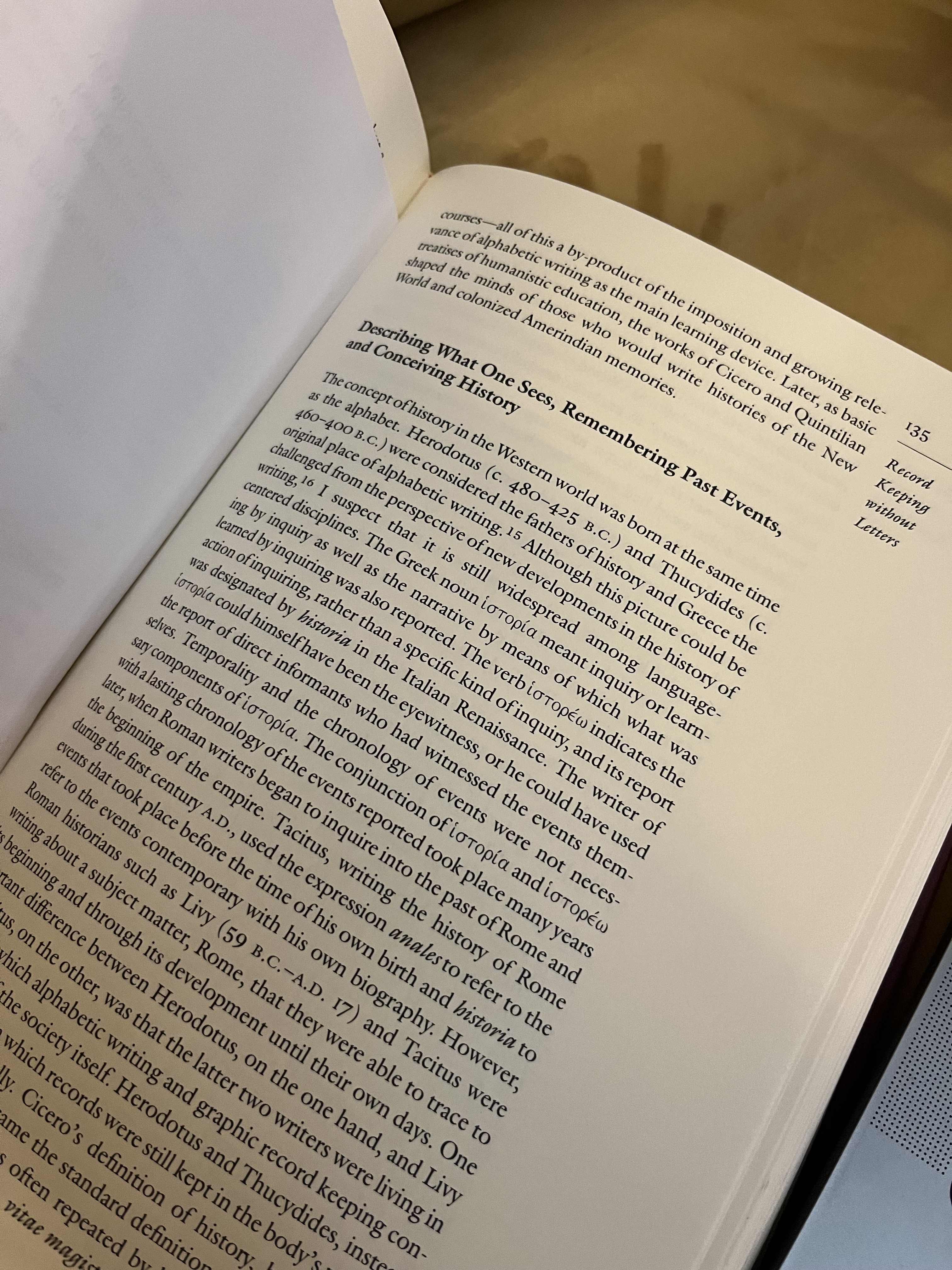
On reading Maria Dermout’s Tien Duizend Dingen

There is a house on an island and there is a garden around the house and in that garden are the graves of three little girls.

I read Maria Dermout’s De Tien Duizend Dingen in Dutch, so the above sentence is as close as I can get to summing up the opening of this Dermout’s beautifully immersive novel.

What captivated me the most about this novel was the intentional use of language and how through language Maria Dermout pulls the reader into the rhythm of a time and a place. It’s beautifully evocative and not only does the writer make us see the house, but we also see the garden, the leviathan who lives near the edge of the water that is in the garden, and then we are made aware of the graves and the possible ghosts of the three dead girls.

There is also the history of a place and of the first Mevrouw Kleyntjes who lived in this house and the second Mevrouw Kleyntjes who still lives in this house. There is the history of these women and the stories of the lives of the people who have interacted with and lived in relation to the house and around them is the history of place.

Somewhere halfway through De Tien Duizend Dingen, I sent a message to the friend who told me about this book. I told her that it made me think of Virginia Woolf. It’s been quite a long time since I read Virginia Woolf, but I remember a similar mesmerising almost hypnotic use of language in The Waves.

We are immersed in the world Maria Dermout writes about. We are transported to a period in time when the then Dutch East Indies (now Indonesia) is heading towards–an upheaval that will lead to a complete social-political change. Through the manner of telling, we can feel the simmering undertone of imminent change. Something is about to happen. What is about to happen is faintly present at the opening of the novel, but as the novel progresses, so does the sense of danger and precariousness–it is enough to make us recognise that at this point in time, the people in this place are no longer willing to simply accept the authority of Dutch masters. In this world, the woman, the house, the garden and its ghosts are relics of a past that will soon be nothing more than a dream.

De Tien Duizend Dingen was published in 1955 by Querido publishing house. It’s also available in English as The Ten Thousand Things.

De Nederlandse Norm van Gezond Bewegen or the Dutch standard for healthy activity

After the exercise portion of our physiotherapy class today, we spent time thinking on what healthy activity meant to us and what plans we could make for ourselves now that recovery and balance classes are coming to an end.

All through the various phases of treatment, from surgery to recovery from surgery through radiotherapy and chemo and immunotherapy, I had more or less been able to maintain some form of exercise. Whether it was walking 10,000 steps a day or going to physiotherapy class, I was able to do that. But the last round that I had with chemo depleted my stores so much that I sometimes felt frustrated by my inability to be stronger. I kept telling myself that I would get stronger.

For more than a year, oncological physiotherapy served like a tether or a safety net. Sure, I wasn’t very strong, but I was doing something and that gave me a feeling of some control.

At one point, I said to our physiotherapist: I probably just have to accept that it is what it is.

Thankfully, she didn’t agree. Thankfully, she suggested that I go on to recovery and balance class which was more intense, but she believed it was the best class to get me to where I wanted to be.

As recovery and balance class nears a close, I am thankful. Even when I grumbled about how hard the class was, I now have the tools I need to balance myself. Today, I was surprised to find that I can do a full plank again. Doing the plank helped me recognise that I can trust my body to carry me and as long as I listen to what my body is saying, I can know that it will continue to serve me well.

Writing this, I have to think about a feisty woman who must have been just a little bit older than me. She was in my first physiotherapy class, but opted not to continue with classes focused on oncological patients.

“It becomes comfortable,” she said. “You get stuck in that grove of belonging with patients who are in recovery, but you have to get out of it. You have to move out of that comfortable space.”

While our physiotherapist didn’t say the exact same words today, they had a similar resonance.

“You’ve built up your core strength, we’ve talked through how to balance and where to go if you need support. Another three months of oncological physiotherapy won’t benefit you more than going out and taking up the challenge of being active again on your own.”

So, even though the option exists to continue in a similar space, I have decided to leave the comfort of being in a space where everyone has been through similar experiences. In some ways, it’s scary. But in other ways, I realise this is a natural progression. As we leave our comfortable spaces, we discover new things. Our horizon expands. We discover new strengths and we learn that we have the capacity to continue to grow and to become even stronger than we are now.

It’s okay to retreat into our cozy spaces from time to time, but we’re not meant to dwell there. We’re meant to be out in the world. Living and thriving and growing and sharing and becoming all that we are meant to be.

(NNGB: 30 minutes a day of active movement whether brisk walking or biking with a normal bike or briskly walking up and down the stairs when done 5 days a week are considered healthy activity. There are other parameters of course, but basically 30 minutes of daily movement is good for you. Movement makes you more resilient and studies have shown that it prolongs life expectancy.)

Blessings and peace to you who read this and thank you for stopping by.