A very short update

I have been quite immersed in the novel draft since end of August and it’s a bit of a surprise to look up and realise that we are already in November. That’s almost three months of non-stop writing at varying speeds and wordages, but I am happy to say that I am heading over the halfway mark as I hope to achieve 65k sometime within the next few days. I’ll likely hit 70k sometime end of the month or early December, but I am steadily moving onward. As my friend, Tricia, reminded me: I must finish.

I acknowledge that one of the things I love the most about writing is when I get to create new worlds. I love exploring different worlds and dimensions, the idea of creating different kinds of being in the world–sometimes similar to, but also other than how we are in the world today. It leads to some complexity when my head is thinking around matters like decoloniality and decolonisation and also when I contemplate kinship and connectedness and how might I bring this all into my on the ground workshop practice.

This November, a project I’ve been involved with for a little while, is starting up with a programme put together by different facilitators and arranged in such a way that we build up towards where participants can create their own micro films. It’s been quite a satisfying experience and I’m looking forward to the start of the workshop when we get to see all of these things manifest in practice space. When the time is right, I might share links to the eventual exhibit of the works that come from this project.

I shared with some participants during the co-creation lab, how putting together this programme was a satisfying act of collaboration and co-creation as we brainstormed together and also asked members of the community what would benefit participants the most. At the heart of the matter are the needs of the community whose voices we want to amplify. So, we want to create this space where it’s more than just the project space, but also beyond that there are possibilities to grow further as a creative, as a storyteller or as a filmmaker. I think that’s one of the aspects I love about this vision: where participants are empowered and given access to the networks so they can move and grow as they wish to.

I shared how one of our facilitators expressed how they wished this kind of programme existed back in the day because of how the programme speaks to the experience of us who are traditionally marginalised. One of our team members said: perhaps this too can be part of the impact of the project.

And because I am a world-builder, I started to imagine a world where curriculums are built and composed differently from how curriculums are today. My science fictional brain and my real world brain collide and I remind myself we are living in the present.

Reciprocity when we go to communities means we are also thinking of how we can encourage people to hope beyond the present. To see a vision beyond now and even if we cannot fund everything, the knowledge that someone has your back and is there encouraging and supporting your vision could already be enough. (To this day, my sister’s voice continues to encourage me even if she’s no longer physically here in this world.)

I still have lots of things I want to write about, but I will end this here as I still have to work on my novel. I am thankful to celebrate a year without treatments. A year wherein the report has come back still in remission and stable. For this I am very grateful.

Maraming salamat for taking time to read. May blessings and peace be with you as you continue on your journey.

Current doings

I’m waiting for CT scan results and I thought it would be good to post this before I get distracted.

I’ve been writing and rewriting the work in progress which expands in size, decreases in size and expands again as I write on it. At the same time, I’ve found myself asking questions of myself as I write. For instance: I think I might have fallen into the trap of trying to write something that’s commercially in line with what’s already out there. You know: a nice hooky opening. Action and bam we are in the middle of the story. It’s not bad, but a part of me was raising an eyebrow and going: what did you want to achieve with that?

I am a bit of an over thinker and I found myself asking what I really enjoy about writing science fiction and fantasy. The answer really isn’t very deep. One of the reasons I enjoy science fiction and fantasy is how there’s this wild space where you get to imagine all kinds of strange or weird worlds that may or may not be related to this world.

Of course, I write about the things I’m passionate about and I write about matters that are on my mind and things I want to work through. But most of all, I love the freedom to create outside of the expectation that I will be writing about my culture or about my experience of displacement or as someone once said at a symposium I attended: I don’t want to tell you another story about my pain.

Perhaps the most freeing thing we can do is to unshackle ourselves from the having to be something and instead embrace what gives us joy and freedom. For example, I’m invested in the furniture of strange worlds and I enjoy the experience of wandering through it in a documentary film kind of way. Oh look, shiny curtains. What are they made of? Oh wow. They’re alive. These plants can tell stories: I’ll sit here and let the trees talk to me now. (I confess, I also do this in real life.)

But as I progressed, I realised that my first draft wasn’t really all that great. It was fun, but it was kind of meh. So, I asked myself a few more questions: Oh hey, Rochita, I know your subconscious does this for you most of the time, but let me ask you if you are aware of who the stakeholders are in your world? I had a short laugh at how I progressed from “yay, sentient furniture” to “here’s my project proposal”. But also, I find myself thinking of how it’s not just about the motions of living, it’s the why are you living there and how are you living there. There’s a part of me that thinks back to the conversations had around the table as we discussed TTRPG creation and where I asked out loud if villains or enemies or oppressors were a necessity in story. (I know I’m gonna eat my question because I’m not sure if a big world story is possible without one of those things coming up and even if the conflict comes organically from the direction of ‘player A does not recognise your innate ability to become an amazing superhero’, there is still going to be an acting opposition, right?)

In the midst of all this wrestling, I read an article penned by someone (I forgot who) where they write about this experiment they did with an AI writing machine while working on a column. They were using a particular program and they fed it with a prompt and with an instruction to check out their blog and write something in the same style and voice. The machine spit out something which the writer then proceeded to rewrite and adjust and by the end of it the only things left over from what the machine had given her were articles like a and the. It was rather fascinating to observe the writer defending the use of an LLM because they ended up writing their column in under an hour instead of more than an hour. A part of me was like: Uh…I’m not so sure why you did this exercise, but it seems to me sitting down and writing the entire thing on your own would have been better. (Also, damn girl, you are a good writer. Why would you do that to yourself?)

I think about the journey I’m taking with this work in progress and how I’m discovering the world as it unfolds on the page and how there are bits of the world that I’m writing now that will likely not make it to the final cut, because I’ve already put them in my notepad under the header: cuts. But I really really like those bits and I had so much fun writing them. (I’m having some thoughts around waste and intentionality and how using an LLM in this way makes me think of landfills and fast fashion. I know. It’s how my brain works.)

After my last posting (How thinking of language leads to thinking about other things) a friend asked me how we could possibly escape the machine if the machine also copies our imperfections. I thought about this for quite a while and then I was reminded of the various movements in the art world and how all of these movements were a fighting against and a coming up against and a wrestling with what is established. History tells a story of invention and reinvention, of how there are always ways of escaping something that becomes establishment and the norm and also I find myself thinking about impositions and how artists don’t really like impositions. So I find myself rather invested in what our answer to this question will be. (If you have any thoughts on it, I’d be interested in them.)

In the meantime, I thought I’d share the link to a weirdly wonderful story which involves playing with language from my lovely friend Weegbree. If you have time, do click to read Brood/Pain/Pan: A Breadtale in Three Movements.

Blessings and peace to you who read this and Agayamanac Unay for passing by.

How thinking of language leads to other things

I’ve been struggling with a cold all week, so my plan to go to Amsterdam today did not push through. Instead, I found myself watching a friend defend her PhD on the livestream. I was a bit disappointed not to be there in person, but life is life and even the best laid plans don’t always work as we want them to.

Later on, I find myself reflecting on the use of language and also how I appreciated how most of the language used felt accessible to me who is not at all an academic.

It had me thinking about a conversation I had with another friend on the purpose of academic writing and who it’s for and why it’s done. If research and the results of research are only exchanged inside the university or the academy or among peers, if the language is not accessible to people who don’t have doctorates or access to that kind of language, what is the use of the research? Maybe we can argue that it has a trickle down effect into policy, but how long before that happens? In particular when we talk about social sciences which have to do with community and with the masses, isn’t it better to use language that will invite inclusion rather than exclusion?

I think about language because, of course, as a writer it’s part of my daily life. Like for instance, the visceral response I have to Spanish. Which I love the sound of it, and yet it also reminds me that we have this long history under Spanish occupation and that’s why the sound of Spanish can have this kind of mesmerising effect and also at the same time serves as reminder of a history that is painful. I wonder how it would be to learn Spanish simply because it’s a beautiful language and not feel as if I am helplessly caught in this net where I know in parts but don’t know because the way I know it is in the expressions that linger like remnants in Filipino consciousness.

Language remains a matter that I wrestle with because of the complexity of our history and it is related not just to colonialism but also to displacement, to the experience of being othered, to that experience of being seen as “little brother” or “model migrant”.

Whether I am writing in English or Dutch, I wrestle with how this language that I use carries so many layers.

So, maybe this is on a tangent, but I admit to side-eying advocates for using AI if you are not a native speaker of a language.

Of course, I agree, a properly constructed sentence helps us communicate better, but if I utilise an AI to take away that wrestling with language, then the story of that struggle is absent from my text. It’s absented because I allow an artificial intelligence to erase it for me. My question then becomes this: what are we afraid of that we cannot write as we speak? And who are we writing for if we opt to allow AI to write for us?

For me, writing isn’t just about producing a cohesive text. Often, it’s not. Writing is about struggling with things and maybe the conclusion isn’t neat or maybe I have to go back and think about it again, or maybe I have to argue with myself again. Maybe there is no resolution or conclusion and that’s okay. If the ends aren’t neatly tied up and the package isn’t neatly wrapped, does it mean it’s of lesser worth?

I suppose what I mean to say is that our use of language reflects the imperfections of our lives.

Writing this, I have to think of the impulse of consumerism and materialism to erase everything that isn’t perfect. Erasing wrinkles. Erasing lines. Erasing imperfections that we may have been born with. All these in the hope of creating perfection. Often, we end up with shallow and grotesque expressions that reflect the soullessness in that pursuit of perfection.

It’s the same with writing or with art. Without the wrestling, without the struggle, without the imperfection, we empty our work of what makes it meaningful.

I’d rather keep my imperfections and keep my soul.

History in episodes

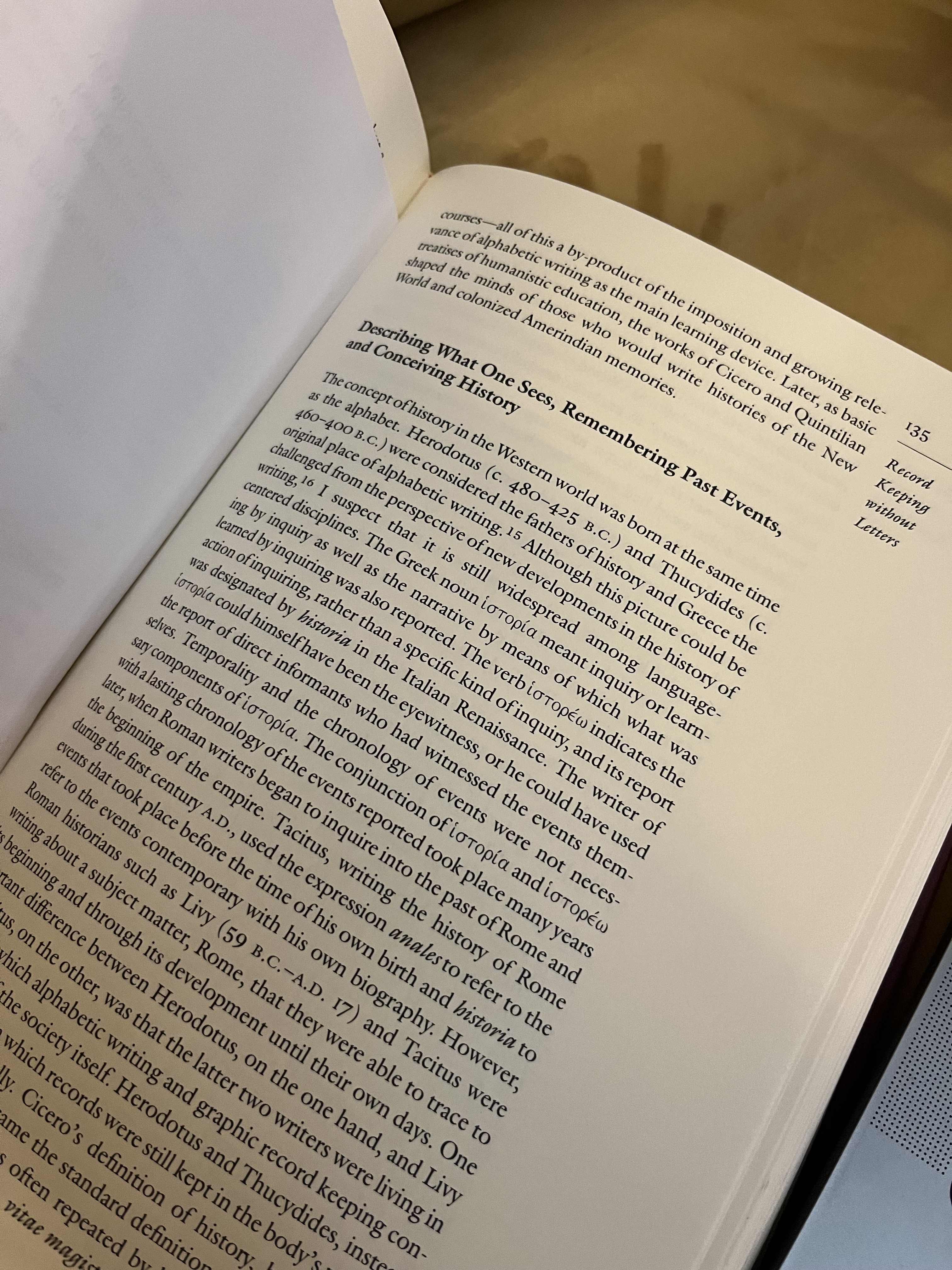
I’m chatting with a person who’s writing about my father’s life while reading this section called Describing what one sees, Remembering Past Events, and Conceiving History in Walter D. Mignolo’s The Darker Side of the Renaissance: Literacy, Territoriality and Colonization. I am seated in the lounge of the Royal Library of The Hague and it’s nice and cool with the small sounds coming from different occupants of the library. In a corner of this lounge, someone is snoring. The seats are comfortable and conducive to a siesta and I am seated on a comfy sofa with my belongings around me–it’s kind of like being at home but being able to focus in a way that’s more library-like (if you know what I mean, you know what I mean). I think about history–family histories–the things that are said and that aren’t said–what we pick up without words having to be said and how we carry these histories with us and how we don’t speak about the painful or dark parts of familial pasts.

Reading Mignolo, I reflect on how histories are made and passed onward from generation to generation. Mignolo writes about histories being kept in the body memory, of histories being transmitted orally. And somehow, I find myself thinking of history that we keep in our bodies.

Recently, a friend of ours spoke of finding out that the father she’d grown up with wasn’t her biological father and the pathway to connecting with her biological family from the side of her biological father all came down to taking a DNA test that matched her with a niece who for some unknown reason decided to also take a DNA test. This connection eventually led to her finding the sister who had been searching for her for a long time.

A whole puzzle with unmatched edges fell into place. Character traits she’d wondered about finally made sense, once she spoke to her sister. Conversations that were cut-off mid-sentence. Hints of something secret–dates that didn’t match. Unspoken tensions that she somehow registered. She had this feeling that maybe there was something hidden, but it wasn’t until it was time to clear out her mother’s attic that she discovered the secret of her paternity.

In an age where histories are being re-shaped, re-written and erased, it feels urgent to think about the position from where histories are being told. Who is telling this history? Under what terms is that history being told? In what form and in what shape and with what words or means is that history being put in place?

It feels necessary too to keep a record of what is happening in the world around us as we keep a record of our own histories.

I think about my father and I wonder what he would say about the ongoing conflicts in the world today. I want to think he would also feel urgency and the need to speak out against injustice. The truth is, I don’t know what his response would be were we in conversation today. That’s because my last memory of him is one of heated conversation where we disagreed on what was just and what was unjust and how we left it in the middle as something we would come back to later on.

Familial history often feels episodic. When we talk about memories and things that happened in the past, we remember in bits and pieces and then we look to each other for confirmation.

I’m going back to reading Mignolo. I want to think about memory and the fallibility of memory and how we tend to remember people in a different light once they are no longer in the world.

Blessings and peace to you who read this. May you find joy in the journey.

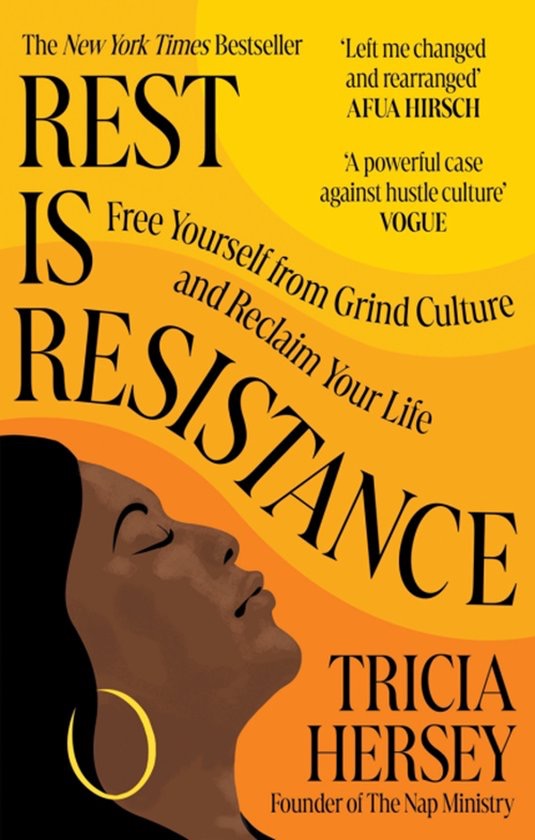
Downtime and Tricia Hersey’s Rest is Resistance

It’s the first proper week of my summer break and I have to admit that I’m really enjoying the time to just chill and do whatever I want. Downtime is a great period to relax and reflect–do a little bit of dreaming, think about lessons learned, about the work that’s been done and what it means. I also find myself thinking on how to encourage a younger generation of activists and collaborators because community work can eat you up if you don’t get the support and the rest that you need.

I recently shared a book with one of my dear friends and a fellow collaborator. It’s a book that came across my timeline and the title of the book drew my attention because it speaks to something I hear coming from workers in different spaces.

“I am tired.”

“I feel like I need more sleep.”

“I want to recharge.”

I hear different variations on this theme of needing rest. So when Rest is Resistance by Tricia Hersey came across my timeline, I felt moved enough to put it into my basket.

Hersey’s book is a quick read, but it is a good read. Reading it, I found myself thinking of how easily a body can be trained to forget about rest. For instance, when I first moved to The Netherlands, I still practiced siesta time (like we do in The Philippines). My in-laws were rather shocked/surprised and I was shocked/surprised to find that Dutch people do not do siesta unless you’re old or sick. I had to un-learn siesta pretty quick because being caught in siesta resulted in that disapproving look that made me feel like I had committed a crime. Nowadays, I’m like: I do not care…I will siesta if I feel like I need a siesta.

Hersey’s story about her father–his life of work, in service to God, in service to family, in service to community, reminded me so much of my father. My father was the youngest of three brothers, all three who were raised by my grandmother who became a single mother when her husband left them for someone else. There are many ways to justify a man leaving his wife and family. My Grandma was quite a character and I have been told repeatedly by other people that living with my grandma was hard for my grandpa and so when he met this lovely young woman who became his second wife, it was understandable that he chose to leave my grandma. I know how much my Dad valued my grandma and how much his Dad’s leaving hurt him. I don’t doubt my Dad had heard all the reasons. He didn’t blame the woman his Dad left them for, but it didn’t make his pain less and it doesn’t make his pain invalid.

All throughout his life, my Dad was determined to be there for us, even as he also lived his life in service to the community and in service to God. He was a doctor, and a lot of times, he would be opening the door to patients when it was way past midnight. Later on, he organised medical missions to places where medical care was inaccessible. Free clinics for those who couldn’t afford it. He was always on the go.

On the day he died, he was preparing for another medical mission.

I think of how the life of my father was punctuated by constant movement. He was so invested in providing for us and protecting us. He wanted to keep my Mom free of stress and worry. He was taking care of so many people and so many things, he didn’t tell us he had a heart condition.

I thought of how the pattern of my life ran similar to my Dad’s because my Dad was my hero and I wanted to be just like him. So, I almost never said no to anything. I found it hard to refuse help. I found it hard to set boundaries and to say: I can’t or until here and that’s it. Then I had a burnout where my body literally refused to function. Then, Jan died. Then, the diagnosis happened. And I was forced to rethink my life and say “no, I cannot”. “No, I don’t have the energy for that.” “No, I have to prioritise something else first.”

It took my body breaking down for me to re-learn rest.

The funny thing is–once you come face to face with it, you understand that the human body isn’t meant to keep going like an engine. Rest and sleep are essential to the recovery process. When I was going through treatment, I thought of how the emphasis is often on the parts of us that are sick or that carry disease. So, I thought to myself. So, there’s this small nodule somewhere. But it’s not everywhere. I can’t do much about the nodule, but the parts of my body that are well, can be made stronger. Can be made stress-resistant, can be helped to be healthier. So, no one knows how much time I’ve got, but no one else on earth knows that either. So, what I can do is be as alive as I can be right now. When my body was weak from chemo, I remembered what gives life to the body is not the body itself, rather there is that source that is beyond human explanation. We are, after all, more than these vessels we occupy and the spirit that is inside us travels on a path undefinable and unconfined by human parameters.

After my last treatment, there was moment where I could feel life gaining momentum. I was working more, I had more energy, I was more focused. I thought: I can do this. Oh, I can do that. Oh, yes. But I also felt this jealous guarding of my alone time–the downtime. Time to recuperate. Time to gather my thoughts. Time to be alone with a book. Time to nap. Time to tune in to that other space–to that other timeless space where dreaming happens.

A lot of what Hersey writes about is recognisable. My hope is that those who read it won’t just read it as this best-selling book where after reading it, they can put a checkmark beside the title. Read that. Liked it. Next book. (That would so defeat the purpose of it.)

I am reminded that my body is a vessel that carries me through life. I can’t accomplish what I want to do with this life, if I’m not taking care of my body and taking time to rest, recuperate and dream.

Writing this, I am reminded again of The Sabbath and Heschel’s thoughts on time and how time is like this cathedral we live inside of. Time isn’t going anywhere. We just need to dwell here and be here and do what we need to do where we are right now.

Maraming salamat for reading. May blessings and peace go with you as you journey on.

There is so much I want to write

There is so much I want to write and there is no way to make the writing short or light or easy or quiet. My thoughts are like waves rising and falling–in constant motion.

I have an ocean drum. A small one that I want to use and share and bring along.

I hold the drum in my hand and listen as the pellets roll around. A loud noise. A crescendo and decrescendo.

Like my feelings and my thoughts.

I know I am much better because I feel the restless yearning tide rising and reaching towards change.

Why can’t borders be porous? Who do we need borders for?

Why does it take us so long to take action? Why do we remain in inertia?

There is so much happening. There is so much injustice going on.

How can we justify genocide? How can we justify war?

What difference does it make? Someone asks. What difference can I make?

My thoughts rise and fall, like waves.

In my head, I stand on the edge of the shore. I dig my feet in the sand and feel the grains between my toes.

From where we are, what we are doing seems so small.

The ocean is big and wide. Our doing is a drop tinier even than a drop of sand. But if we join all our doings together, all these doings could become the shore.

Spring is in the air

It’s been quite a busy period as not only is it exam week for the youngest one, it’s also been a week of appointments and events. I visited the municipal hall last week and handed in my application for a new passport along with a new id picture. It’s probably the first time since I’ve had a passport made that my passport picture doesn’t look like I’m running from the law.

A few days before I went to the municipal hall, I had new pictures taken. On my walk to the shop, I found myself ruminating on my previous passport picture and I decided to ask the photographer if it was possible to have one that was somewhat friendlier. As tends to happen, I walked into the shop and blurted out my thoughts to all and sundry including two surprised customers who burst out laughing when I announced that my last passport picture had me looking like I was a fugitive from the law.

It made for a lighthearted moment and I can happily say that for the first time, I have a passport picture that is somewhat friendlier.

At the municipal hall, there was some difficulty registering my fingerprints. I learned that intense treatments like chemotherapy has this effect of where fingerprints become a bit more hazy. It made me wonder if we ever lose our fingerprints.

“It happens with old people too,” the lady behind the counter says to me. “Not that fingerprints are ever erased, it’s just they don’t register anymore. But we also see this in people like you who have undergone chemo.”

And it somehow strikes me that she hasn’t tagged me as an old person but as someone who has undergone intense treatment.

On Saturday, I travel to Rotterdam. I’m headed there to support the project called Project Take Away. Take Away started as a neighbourhood initiative led by friends Marielle and her partner at ook_huis. It’s a lovely initiative which started with refugees and neighbours coming together to share coffee and talk about coffee and different ways of making coffee and as time progressed it evolved into something more. To celebrate their third year, Take Away released a book documenting three years of work. It’s an impressive volume with beautiful images but most importantly it reflects the vibrant life of this group of people who have been working together, caring for this community and for the neighbourhood and growing into this rich and beautiful art collective.

I think of how we forget the power of small movements like these. How practicing care in the community setting is a radical act in a society that’s grown more and more disjointed and disconnected. It’s not the size of the movement that matters, that we are doing a movement with intention is what matters. The intention drives the movement, drives momentum and leads to change.

I think of how these small movements are so vital when it comes to changing perceptions. When it comes to changing how we see each other and when it comes to making space and holding space for one another. I understand the antipathy that exists on one side of society towards asylumseekers, but I also want society to understand that if it were possible to live humanly where they are, people would not be seeking asylum. Living means more than surviving, living means being able to grow and thrive and fulfil your potential as a human being. This is why we can’t turn our backs or close our eyes to the circumstances that cause people to flee the countries of their birth.

It’s callous to say: ‘go back to where you came from’, when we don’t know the full story.

After the meeting at the Take Away space, we traveled to where Marielle was holding a reading/talk around a book she’d collaborated on together with the artist Chen Yun. This book, titled 51 Personae:Tarwewijk was five years in the making. It’s a unique and beautiful work documenting walks around the Rotterdam neighbourhood of Tarwewijk. What I love most about this work is how in the final publication, it contains the text from these walks in Dutch, English and Chinese. Not on separate pages, but these texts exist side by side on the same page or as extensions of each other.

It made me think of how it’s beautifully representative of the multicultural nature of society and how the world is made up of many different people speaking many different languages and there is room for all of us to live side by side.

Copies of this book are available at Available & The Rat.

I feel like I should write a little bit more about Available & The Rat, but I will do so another time. It’s a space that’s definitely worth visiting.

Spring is in the air. Out in the garden, things are growing. Our prunus tree has grown a bit more sturdy and is spreading out its arms. From the small seat by the water, I have a lovely view of back gardens with tulips coming up, a magnolia tree in bloom and a cherry blossom tree.

I have resolved to go and sit out beside the water as much as I can. For now, I’m ending this lengthy post.

Take some time out of your busy schedule to just sit and reflect on how you want to greet this new season. Life brings with it unexpected things, but when you take time to connect to what’s strong in you, you won’t be easily shaken.

Blessings and peace to you who read this and thank you for dropping by.

Reflecting on what was and what is now

Today, I think of my father standing in the only hospital in Banaue, right after an armed conflict between the government forces and the NPA. (This incident took place during the martial law period when my dad was the only doctor in the mountains.) I think of him being made to choose: Doctor, if you treat one of theirs, we will shoot you. And my father, who was the only doctor in the mountains at that time said to these men: I don’t see government military or NPA, all I see are wounded in need of care. You can shoot me, if you want, but who will take care of your wounded?

And he took care of all the wounded, and in that space of time when he was taking care of their wounded, while they were waiting for him to do his work, the hospital compound became neutral ground.

We are grieving. We grieve for the ones who suffer the consequences of war. We grieve for those who are lost, for those who suffer, for those who have lost. We grieve for what is broken. We grieve for the innocent and for the loss of innocence. We grieve for the brokenness that is in the world.

I think of these things as I prepare for LIMBO, and I think of how we keep spaces safe and how we hold space for those who are vulnerable and need this space. I don’t have much power but I have now and I can ask: What do you need now? What do you need today? How can I help or facilitate or support in such a way that this need is met in this moment that I am with you?

From this point of beginning, I can think in possibilities. I think of mapping the world we dream about, of making visible what is strong and resilient and hopeful and beautiful inside each one of us. I think of how, in a world where conflict has become the norm, liminal spaces are necessary spaces.

Of course, we knew that when they left the hospital, some of my father’s patients continued on with their conflict. We heard their guns in the distance and we knew there were places where it was not safe. But for a moment, when they were in the hospital compound, there was peace.

I want to walk in my father’s footsteps. To say: I am here to serve. If you leave this space feeling stronger, feeling more hopeful, feeling a little more able to face what life throws at you, feeling more connected than disconnected, then that’s good enough for me. I wish I had the power to right all the wrongs in the world, to heal the pains and the illnesses, to bind up what is broken. I don’t have that power, but I can say: I am here in this now. I am also here for you.

This post is more of a personal reflection than one that offers solutions. Because all things in life are connected, because art and life flow seamlessly into and through one another, it becomes inevitable that this too makes its way into my own work.

May lovingkindness surround you and may peace be with you who read these words.

*Having written this, I am thinking of how my father’s stance was an act of resistance. In choosing not to take a side but to address the problem, he opened a path to neutral ground.

workshop prep

Saturday will be the third and final session for the first iteration of the Invitation to Dreaming series. I am in the midst of preparing what’s called a draaiboek for Saturday. This is a useful tool that I highly recommend for people planning workshops. Basically, what I’ve done is create two different scripts for the day. One that’s detailed and one that’s bare bones. The barebones script is an approximate time schedule with lunch and breaks figured out while the detailed script includes notes and reminders to myself with highlighted notes on what it is that I want participants to take away with them. I’ve also written out my lesson plan so that I hear the words I want to say in my head. They may undergo transformation in the telling as I don’t do the workshop with a script in my hand, but the gist of it remains the same.

For this final day, I want participants to reflect on how the exercises we’ve used during the first two sessions are useful when we think of planning out a longer work and working over a longer period of time on a particular project.

Because not all of my participants may end up embracing a writing project, I want to emphasize that while they might not think of story making in terms of publishing professionally, they can also think of writing or creating and sharing stories as a form of legacy related to their journey as BIPOC and as members of a migrant community. We can never underestimate how valuable such sharings are for the younger generation or for the generations that follow. I am still very grateful that my Dad wrote lengthy letters to his children and that he decided to try and write a little about his personal history before he died. Knowing that I have that record that I can look back on now that he’s no longer here gives me this feeling of still being connected.

I have participants who are very interested in embracing writing or storytelling in some form. Some might want to embrace doing roleplay or theater type performances together, while others may go on to write their memoirs or continue to explore other kinds of fiction writing and that’s definitely something I want to encourage. These different types of making are beautiful and magical and transformative in power.

I feel very privileged indeed to be witnessing such flowerings and also to hear people say that they’d never imagined that writing a story was a possibility for them (even if they’d always wanted to)–well, that’s the reason why I felt and do feel it’s important to bring this workshop to communities.

During the communal worldbuilding exercise, one of the women said that it was hard to imagine in a science fiction way and that it was hard for them to envision a future world without thinking of politics. (Imagine me doing mental squee.) And then, this woman went on to share a story that was so damned good, I was like: what do you mean you can’t write science fiction?

In its naked self, story is about writing, sharing, telling what you see, what you envision and what it means to you. And the best stories are the ones that come from that place of feeling safe enough to be vulnerable. I have heard so much joy and laughter among the participants during the first two sessions and I want to continue to remind them that this is the joy you hang onto when you’re in that space facing your story.

I know there are many other things that go into stories, but on the journey, joy is one thing we need to take along with us. Hope, joy, and love, and also community.

For the record

For self-care reasons, I’ve requested that my name be removed from any publicity connected to The SEA is Ours. I’ve written the organizers to say that I will honor the perk that I offered in support of the fundraiser ( a criticque of a piece up to 8000 words ), but I have stated that I don’t want my name to appear on the page anywhere. I am making a note of it here, in case people wonder why my name has vanished from the fundraiser page and also to assure the person who took my perk that I will fulfill my word.

I wish the authors all the best and am thankful to the editors for their understanding.