Current doings

I’m waiting for CT scan results and I thought it would be good to post this before I get distracted.

I’ve been writing and rewriting the work in progress which expands in size, decreases in size and expands again as I write on it. At the same time, I’ve found myself asking questions of myself as I write. For instance: I think I might have fallen into the trap of trying to write something that’s commercially in line with what’s already out there. You know: a nice hooky opening. Action and bam we are in the middle of the story. It’s not bad, but a part of me was raising an eyebrow and going: what did you want to achieve with that?

I am a bit of an over thinker and I found myself asking what I really enjoy about writing science fiction and fantasy. The answer really isn’t very deep. One of the reasons I enjoy science fiction and fantasy is how there’s this wild space where you get to imagine all kinds of strange or weird worlds that may or may not be related to this world.

Of course, I write about the things I’m passionate about and I write about matters that are on my mind and things I want to work through. But most of all, I love the freedom to create outside of the expectation that I will be writing about my culture or about my experience of displacement or as someone once said at a symposium I attended: I don’t want to tell you another story about my pain.

Perhaps the most freeing thing we can do is to unshackle ourselves from the having to be something and instead embrace what gives us joy and freedom. For example, I’m invested in the furniture of strange worlds and I enjoy the experience of wandering through it in a documentary film kind of way. Oh look, shiny curtains. What are they made of? Oh wow. They’re alive. These plants can tell stories: I’ll sit here and let the trees talk to me now. (I confess, I also do this in real life.)

But as I progressed, I realised that my first draft wasn’t really all that great. It was fun, but it was kind of meh. So, I asked myself a few more questions: Oh hey, Rochita, I know your subconscious does this for you most of the time, but let me ask you if you are aware of who the stakeholders are in your world? I had a short laugh at how I progressed from “yay, sentient furniture” to “here’s my project proposal”. But also, I find myself thinking of how it’s not just about the motions of living, it’s the why are you living there and how are you living there. There’s a part of me that thinks back to the conversations had around the table as we discussed TTRPG creation and where I asked out loud if villains or enemies or oppressors were a necessity in story. (I know I’m gonna eat my question because I’m not sure if a big world story is possible without one of those things coming up and even if the conflict comes organically from the direction of ‘player A does not recognise your innate ability to become an amazing superhero’, there is still going to be an acting opposition, right?)

In the midst of all this wrestling, I read an article penned by someone (I forgot who) where they write about this experiment they did with an AI writing machine while working on a column. They were using a particular program and they fed it with a prompt and with an instruction to check out their blog and write something in the same style and voice. The machine spit out something which the writer then proceeded to rewrite and adjust and by the end of it the only things left over from what the machine had given her were articles like a and the. It was rather fascinating to observe the writer defending the use of an LLM because they ended up writing their column in under an hour instead of more than an hour. A part of me was like: Uh…I’m not so sure why you did this exercise, but it seems to me sitting down and writing the entire thing on your own would have been better. (Also, damn girl, you are a good writer. Why would you do that to yourself?)

I think about the journey I’m taking with this work in progress and how I’m discovering the world as it unfolds on the page and how there are bits of the world that I’m writing now that will likely not make it to the final cut, because I’ve already put them in my notepad under the header: cuts. But I really really like those bits and I had so much fun writing them. (I’m having some thoughts around waste and intentionality and how using an LLM in this way makes me think of landfills and fast fashion. I know. It’s how my brain works.)

After my last posting (How thinking of language leads to thinking about other things) a friend asked me how we could possibly escape the machine if the machine also copies our imperfections. I thought about this for quite a while and then I was reminded of the various movements in the art world and how all of these movements were a fighting against and a coming up against and a wrestling with what is established. History tells a story of invention and reinvention, of how there are always ways of escaping something that becomes establishment and the norm and also I find myself thinking about impositions and how artists don’t really like impositions. So I find myself rather invested in what our answer to this question will be. (If you have any thoughts on it, I’d be interested in them.)

In the meantime, I thought I’d share the link to a weirdly wonderful story which involves playing with language from my lovely friend Weegbree. If you have time, do click to read Brood/Pain/Pan: A Breadtale in Three Movements.

Blessings and peace to you who read this and Agayamanac Unay for passing by.
thoughts that could be random but also connected

While the summer break is now behind us, I still have a couple of days before regular scheduling fills my calendar and I’m taking these days to think around what I hope to do for the rest of 2025. There is some tentative and hopeful planning around 2026 as well. Being in Norway made me realise just how much I need to be intentional in freeing up time to focus on the kind of thinking and writing that I want to do. Going back home to the Philippines is still on my wish list and I am hoping that when we hit the one year mark, my hospital visits will be spaced out a lot more so I don’t feel like time is being squashed and I can only do so many things before my headspace is cluttered by hospital anxiety.

I ended up writing a lot on a manuscript that I’d been working on before I was diagnosed. It surprised me to discover that it was almost full-fledged. All that’s missing is the ending which I am working toward. I have no idea how long this story is going to end up as, but I like that I’m not falling asleep while writing it and that it remains on my mind in a way that I’m poking at it and thinking about it and still thinking: I am enjoying this.

At the same time, because I was reading a lot and thinking a lot about and with Mignolo’s work and Glissant’s work, I found myself also asking who in the Philippines or from the Philippines is thinking along similar lines around decoloniality and decolonial practice. I was very happy to find a recent paper written by Simoun Magsalin. Notes towards a Decolonial Anarchism for Creoles who are Neither Indigenous nor Settler is thought-provoking and makes my mind wander in all sorts of directions as I think around the subjects of history making, uprootment, nomad life and also as I think about my own history.

Reflecting on Filipino identity, I’ve thought on the waves of migration, intermarriages, the interweaving of different cultures resulting from that, and then as an added layer, the different occupations and colonisations that happened and how that changed and influenced not just our genetics but also how it has affected and impacted the DNA of our culture.

It feels very much like serendipity that all these thinkings are emerging, meeting at junctions, connecting like lattices or (as someone has said) like fractals. I like the word Creole and how it speaks of that kind of blending and mixing. It feels also so much like the universe conspiring to bring up food for thought at this time when I am thinking on my father’s history, my mother’s history and how that relates to us who are descendants of them.

I am also attracted to Glissant writing about uprootment and circular nomadism as opposite to arrowlike nomadism and I find myself pulled towards thinking around creolization and how that has worked through in Filipino culture and identity. There is so much to think about and I feel like I want to sit with this for a while.

In Notes towards a Decolonial Anarchism for Creole who are Neither Indigenous nor settler, Magsalin writes and lays out what decolonization is not while thinking around decolonial anarchy and what it would mean for the Philippines. ( It would be interesting to hear what people think after they’ve read this writing.)

In particular, I liked this line: Importantly, we do decolonial anarchy as creoles and as post-colonized subjects, not appropriative of Indigeneity.

I’m always surprised and happy when people tell me they’ve read what I write on this blog. I hope it encourages conversations and thinking around things that matter to you who read it.

Daghang Salamat for taking the time to read. May blessings and peace be with you.

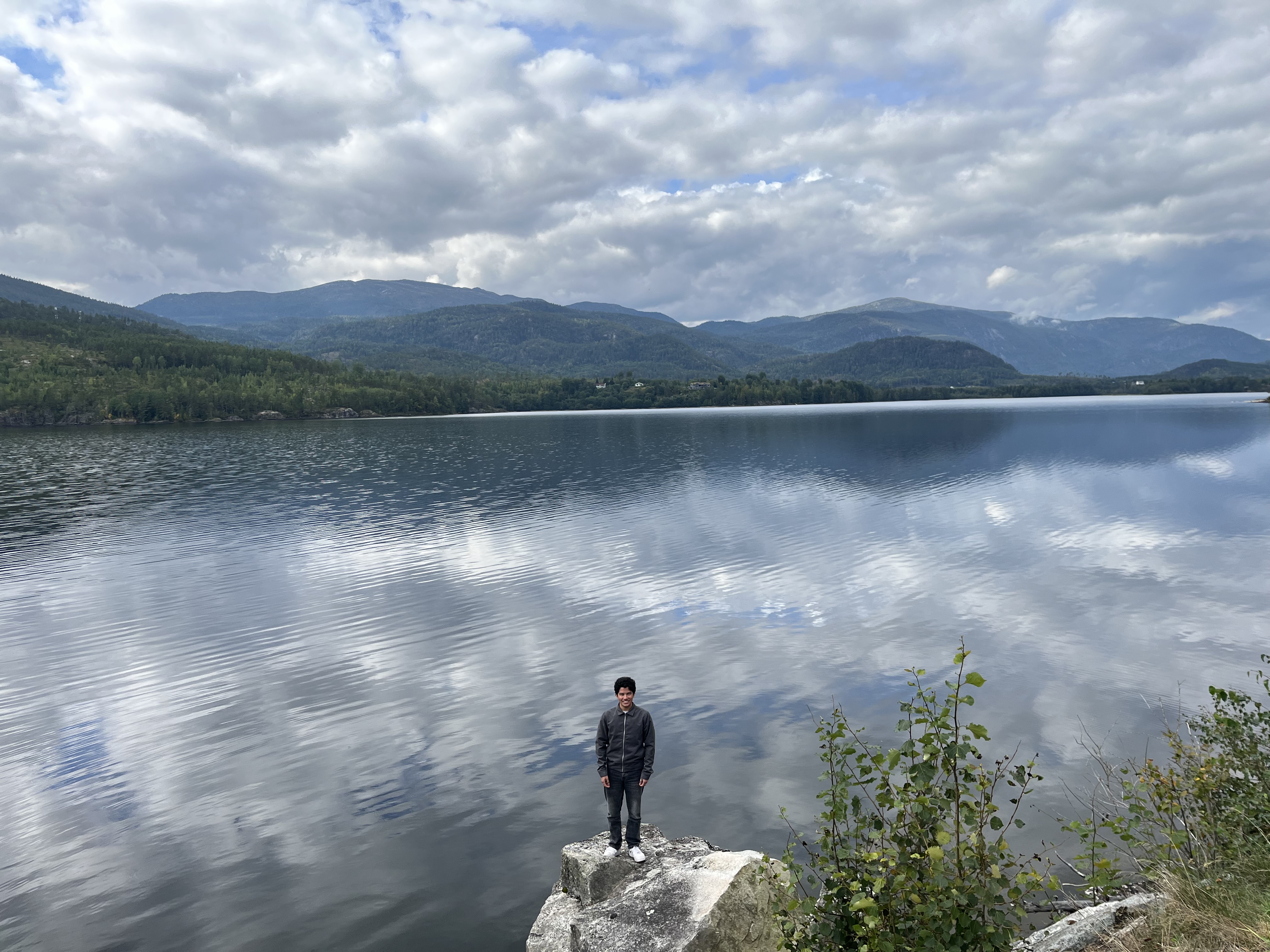
My son stands on a rock, between sky and water. I feel like it is a poetic description of my son’s mixed-race identity. Taken during one of our roadside stops in Norway.

I wish it were Sunday already

It’s been quite a hectic week as we head towards the closing event for the LIMBO workshops. FramerFramed is hosting LIMBO for this event and Maison the Faux has invited LIMBO to make use of their podiums. When we first talked about this closing event, we thought of creating a similar atmosphere to the LIMBO workshops–intimate and cozy, with time to check in individually and converse. But as the programme bloomed and volunteers raised their hands, we now have a full-blown programme complete with a Waacking Dance Workshop and a pole dance presentation from one of LIMBO’s participants.

I do hope that there will be space for cozy conversations as being in FramerFramed does mean that it’s always possible to wander away from the main space for a tete-a-tete.

I heard back from one of the PhD students who visited LIMBO sometime ago with the hope of creating a space with a similar vibe to LIMBO. I remember that we had a lovely call where we talked about possibilities and what can be done to make the space feel welcoming and safe and how presence and intentionality are key elements to such spaces. It was lovely to hear about the success of their project and also to hear that this particular student was able to complete their thesis. I’m hoping we meet again as I would love so much to hear what it was like for them and also to compare notes.

LIMBO’s future is a bit up in the air at the moment as the last grant request wasn’t successful, but I’m sure that whether it’s in this form or another form, LIMBO will continue on and the people who make up the community will find ways to keep meeting and supporting one another.

I also think it’s good for facilitators and organisers to have room to self-reflect, to recuperate and to think on what kinds of spaces we might want to be in and how we would like to continue working and supporting communities in the future.

While I am looking through the fiction work that I have on my drive, my main thought at this period is thematising and gathering together the nonfiction writing that I’ve done. Part of which is almost done as I finally managed to divide the themes into five sections. There remains the matter of collecting the pieces that belong with each theme and then perhaps editing/expanding/completing them.

There have been times when I’ve felt like I was less than because I haven’t completed my novel yet. I sometimes felt that my voice was of less value than the voices of those who had won awards or been recognised as great authors. But a beloved friend of mine sent me such a heartwarming message reminding me that it’s not writing a bestselling book that makes our voices matter in the world. Dear reader, I cried listening to that audio message.

I was reminded of the joy that blossoms in my heart when I hear someone share a story or a poem or a piece of art accompanied by story. There was this one woman who shared how they’d never imagined they would be able to write and express themselves because they’d constantly been told their grammar was always wrong. I was like: “screw grammar. That part you can worry about if your objective is getting published. But now, at this point where you only want to share a story, just write.”

Often, we believe that we can’t because we’re told we haven’t mastered the language well enough. But I can testify to how if you can write in the same way that you would say it, a good editor will help you polish and refine your work so what you want to say comes across in the way you meant it. Don’t use chatgpt or whatever google translate. It won’t get your meaning across. Write it in your own words. We keep talking about decolonisation, but we still keep wringing ourselves into spaghetti forms to fit into something we are not.

Let language (esp the English) flow in the way it flows in your head. When I’m writing in the space of my stories, I’m not thinking English the way USians or British people think or write English. I’m thinking and writing English the way I hear the people in my head speak it. And that’s English that reflects the different influences on my tongue. Like how my son will say: You have a very Filipino accent. But my brother will say: your accent is no longer Filipino. And a Dutch friend says: Oh, you sound American. Lol. Yes. I have a mongrel tongue and I also do have a tendency to absorb the way friends who have grown up in different non-white settings speak. Those are the people on my tongue and in my ears. So yeah. It’s different.

At the first workshop I gave for LIMBO, I said to the participants–as we all do not come from the same language stream, don’t make yourself write in English. Don’t make yourself write in Dutch. Write in the language that comes to you naturally. We will understand the emotion. And we always do.

Anyway, I was intending to write about LIMBO’s upcoming booklet launch and somehow this post has turned into an all out discussion of me with myself as I think about writing. During the Spring School Co-creation Lab at the VU (Vrije Universiteit Amsterdam), I asked Saba Hamzah who is a Yemeni poet to read to us from work she’d written. It was a memorable moment to be listening to her read a piece she’d written in the three languages in which she lives. Yemeni, Dutch and English. To me such work is a reflection of the world we live in. We are multi-language, multi-culture, multi-faceted. Our work reflects that too. (Please click on Saba’s name to get to her website.)

Thank you for taking time to read this “hak op de tak” post. May you find joy in the small moments of everyday.

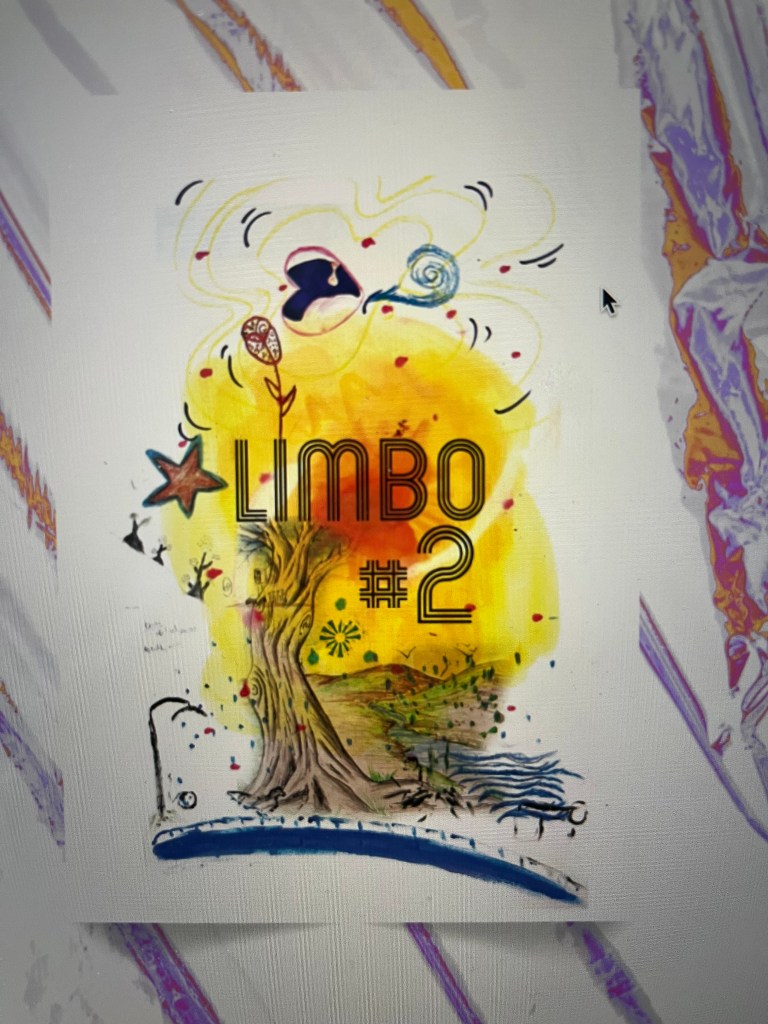
LIMBO’s booklet launch is this coming Sunday, 20th of July. Click on the image to get to the announcement.

This cover for LIMBO’s second booklet was designed by the wonderful visionary artist Ariya.

**I’ve picked a new book to read and possibly write about. Check the sidebar.

All the things and how do I choose?

In my previous life, goal setting was a little bit like this thing I would do in intervals. Like at the start of the year, I might set a couple of things for myself and at a certain point a sense of panic would creep in when I realised there were still things I hadn’t done.

Yesterday, as I was reading through the life after treatment module, the goal setting part of it had me thinking. For instance, if I say I want to travel more. What exactly do I mean when I say that? If I say I want to spend more time with my family, what do I really mean by that? And what about getting back to writing and finally finishing that work in progress? What about leaving a legacy and creating space for others? How and where do I even start? That familiar sense of panic came over me–that sense of I’m not sure I have enough time to do all the things.

To be honest, I didn’t actually think about these things when I first listed things down. I basically just filled in whatever and went on my merry way. But yesterday, I realised that I had a rather long list of things I want to do and it’s probably one of the reasons why I’m feeling a bit out of breath because how does one choose and where do I even start?

Thankfully, the module provides the following questions in support, some of which are:

How far along are you in regard to this goal?

What do you need to accomplish this goal?

Do you have all you need to get there?

One of the things on my list is to plan at least one weekend every year when all of us spend time as a family in one house. Last year, we went to Spa in Belgium. We are rather fond of Formula One and I’ve always wanted to visit a race track. Not only is the Spa circuit legendary, it’s also a beautiful track surrounded by lots of nature.

As I was in treatment at the time, my youngest spent most of our visit to the famous Spa circuit pushing me in the wheelchair. I didn’t get to climb up to the viewpoint tower but I loved that the kids got to do that and see it for themselves. It was only for a weekend, but we had a lot of fun with time together as well as time separately.

This year, I’m thinking of a place closer to home with more possibilities for going out into nature and taking walks because I’m more mobile than I was last year and I have more energy than I had.

But while I can plan things and organise things, while music and artmaking and teaching are proving to be quite friendly and within my grasp, I’ve discovered that getting back to writing is a lot more challenging than I had imagined.

Do I struggle with the writing because my brain isn’t quite up to it yet? Or do I struggle with the writing because writing (even when it’s fiction) feels very close somehow and I’m not yet ready to go there? It’s telling that I’m writing about not being ready because that’s actually probably what it is. Will I be ready to go there?

Writing even when it’s fiction has often been a way for me to work through whatever is weighing on my mind at the moment. I doubt that my work is commercially appealing because writing to an audience has probably been the last thing I’ve thought about. I’m not sure if that makes me a bad writer–but basically I write things that tug at me and call to me and make me take that deep dive and a lot of times the dive is personal and involved with the body and how the body moves through society and navigates all these questions that arise. What impact does space have on the body? How does society impact the body? And can one body have an impact or influence in the space they occupy? If so, in what way? (Yep, that’s one example of the process my brain goes through and maybe it’s helpful that I’m writing about it because this is probably a step towards getting there.)

I wish that answers were easy, but often answers are complex and require time and patience and a lot of times solutions to problems are never easy. The concept of good or bad and black and white is simplistic when we live in a nuanced world where many different shades go into what we imagine is one color.

So, this leads me back to goal setting and the objective of it.

Perhaps it’s so we don’t get this feeling of empty hours or days that we must feel. Maybe that’s it. Maybe it’s to give us a sense of purpose. Perhaps it’s to make us feel useful or accomplished. Oh hey, I did this task and that. I cleaned the bathroom without breaking down and I still had the energy to iron some clothes. That’s a win.

Now that I think about it, this sense of time running out is an illusion. We get caught up in the rush of “I must do this” and “I have to accomplish this” or “I must be useful” or whatever narrative we say to ourselves.

I think that we all have the time we need/ to do what we need to do/ and /time never runs out/. We may think that time runs out when we close our eyes in final sleep, but actually time keeps on running and what we accomplish as warm bodies reverberates even after our bodies are gone from the timeline.

Writing about this has helped me shed the rush. What needs to be done will be done and if it’s not done perfectly or as exactly as I imagine it could be, it will be enough. When I look at the timeline, I realise that actually what matters is now. From a minute ago to this minute to the minute that follows after this one. These are the moments that I can make count. Maybe I can give my son a hug or by practice my brush strokes (I’m learning how to use watercolour), or I can go out and find rocks to use for an exercise with the group. Maybe it’s something else. There’s no rush, there’s no panic. Time isn’t running out. I am moving exactly as I am meant to move within the time I occupy.

As usual, this is me thinking out loud on the page. I hope that it’s helpful to someone. Take time to do what matters to you now and if you’re feeling rushed, breathe.

Thank you for taking time to read this. I wish you blessings and peace. Maraming Salamat.

Challenges

So, I decided to take the challenge and keep on writing in Dutch. When Liang de Beer asked me if I would like to take a shot at writing something for Modelverhalen, I thought–let’s say yes. How hard can it be?

Well. I am here to tell you that writing in Dutch is hard and challenging. Dutch isn’t an easy language and I actually caught myself turning English words into Dutch by changing the spelling. I know. Thank goodness for the native Dutch speakers who live in my house and who are pretty tough when it comes to my use of the Dutch language.

Even if my story doesn’t make it into the anthology, I have learned so much from the process of being edited by Liang. From fuzzy first draft, through tangled experimental versions, to the draft that I ended up submitting today, I can see the process the story has gone through and how the draft I ended up submitting tells a more cohesive story than the draft I submitted first. (Plus, I also feel like I learned to use the language better than before.)

Writing in Dutch also made me realise that while I may still have a journey ahead of me, I actually do enjoy writing in Dutch. I like the rhythm and the sound of the language and I want do discover how to use it to tell the stories I want to tell.

I think about life and how life is a journey and a process and learning to write in Dutch is for me part of my journey and part of my process of becoming a better inhabitant of the Earth. I am learning too to be more patient with myself because process cannot be rushed and neither can you rush the journey. Perhaps this is why it takes about 100,000 words.

I’m thinking about process and journey as I also recently took another step in the journey towards becoming stronger. I recently signed up for a physiotherapy class which is focused primarily on cancer patients and the needs of cancer patients.

Back before my diagnosis and all the treatments that followed, I pushed my body to the limit and I could lift and carry and do a lot of things which my body can’t do as well as it used to. What’s often frustrated me is how I seem to just run out of energy even when my brain tells me: we have lots of things to do.

During the intake my physiotherapist gave me the word “doseren”. In translation, the goal is to learn how to budget and make use of my energy so I don’t end up constantly with a deficit. Not giving your body time to recover energy results in a constant deficit until you are no longer capable of doing anything. The objective of physiotherapy is to make sure that your energy level eventually gets back to the point it was before all the traumatic stuff happened to your body.

I learned this lesson during my second class. I had had a broken rest and wasn’t feeling in tiptop shape, but I still came to class. My physiotherapist observed that my energy was low and told me not to make use of the weighted vests. When I insisted that I could, she said: remember what I told you about doseren?

It was a humbling moment. I had to admit to myself that in that moment, if I took the weighted vest, I might be able to finish the class, but at the end of the class, I would not be able to do anything else. Acknowledging the limits of my energy, allowed me to recover well and the day after class, instead of taking my usual quickstep one hour walk, I decided to take a gentle half hour stroll.

I think of how we’re often focused on the goal–on getting there–on achieving something–on becoming whatever it is that we want to become. But I am learning that process is important. Maybe even more important than the goal.

I have this tendency to be so focused on getting somewhere, that I forget to pay attention to the things that matter most. Being rooted in now. Focusing on what my body is telling me. These are things that are easy to forget when life is going at its usual pace. In a manner of speaking, it’s a blessing to be taught to slow down.

I am in the process and I am learning and what I am learning is all helpful. Nothing in life is ever wasted.

Blessings and peace to you who read this and don’t forget to take time to be in the moment.