De Nederlandse Norm van Gezond Bewegen or the Dutch standard for healthy activity

After the exercise portion of our physiotherapy class today, we spent time thinking on what healthy activity meant to us and what plans we could make for ourselves now that recovery and balance classes are coming to an end.

All through the various phases of treatment, from surgery to recovery from surgery through radiotherapy and chemo and immunotherapy, I had more or less been able to maintain some form of exercise. Whether it was walking 10,000 steps a day or going to physiotherapy class, I was able to do that. But the last round that I had with chemo depleted my stores so much that I sometimes felt frustrated by my inability to be stronger. I kept telling myself that I would get stronger.

For more than a year, oncological physiotherapy served like a tether or a safety net. Sure, I wasn’t very strong, but I was doing something and that gave me a feeling of some control.

At one point, I said to our physiotherapist: I probably just have to accept that it is what it is.

Thankfully, she didn’t agree. Thankfully, she suggested that I go on to recovery and balance class which was more intense, but she believed it was the best class to get me to where I wanted to be.

As recovery and balance class nears a close, I am thankful. Even when I grumbled about how hard the class was, I now have the tools I need to balance myself. Today, I was surprised to find that I can do a full plank again. Doing the plank helped me recognise that I can trust my body to carry me and as long as I listen to what my body is saying, I can know that it will continue to serve me well.

Writing this, I have to think about a feisty woman who must have been just a little bit older than me. She was in my first physiotherapy class, but opted not to continue with classes focused on oncological patients.

“It becomes comfortable,” she said. “You get stuck in that grove of belonging with patients who are in recovery, but you have to get out of it. You have to move out of that comfortable space.”

While our physiotherapist didn’t say the exact same words today, they had a similar resonance.

“You’ve built up your core strength, we’ve talked through how to balance and where to go if you need support. Another three months of oncological physiotherapy won’t benefit you more than going out and taking up the challenge of being active again on your own.”

So, even though the option exists to continue in a similar space, I have decided to leave the comfort of being in a space where everyone has been through similar experiences. In some ways, it’s scary. But in other ways, I realise this is a natural progression. As we leave our comfortable spaces, we discover new things. Our horizon expands. We discover new strengths and we learn that we have the capacity to continue to grow and to become even stronger than we are now.

It’s okay to retreat into our cozy spaces from time to time, but we’re not meant to dwell there. We’re meant to be out in the world. Living and thriving and growing and sharing and becoming all that we are meant to be.

(NNGB: 30 minutes a day of active movement whether brisk walking or biking with a normal bike or briskly walking up and down the stairs when done 5 days a week are considered healthy activity. There are other parameters of course, but basically 30 minutes of daily movement is good for you. Movement makes you more resilient and studies have shown that it prolongs life expectancy.)

Blessings and peace to you who read this and thank you for stopping by.
Stable

Everyone who’s had a brush with cancer is familiar with scanxiety. Last week, I had a new scan but I was able avoid being anxious about it as last week’s schedule was so packed. It wasn’t until I was reminded that my oncologist would call with the results that I started to feel some of the usual tension.

Traveling back and forth from Amsterdam, and going to the VU for Spring School was so inspiring and invigorating. I felt like I was back to being more like myself before the diagnosis and all the treatments.

But yesterday came around and I felt a little bit of tension waiting for the phone call. To keep myself from checking my file and making my own interpretations of things that aren’t my expertise, I proposed traveling to an art shop to pick up more paper. I have a thing about paper. Even before I ventured into artmaking, paper has always been a fascination for me. I have a bit of thing for notebooks and have a preference for unlined ones that don’t have bright white pages. I can’t explain why, I just do.

Anyway, my oncologist called towards the end of the afternoon. By the time the call came, I was so engrossed in trying to make sense of my messy filing system that I was a bit surprised. So when she told me that it was good news and my scans were stable, I was a little bit unsure how to feel about it. I mean…last time the news was surprising and wonderful. Despite being out of treatment for almost five months, the remaining nodules continued to shrink. Now, six months later, we are stable.

What does it mean?

In a practical sense, my oncologist said that we’ll just go on as we are and she’ll schedule another scan towards end of July. My scans take place every two months as I am being monitored in the context of a clinical trial.

A friend said to me that it’s a good thing to be constantly under medical supervision. That they have another friend who pays out of pocket to have scans done every six months because they’ve been declared cured and dismissed out of the system. The thing is, being declared cured doesn’t really mean much because you never know. I can understand this. I was declared cured once, except a few months later, I wasn’t really.

Stable.

It’s good news and yet I wept a little bit. I want so much for the remaining nodules to be just gone. But stable is good. It means there is no growth. It means I can slowly start to dream again. I can think of enrolling in another art class. I can think of committing again to the work that I’m doing with LIMBO. I can think of doing more for the community and I can give more in terms of attention, focus and energy. I like this me who is present and focused.

And so, I’m piecing together the histories of my life and I’m thankful that even though the files on my computer are messy, my work is there to remind me that I was reaching for something before cancer happened. I can’t go back, but I can move forward.

Nothing in life is guaranteed. We can only do what we can do in this moment. In this now. My encouragement is to live life to the fullest. Be present now and (cliche as it sounds) be the difference that you want to see in the world.

Blessings and peace to you who read this and thank you for stopping by.
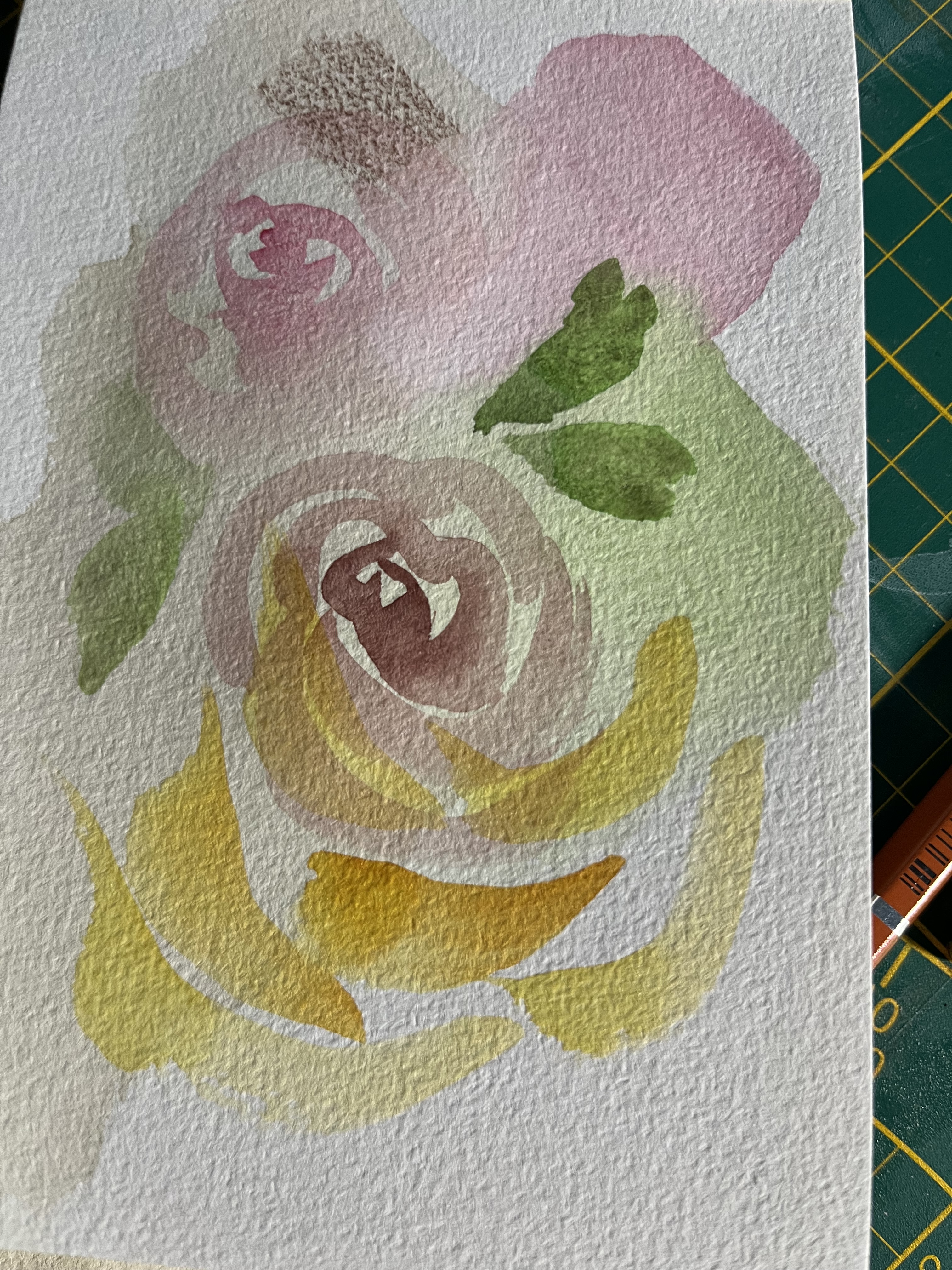
From my desk: A small relaxing play with watercolors.

Recovery and balance after cancer treatments

It’s a sign of recovery that I’m updating this blog more often. That I have the energy to finish writing a post on this blog is a big thing. Back in December, I would start writing and then end up not finishing because posting any kind of update cost so much effort. I still have some of that fatigue–but then in social situations where I think up words and then go–ah, it’s too tiring to say them.

One thing that’s helped me a lot through treatment has been the surprise called art making. I didn’t know just how much it would help me through the difficult days when I had no words, through the days when I couldn’t do more than sit on the couch or putter around the living room. A lot of times, my art making was me throwing color on canvas while I argued out loud with God. I think of the kind of upbringing I had were I had this idea that one was supposed to sit quietly in church and be really respectful when talking to God and use your best words because everyone else was doing that. But I have grown more convinced that God actually doesn’t care much for our pretty words.

I’m writing this as I wait for the results from my most recent scan. It’s funny how there’s always this feeling of tension after a new scan–it’s a moment where I tense up before I think: Ah, what’s the worst that can happen?

I mean, I had the “we cured you” talk, three years ago. And then three months later that changed to ” we thought we cured you, but actually we didn’t, and we don’t know if we can ever cure you. But this is the plan.”

I’ve had conversations where the scans were iffy. Where the results were non-conclusive but I was a good candidate for a clinical trial where I might get a chance at a new (as yet unavailable) drug. I’ve been through two trials and in none of these trials did I get the trial drug.

My last drug was Doxorubicin. It had this distinct characteristic of being red and in the lead-up to November, I saw some fake dextrose bags with red liquid being sold for halloween in shops. I made a joke about how my drug was the ultimate halloween drug. Doxo is scary in its strength and in its side effects and most days I was just out for the count after an infusion. The funny thing though was how it made me so hungry that I grew by 12 kilos in the months I was having the infusions.

I had six infusions of doxo as that was the trial requirement. By the sixth infusion, I was so relieved I felt like crying and cheering all at the same time. I just wanted to finish treatment and thankfully it looked like doxo did its job. Once again, we had the “we really can’t say you will ever be cured” talk. By that time, I was like: it doesn’t matter. I am so tired of hospitals and needles. I mean, I love my oncologist, but I would love if a time comes when I don’t have to see her anymore except for a social catch-up.

I’ve been out of active treatment for more than three months, but have to have a follow-up scan every two months. Each time, I almost forget until a reminder shows up that I have a hospital appointment.

I’m doing so well at physiotherapy that I’ve been moved to a program called Recovery and Balance. It’s a 12 week program towards recovery and at last night’s information evening, I had this feeling of: Oh dear, I didn’t know it was going to be this intense. I admit to being a little bit annoyed when I realised that I would have to rearrange all my planning around this program for the next 12 weeks.

But studies show that people who have gone through life-changing diagnoses such as cancer and its ensuing treatments, benefit a lot from programs such as the one I have signed up for. So, despite being annoyed, I have duly rearranged my agenda to make sure I can complete those 12 weeks.

Our physiotherapists tell us that it’s not just the physical that needs time to recover. Recovery is also psycho-social. It takes time to work through what’s happened and often people think it’s going well, but it turns out that there could be an underlying depression brought about by so much change and trauma.

I have to say that it’s when you’re going through hard times you’ll find what matters to you most and also you’ll see the people who will stick no matter how tough things are. It’s also in the aftermath of everything, when the busyness of hospital visits are over that you discover that there are people who were just waiting for you to have the energy and time to re-connect. I’m so thankful for those people. For friends and loved ones and for partners and fellow collaborators who refused to write me off because I had cancer. I’m thankful for people who kept me writing and who made the extra effort to reach out and ask me to submit and remind me about calls for stories. (By the time I was doing Doxo, I was just so out of it, I couldn’t even understand emails though.)

During one of our talks, I said this to my oncologist: Doctor, my life isn’t cancer.

Yes, my oncologist said. You are more than cancer. Your life is so much more than that.

I am thankful for an oncologist who sees that and who says those words to me out loud.

This post is a lot of personal, but I hope it will help someone out there who reads it.

To you who read this, thank you for reading. Blessings and peace.

Finally, an update…

It’s taken time for me to get around to updating this online journal. There was a season when I felt as if I was inside a time capsule, watching the world go by, observing, doing, moving in some direction but always within that capsule. I had my last treatment right before December and since that time the capsule enclosure has become quite porous. At times, it feels as if a wild and eager rush pushes outward from inside me–a wanting to do and to go and to undertake so many things.

My oncologist says: we don’t know. We can’t say or predict how things will turn out. But the chemo has done what it’s supposed to do, and for now I have been moved to the list of people who are under observation.

It took me a good number of minutes to process what my oncologist said. I keep going back to that moment and checking in with myself. There are still things in my body–a nodule and a lymph node are mentioned in the scan report–things that can’t be easily removed through surgery. And yet, my oncologist isn’t worried. All I can feel is relief that chemo has ended.

I think to myself: There are more people walking around with things in their bodies, living lives and just being and doing and staying in the now. The length of our life spans is not something we can control, so why worry about that?

If you can let go of worrying, my physiotherapist says, then it’s already a win.

Why worry about something I can’t control? I reply. This, I can control. I can train my body to be physically fit. I can work to become stronger. Instead of obsessing about weight, I make sure to eat a balanced diet. As for the rest, I leave it in the hands of God. (So very Pinoy. Yes.)

I’ve decided that I’m going to keep living and keep doing things that I love and things that give me joy. I’ve decided to hold on to faith and to this knowledge that we do what we can do in the time allotted to us and life is about living one day at a time.

It’s going to take some time to find a new balance and I am thankful that time is being made so that I can find that new balance. Where people talk about spoons, our physiotherapists talk about buckets. You only have so much energy in your bucket and some things will deplete your bucket quicker than other things. You can empty your bucket in one go, but recovery is better when your bucket isn’t completely empty at the end of the day. Brain work, thinking work, social interactions, new situations can empty your bucket faster than doing the laundry and vacuuming your house. You’ve been in a space of time where for a long while, you’ve had to do all you can to just get through it. Once you’re no longer in treatment, it’s tempting to succumb to demands we imagine are being placed on us. But, it’s okay to say: no, I cannot or no, I don’t have the energy for that. It’s okay to pick and choose and to say: I can only do one or two things in a day.

And then, my physiotherapist says with a laugh. Of course, it’s in pushing ourselves that we discover our limits. And once we find those limits, we know how far we can go. If we go about it the right way, those limits expand as time passes.

I think of how the state of being in a limbo is one that allows us to become rooted in the present. In this now. In this moment. Tomorrow will come. Tomorrow’s worries are for tomorrow. Today, I am doing what I can to the best of my ability. I am here in this moment and I am thankful.

I didn’t have the brain space to write about LIMBO, but our December celebration was lovely.

Blessings and peace to you who read and may 2025 bring good things your way. Maraming Salamat for stopping by.

A note for readers who might be going through cancer treatment: if it’s possible and doable, oncological physiotherapy is a big help. I am thankful for the person who posted about it on a forum somewhere because it’s not standard at the hospital I go to. I found out that it’s standard for some hospitals though.

the cancer update

It’s been a really hard week for us as we received news that the hormone therapy that had been keeping cancer cells from spreading was no longer doing it’s optimum work. I now have two nodules in my left lung. It’s not yet life-threatening (my oncologist makes sure I understand this). On the scan, you can see that compared to the mass of my lung, the nodules are pretty tiny. But those tiny things, if not contained, can spread and so to stay ahead of it, my oncologist suggested that we take part in a new study for a monotherapy which combines a protein and a chemotherapy targeting the cancer cell. For homework, we were given a bunch of papers to read so we would understand all the risks involved.

For the first time since diagnosis, I find myself struggling. Uncertain about which direction to go. I wonder if going through another round of chemotherapy will help. When I went through it the first time, we ended up having to postpone treatment three times because my leukocytes were tanking. It got so bad at one point that I had to have a blood transfusion. Weirdly, I was still quite energetic and healthy. A puzzle for my oncologist who thought it was strange that I wasn’t more tired. Looking at my values today, I noticed how hormone therapy did lessen disease activity drastically. However, the scans say the hormone therapy is no longer as effective as it was at first. Hence why we are considering this idea of going through chemo again.

I think that when we’re facing something for the first time, when we don’t really know what’s going to happen, we just go through things trusting that all will be well, but having gone through it and knowing what to expect, we start to weigh things a bit more. Do I really want this? And if there are other options on the table, maybe it’s worth looking at them again before making a final commitment to this trial? My doctor says that the length of effectivity from our existing options are a bit uncertain compared to this new treatment that she’s hoping I will get. But then, again, the trial is a lottery. So, I still have a lot of questions for when we next meet and I think it’s okay and it’s important to ask those questions.

By itself, the infusions don’t hurt. I made it through chemotherapy quite well, except for the final two sessions when I lost all my hair, including my eyelashes and my skin turned slightly grey. I kept teaching throughout treatment (except for days when I felt really sick), I still got to play with the band, and I made art. (And oh yeah, I wrote my first Dutch language SF story.)

I think of how in my work, I’ve sometimes used the body as a metaphor. Here, the body is a world. An anomaly has appeared in this world, it’s one that holds the possibility of taking over the world and consuming it. You just don’t know what needs to be done or how to go about it. Is burning it all down the right approach? Are there gentler and kinder approaches that will allow the body to find equilibrium and balance? What approaches will allow me to contain this anomaly so it doesn’t spread and kill everything else that’s healthy? How do you keep the systems that are healthy in that state of health? (Because I am clearly quite healthy except for existing nodules and small tumors.)

Yesterday, we had a visit from a friend who told us that maybe we have to let go of the hope of a cure. That I may be hoping so much for a cure that I forget that life is more important than the cure. And it had me thinking: if the doctors tell you they only hope to keep the disease chronic for as long as possible, what does that mean? Is it like having high blood pressure and having to take pills for the rest of your days? I don’t mind taking pills. It’s just that I never liked needles and I have developed a sort of traumatic response to being pricked by one. It doesn’t hurt, but I still cry. I say to the nurses: it’s the body that can’t help crying.

A part of me rebels against the thought of letting go of hope of a cure. Like: hello. There are advances being made everyday and all these new studies coming out. But at the same time, I also understand that nothing about this disease is predictable and what works for one patient may not work all that well for another. I understand the gravity of the situation and why I have to take it seriously. Which I do, except I get easily distracted by other things…like how all of what’s going on is great research. And I am still working on this novel draft and I am close to 70k. And hopefully I can finish this draft so by the time treatment starts, I don’t have to worry about the details but can focus on the rearrangement of certain things and filling in blanks like place names and character names.

According to studies, someone spontaneously getting healed from cancer without any treatment happens once in 100,000 cases. We still can’t explain why it happens or how, but it does happen. I’m not thinking of ditching treatment, btw. I just can’t help thinking about this fact that none of us knows just how long or how short our lives will be and none of us can predict what happens next.

We often think life is ours for the saying–we look at the future and it seems to stretch on into forever and we think we’ll just keep on going and doing and planning and racing from one moment to the next until we are faced with the truth of how life is ephemeral and we are ephemera. So, what does it mean to live and what do we mean when we choose life? What kind of marks are we making in the spaces we occupy?

I’m not yet sure what path of treatment we’ll take, but I do know that I would like to still be here on earth for a good while for the sake of my boys who have already lost so much. At times, I think that it just isn’t fair. And then, I think but we were never promised fairness in life. What we were promised is strength for the journey ahead.

Agyamanac Unay for stopping by. Blessings and peace be with you.

Titles are a challenge

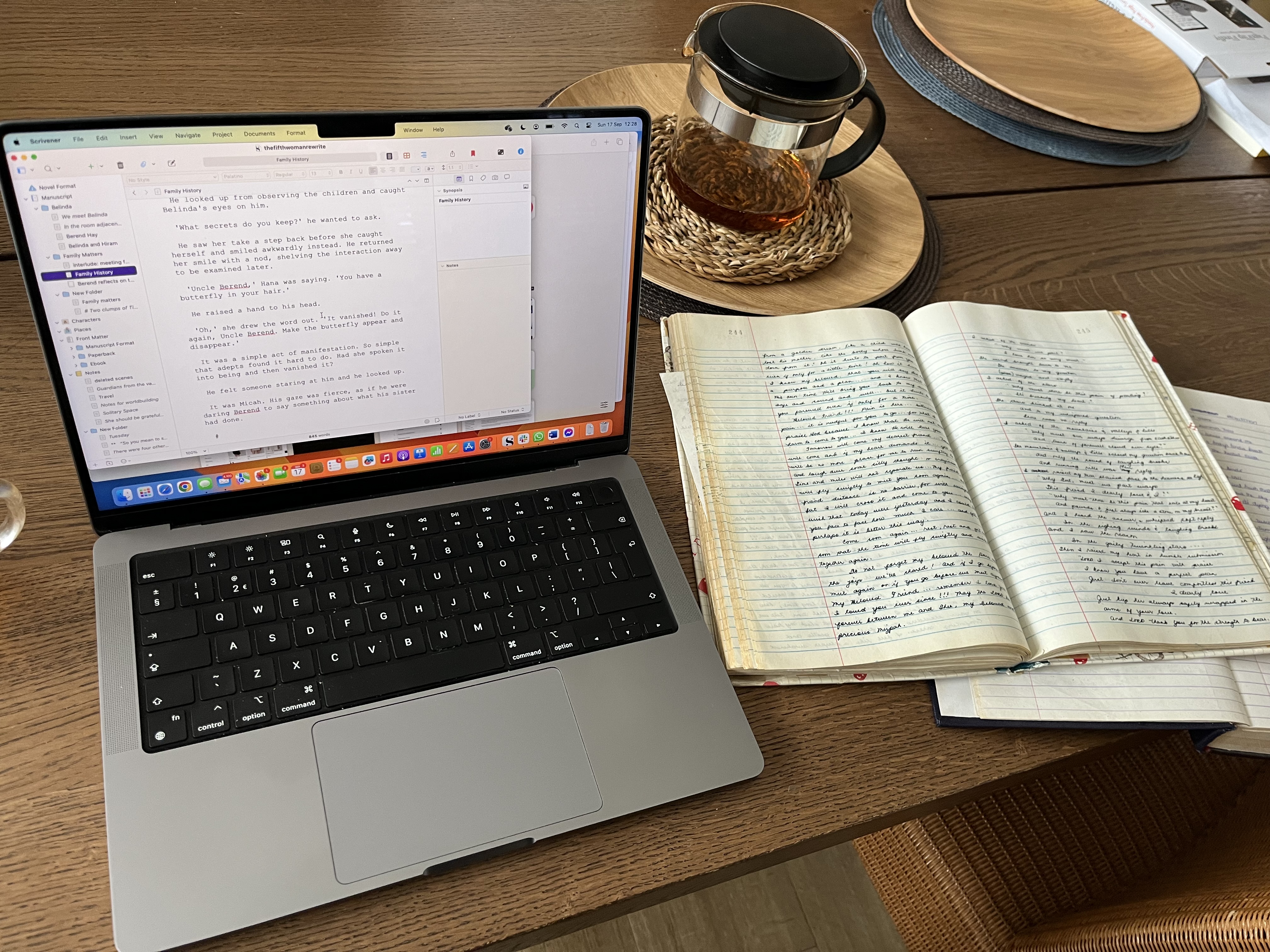
Titles are not my strong point. I am currently working on the second draft of a novel titled The Fifth Woman. Don’t ask me why…it probably just felt cool at that time or maybe I was just like: whatever. Let’s just call it this as a sort of jumpstart. So far, I haven’t found anything in the draft that talks about a fifth woman. It’s a pretty amazing feeling though to have been writing consistently everyday for the past two months as prior to that time, my brain often felt like a jumble of words and there was not enough quiet to properly focus on fiction. To my surprise, I have passed 15k on second draft and it looks like it’s still going.

Before I found The Fifth Woman, I had been writing away at The Cartographer novel which I’ve left stranded at 85k because the world was getting so big and unwieldy I had to step back from its noise for a bit.

Finding The Fifth Woman (first draft from end of 2021 before cancer struck) was like finding a gift because there was enough distance for me to appreciate and see where I’d gone off the rails with it ( characters with names like ‘this person’s dad’ and lazy shorthand place names ‘let’s just call this place wherever’ and I’ll call this form of transport something unpronounceable). Clearly, I was just in a rush to finish first draft. When I read it for the first time after regaining my focus, I thought it was someone else’s work, until I got to some place names and memory hit me…oh right. I wrote this while doing the Munabol online workshop for BIPOC kids. And then…Oh. This thing is long. It’s super-long. What is it? Is it a novel? Is it finished? (Yes. It was indeed a first draft clocked in at a little above 65k.) That was two weeks ago.

My current writing speed is an average of 1000 words a day (sometimes 1500), but at the end of a writing session my brain refuses to focus and I just want to go watch Formula one or something mindless for a while. (I have become quite the Formula One and bike racing addict. Tour de France, the Giro, Vuelta, and then there are the classics. Cobblestones! I can hardly watch but I still do anyway.)

I’ve noticed that there is a lot of messiness in my head the closer I get to the appointments for my bloodtest and immunotherapy. As I said to people closest to me, it’s quite weird because it doesn’t hurt, but I have an increasing aversion to being stuck with needles. It melts away once the bloodtest and immunotherapy week have passed and for most of the time I forget that I am under treatment. My oncologist tells me we are on this road for two more years and then we’ll see. It’s an interesting space to be in because no one really knows and I think that’s okay.

Just a little while ago, I bumped into an acquaintance who I hadn’t seen in a long while. Upon hearing about my diagnosis and about all the treatment things, she went: But you’re too young… (I won’t insert what was implied here because it took me aback). It’s one of those really odd responses that makes me want to laugh out loud. I know it’s well-intentioned and well-meant, but I remind people that I am not dead and I have no intention of dying anytime soon. I am completely in the land of the living and I believe I’ll still be here for as long as I am meant to be here. It’s the thought that comes to me when anxiety strikes: Peace. I remind myself. As my mother said to me at the start: you go ask God what he wants to do with you because until He’s done with you, you’re not done doing.

My mother, a cancer survivor, was diagnosed with metastasised cancer when she was 46. It had spread to her bones and she was given one year to live. Today, she’s 85. She laughs talking about it: ‘Actually,’ she says. ‘I decided I wouldn’t die because I didn’t want your Dad marrying someone else.’

There’s this thing about coming face to face with mortality. You come to understand what it means to be alive. I think about one of the participants to the workshop saying: this is my now.

It’s a pretty radical thing to say and to do. To be present in the now. To rest in this moment. To give as well as to take pleasure, to share in what is funny, what makes you laugh, what makes you cry, what warms your heart, what melts you–to choose to be here in now is such a powerful and radical act because it is the essence of being alive.

It’s easy to get pulled into the rat race. To think: I’ll make time for what matters and what makes me happy when I have more time. Time is an ephemera. It’s an illusion we create for ourselves. Time that matters is now. What am I doing now? How am I being present now? What am I sharing of myself now? What kind of memories and legacies am I putting in place now? It’s in this now moment that we are doing and creating and making and establishing connections and as I said to someone precious to me: humans and relationships are more important than things. Wealth, status and possessions you can replace. Connections, relationships and humans you cannot.

Perhaps it’s why I’ve become so invested in The Fifth Woman. Because it’s a messy novel about messy relationships. It’s about the now space versus the could be space. It’s about family and relationships and all the pressures that are exerted upon that precious space of simply being. It could be fantasy, but it could also be science fiction. I really do not know. I’m just writing it. In the now.

Blessings and Peace and Agyamanac Unay for reading.