My father’s unfinished memoir

My youngest brother sent me a message, asking if I’d read my father’s unfinished memoir. I told him I hadn’t been able to because in the chaos following my father’s unexpected death, we lost track of his documents. After this reply, my brother told me he’d found it, but it wasn’t finished and it needed editing. I am thinking and processing some of what I’ve read so far and am in touch with other members of the family as I seek to fill in the blanks.

I remember asking my father lots of questions about his parents. He’d say that we would sit down and talk about it some time. Except, that never really happened. My grandma told me that they’d been part of the resistance during the Japanese occupation. I’d often wondered if it was just a story or if it really happened.

In his memoir, my Dad writes vividly about that period. His account relays the complexity of growing up in that time with an awareness of the work his parents were doing while at the same time living alongside the presence of the Japanese soldiers. There are moments of quiet, like the period before his parents were discovered and they were forced to flee from hideout to hideout while the Japanese hunted for them. My Dad doesn’t dramatise and yet there is drama. It’s also an absorbing read because of the level of detail that he remembers. Names of resistance fighters, their commanding officer, places where they hid, and the locality where they eventually were able to find refuge. Nico on bluesky makes a comment about this being a historical document and I think that it could be described as such. The curious person in me wants to book a flight to The Philippines and go do research. Instead of doing that, I decide to patiently read some more.

My father writes about life after the war. About moving locations until they settle in Gingoog City. My grandfather builds a practice. My grandmother works as a respected teacher. Their home life seems to be a stable one. And then, in the year that he finishes high school, his parents break up for good. He writes about the break-up quite dryly. It’s a mutual decision. His parents have decided that it’s time for them to live separate from one another. It turns out that my grandfather was a womaniser. All throughout, my grandmother looked the other way, but this last adventure (my father writes) was the straw that broke the camel’s back. My grandfather leaves them. He leaves my grandmother and his three sons and goes away. My father doesn’t know where he’s gone and he loses touch with his father until much much later when he finally tracks him down in Zamboanga city where his father has a thriving surgical practice. It’s there that he meets his father’s other family.

My Dad’s younger half-sister tells me a story of my father showing up at their house one day. Just out of the blue. He’s there. My Dad, demanding that he see his father and telling his father that he is going to med school and as he is unable to pay for his tuition, he feels his father must pay for his tuition. She’s very insistent about how her mother impresses on Lolo that he must pay for the tuition of his son. After all, they have the money to pay for it.

It’s quite something to think about this after reading about my father working at different odd jobs. He is fifteen or sixteen at the time and when his mother’s younger brother comes across him working instead of studying. He is then brought to meet his maternal grandfather who tells him he should study and it is his grandfather who makes him apply for Ateneo de Agusan.

I want to know what happened in between the break-up and my granduncle finding him. I think about my grandmother’s proud nature. I think about her younger sister telling me that my grandmother was very stubborn and had married my grandfather against her father’s wishes. It feels plausible that my grandmother might have hidden the break-up from her family until it’s found out.

I recall someone telling me that my grandfather couldn’t remain where he was. That he had to move away because of how people viewed their break-up and because of all the things that were said. In that time period, it was, of course, a scandal. In present day Philippines, separation is still viewed as a scandal. I remember someone saying to my sister once that divorce was a sin. My sister, who holds a masters in Theology, answered quite sharply: “Where in the Bible does it say so, because I can point you to multiple passages that contradict what you’re saying.”

My father mentions my grandfather two more times in his account. One when his father comes to visit him after my Dad loses one of his patients and the second time when my grandfather comes to Banaue to die.

My grandfather’s death feels like a punctuation.

I think about memory and pain and wonder. Perhaps when a memory is too painful, we decide to overlay those hard memories with something easier for us to live with.

I also think about myth making and how myth can tell us a truth that a factual and chronological narration of facts cannot.

Beyond all expectation, I find myself writing about family; about my father and his parents and about the life that he lived. In conversation with someone, I speak about my father’s life of faith and how in the end the overarching theme in my father’s life is that of grace. He became who he was not because he was exceptional or special. He became who he was because he found grace for living.

I’m not sure how to go on from here. I do think that we are all in a constant process of transformation. We don’t stand still. We change as our lives are touched by other lives and we change too in the process of touching other lives. When we make the choice to live with intention, it is just like that.

In a way, reading my father’s memoir is like hearing his voice speaking from the other side. I have so many questions, I say to that voice. But you’re not here to answer them.

A voice in my head says: What if the answers aren’t as important as the process of asking? If you keep asking how and why and what does it mean, and when you acknowledge that you don’t know all the answers, but are also searching, then perhaps you’ll find better answers than the ones that exist today.

I’m going to end this here. I’ve just heard that the English version of Hymne van de Overlevers has gone live on Philippine Genre Stories. In English, it’s titled Hymn to Life. Clicking here will take you there, if you want to give it a read.

May joy accompany you on the journey and maraming salamat for passing by.
How we conceive a familial history

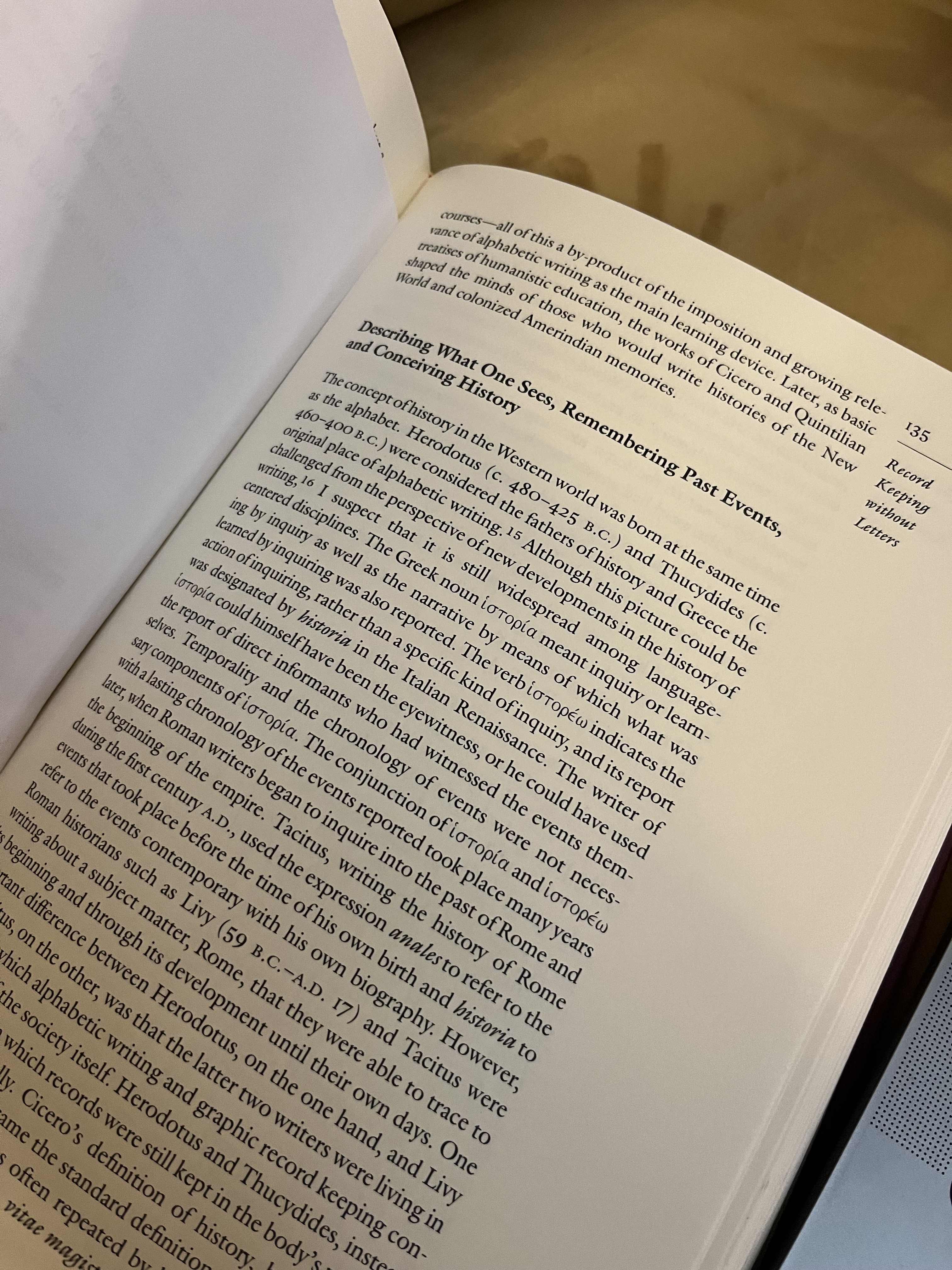
In The Darker Side of the Renaissance, Walter D. Mignolo quotes Isidore in the chapter on Record Keeping without Letters. He quotes this from Isidore: For among the ancients, without exception, only those who were witnesses and who had seen the things they narrated wrote history, for we understand what we have seen better than what we know by hearsay.

I had a conversation with a cousin who is older than I am, who might know more about the history of my grandparents. They might know more, not just because they are older, but they might know more because of how they were situated in physical proximity to my grandfather. My cousins lived in Cagayan de Oro and this cousin tells me that our grandfather visited them often and the story they tell about my grandfather is one of a gentle and kindhearted giant of a man. Someone whose visits they looked forward to and whose presence was very much welcomed.

Our family was located far from where the rest of my father’s family lived. In fact, we were located on the opposite end of the archipelago. My sister and I grew up in the mountains of Ifugao, my brothers were born there too, and we spent our childhood blissfully unaware of any drama that might be taking part in that place that could just as well be another country. We were far from where my grandmother was located. Also far from where my grandfather and his second family lived. Back then, the trip from where they were to where we were would have been almost the same as traveling from The Netherlands to the Philippines. By Filipino standards, it still is a costly trip.

My cousin tells me that my Dad, being the youngest, was his mother’s favourite and so he didn’t receive the same kind of harsh corporal discipline that his elder brothers received when they were growing up. My memories of my grandma are those of a rather strict lady. I thought at that time that it was because she had Spanish blood and Spanish people are strict (right?). She was always affectionate towards our Dad and the affection was reciprocated.

The story of familial relation unfolds differently when told from the perspective of my cousin who tells of the horror that came with growing up in the proximity of my grandmother. According to this account, my grandmother was more than strict. Indeed, she was quite unreasonable, more than demanding, and even cruel. Any sign of enjoyment when she was visiting with them, was punished with a lengthy sermon that would end only after one of my cousins was punished for an imagined wrongdoing.

My cousin relates this to me from her perspective. We didn’t see, she tells me. We didn’t know what our grandmother was really like. And so, she wants to relate what we never witnessed or experienced for ourselves because of distance. The grandmother she knew and the grandmother I knew seem to be two different people.

A memory arises from a time when my grandmother took me with her to visit her younger sister in Manila. She was fussy about my comfort and then when we arrived at her sister’s house, she was devastated to find out that she’d forgotten to pack extra underwear for me. I think I must have thrown some kind of a tantrum (I was a bit of a handful as a child) and she just didn’t know what to do or how to get me out of the bathroom as I kept on blaming her for not knowing that kids are supposed to have clean undies everyday. She was strict, but not more strict than my own mother and she didn’t spank me for throwing a tantrum. She waited and then made me do what she wanted me to do. (Just as my mom would have done.)

By the time my grandmother came to live out her days with us, she had been gentled by years. She had had had a stroke, but she was recovering even though she wasn’t very mobile. She loved telling stories about the past while I massaged her legs and listened eagerly.

I loved hearing her talk because my Dad didn’t tell us very much.

Later, when we were much older and after my grandma was no longer with us, my Mom tells us an entire story of how she would warn my Dad each time my grandma came to visit: Bantay ka! (watch out). Your Mom isn’t going to lay a finger on one of my kids.

None of us ever experienced such harsh punishments or treatments as those described by my cousins. We might have been subjected to some nagging, but our mother would send us out to play and even though we were scolded by my grandmother, I always had this idea that it was because she wanted the best for us. Did this have to do with how my mother stood between us and her? Was it because of the close bond between her and my father? Or are these things that I have imagined because there is a lot I do not know.

I can remember the sound of my grandmother’s voice whenever she called out to my Dad.

“Nonoy,” she would say.

Now that I have children, I recognise that tone of affection that one reserves for one’s own children, and in particular, for the youngest one.

For a long time, until my grandfather came to visit, my sister and I believed my grandmother was a widow. And then, when we found out that there was a grandfather, we thought he must have done some dastardly crime because no one spoke about him.

I suppose this speculation was natural considering how we grew up far from anyone belonging to my father’s family, in our defence, we only ever met him once.

My sister and I met our grandfather for the first time when he was already sick. By the time he came to visit us in Ifugao, he was dying. But he came to see us, or perhaps he came to see my father. No one spoke about why he’d come; not even afterwards, so I can only speculate. Did he come to mend broken bridges? I don’t know.

In my mind, I see my grandfather as a tall man with a gaunt and lonely face trying to connect with us kids. I can still see him towering over us, trying to win us over by showing us his magic slippers.

This memory is overshadowed by whispers and a feeling of tension. It seemed as if we saw him only that one afternoon, but I’m sure it must have been more than that one afternoon. I remember my mother trying to keep my father from going away to the city on an errand and my father’s stubborn insistence on going and how while my father was gone, my grandfather died.

My mother talked about how she had to have a casket made. It must have been a while before my father arrived because I remember visiting the carpenter’s shop and the carpenter explaining to me how he was making a casket for my grandfather. I thought I should feel properly sad, but I didn’t know how to feel about the tall stranger with magic slippers who now lay in a casket in our living room while the voices of visitors filled our living room. I felt uncomfortable and impatient for my father to return.

It’s interesting what kinds of snapshots the mind retains. I see one of myself frozen in the moment when my father arrives. The house is teeming with people, but the living room is in the shadows. I am standing on the stairs looking down onto the porch as my father climbs up toward my mother. He doesn’t look up to where I am, all that is him is focused on my mother and then a sound breaks from him. After my sister died, I understood what that sound was and what kind of deep grief that sound contains.

Is this the memory that colours my recollection of my father’s pain?

Did I imagine my father’s feelings towards my grandfather? I know we hardly spoke about him and when I did try, he tended to be quite abrupt. Was he in pain because he wasn’t there when his father died? Had he left because he didn’t know what to say after so many years of not seeing each other? Had something been left unsaid or undone? I can only speculate.

The person writing about my father’s life writes from the perspective of someone who spent time in conversation with my Dad, long after the pain had been healed. Their conversations took place after a transformation had taken place. It gives me peace to know that my father was no longer angry. He was no longer in pain. He had reconciled his grief and pain and he had become the beautiful self everyone remembers–a man filled with compassion, gentled by time, always present and in service of those who needed him.

If we are to take Isidore at his word, then it means I can only write what I have seen and what I have understood from that seeing. As Mignolo writes, Isidore wasn’t concerned with the distinction between a narrative of witnessed events (which will become past events from a future perspective) and a narrative of the narrative of witnessed events.)

Again, Mignolo quotes Isidore: Things that are seen are reported without any ambiguity. This discipline pertains to grammar, for only the things deemed worthy of memory were written down.

These entries are (for me) a way of processing. Thinking about family history as I think on what I am reading. Blessings and peace to you who read this and Daghang Salamat for passing by.

History in episodes

I’m chatting with a person who’s writing about my father’s life while reading this section called Describing what one sees, Remembering Past Events, and Conceiving History in Walter D. Mignolo’s The Darker Side of the Renaissance: Literacy, Territoriality and Colonization. I am seated in the lounge of the Royal Library of The Hague and it’s nice and cool with the small sounds coming from different occupants of the library. In a corner of this lounge, someone is snoring. The seats are comfortable and conducive to a siesta and I am seated on a comfy sofa with my belongings around me–it’s kind of like being at home but being able to focus in a way that’s more library-like (if you know what I mean, you know what I mean). I think about history–family histories–the things that are said and that aren’t said–what we pick up without words having to be said and how we carry these histories with us and how we don’t speak about the painful or dark parts of familial pasts.

Reading Mignolo, I reflect on how histories are made and passed onward from generation to generation. Mignolo writes about histories being kept in the body memory, of histories being transmitted orally. And somehow, I find myself thinking of history that we keep in our bodies.

Recently, a friend of ours spoke of finding out that the father she’d grown up with wasn’t her biological father and the pathway to connecting with her biological family from the side of her biological father all came down to taking a DNA test that matched her with a niece who for some unknown reason decided to also take a DNA test. This connection eventually led to her finding the sister who had been searching for her for a long time.

A whole puzzle with unmatched edges fell into place. Character traits she’d wondered about finally made sense, once she spoke to her sister. Conversations that were cut-off mid-sentence. Hints of something secret–dates that didn’t match. Unspoken tensions that she somehow registered. She had this feeling that maybe there was something hidden, but it wasn’t until it was time to clear out her mother’s attic that she discovered the secret of her paternity.

In an age where histories are being re-shaped, re-written and erased, it feels urgent to think about the position from where histories are being told. Who is telling this history? Under what terms is that history being told? In what form and in what shape and with what words or means is that history being put in place?

It feels necessary too to keep a record of what is happening in the world around us as we keep a record of our own histories.

I think about my father and I wonder what he would say about the ongoing conflicts in the world today. I want to think he would also feel urgency and the need to speak out against injustice. The truth is, I don’t know what his response would be were we in conversation today. That’s because my last memory of him is one of heated conversation where we disagreed on what was just and what was unjust and how we left it in the middle as something we would come back to later on.

Familial history often feels episodic. When we talk about memories and things that happened in the past, we remember in bits and pieces and then we look to each other for confirmation.

I’m going back to reading Mignolo. I want to think about memory and the fallibility of memory and how we tend to remember people in a different light once they are no longer in the world.

Blessings and peace to you who read this. May you find joy in the journey.

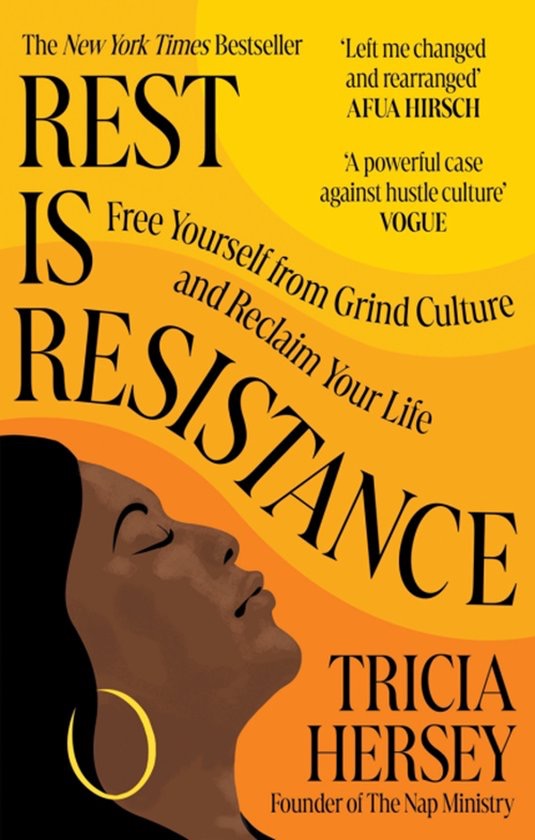
Downtime and Tricia Hersey’s Rest is Resistance

It’s the first proper week of my summer break and I have to admit that I’m really enjoying the time to just chill and do whatever I want. Downtime is a great period to relax and reflect–do a little bit of dreaming, think about lessons learned, about the work that’s been done and what it means. I also find myself thinking on how to encourage a younger generation of activists and collaborators because community work can eat you up if you don’t get the support and the rest that you need.

I recently shared a book with one of my dear friends and a fellow collaborator. It’s a book that came across my timeline and the title of the book drew my attention because it speaks to something I hear coming from workers in different spaces.

“I am tired.”

“I feel like I need more sleep.”

“I want to recharge.”

I hear different variations on this theme of needing rest. So when Rest is Resistance by Tricia Hersey came across my timeline, I felt moved enough to put it into my basket.

Hersey’s book is a quick read, but it is a good read. Reading it, I found myself thinking of how easily a body can be trained to forget about rest. For instance, when I first moved to The Netherlands, I still practiced siesta time (like we do in The Philippines). My in-laws were rather shocked/surprised and I was shocked/surprised to find that Dutch people do not do siesta unless you’re old or sick. I had to un-learn siesta pretty quick because being caught in siesta resulted in that disapproving look that made me feel like I had committed a crime. Nowadays, I’m like: I do not care…I will siesta if I feel like I need a siesta.

Hersey’s story about her father–his life of work, in service to God, in service to family, in service to community, reminded me so much of my father. My father was the youngest of three brothers, all three who were raised by my grandmother who became a single mother when her husband left them for someone else. There are many ways to justify a man leaving his wife and family. My Grandma was quite a character and I have been told repeatedly by other people that living with my grandma was hard for my grandpa and so when he met this lovely young woman who became his second wife, it was understandable that he chose to leave my grandma. I know how much my Dad valued my grandma and how much his Dad’s leaving hurt him. I don’t doubt my Dad had heard all the reasons. He didn’t blame the woman his Dad left them for, but it didn’t make his pain less and it doesn’t make his pain invalid.

All throughout his life, my Dad was determined to be there for us, even as he also lived his life in service to the community and in service to God. He was a doctor, and a lot of times, he would be opening the door to patients when it was way past midnight. Later on, he organised medical missions to places where medical care was inaccessible. Free clinics for those who couldn’t afford it. He was always on the go.

On the day he died, he was preparing for another medical mission.

I think of how the life of my father was punctuated by constant movement. He was so invested in providing for us and protecting us. He wanted to keep my Mom free of stress and worry. He was taking care of so many people and so many things, he didn’t tell us he had a heart condition.

I thought of how the pattern of my life ran similar to my Dad’s because my Dad was my hero and I wanted to be just like him. So, I almost never said no to anything. I found it hard to refuse help. I found it hard to set boundaries and to say: I can’t or until here and that’s it. Then I had a burnout where my body literally refused to function. Then, Jan died. Then, the diagnosis happened. And I was forced to rethink my life and say “no, I cannot”. “No, I don’t have the energy for that.” “No, I have to prioritise something else first.”

It took my body breaking down for me to re-learn rest.

The funny thing is–once you come face to face with it, you understand that the human body isn’t meant to keep going like an engine. Rest and sleep are essential to the recovery process. When I was going through treatment, I thought of how the emphasis is often on the parts of us that are sick or that carry disease. So, I thought to myself. So, there’s this small nodule somewhere. But it’s not everywhere. I can’t do much about the nodule, but the parts of my body that are well, can be made stronger. Can be made stress-resistant, can be helped to be healthier. So, no one knows how much time I’ve got, but no one else on earth knows that either. So, what I can do is be as alive as I can be right now. When my body was weak from chemo, I remembered what gives life to the body is not the body itself, rather there is that source that is beyond human explanation. We are, after all, more than these vessels we occupy and the spirit that is inside us travels on a path undefinable and unconfined by human parameters.

After my last treatment, there was moment where I could feel life gaining momentum. I was working more, I had more energy, I was more focused. I thought: I can do this. Oh, I can do that. Oh, yes. But I also felt this jealous guarding of my alone time–the downtime. Time to recuperate. Time to gather my thoughts. Time to be alone with a book. Time to nap. Time to tune in to that other space–to that other timeless space where dreaming happens.

A lot of what Hersey writes about is recognisable. My hope is that those who read it won’t just read it as this best-selling book where after reading it, they can put a checkmark beside the title. Read that. Liked it. Next book. (That would so defeat the purpose of it.)

I am reminded that my body is a vessel that carries me through life. I can’t accomplish what I want to do with this life, if I’m not taking care of my body and taking time to rest, recuperate and dream.

Writing this, I am reminded again of The Sabbath and Heschel’s thoughts on time and how time is like this cathedral we live inside of. Time isn’t going anywhere. We just need to dwell here and be here and do what we need to do where we are right now.

Maraming salamat for reading. May blessings and peace go with you as you journey on.

How is it Wednesday already?

Weirdly, I find myself thinking about the phrase ‘time flies’ and how there must be a better phrase to express how quickly we move through time. As Treebeard from LOTR says: us two-legged creatures are always rushing about and wanting to hurry things up.

And so, I find myself in Wednesday and thinking of how my Monday and Tuesday were so quickly filled with things like seeing my youngest son to the airport. I still keep seeing him as this curly-haired mischievous toddler, only now he’s taller than I am. He still is curly-haired and thankfully, he is still mischievous.

Yesterday, I was looking through some old photos from when the boys were little beings. I came across pictures of us taking picnics in our backyard. I thought of that one summer when we couldn’t take a holiday, so we set up the tent and our eldest spent the better part of a week camping. I sent these pictures to my eldest and he sent me a message saying how those were some of the best times ever.

We think it’s giving our kids everything that will make them happy, but I don’t think they noticed how our holidays were always truncated–not two weeks away like other families but one mid-week (which was more within our budget). Once, we managed to score a great midweek at this out of the way holiday park with a whirlpool bathtub. That was a feast for the boys. I think I stressed about how to get there, but now that I look back, I can’t help but smile. Good times.

On Tuesday, I had my regular CT-scan and they also took some blood. Bah. I know this is all part of it and I did sign up for this trial, but I am looking forward to when these appointments become more of a quarterly or twice yearly thing. (Here I am thinking again about time)

I want to write about Sunday’s celebration, but at present, I’m finding it hard to find the right words. I think about why I feel I should write about it and realise that this is a thing I have put upon myself. And so, it’s something I can let go of. I recognise that some things aren’t meant to be written about so quickly. I can move back and forth in time, thinking on this and that. Dipping into a book, thinking again, writing down notes, going back in memory. Breathing. Listening to my heart. Paying attention to what’s going on in the body and in the spirit. Time isn’t rushing forward. It’s just there waiting for me to step into it.

I breathe again.

I hope that you who read this will step into that pocket of time where you can breathe. Listen. Pay attention. And then breathe again. Blessings and peace. Maraming salamat for stopping by.

Letting go of perfection

After a while, the portrait I’d been wrestling with made me feel so dissatisfied, I decided to turn its face away from me. Maybe it was the colours I’d been using, maybe it was because I needed a break, but the more I worked on it, the more I felt as if I wasn’t getting anywhere near where I wanted to be. It’s funny to write this when during my last entry, I felt as if I’d had a breakthrough.

So, I decided to step away from the portrait. I didn’t work on it for a couple of days. I didn’t even look at it. I played with my watercolours and didn’t require myself to do anything that was like a project.

There wasn’t really much time to dwell because I had the regular check-up which consists of a bloodwork and a CT scan. I didn’t have time to dwell on the CT-scan because my youngest son was leaving for the traditional end-of-school holiday (it’s a Dutch thing where young people go on holiday with their mates at the end of senior high). It’s kind of difficult to stress about a scan when you’re making sure that your son won’t miss his flight and it’s kind of difficult to stress about a portrait when you remember you have to go to the hospital.

After a busy couple of days, I decided I needed a break. I made a date to meet up with my eldest son in the city and we went shopping for some things (in my case it was art supplies).

The great thing about taking such a break is how there’s time to think while on the train ride to and from the big city. I thought about that little voice that makes tiny sounds of disapproval in the back of our heads. We don’t register it as disapproval because we’re so used to hearing it. It’s a voice that says: Oh, that’s not good enough. Oh, that nose doesn’t look right. Oh, are you sure you want to use that shade of red? Oh. Now you’ve done it. You’re overworking it. You’re doing it all wrong. You’ll never be good at this.

It doesn’t matter whether it’s a painting or a story or a book report, our first and harshest critic is that tiny voice that causes us to tense up and become so focused on being perfect we end up helplessly throwing our hands up in the air and saying: I cannot.

There’s a great little clip I stumbled upon on youtube where a pianist is playing one of Chopin’s etudes (I forget the name but it’s one my mom played a lot). Over a section of the clip with the beautiful cascading tones of the piano, there’s a caption: What the audience hears when the pianist plays this piece. Right after this, there’s a section where the notes are clanging together in disharmony. The caption says: what the pianist hears when playing this piece.

It’s a funny clip, but it’s so apt. It doesn’t matter what art form we practice. Whether it’s making music or making art or writing, somehow we tend to hyperfocus on that one thing that just isn’t working. And it’s all that tiny little self-critical voice will let us focus on.

I laugh as I write this because it seems like this is a lesson that keeps returning to me. In the chase after an elusive perfection, we lose sight of what makes us love the things that we do.

Blessings and peace to you who read this. Thank you for dropping by.

Today is my sister’s birthday

I’ve been thinking about my sister in the in-between hours, all throughout the day. Perhaps it’s one reason why I felt somewhat agitated. It’s not until I took the time to sit down and think about the day that I realised it’s because I didn’t get to talk to my sister.

My sister and I were born almost exactly a year apart. Both of our birthdays fall in April. Hers falls earlier in the month and mine closer to the end of it. I think about my sister and the unexpectedness of her passing and what a gift it was that she was able to come to us and spend time with us in the months after Jan passed away. Little did we know that she would leave us too.

For a long time, I couldn’t put a name to what it was that I felt when my sister died. I was able to carry on after Jan’s passing, I was able to push through and still keep going, but when my sister died it was like the world stopped and I sank into a deep dark place. I’m not exactly sure how I got out of there, but time helps a lot and it helps when someone picks you up and says: you don’t have to do anything for a while, you just have to keep on living.

In the days when I was going through treatment, when chemo was rough and I didn’t want to even get out of bed, I thought of my sister saying: Come on, Rochita. Don’t just lie there. Fight.

And I would get up and I would make myself go downstairs and eat breakfast even if I didn’t feel like eating. I decided I wouldn’t die, but I would live.

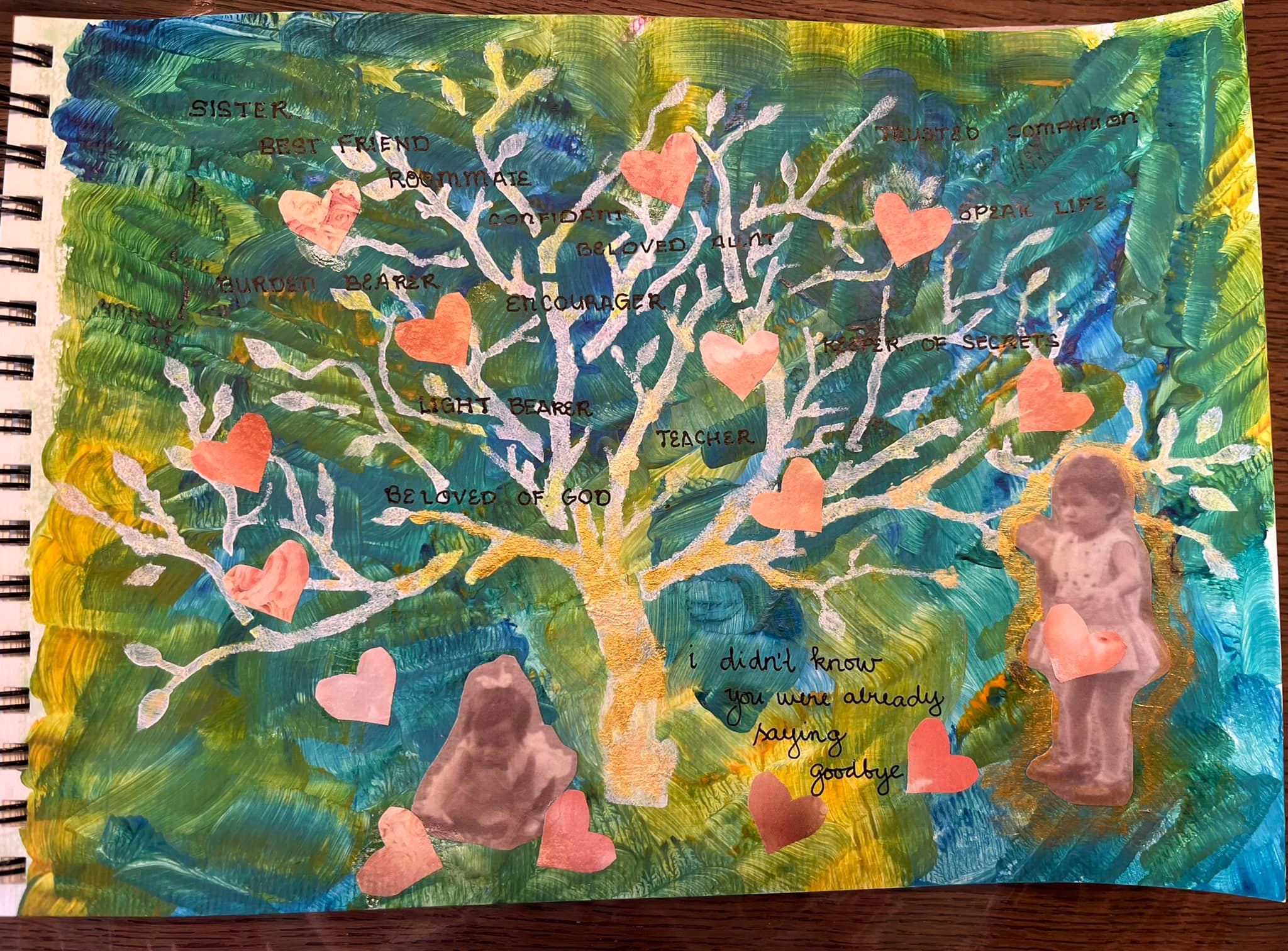
Because there was so little of a gap between us, my sister and I were often mistaken as twins when we were kids. And my Mom liked to dress us up in twin clothing. There are loads of black and white pictures of the two of us twinning. For a long time, there was just me and my sister. We had to wait another seven years before the first of my brothers was born. My sister and I were each other’s best friends and confidantes. We could fight like cats and dogs, but we were each others’ allies. (It’s kind of impossible to remain hostile when you’re sharing a room.)

I want to honour my sister today. To remember the sound of her voice and the way she smiled. I’m thankful my sons have memories of her. That they know who I’m talking about when I talk about Tita Weng.

In 2022, when I was preparing for surgery, I had a dream about my sister. We were playing together under a big tree in the garden, and I was so preoccupied with what I was doing that I didn’t notice that she’d stood up and walked away.

Today, I remember my sister whose light I carry with me.

(Collage made in 2022)

It’s only Tuesday and yet . . .

Not that I post with any kind of regularity or schedule, but here I am on a Tuesday. I’ve enrolled in a five session course on portraits with acrylics and the first session went pretty well. The advantage of acrylics is the drying time and how it’s much easier to take it home to continue work on it. Compared to pastels where the work has to be carefully transported, acrylics are easy. I’m enjoying these courses which are in series of five sessions each time focusing on a particular medium as I feel like I want to understand how different mediums work.

I do enjoy portraits a lot and I want to try and see what different things I can do with it once I get the basics down.

When I was a young girl, my mother once showed my notebook of writings to the daughter of a friend of hers. I think my Mom was proud that I was writing, but I was quite embarassed because her friend’s daughter was (at that time) already playing the violin for a big orchestra. I was like: Eh…Mom. Why?

But instead of dismissing my work, this young woman looked at it carefully, then she said something to me which I’ve carried around much like a puzzle that I keep trying to unfold.

“An artist,” she said. “Can see beyond the leaf.”

I never got around to asking her what she meant because soon after that this violinist went abroad to play with other orchestras and our paths never crossed again.

I think of her words every now and then, though.

Today, those words came bubbling up again and I thought of the following reply:

Beyond the leaf is a world (maybe more than one)

Lives are lived. Not all are told or written down in story.

Not one is insignificant.

To you who read these words, may you be surprised by small moments of daily joy. Thank you for stopping by.

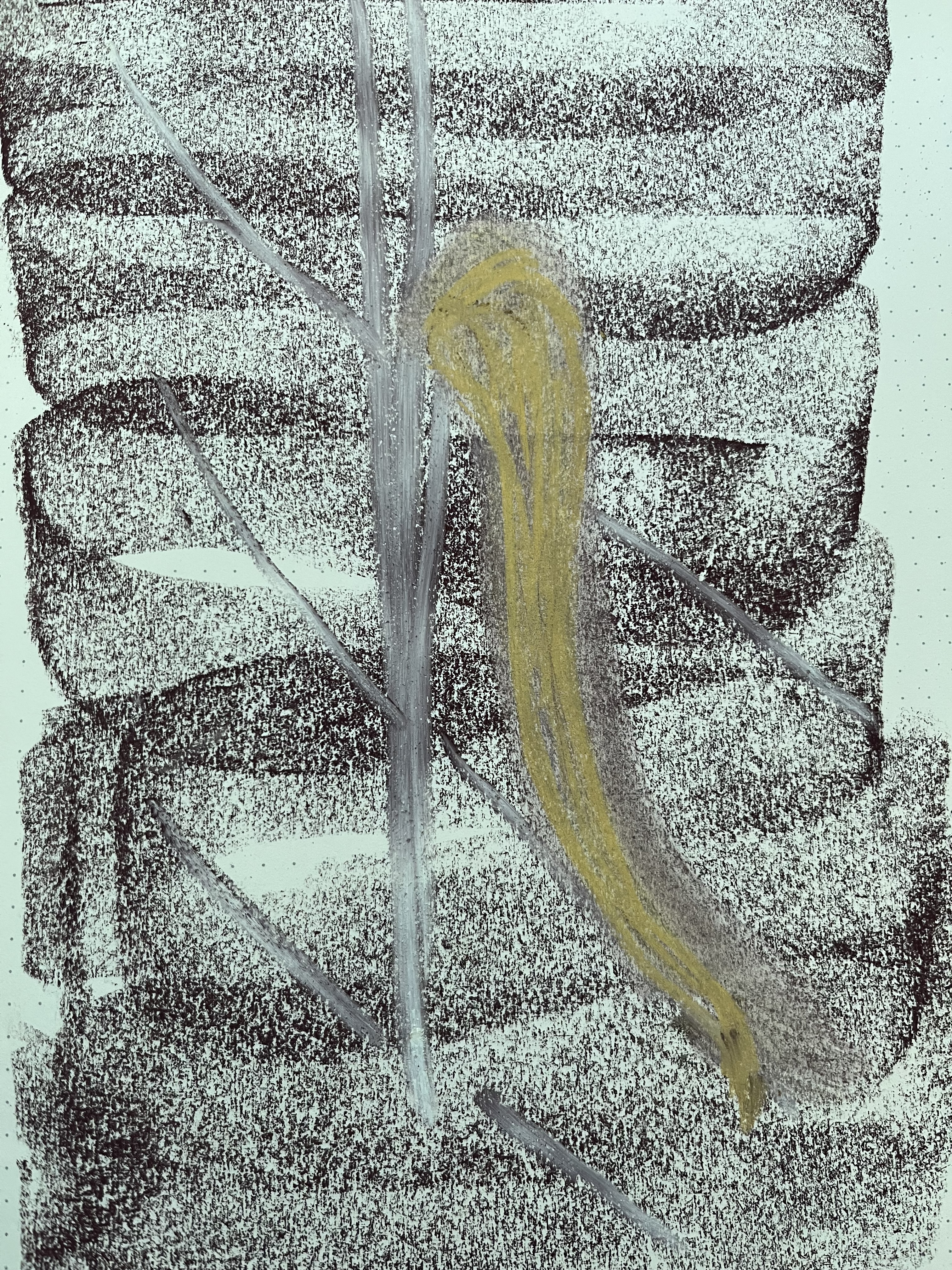
Here’s one of my favorite exercises from this week. On a background of sennelier soft pastel, an impression of branch and leaf.

memorials

Today is my elder sister’s death anniversary. I considered posting about it on FaceBook which is the social media thing for a lot of Filipinos, but something in me rebels at the thought of remembering my Ate and having people put likes on the post. I know the intention is always good, but my insides just don’t feel in tune with doing that. (But still I’m writing this post because I didn’t want this day to pass without remembering her in some way.)

For a long while, I blamed myself for my sister’s passing. I thought: how could I not have seen it? She was here with me in the months after my husband died. How could I not have seen it? I blamed myself for being so preoccupied with my life and my sorrows at that time–if I hadn’t been so self-absorbed, I might have been able to do something. I don’t know what I blamed myself for not seeing. She spent three months with us and one month after she arrived back in The Philippines, I got a phone call telling me she was gone.

It wasn’t until about a year ago that I had the courage to ask my brother what the diagnosis was. It turns out my sister had sepsis. Something had entered her bloodstream and poisoned her. Sepsis goes so quickly that by the time it manifests, it can be too late.

The cancer I was diagnosed with is also something that doesn’t manifest. It doesn’t show up on blood tests unless you’re looking for it, and because I was pre-menopausal, what might have been warning signs could just as easily be pre-menopausal stuff. That it was found came about because I remembered my sister had a non-cancerous fibroid that was causing her some trouble and I wondered if that might be the same for me. When we sent the test away, we were perfectly confident it would be nothing–but it was something after all. A part of me wonders if it was still my Ate, looking out for me.

We measure grief in moments of time. How many days has it been? How many years? We light candles or we carry out rites of remembrance. We post pictures on social media, we try to find words for our grief.

And yet, for all that she’s no longer physically here, my sister is with me. When I am on the verge of giving up, it’s her voice I hear scolding me. She was really strict with me about not giving up. Ano ka ba? She would say. Okay, if that’s how you want to end up as. (The implication being that if I give up, it’s not her fault if I get called someone who gave up.) Even though she’s no longer here, she still remains my number one cheerleader.

Losing my sister was painful because of how sudden it was. It was painful because there was so much still left unspoken and undone. (We were still going to Paris. We were going to travel together. We were going to grow old and talk about all the books we had read.)

Sister relations are never simple. My relationship with my sister was complex. We were at times adversaries. I remember her banging on our shared bedroom door while I listened to Queen or to David Bowie–and I remember her telling on me. ‘Mom, Rochita’s listening to rock music again.’

But even so, she was also my staunchest ally and my most trusted friend.

Grief softens with time (they say). And it’s true, it does. The sharp edges are gentled. But the missing remains. When I think of my sister, I no longer feel as if I am held fast in that dark moment where the world has lost all meaning or context. I think of how she would want me to walk forward and to take on life and live it as ferociously as I can with as much courage as I can.

Today, as I remember my Ate, I make the decision once again to keep embracing life. Everyday, I make the choice to embrace life and live life. I am present here and I am present now. Now is when I can do what I need to do. Tomorrow will take care of itself.

Blessings and peace to you who read this. Agyamanac Unay for passing by.