At World Fantasy

Here at World Fantasy, I am learning how to balance my energy in a more intense way than I have had to since my last treatment at the end of 2024. I’m not exactly sure what made me decide to come to World Fantasy, but I think it might have had to do with wondering if I could still go to conventions on my own. A convention closer to home felt safer than a convention somewhere like in the US. After all, I managed to complete the co-creation summer workshop, which was also pretty intense, but in a different way. So when Aliette de Bodard told me that World Fantasy was in Brighton, I thought: Oh, I think I can go. It’s also a plus that I get to share a room with Aliette.

World Fantasy is quite intense in the way most conventions are intense. I had quite forgotten the noise level and how draining that can be. It brings home the fact that while I may be recovering really well, I am not yet at 100%. I’m very thankful then for friends who have introduced me to their friends. I was very happy to reconnect with Julie Philips who wrote James Tiptree Jr., The Double Life of Alice Sheldon and The Baby on the Fire Escape. Julie lives in Amsterdam, but it’s been a long time since we last met, so I was so happy when she told me she was coming to WFC. Julie introduced us (me) to Theodora Goss who just as lovely and as elegant as her prose is. I was quite starstruck and speechless for a moment. Like what are words? I remember reading In the Forest of Forgetting when I first learned that such a thing as genre existed and being quite blown away by the beauty of it. I’m pretty sure I’m mangling something up in the process of writing this, but I feel like I want to write this short blog before the feeling of now fades and I run out of gas.

An interesting new writer to me, is M.K. Hardy. I met the M of M.K. and enjoyed listening to her talk about their novel and the underlying themes in their work. I’m quite intrigued by the aspect of co-creating and writing together as it feels like an enriching process and I hope to get to ask about that part one of these days. I was very much engaged in Morag sharing about how the novel thinks around matters related to Scotland’s history as part of an Imperial project. I wished again that my sister were here because they would probably have got on like a house on fire.

While reflecting on this feeling of missing, I realised that even though my sister isn’t with me, she is still with me. I wrote a short piece reflecting on it and will share it here. Early on, after I realised that my ability to socialise is still at recovery stage, I decided not to rush out in the mornings. The panels I circled on my programme are wishlists not must do’s and it’s perfectly fine to spend time in the hotel room writing or wandering along the shorefront or doing other things not convention related. In the meantime, the manuscript has grown beyond 50k. I am embracing it and recognising how ambitious this project actually is and so I do need to take more time with it, to let it breathe and become what it is meant to be.

I have this hope that thinking around these ideas will lead to connect with others who are also thinking around these ideas of kinship and entanglement and not looking away from, but staying with the trouble as Donna Haraway would say.

There’s still more to write, but I need to end this post here. Sharing this short reflection on Grief and presence in the hope that it will mean something to you who have stopped by to read.

Grief makes us awkward. 

We are carrying these wounds with us, but we have no way to heal them because we have imbibed the narrative that tells us we must keep moving forward. 

But grief is also healing. 

In remembering, we make alive again the ones who we have lost. Their presence walks beside us in a different way. We can gain strength from that presence. From the knowledge that we have loved and are continuing to love. We have been entangled and continue to be entangled. They are not really gone from us. It is simply that idea of presence as being physical that we need to let go of. 

My sister is here, present with me. Just as present with me as she was when I could touch her hand. 

Blessings and peace to you who read this and Maraming Salamat for passing by.
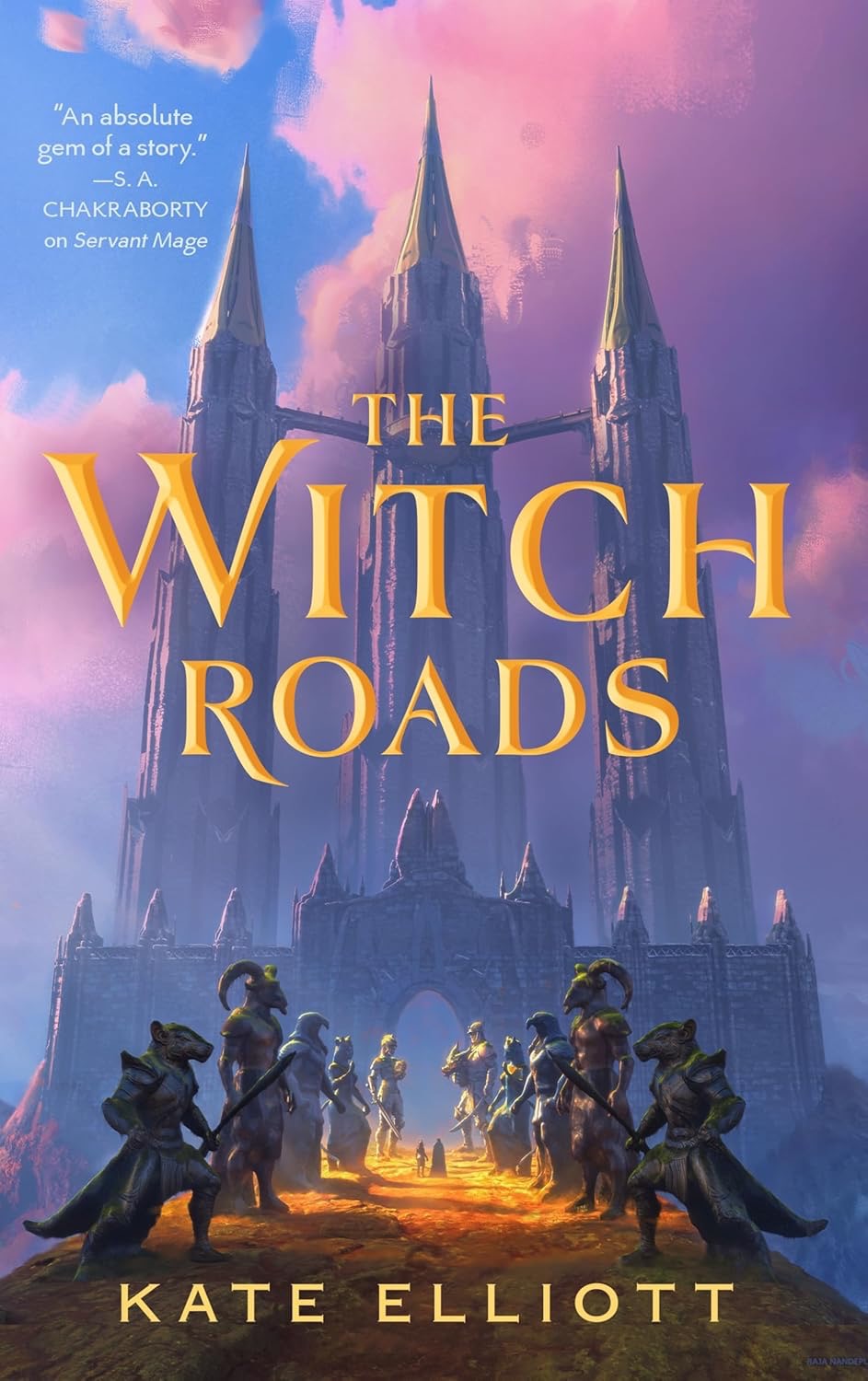
On Reading Kate Elliott’s The Witch Roads while travelling

I read Kate Elliott’s The Witch Roads while travelling in Norway and I feel like this was the perfect companion book for my travels as each time I looked up at the mountains or hiked a path, I would think about Elen and her crew travelling through the lands of the Tranquil Empire. Of course, the roads we walked and the paths we hiked were not at all as rough or as challenging as say the crossing Elen and company make at Grinder’s Cut (also there is no pall in Norway). But still, it gave me a sense of satisfaction to observe how time passes when your main form of transportation are your legs. Of course, there are also carriages and horses in this book, but the pace of travel is perfectly done and also a perfect way for the reader to get to see and know this world and its perils (mind you, it’s not just all peril. There is also sense of wonder in walking through this world). I found myself quite enchanted by the pacing of this novel which wasn’t a quick read because I had so much going on that I also had to keep putting it down. I’ve had some books where I eventually give up because I have to start all over again, but this wasn’t a problem with The Witch Roads. Picking up where I’d left off wasn’t a problem with this novel. Rather, it felt like picking up the thread of a journey once again and going: Oh, yes. We did this yesterday and so we’re going onwards.

If I’m giving the impression that The Witch Roads is a tame read, let me disillusion you. The Witch Roads is far from tame. There is an imperial prince and there is a haunt. There is danger because the company must stay wary not only of possible ambush, but also they need to stay wary of spores and the pall. There is magic and there is all kinds of love, from filial love to love born of allegiance to the kind of love that transcends. There are also lots of secrets and I feel like there is even more intrigue and danger waiting in book two.

There are so many deep and speaking lines in this novel. I thought I should post some of them, but I’m just gonna say: go read the book and highlight your favourites.

The Witch Roads is not just Elen’s journey or the haunt’s journey or the Prince’s journey, it’s also Kem’s journey and there’s something so beautiful about how Kate Elliott weaves all these things together and by the time I reach the end of this novel, I find myself thinking again about the question of who is the centre and where is the centre and from whose perspective narratives take place and it’s beautiful how Kate Elliott reveals the ways in which this journey has changed the different characters in different ways. Bringing them to places where they understand theirselves and those around them better.

Yesterday, I was at the Bryggen’s Museum, observing tapestries made by the tapestry artist Ragna Breivik (currently on exhibit at the museum). While observing the loom on which she worked and thinking about all the different threads and shadings and the amount of detail and work that went into making tapestries that continue to speak to this day, I thought of the way Kate Elliott’s work does this kind of tapestry making with her words where all the little threads come seamlessly together forming a story with different shades of meaning and texture.

The Witch Roads gives us a world that’s rich and full. Complex characters, each with their own path and their own priorities. We get the narratives around inequalities and the different relations that exist between different strata in society within the world but these are done not in an intrusive or shouty way. Thread by thread, shade by shade, with intention, Kate Elliott gives us this world that is rich and full peopled by complex characters who we can identify with and love.

For all that this first book ends with a foreshadowing of what might come in book two, book one leaves me feeling satisfied. I’m a bit impatient to know what happens next (of course), but there’s a lot to reflect on and think on about the first book and I’m very happy about making the choice to pick up this novel and read it (even though I tend to try and not read unfinished series).

On the dedication page, Kate Elliott writes about how The Witch Roads duology reignited her love for writing during a rough period when she wondered if she should just quit. I am so thankful she decided to keep on writing and I hope she will continue to do so because the world is a better place for having her books in it.

The Witch Roads is published by Tor Publishing Group.

Important note: I purchased my own copy of this novel, as I have done with most books that I write about. Reviews or thoughts on these books appear as time and energy permit.

art and narrative

Last Thursday, I moderated a panel discussion on the Fractal Art of Julius Horsthuis at NXT Museum. It was quite an interesting event as not only was the artist on panel, but we also had Dr. Margriet van der Heijden on panel–a physicist who specialised in particle physics at CERN. I’d never thought all that much about fractals before–I mean, if someone said the word fractal, I would understand that they’re talking about self-similar patterns which we often see in nature, but I probably wouldn’t be able to tell you what it is in-depth. For math people, talk about fractals will often lead to thinking about the Mandelbrot equation, but did you know that before Mandelbrot, there was the Julia? (Yep. I learned all these things while doing my prep.)

I also found myself thinking on the question of what makes art. What do we mean when we say a thing is a work of art? And what function do we ascribe to art? Julius Horsthuis says that his focus on Fractals lies in the fact that he hasn’t gotten bored by it yet.

For Julius, documenting or discovering the 3D worlds opened up by the input of various equations is what makes it fascinating for him. He talks about the films Baraka and Samsara which don’t follow a conventional narrative and how these films were an inspiration for the 3D films that he makes.

I certainly think that experiencing this kind of art by being in a space where you are surrounded by it is a different one from that of seeing it onscreen (on your laptop, your pc or your television). There is a mesmeric quality to it, but at the same time there is (as one of the audience said) a feeling of loneliness. Perhaps because there is an absence of characters interacting with the landscape. (Perhaps the person in the space becomes a character interacting with the landscape or could it be the maker himself?)

I watched Baraka and thought about that difference (the absence of humans in Julius’s work) and found myself thinking of how a landscape changes with the presence of humans. As Margriet said to me later on: Humans are not fractals.

I do like the concept of non-conventional narration and how it ties in with how story doesn’t have to conform in order for it to matter.

Later, Julius speaks of how the absence of narration is deliberate, although as he explores the possibilities of bringing his creations to VR, he realises that the absence of narration may not be conducive to people engaging with the art, particularly if they come to the experience for the first time.

Is story an experience? Is art an experience?

I think about these as I deliberate on my own work and process. I think of how as writers of story, there is a certain expectation arising from centuries of stories being told. What happens when story doesn’t conform to expectation? What happens when a story simply wants to show a world in the same way a documentary maker would show the world?

But is showing the world enough? We could argue that the majority of science fiction and fantasy books are about showing the world.

Piranesi, one of the books I read when I finally got my reading brain back, feels very much like that. It’s basically Susanna Clarke showing us the world Piranesi occupies. Piranesi’s voice compels us to come along and see and learn more about the world they live in. The cast of characters is barely there, but we’re seeing the world through Piranesi’s eyes and it’s beautiful and fascinating and a lot of times it is lonely. Piranesi eventually conforms to a story expectation but then not really and the feeling of fascination remains long after the book is finished.

Does Horsthuis’ art work in the same way? I can’t help but wish I had thought to ask how exploring the world of Fractals has changed or enriched the artist as a person. I’m not even sure if this is what the artist is after. Does it even matter? Should our work change us or reflect us or enrich us even? Does a work have to mean something in order for it to have value? Is fascination and sense of wonder enough?

In the light of discussions around the lives of creators, to what extent does the character and life of a creator influence our engagement with the work that they create? And can we separate things made from the people who make them? (Probably something for another post…my brain tends to wander off in tangents and this is my blog. 🙂 )

I think there is room in the world for different kinds of artmaking because every form of creation will find its own audience and will speak to audiences in different ways. Thursday’s event reminded me of that. It reminded me of the beauty of physics, the endless mystery of the world we live in and that joyful feeling that arises when people come together with a desire to create bridges of understanding and knowledge.

If you’re in Amsterdam, I would recommend checking out NXT Museum (check out what’s on exhibit first as it varies). Not only is Julius Horsthuis’s Fractal Art on display, but they also have a fascinating exhibition by the postdigital art group Random International.

Blessings and peace to you who read this. Daghang salamat for passing by.