At World Fantasy

Here at World Fantasy, I am learning how to balance my energy in a more intense way than I have had to since my last treatment at the end of 2024. I’m not exactly sure what made me decide to come to World Fantasy, but I think it might have had to do with wondering if I could still go to conventions on my own. A convention closer to home felt safer than a convention somewhere like in the US. After all, I managed to complete the co-creation summer workshop, which was also pretty intense, but in a different way. So when Aliette de Bodard told me that World Fantasy was in Brighton, I thought: Oh, I think I can go. It’s also a plus that I get to share a room with Aliette.

World Fantasy is quite intense in the way most conventions are intense. I had quite forgotten the noise level and how draining that can be. It brings home the fact that while I may be recovering really well, I am not yet at 100%. I’m very thankful then for friends who have introduced me to their friends. I was very happy to reconnect with Julie Philips who wrote James Tiptree Jr., The Double Life of Alice Sheldon and The Baby on the Fire Escape. Julie lives in Amsterdam, but it’s been a long time since we last met, so I was so happy when she told me she was coming to WFC. Julie introduced us (me) to Theodora Goss who just as lovely and as elegant as her prose is. I was quite starstruck and speechless for a moment. Like what are words? I remember reading In the Forest of Forgetting when I first learned that such a thing as genre existed and being quite blown away by the beauty of it. I’m pretty sure I’m mangling something up in the process of writing this, but I feel like I want to write this short blog before the feeling of now fades and I run out of gas.

An interesting new writer to me, is M.K. Hardy. I met the M of M.K. and enjoyed listening to her talk about their novel and the underlying themes in their work. I’m quite intrigued by the aspect of co-creating and writing together as it feels like an enriching process and I hope to get to ask about that part one of these days. I was very much engaged in Morag sharing about how the novel thinks around matters related to Scotland’s history as part of an Imperial project. I wished again that my sister were here because they would probably have got on like a house on fire.

While reflecting on this feeling of missing, I realised that even though my sister isn’t with me, she is still with me. I wrote a short piece reflecting on it and will share it here. Early on, after I realised that my ability to socialise is still at recovery stage, I decided not to rush out in the mornings. The panels I circled on my programme are wishlists not must do’s and it’s perfectly fine to spend time in the hotel room writing or wandering along the shorefront or doing other things not convention related. In the meantime, the manuscript has grown beyond 50k. I am embracing it and recognising how ambitious this project actually is and so I do need to take more time with it, to let it breathe and become what it is meant to be.

I have this hope that thinking around these ideas will lead to connect with others who are also thinking around these ideas of kinship and entanglement and not looking away from, but staying with the trouble as Donna Haraway would say.

There’s still more to write, but I need to end this post here. Sharing this short reflection on Grief and presence in the hope that it will mean something to you who have stopped by to read.

Grief makes us awkward. 

We are carrying these wounds with us, but we have no way to heal them because we have imbibed the narrative that tells us we must keep moving forward. 

But grief is also healing. 

In remembering, we make alive again the ones who we have lost. Their presence walks beside us in a different way. We can gain strength from that presence. From the knowledge that we have loved and are continuing to love. We have been entangled and continue to be entangled. They are not really gone from us. It is simply that idea of presence as being physical that we need to let go of. 

My sister is here, present with me. Just as present with me as she was when I could touch her hand. 

Blessings and peace to you who read this and Maraming Salamat for passing by.

How we conceive a familial history

In The Darker Side of the Renaissance, Walter D. Mignolo quotes Isidore in the chapter on Record Keeping without Letters. He quotes this from Isidore: For among the ancients, without exception, only those who were witnesses and who had seen the things they narrated wrote history, for we understand what we have seen better than what we know by hearsay.

I had a conversation with a cousin who is older than I am, who might know more about the history of my grandparents. They might know more, not just because they are older, but they might know more because of how they were situated in physical proximity to my grandfather. My cousins lived in Cagayan de Oro and this cousin tells me that our grandfather visited them often and the story they tell about my grandfather is one of a gentle and kindhearted giant of a man. Someone whose visits they looked forward to and whose presence was very much welcomed.

Our family was located far from where the rest of my father’s family lived. In fact, we were located on the opposite end of the archipelago. My sister and I grew up in the mountains of Ifugao, my brothers were born there too, and we spent our childhood blissfully unaware of any drama that might be taking part in that place that could just as well be another country. We were far from where my grandmother was located. Also far from where my grandfather and his second family lived. Back then, the trip from where they were to where we were would have been almost the same as traveling from The Netherlands to the Philippines. By Filipino standards, it still is a costly trip.

My cousin tells me that my Dad, being the youngest, was his mother’s favourite and so he didn’t receive the same kind of harsh corporal discipline that his elder brothers received when they were growing up. My memories of my grandma are those of a rather strict lady. I thought at that time that it was because she had Spanish blood and Spanish people are strict (right?). She was always affectionate towards our Dad and the affection was reciprocated.

The story of familial relation unfolds differently when told from the perspective of my cousin who tells of the horror that came with growing up in the proximity of my grandmother. According to this account, my grandmother was more than strict. Indeed, she was quite unreasonable, more than demanding, and even cruel. Any sign of enjoyment when she was visiting with them, was punished with a lengthy sermon that would end only after one of my cousins was punished for an imagined wrongdoing.

My cousin relates this to me from her perspective. We didn’t see, she tells me. We didn’t know what our grandmother was really like. And so, she wants to relate what we never witnessed or experienced for ourselves because of distance. The grandmother she knew and the grandmother I knew seem to be two different people.

A memory arises from a time when my grandmother took me with her to visit her younger sister in Manila. She was fussy about my comfort and then when we arrived at her sister’s house, she was devastated to find out that she’d forgotten to pack extra underwear for me. I think I must have thrown some kind of a tantrum (I was a bit of a handful as a child) and she just didn’t know what to do or how to get me out of the bathroom as I kept on blaming her for not knowing that kids are supposed to have clean undies everyday. She was strict, but not more strict than my own mother and she didn’t spank me for throwing a tantrum. She waited and then made me do what she wanted me to do. (Just as my mom would have done.)

By the time my grandmother came to live out her days with us, she had been gentled by years. She had had had a stroke, but she was recovering even though she wasn’t very mobile. She loved telling stories about the past while I massaged her legs and listened eagerly.

I loved hearing her talk because my Dad didn’t tell us very much.

Later, when we were much older and after my grandma was no longer with us, my Mom tells us an entire story of how she would warn my Dad each time my grandma came to visit: Bantay ka! (watch out). Your Mom isn’t going to lay a finger on one of my kids.

None of us ever experienced such harsh punishments or treatments as those described by my cousins. We might have been subjected to some nagging, but our mother would send us out to play and even though we were scolded by my grandmother, I always had this idea that it was because she wanted the best for us. Did this have to do with how my mother stood between us and her? Was it because of the close bond between her and my father? Or are these things that I have imagined because there is a lot I do not know.

I can remember the sound of my grandmother’s voice whenever she called out to my Dad.

“Nonoy,” she would say.

Now that I have children, I recognise that tone of affection that one reserves for one’s own children, and in particular, for the youngest one.

For a long time, until my grandfather came to visit, my sister and I believed my grandmother was a widow. And then, when we found out that there was a grandfather, we thought he must have done some dastardly crime because no one spoke about him.

I suppose this speculation was natural considering how we grew up far from anyone belonging to my father’s family, in our defence, we only ever met him once.

My sister and I met our grandfather for the first time when he was already sick. By the time he came to visit us in Ifugao, he was dying. But he came to see us, or perhaps he came to see my father. No one spoke about why he’d come; not even afterwards, so I can only speculate. Did he come to mend broken bridges? I don’t know.

In my mind, I see my grandfather as a tall man with a gaunt and lonely face trying to connect with us kids. I can still see him towering over us, trying to win us over by showing us his magic slippers.

This memory is overshadowed by whispers and a feeling of tension. It seemed as if we saw him only that one afternoon, but I’m sure it must have been more than that one afternoon. I remember my mother trying to keep my father from going away to the city on an errand and my father’s stubborn insistence on going and how while my father was gone, my grandfather died.

My mother talked about how she had to have a casket made. It must have been a while before my father arrived because I remember visiting the carpenter’s shop and the carpenter explaining to me how he was making a casket for my grandfather. I thought I should feel properly sad, but I didn’t know how to feel about the tall stranger with magic slippers who now lay in a casket in our living room while the voices of visitors filled our living room. I felt uncomfortable and impatient for my father to return.

It’s interesting what kinds of snapshots the mind retains. I see one of myself frozen in the moment when my father arrives. The house is teeming with people, but the living room is in the shadows. I am standing on the stairs looking down onto the porch as my father climbs up toward my mother. He doesn’t look up to where I am, all that is him is focused on my mother and then a sound breaks from him. After my sister died, I understood what that sound was and what kind of deep grief that sound contains.

Is this the memory that colours my recollection of my father’s pain?

Did I imagine my father’s feelings towards my grandfather? I know we hardly spoke about him and when I did try, he tended to be quite abrupt. Was he in pain because he wasn’t there when his father died? Had he left because he didn’t know what to say after so many years of not seeing each other? Had something been left unsaid or undone? I can only speculate.

The person writing about my father’s life writes from the perspective of someone who spent time in conversation with my Dad, long after the pain had been healed. Their conversations took place after a transformation had taken place. It gives me peace to know that my father was no longer angry. He was no longer in pain. He had reconciled his grief and pain and he had become the beautiful self everyone remembers–a man filled with compassion, gentled by time, always present and in service of those who needed him.

If we are to take Isidore at his word, then it means I can only write what I have seen and what I have understood from that seeing. As Mignolo writes, Isidore wasn’t concerned with the distinction between a narrative of witnessed events (which will become past events from a future perspective) and a narrative of the narrative of witnessed events.)

Again, Mignolo quotes Isidore: Things that are seen are reported without any ambiguity. This discipline pertains to grammar, for only the things deemed worthy of memory were written down.

These entries are (for me) a way of processing. Thinking about family history as I think on what I am reading. Blessings and peace to you who read this and Daghang Salamat for passing by.
Downtime and Tricia Hersey’s Rest is Resistance

It’s the first proper week of my summer break and I have to admit that I’m really enjoying the time to just chill and do whatever I want. Downtime is a great period to relax and reflect–do a little bit of dreaming, think about lessons learned, about the work that’s been done and what it means. I also find myself thinking on how to encourage a younger generation of activists and collaborators because community work can eat you up if you don’t get the support and the rest that you need.

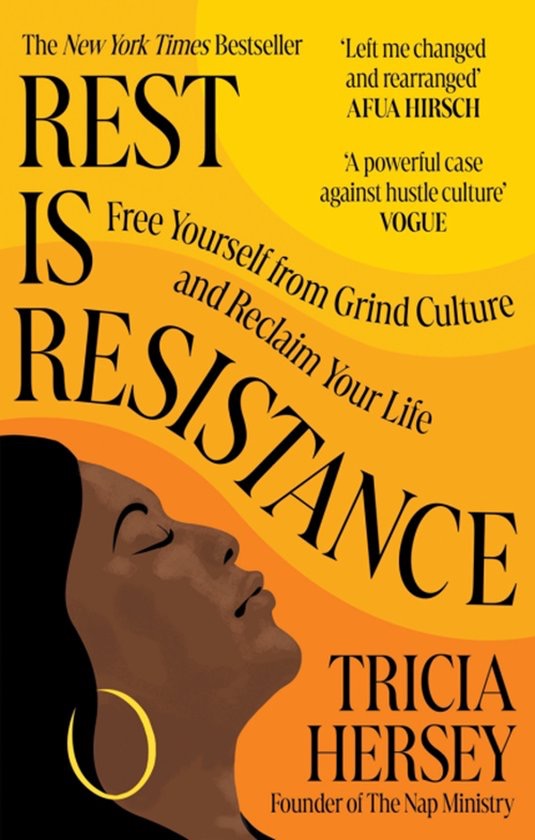
I recently shared a book with one of my dear friends and a fellow collaborator. It’s a book that came across my timeline and the title of the book drew my attention because it speaks to something I hear coming from workers in different spaces.

“I am tired.”

“I feel like I need more sleep.”

“I want to recharge.”

I hear different variations on this theme of needing rest. So when Rest is Resistance by Tricia Hersey came across my timeline, I felt moved enough to put it into my basket.

Hersey’s book is a quick read, but it is a good read. Reading it, I found myself thinking of how easily a body can be trained to forget about rest. For instance, when I first moved to The Netherlands, I still practiced siesta time (like we do in The Philippines). My in-laws were rather shocked/surprised and I was shocked/surprised to find that Dutch people do not do siesta unless you’re old or sick. I had to un-learn siesta pretty quick because being caught in siesta resulted in that disapproving look that made me feel like I had committed a crime. Nowadays, I’m like: I do not care…I will siesta if I feel like I need a siesta.

Hersey’s story about her father–his life of work, in service to God, in service to family, in service to community, reminded me so much of my father. My father was the youngest of three brothers, all three who were raised by my grandmother who became a single mother when her husband left them for someone else. There are many ways to justify a man leaving his wife and family. My Grandma was quite a character and I have been told repeatedly by other people that living with my grandma was hard for my grandpa and so when he met this lovely young woman who became his second wife, it was understandable that he chose to leave my grandma. I know how much my Dad valued my grandma and how much his Dad’s leaving hurt him. I don’t doubt my Dad had heard all the reasons. He didn’t blame the woman his Dad left them for, but it didn’t make his pain less and it doesn’t make his pain invalid.

All throughout his life, my Dad was determined to be there for us, even as he also lived his life in service to the community and in service to God. He was a doctor, and a lot of times, he would be opening the door to patients when it was way past midnight. Later on, he organised medical missions to places where medical care was inaccessible. Free clinics for those who couldn’t afford it. He was always on the go.

On the day he died, he was preparing for another medical mission.

I think of how the life of my father was punctuated by constant movement. He was so invested in providing for us and protecting us. He wanted to keep my Mom free of stress and worry. He was taking care of so many people and so many things, he didn’t tell us he had a heart condition.

I thought of how the pattern of my life ran similar to my Dad’s because my Dad was my hero and I wanted to be just like him. So, I almost never said no to anything. I found it hard to refuse help. I found it hard to set boundaries and to say: I can’t or until here and that’s it. Then I had a burnout where my body literally refused to function. Then, Jan died. Then, the diagnosis happened. And I was forced to rethink my life and say “no, I cannot”. “No, I don’t have the energy for that.” “No, I have to prioritise something else first.”

It took my body breaking down for me to re-learn rest.

The funny thing is–once you come face to face with it, you understand that the human body isn’t meant to keep going like an engine. Rest and sleep are essential to the recovery process. When I was going through treatment, I thought of how the emphasis is often on the parts of us that are sick or that carry disease. So, I thought to myself. So, there’s this small nodule somewhere. But it’s not everywhere. I can’t do much about the nodule, but the parts of my body that are well, can be made stronger. Can be made stress-resistant, can be helped to be healthier. So, no one knows how much time I’ve got, but no one else on earth knows that either. So, what I can do is be as alive as I can be right now. When my body was weak from chemo, I remembered what gives life to the body is not the body itself, rather there is that source that is beyond human explanation. We are, after all, more than these vessels we occupy and the spirit that is inside us travels on a path undefinable and unconfined by human parameters.

After my last treatment, there was moment where I could feel life gaining momentum. I was working more, I had more energy, I was more focused. I thought: I can do this. Oh, I can do that. Oh, yes. But I also felt this jealous guarding of my alone time–the downtime. Time to recuperate. Time to gather my thoughts. Time to be alone with a book. Time to nap. Time to tune in to that other space–to that other timeless space where dreaming happens.

A lot of what Hersey writes about is recognisable. My hope is that those who read it won’t just read it as this best-selling book where after reading it, they can put a checkmark beside the title. Read that. Liked it. Next book. (That would so defeat the purpose of it.)

I am reminded that my body is a vessel that carries me through life. I can’t accomplish what I want to do with this life, if I’m not taking care of my body and taking time to rest, recuperate and dream.

Writing this, I am reminded again of The Sabbath and Heschel’s thoughts on time and how time is like this cathedral we live inside of. Time isn’t going anywhere. We just need to dwell here and be here and do what we need to do where we are right now.

Maraming salamat for reading. May blessings and peace go with you as you journey on.

Fruits of my write-a-thon

If you’ll look at the sidebar (or if you’re on the phone, it’s probably going to be the footer), you’ll notice that I’ve posted two lovely badges from the Clarion West Write-a-thon. It’s been a while since I felt up to participating in the write-a-thon, but this year felt like an important year. I wanted to find a way to write about books again. For some reason going back to the bookblog felt too raw. The place she left behind is still right there and I had a jolt when I realised that it’s been nine years since we last talked about books.

Every memory I have of me and my sister is related to us reading books together, arguing over who would read what book first, complaining about how slow the other person was at finishing a book (no backtracking allowed), arguing over what kinds of books were best, discussing the pros and cons of a book, disagreeing over characters and how things unfolded in a book–and a really bad phase when I was so snobbish about my sister’s love of romance books that I got her some of those body rippers for a present. (She really hated me for that and I regretted it a lot because it wasn’t a very loving thing to do.)

I couldn’t understand the appeal of Mills & Boons romances with men treating women like trash and women still going back to those kinds of men because of ‘melt’. We argued about that too and discussed alternative endings where women would look down their noses at those men and say: ‘I am perfectly fine on my own and who needs love if it means being treated like you are less than just because.’

So, when I got my reading mojo back and tentatively started reading novels again, I missed being able to send her an email and ask her what she thought. I imagined us having face time conversations about details in books that we noticed. What we liked and what we didn’t like and what we wished were different or what we wished we could see more of.

Perhaps it was my sister nudging this bright idea towards me from where she now lives. Why not just blog about the books I was reading alongside blogging my thoughts on the work I was doing? Why not make that a write-a-thon goal alongside revisiting The Cartographer and finding out what I needed to do to make it work this time? Make it not too stressful because writing a thousand words a day might not be doable after not writing for a long time.

It took me reading and writing about Nisi Shawl’s book to find a way to keep the conversation going with my sister. In some way, Everfair unlocked that space where I could write without feeling pressured to review. It was like writing to my sister and trying not to give away spoilers about this novel I’d read. I loved it so much and wanted so much to talk about it with her that I wanted her to read it too. I might give away bits and pieces but not all because she would really scold me if I did that in the real. Writing about Everfair connected me to that part belonging to my sister and the history of books between us.

In between EverFair and preparing for LIMBO’s booklet event, I decided to go read other books on my reader. Long train rides are really great for catching up on reading. I finished R.S.A. Garcia’s The Nightward in less than a week while traveling back and forth to Amsterdam. I finished reading Martha Wells’s City of Bones even quicker because i was traveling almost everyday. Along the way, I noticed how my reading speed seemed to be improving along with my ability to keep focus. (I do have notes and plan to write that reading post sometime soon.)

Perhaps one of the realisations I’ve had is how when we love to read, we tend to take it for granted. I started reading at an early age, so did my sister. I never imagined that I would be not able to read until chemo affected my ability to focus and hold onto things I’d read. I had to learn to be kind to myself and also I grieved a little bit because I didn’t know if I’d get my reading mojo back. Now, reading feels like a miracle. It’s something I’m so thankful for and it’s a reminder not to take things for granted.

I didn’t realise that today was the last day of the write-a-thon until I got the email. It was also stunning to get the mail telling me that a good friend had pushed my write-a-thon goal way past my original funding goal. I am incredibly moved.

During the worldbuilding workshop that I gave for the Springschool Co-creation Lab, I talked about the potential of science fiction to help us think around possibilities. How science fiction at its very best challenges us to think of different ways of being in the world. Science Fiction has this potential for us to dream of different kinds of worlds, different ways of being in community and in relation to and with one another.

It’s my hope that we continue to encourage one another not just to think about how to write great stories, but more importantly to think on how we can create small movements that could lead to change in the spaces we move in. Let’s encourage each other to keep asking questions, to think of different ways of being in the world, to question why we do what we do when we do them and to live and create with intentionality.

Thank you for passing by. Maraming salamat and may blessings and peace be with you.

*Big shoutout to my dear friend, Vicki, who pushed me way past my writeathon goal. Thank you so so much.

**If you want to help us achieve 100%, the fundraiser is still open. Click on this sentence to visit the writeathon page.

Today is my sister’s birthday

I’ve been thinking about my sister in the in-between hours, all throughout the day. Perhaps it’s one reason why I felt somewhat agitated. It’s not until I took the time to sit down and think about the day that I realised it’s because I didn’t get to talk to my sister.

My sister and I were born almost exactly a year apart. Both of our birthdays fall in April. Hers falls earlier in the month and mine closer to the end of it. I think about my sister and the unexpectedness of her passing and what a gift it was that she was able to come to us and spend time with us in the months after Jan passed away. Little did we know that she would leave us too.

For a long time, I couldn’t put a name to what it was that I felt when my sister died. I was able to carry on after Jan’s passing, I was able to push through and still keep going, but when my sister died it was like the world stopped and I sank into a deep dark place. I’m not exactly sure how I got out of there, but time helps a lot and it helps when someone picks you up and says: you don’t have to do anything for a while, you just have to keep on living.

In the days when I was going through treatment, when chemo was rough and I didn’t want to even get out of bed, I thought of my sister saying: Come on, Rochita. Don’t just lie there. Fight.

And I would get up and I would make myself go downstairs and eat breakfast even if I didn’t feel like eating. I decided I wouldn’t die, but I would live.

Because there was so little of a gap between us, my sister and I were often mistaken as twins when we were kids. And my Mom liked to dress us up in twin clothing. There are loads of black and white pictures of the two of us twinning. For a long time, there was just me and my sister. We had to wait another seven years before the first of my brothers was born. My sister and I were each other’s best friends and confidantes. We could fight like cats and dogs, but we were each others’ allies. (It’s kind of impossible to remain hostile when you’re sharing a room.)

I want to honour my sister today. To remember the sound of her voice and the way she smiled. I’m thankful my sons have memories of her. That they know who I’m talking about when I talk about Tita Weng.

In 2022, when I was preparing for surgery, I had a dream about my sister. We were playing together under a big tree in the garden, and I was so preoccupied with what I was doing that I didn’t notice that she’d stood up and walked away.

Today, I remember my sister whose light I carry with me.

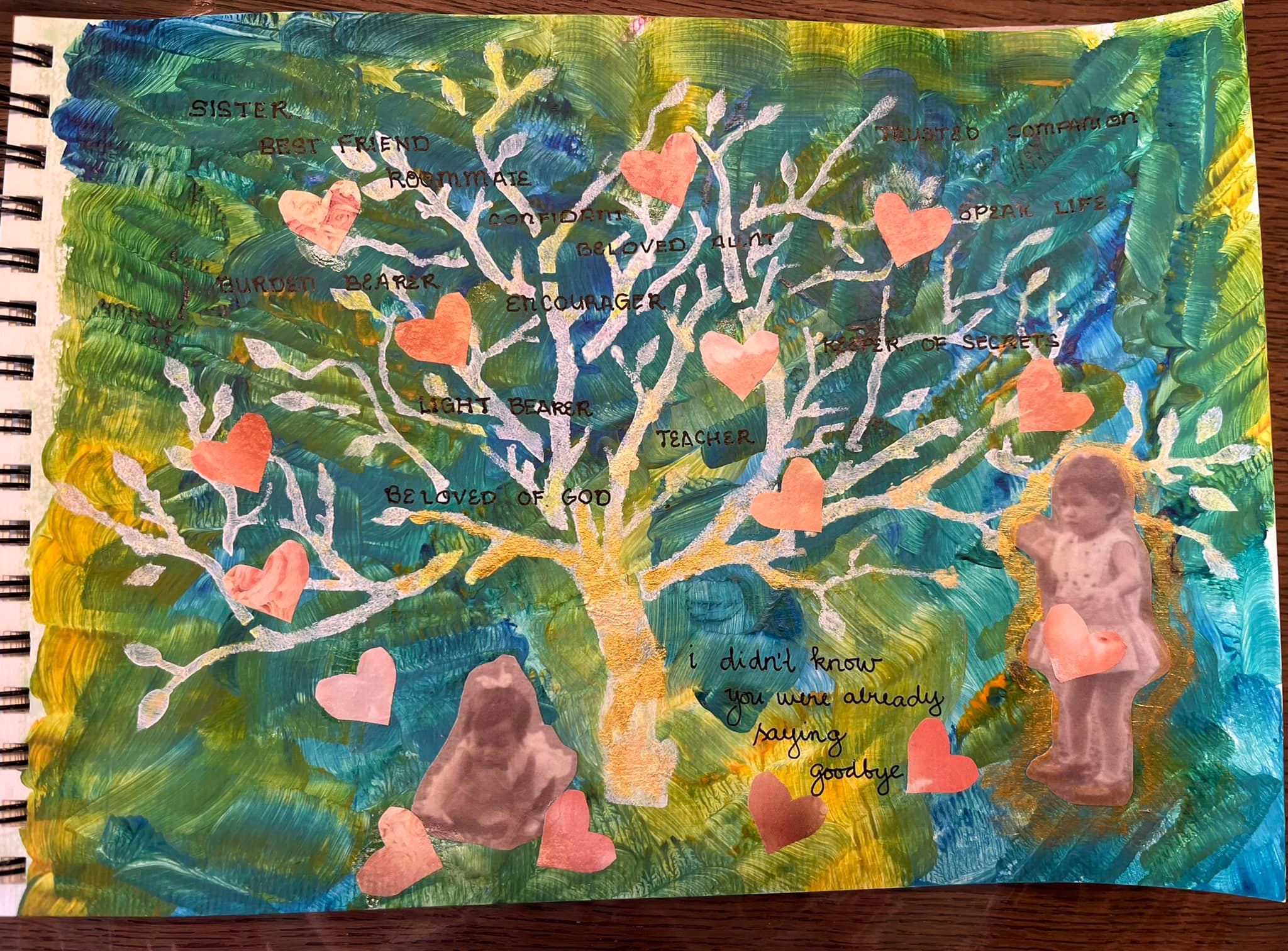
(Collage made in 2022)

memorials

Today is my elder sister’s death anniversary. I considered posting about it on FaceBook which is the social media thing for a lot of Filipinos, but something in me rebels at the thought of remembering my Ate and having people put likes on the post. I know the intention is always good, but my insides just don’t feel in tune with doing that. (But still I’m writing this post because I didn’t want this day to pass without remembering her in some way.)

For a long while, I blamed myself for my sister’s passing. I thought: how could I not have seen it? She was here with me in the months after my husband died. How could I not have seen it? I blamed myself for being so preoccupied with my life and my sorrows at that time–if I hadn’t been so self-absorbed, I might have been able to do something. I don’t know what I blamed myself for not seeing. She spent three months with us and one month after she arrived back in The Philippines, I got a phone call telling me she was gone.

It wasn’t until about a year ago that I had the courage to ask my brother what the diagnosis was. It turns out my sister had sepsis. Something had entered her bloodstream and poisoned her. Sepsis goes so quickly that by the time it manifests, it can be too late.

The cancer I was diagnosed with is also something that doesn’t manifest. It doesn’t show up on blood tests unless you’re looking for it, and because I was pre-menopausal, what might have been warning signs could just as easily be pre-menopausal stuff. That it was found came about because I remembered my sister had a non-cancerous fibroid that was causing her some trouble and I wondered if that might be the same for me. When we sent the test away, we were perfectly confident it would be nothing–but it was something after all. A part of me wonders if it was still my Ate, looking out for me.

We measure grief in moments of time. How many days has it been? How many years? We light candles or we carry out rites of remembrance. We post pictures on social media, we try to find words for our grief.

And yet, for all that she’s no longer physically here, my sister is with me. When I am on the verge of giving up, it’s her voice I hear scolding me. She was really strict with me about not giving up. Ano ka ba? She would say. Okay, if that’s how you want to end up as. (The implication being that if I give up, it’s not her fault if I get called someone who gave up.) Even though she’s no longer here, she still remains my number one cheerleader.

Losing my sister was painful because of how sudden it was. It was painful because there was so much still left unspoken and undone. (We were still going to Paris. We were going to travel together. We were going to grow old and talk about all the books we had read.)

Sister relations are never simple. My relationship with my sister was complex. We were at times adversaries. I remember her banging on our shared bedroom door while I listened to Queen or to David Bowie–and I remember her telling on me. ‘Mom, Rochita’s listening to rock music again.’

But even so, she was also my staunchest ally and my most trusted friend.

Grief softens with time (they say). And it’s true, it does. The sharp edges are gentled. But the missing remains. When I think of my sister, I no longer feel as if I am held fast in that dark moment where the world has lost all meaning or context. I think of how she would want me to walk forward and to take on life and live it as ferociously as I can with as much courage as I can.

Today, as I remember my Ate, I make the decision once again to keep embracing life. Everyday, I make the choice to embrace life and live life. I am present here and I am present now. Now is when I can do what I need to do. Tomorrow will take care of itself.

Blessings and peace to you who read this. Agyamanac Unay for passing by.

Updatery and such

It still continues to be busy. In some ways, it’s busier than it was. In other ways, it’s a bit more quiet. I like that I get to have alone time when I can do whatever I like but the house has its demands and there are things that need to be done.

This past month, I finished working on an essay I’d promised Maurice Broaddus. I think of the encouragement that comes to me in emails, in publications (Magnifica Angelica Superable was published on Lightspeed this month), and in conversations had with beloved ones. It may sound strange but I feel like I am coming back from a long way away.

I think of Laura telling me how deaths of those close to us change us. I think of one of our friends telling me that when his father died, the world narrowed down and became somehow sharper. Different.

I think of what it’s like to fall in-between cracks and how there is that moment between losing someone and being alive when it feels like the left behind are hovering somewhere in a place like indefinite limbo while the world goes on.

It feels just right that I am reading a Terry Pratchett’s The Amazing Maurice and His Intelligent Rodents with my youngest son. Youngest son can read the book all by himself, but we borrowed this book expressly to read together. A bedtime ritual where he listens and imagines while I try to make the story feel as real as possible with the reading of it.

There is death in this book. In the past two nights, two of the intelligent rodents have died. Pratchett doesn’t turn away from those deaths. Rather he lays it on the page, factual and clear. It happened. A rat died. We stand still for a moment, thinking on that death and then Pratchett moves us onward–the story continues. It’s not that the death doesn’t matter. It does, but life goes on and characters move forward and think about what happens next.

On some days, it’s a dilemma. How to make it so that a child doesn’t sink into the quagmire of sorrow and despair.

Tearing a book out of Pratchett’s page, I acknowledge my child’s sorrow. It’s sad and it’s a terrible thing, but tomorrow is a promise. Let’s think about what we want to do tomorrow. Where do you want to go? What do you want to see? What about next week? What about next month? What about next year?

I understand very well that grief doesn’t ever go away. That grief is not a neat and orderly process but it comes in waves and flags and sometimes at the most inconvenient and untidy of moments. It is as it is. There is no changing the reality. But we go on. We hang together. And then, I find myself thankful and glad that I can still be here for my children.

You don’t get over it

I am reading a book about grief and grieving children. Sometimes I think that with the passage of time, we will get over it. If I am strong enough. If I am cheerful enough. If I keep a positive outlook and greet everyday with a gung-ho attitude…we will reach a space where we are no longer grieving.

For a while, I hated the idea that my children were without a father. My first impulse being to do something, to find something–to reach out and fill up that gap. But slowly, I am coming to recognise that there is no filling up that gap because it is already filled. My kids are not without a father.

Yesterday, I learned that one of my friends had lost his father in a brutal wrenching away of life. This friend was 19 years old when it happened.

I told him about my youngest son weeping over the fact that he could no longer recall the sound of his father’s voice.

“It’s okay,” my friend said. ( Youngest son was listening in as we were talking on skype.)

“Your memory becomes a bit vague. You forget how he sounded. Sometimes, you don’t remember what he looked like. But you look at photos and you remember the feeling. The feeling is the most important thing.”

It dawned on me then that no matter his physical absence, their father will always be present with us. He is here in our memories and in the feelings that we have when we think or talk about him.

I think of conversations I’ve had with the kids–about boats and distant shores and rowing together.

My kids are not fatherless. Their Dad is always with us. In memories and in the feeling.

What it’s like

Today, someone asked me what it feels like.

“I mean, you lost your husband and then now you’ve lost your sister.”

How do you put into words what it feels like to lose the other half of your heart?  She was always there–my sister. In the darkest periods of my life, I hang onto the thought that my sister was always there. She was witness to my wildest dreams and imaginings and she was the person I confided in the most in times of deep despair. She loved me steadfastly even when she didn’t agree with the choices I made and even when it grieved her to see me walk away from the path that was familiar to us both.

I have a memory of my elder sister from when we were in grade school. Back then, going to school meant climbing down the mountain path to the gravelled road and then a 10-15 minute hike to the central school. I was always slow back then and a little bit of a spoiled child.

(My sister, being much quicker on her feet always was at least a few feet in front of me. )
In this memory, my sister has reached the bend in the mountain path–a couple of meters down from home. I am still at the top of the path. It had rained in the night and the path was a bit slippery and being the scaredy-cat that I was, I wanted my sister to come back and help me down the slippery slope. She, on the other hand, was already impatient to go to school because the first bell had already rung.

I remember my sister telling me to hurry up and I remember crouching there and crying for her to come get me.

Finally, she came marching back up the mountain slope. I still remember the look on her face.

Regardless of how aggravated she was, she helped me down from the top of the slope. She held my hand until we got to a place where the earth was less slippery.

My heart aches.

I have so many memories. Of stories shared in the dark of night after the lights went out–of listening for the crunch of gravel outside our bedroom window–of running up and down the mountainside.

There are not enough words to say what it’s like.


My sister

20160309_223206

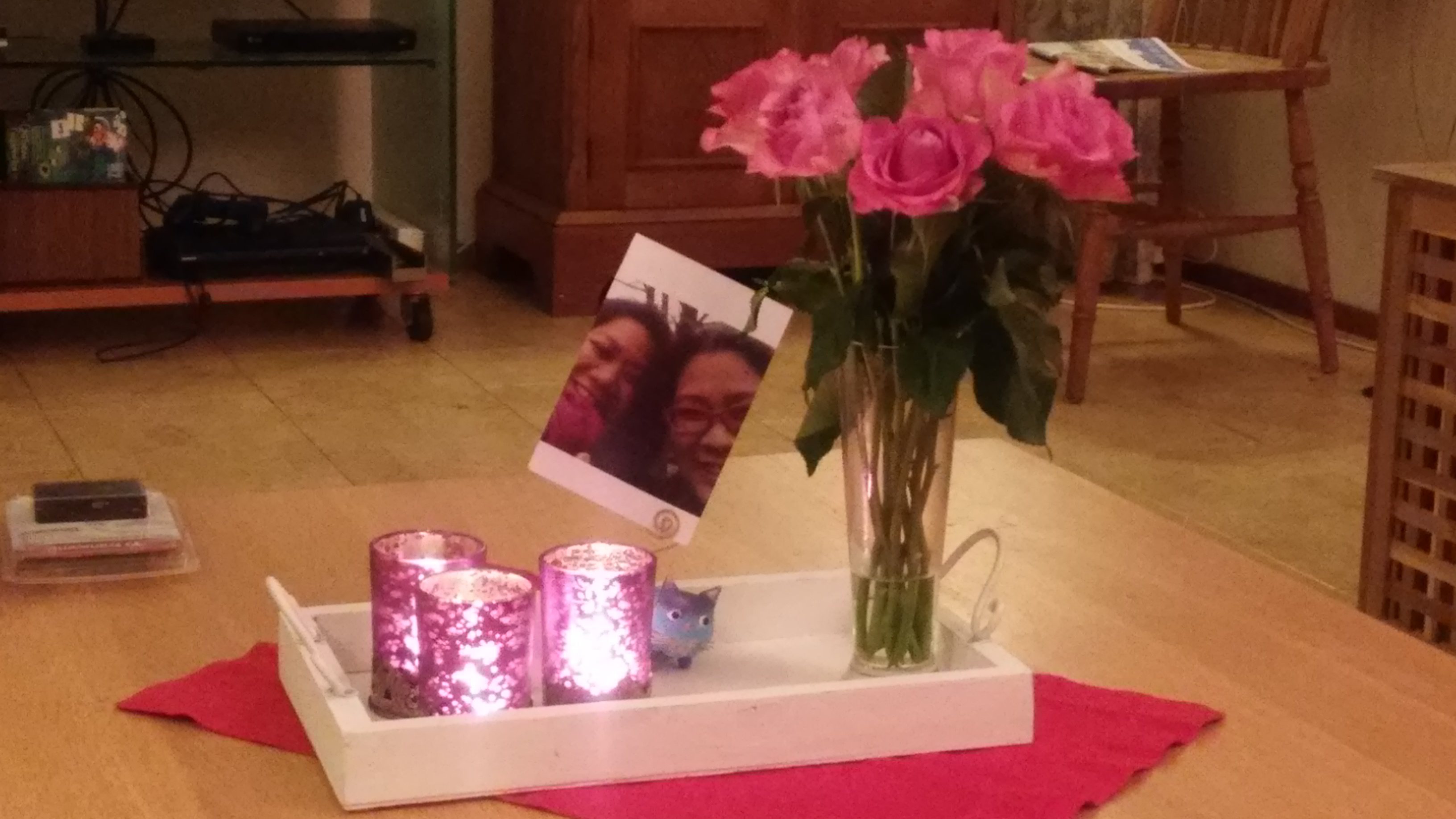
Yesterday, my neighbour brought me lights for my sister. I made a spot on the living room table with these roses that seem to keep on blooming and a print of a happy selfie from the time my sister was here with me.

Loss is an ache inside my chest and it takes a lot of effort to keep on going.

One never dreams or hopes of losing their sister. I never thought or imagined that I would lose mine so soon. How is it possible?

My sister who I laughed with and cried with. The one I fought with and made up with. My sister who always won the contest over who got the read the books first…because she was (of course) the eldest. My sister who irritated me and encouraged me; who challenged me and didn’t hesitate to confront me. My sister who lives in so many of my stories; whose voice I hear when I am on the verge of throwing in the towel. My sister who refuses to let me give up and surrender.

My sister.

My sister who started the bookblog together with me; who made me understand that there are readers who just want to enjoy a book and who see its flaws but love it anyways because that’s how they are.

I remember fiery discussions over the dinner table, pillow fights in the bedroom, whispers in the night when the lights went out, secret conspiracies, mad adventures.

My sister who saw no need to conform to societal expectations but who chose to be exactly as she was.

My sister who loved and forgave wholeheartedly. My god. I shall miss my sister. There are not enough words for the agony of this loss.

I can only go on and do as she would tell me to do. Live because you have your sons. Live because you must write. Live because your path in life is not yet done. I must live because she wanted me to. Someday, I too will pass through the veils. I will see her then.