I’m still basking in the IFFR glow of watching our young filmmakers from Moving Love having that epiphany of: I am a filmmaker.
They finished the course, they made these films, and so they are deserving of that title: filmmaker. I’m looking forward to the premiere when all of the moving portraits will be seen in one space. At present, we continue to send out feelers for other possible locations as we want to bring these films all over The Netherlands and hopefully beyond The Netherlands.
My role as consultant and coach for this project is coming to a close, but I still feel connected to these young people. I very much wish that as they continue on with their journey, they will be able to find people who will help them grow further in their craft.
On Friday’s IFFR film-showing, I met a young filmmaker from Berlin whose film called Unbelong moved me so much. Pars Lorenis a non-binary artist and filmmaker and for those interested in finding out more about them, they have an online presence on instagram.
Unbelong is like a visual poem. It has beautifully haunting imagery combining footage from Pars’s life with other archival footage. All throughout the film, we hear Pars’s voice telling us a story, we are invited to be part of the inner world of the self. Unbelong is vulnerable and intensely personal, and it speaks to us on a plane where we connect with that vulnerability and acknowledge the courage it takes to be so. If you ever have the chance to see this film, I want to encourage you to do so.
Unbelong will be shown during an Anatolian filmmakers in Exile event in Berlin on the 14th of February. This event is a Turkish event. but there will be another showing on the 7th of May at the Frauenzentrum (in Berlin) in English and in German for those who prefer English or German.
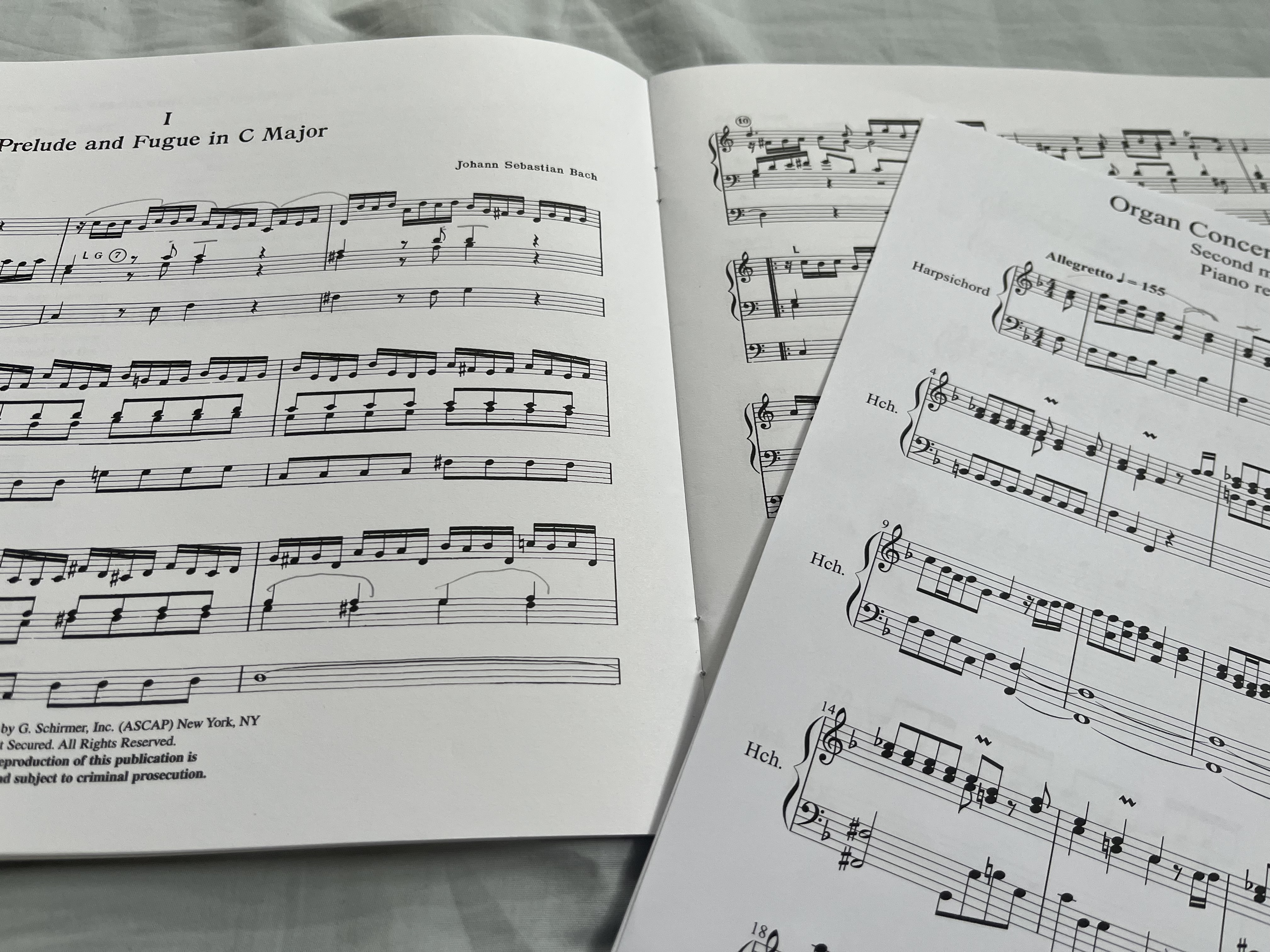
On another note: I started organ lessons this Monday and am feeling quite rejuvenated and excited. It’s a feeling pretty similar to when I was studying at the conservatory back home in The Philippines. But where I used to dread piano lessons, I’m looking forward to my organ lessons. I can’t fit an organ in my house, but the digitaal piano has an organ set-up which helps in terms of understanding the difference in technique. I’m starting with the first of Bach’s eight preludes and fugues for the organ and with the second movement of Handel’s Organ Concerto HVW 295, which I’m told is called the Cuckoo concerto.
There are still a number of things to write about, but I thought I’d keep it to this for this post.
May blessings and peace be with you always and thank you for dropping by.
(If you prefer, you can also listen to this blog.)
I have a memory of hiding under my bed as a child. My mother was quite insistent about teaching us how to play the piano and before we were allowed to go outdoors, we were required to spend some time practicing the piano. To my mind, I really didn’t see the point. I mean, my sister was the gifted one. She had a beautiful touch and she had the diligence to sit and master a piece of music, while I fidgeted on the piano seat, impatient for practice time to be over. So, I devised this plan of hiding under the bed. Surely, my mother would grow tired of waiting. Surely, she would rise and leave the room and then I wouldn’t have to practice.
Of course, I never won the waiting game.
Later, when we moved to the city, my mother stopped requiring me to practice daily. She had a thriving piano practice, she had other students who didn’t hide under the bed when it was time for piano lessons. My older and more talented sister stopped playing the piano at some point and now that my mother wasn’t pushing me to practice daily, I let piano practice slide.
I actually don’t know why my Mom thought I would make a good conservatory student. Maybe it was my sister’s decision to pursue computer science instead of music that decided it for her. But when it was my turn to decide on a study, she declared that one of her kids would definitely become a pianist and that kid was going to be me. I protested, saying that I would like to do something else, I just wasn’t sure what yet.
“Since you don’t know, you will go to the conservatory,” that’s what my mom said.
And she spent the following month steamrolling me through a repertoire that she said would guarantee my admission. She also called up one of her former teachers. On the basis of that connection, I played Mozart’s sonata in C (not just the first movement but all three), a Bach invention (I don’t recall which one), and a Czerny study. When the panel asked me to play the scale in D major, I turned to my mother and went: what are they talking about. And my Mom went: 2 sharps. And that was how I got into the conservatory at the University of Santo Tomas.
The teacher my mom had contacted was Ms. Fule. She was a dragon lady and quite a character. Books write about characters who bark, Ms. Fule was like that. She barked out commandments and woe to anyone who dared gainsay her. Not only did I have to take my piano lessons with Ms. Fule, I also had theory and counterpoint with her. If I skipped class, she would call my mother.
“Where is Rochita? Why wasn’t she in class today?”
There was no escape.
Piano lessons were like torture. I would sit in the hallway beside other students waiting for their turn. Ms. Fule sometimes ran late, but she expected her students to be ahead of time. If we were late, we got an earful. It would have been great if the earful was limited to us, but the windows of Ms. Fule’s studio opened out into a courtyard surrounded by the buildings of the education department and so the entire college knew whenever Ms. Fule was berating someone. Woe to the student who made mistakes while playing the required homework.
Sometime after I departed that particular conservatory, I heard that one of the students had filed a complaint of abuse against Ms. Fule. It wasn’t surprising at all. I had had my own share of pinches and at one time, she kicked me for not playing well enough to her liking.
News of this complaint found its way to the college of music where I had enrolled under a different piano teacher. This teacher had been close friends with my mother’s former piano teacher. I had a good technique, an excellent touché (according to my teacher), and I was expressive–sometimes a bit too dramatic. My teacher’s complaint was the same complaint Ms. Fule had: you don’t practice enough.
At that time, I was playing for the church as well as for the church choir. I had also decided that it was a good idea to start a newsletter about the department of music and I felt that writing reviews about recitals was one way of bringing attention to what was going on in our department.
My teacher grumbled about my writing. She grumbled about how much time I spent interviewing other students when I should be practicing. Like Ms. Fule, she called my mother to complain about my lack of due diligence. My final year at the college of music, I spent six to eight hours of everyday playing the piano. I played the piano until I was soaked in sweat. Over and over again, until I felt sick of the piano.
After my last round of chemotherapy, the joints of my hands were so affected that playing the piano became painful.
I was reminded of a moment soon after I moved to The Netherlands where I imagined that I could survive without playing the piano.
“No,” I said to Jan. “I don’t need a piano. I can live without one. In fact, I would be very happy not to see a piano again for a very long time.”
I managed to go for a month before I felt like I would crawl up the walls for want of a piano.
When we moved to our new home, my partner bought me a restored vintage Grotrian-Steinweg. It had survived two world wars, had been cherished and sheltered in the same family until it went to a piano tuner who restored it to former glory. I remember playing this piano for the first time and falling in love. Regardless of its idiosyncrasies (old pianos have those) I love the way its keys respond to the touch. It can be as gentle or as dramatic as I want it to be, when I want it to be. I fell in love with playing the piano because of this piano. Each time our tuner came to visit, he would say: “I can tell that you play this piano almost everyday.”
“Well,” I said to my hands. “There’s no help for it. One must do what one must in order to continue to stay alive.”
And then I cried.
I put a brave face on it and the one thing that dragged me through treatment and helped me come out on the other side was because in that same period, my youngest son somehow decided he wanted to learn how to play that beloved theme from Howl’s Moving Castle. In that period, he learned to play Fur Elisé (the full version) too. He also played some of Vangelion (although only what he liked) and he also started on Aragonaise (never finished).
I didn’t mind not playing if my youngest son was playing. Hearing him play comforted me on the baddest of bad days.
My mother would ask me regularly if I was still playing the piano. Play everyday, she would say. Music keeps us alive. My mom has a form of dementia where she quickly forgets what she’s been told. Having to remind her that my hands hurt when I played the piano was just too painful. So I simply nodded and said yes.
They say that the farther away you are from treatment, the better things become. Recovery can take anywhere from six months to a year, to two years, sometimes side-effects remain with you for the rest of your life. I remember touching the piano keys for the first time after treatment. My hands hurt. I couldn’t exert any pressure. The most I could do was lightly brush the keys with the tips of my fingers. It was nothing.
My joints hurt. Maybe my piano days were over. I couldn’t play the piano, I couldn’t hold words in my head. What was I going to do now?
I still kept trying.
Then one day, six months down the road, I sat down and decided I would play. I started with something light and simple.
My hands still hurt, but I decided that I would do a little bit everyday. My mother was still playing even though she had dementia, even though she had days where her bones hurt. She was still playing. How could I possibly just give up?
My hands came back to me, around the same time I started writing again.
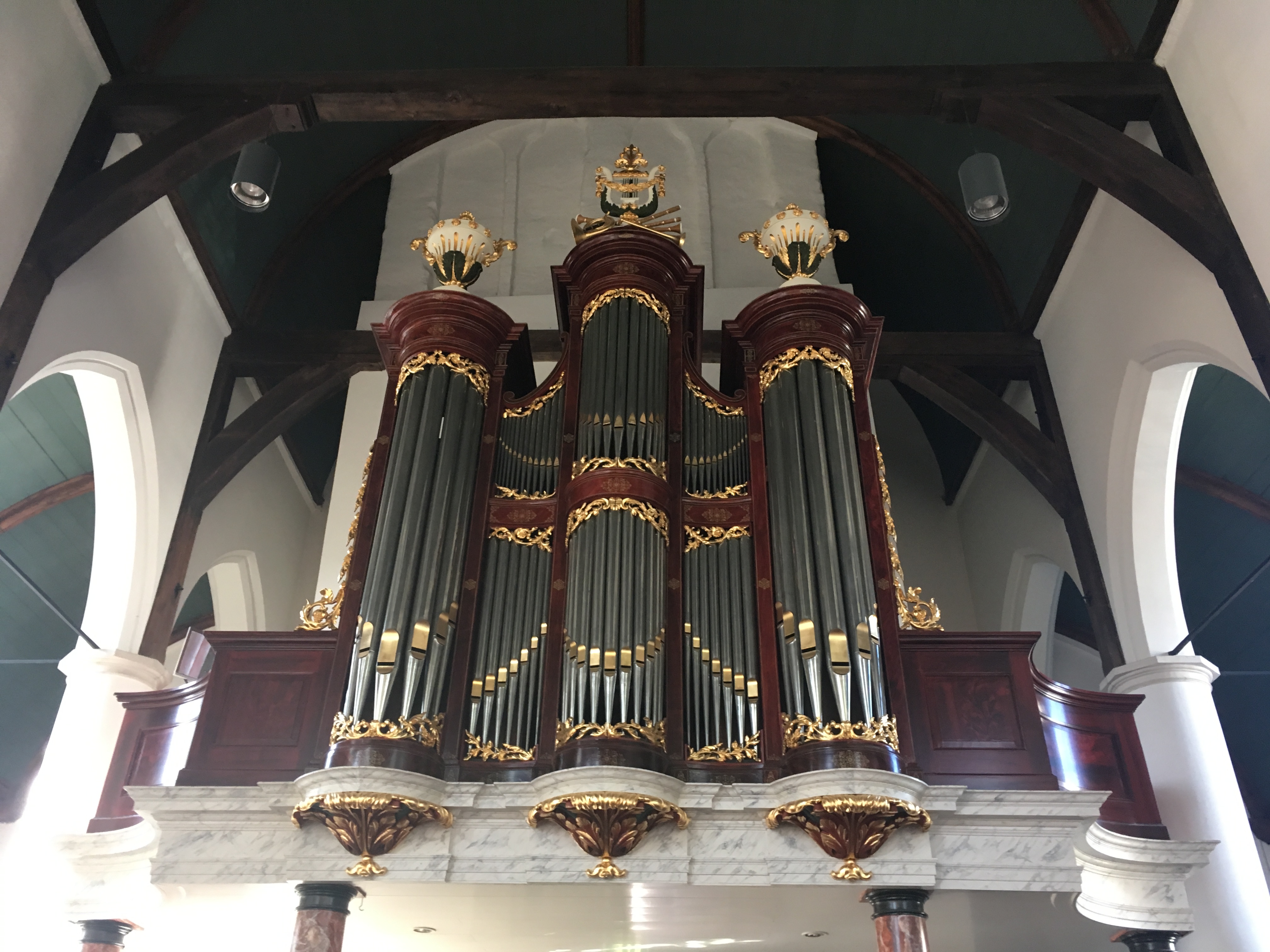
Yesterday, I visited a church with an organ the size of a building. Ever since I’d heard the pipe organ, I’d been curious about it. There was this force of attraction that pulled at me, but I didn’t dare to try. But the organist invited me up to his perch, he let me sit down at the bench and he simply said: well, play something.
Thinking about it, I realised that this might have been the first time I said I wanted to learn an instrument. I never really had an option when it came to choosing a musical instrument. Also, there’s not really much to choose from when you grow up in the mountains. It just so happened that my mother came from a part of the Philippines where the piano was part of her life. She brought her piano to the mountains, and teaching us to play was her logical path. For us, there was nothing else to choose from.
I’d never stopped to consider that I could decide to choose to study something else other than the piano.
Life remains full of unexpected surprises. We are never too old to learn new things. It is never to late to choose things other than what we have always been used to.
I told the organist that I am in what I call my Bach Era. What better way to celebrate life than to learn how to play Bach on the church organ.
In November and December, we had the workshops for Moving Love which is a film project for LGBTQ+ asylumseekers in the Netherlands where participants who are interested in film-making are given the basic knowledge and training needed to help them on the journey towards making a film.
We had three intense day-long workshops in Ede-Wageningen which is more than an hour away by public transport. It meant an early start on the road and a late return home, but it was incredibly rewarding and I learned quite a bit too about how films are made. After the workshop days, participants were scheduled for their own shoots. The intention being for each participant to create two 1-2 minute moving portraits or micro films. I didn’t get to attend the shooting days as my presence wasn’t needed during those days, but I did get some small insight into how those shooting days went and what glimpses I got looked amazing.
This January has been quite busy as I am facilitating for a community writing project under Queer Work. It’s quite a lovely project and one after my own heart as we talk about writing and memoir. I’ve experimented with making a video invitation for this project and have also learned how to make a proper voice recording. It’s quite fun to try out new things.
On the 5th of February, I will be giving a workshop at the Vrije University of Amsterdam. I’m looking forward to talking about the work I do and to share the tools that I use as part of my work. Let’s see. The plan is to make this something fun and collaborative.
During the December break, I had time to read Karin Tidbeck’s beautiful book, The Memory Theater. To my mind, there’s no one who writes like Karin. Karin’s prose is like an enchantment, and I found myself quite immersed in the world of the garden, but more importantly, I found myself just traveling along with Dora and Thistle and wanting to know what happens next. It is a fairytale, one that doesn’t evade what’s harsh or cruel about the world, but it also reveals to us the beauty in relations and connections and it opens us to the possibilities of the world beyond what the eye can see. Reading this book made me miss conversations had with Karin. I know I must make time to look up email addresses and write. A lot of times, I write letters in my mind, but then I forget when I sit down again.
Talking about letters, I have been dipping into Sister Love: The Letters of Audre Lorde and Pat Parker 1974-1989. I tried making a recording of one of the letters and if I succeed in doing so, I might post an attempt at an audio recording. I’m practicing with audacity and with another programme as the possibility of doing a podcast has arisen in the course of conversations with another group of friends. We’ll see. We’ll see.
2026 is an open door and I am thankful for time and for how there is always room to learn and explore new things.
There is a lot to worry about with what’s going on with the world. Sometimes, it seems like the madness of the garden has appeared in the world we live in, but in the midst of all the mayhem, I hope that we will continue to remember joy and magic and that we hold on to what connects us to one another.
(I want to apologise for some mispronounciations. I did try my best to get the names right. Non-native English speaker here.)
Thanks so much for passing by. May you find pockets of peace in your daily life.
I have been quite immersed in the novel draft since end of August and it’s a bit of a surprise to look up and realise that we are already in November. That’s almost three months of non-stop writing at varying speeds and wordages, but I am happy to say that I am heading over the halfway mark as I hope to achieve 65k sometime within the next few days. I’ll likely hit 70k sometime end of the month or early December, but I am steadily moving onward. As my friend, Tricia, reminded me: I must finish.
I acknowledge that one of the things I love the most about writing is when I get to create new worlds. I love exploring different worlds and dimensions, the idea of creating different kinds of being in the world–sometimes similar to, but also other than how we are in the world today. It leads to some complexity when my head is thinking around matters like decoloniality and decolonisation and also when I contemplate kinship and connectedness and how might I bring this all into my on the ground workshop practice.
This November, a project I’ve been involved with for a little while, is starting up with a programme put together by different facilitators and arranged in such a way that we build up towards where participants can create their own micro films. It’s been quite a satisfying experience and I’m looking forward to the start of the workshop when we get to see all of these things manifest in practice space. When the time is right, I might share links to the eventual exhibit of the works that come from this project.
I shared with some participants during the co-creation lab, how putting together this programme was a satisfying act of collaboration and co-creation as we brainstormed together and also asked members of the community what would benefit participants the most. At the heart of the matter are the needs of the community whose voices we want to amplify. So, we want to create this space where it’s more than just the project space, but also beyond that there are possibilities to grow further as a creative, as a storyteller or as a filmmaker. I think that’s one of the aspects I love about this vision: where participants are empowered and given access to the networks so they can move and grow as they wish to.
I shared how one of our facilitators expressed how they wished this kind of programme existed back in the day because of how the programme speaks to the experience of us who are traditionally marginalised. One of our team members said: perhaps this too can be part of the impact of the project.
And because I am a world-builder, I started to imagine a world where curriculums are built and composed differently from how curriculums are today. My science fictional brain and my real world brain collide and I remind myself we are living in the present.
Reciprocity when we go to communities means we are also thinking of how we can encourage people to hope beyond the present. To see a vision beyond now and even if we cannot fund everything, the knowledge that someone has your back and is there encouraging and supporting your vision could already be enough. (To this day, my sister’s voice continues to encourage me even if she’s no longer physically here in this world.)
I still have lots of things I want to write about, but I will end this here as I still have to work on my novel. I am thankful to celebrate a year without treatments. A year wherein the report has come back still in remission and stable. For this I am very grateful.
Maraming salamat for taking time to read. May blessings and peace be with you as you continue on your journey.
Here at World Fantasy, I am learning how to balance my energy in a more intense way than I have had to since my last treatment at the end of 2024. I’m not exactly sure what made me decide to come to World Fantasy, but I think it might have had to do with wondering if I could still go to conventions on my own. A convention closer to home felt safer than a convention somewhere like in the US. After all, I managed to complete the co-creation summer workshop, which was also pretty intense, but in a different way. So when Aliette de Bodard told me that World Fantasy was in Brighton, I thought: Oh, I think I can go. It’s also a plus that I get to share a room with Aliette.
World Fantasy is quite intense in the way most conventions are intense. I had quite forgotten the noise level and how draining that can be. It brings home the fact that while I may be recovering really well, I am not yet at 100%. I’m very thankful then for friends who have introduced me to their friends. I was very happy to reconnect with Julie Philips who wrote James Tiptree Jr., The Double Life of Alice Sheldon and The Baby on the Fire Escape. Julie lives in Amsterdam, but it’s been a long time since we last met, so I was so happy when she told me she was coming to WFC. Julie introduced us (me) to Theodora Goss who just as lovely and as elegant as her prose is. I was quite starstruck and speechless for a moment. Like what are words? I remember reading In the Forest of Forgetting when I first learned that such a thing as genre existed and being quite blown away by the beauty of it. I’m pretty sure I’m mangling something up in the process of writing this, but I feel like I want to write this short blog before the feeling of now fades and I run out of gas.
An interesting new writer to me, is M.K. Hardy. I met the M of M.K. and enjoyed listening to her talk about their novel and the underlying themes in their work. I’m quite intrigued by the aspect of co-creating and writing together as it feels like an enriching process and I hope to get to ask about that part one of these days. I was very much engaged in Morag sharing about how the novel thinks around matters related to Scotland’s history as part of an Imperial project. I wished again that my sister were here because they would probably have got on like a house on fire.
While reflecting on this feeling of missing, I realised that even though my sister isn’t with me, she is still with me. I wrote a short piece reflecting on it and will share it here. Early on, after I realised that my ability to socialise is still at recovery stage, I decided not to rush out in the mornings. The panels I circled on my programme are wishlists not must do’s and it’s perfectly fine to spend time in the hotel room writing or wandering along the shorefront or doing other things not convention related. In the meantime, the manuscript has grown beyond 50k. I am embracing it and recognising how ambitious this project actually is and so I do need to take more time with it, to let it breathe and become what it is meant to be.
I have this hope that thinking around these ideas will lead to connect with others who are also thinking around these ideas of kinship and entanglement and not looking away from, but staying with the trouble as Donna Haraway would say.
There’s still more to write, but I need to end this post here. Sharing this short reflection on Grief and presence in the hope that it will mean something to you who have stopped by to read.
Grief makes us awkward.
We are carrying these wounds with us, but we have no way to heal them because we have imbibed the narrative that tells us we must keep moving forward.
But grief is also healing.
In remembering, we make alive again the ones who we have lost. Their presence walks beside us in a different way. We can gain strength from that presence. From the knowledge that we have loved and are continuing to love. We have been entangled and continue to be entangled. They are not really gone from us. It is simply that idea of presence as being physical that we need to let go of.
My sister is here, present with me. Just as present with me as she was when I could touch her hand.
Blessings and peace to you who read this and Maraming Salamat for passing by.
I’m waiting for CT scan results and I thought it would be good to post this before I get distracted.
I’ve been writing and rewriting the work in progress which expands in size, decreases in size and expands again as I write on it. At the same time, I’ve found myself asking questions of myself as I write. For instance: I think I might have fallen into the trap of trying to write something that’s commercially in line with what’s already out there. You know: a nice hooky opening. Action and bam we are in the middle of the story. It’s not bad, but a part of me was raising an eyebrow and going: what did you want to achieve with that?
I am a bit of an over thinker and I found myself asking what I really enjoy about writing science fiction and fantasy. The answer really isn’t very deep. One of the reasons I enjoy science fiction and fantasy is how there’s this wild space where you get to imagine all kinds of strange or weird worlds that may or may not be related to this world.
Of course, I write about the things I’m passionate about and I write about matters that are on my mind and things I want to work through. But most of all, I love the freedom to create outside of the expectation that I will be writing about my culture or about my experience of displacement or as someone once said at a symposium I attended: I don’t want to tell you another story about my pain.
Perhaps the most freeing thing we can do is to unshackle ourselves from the having to be something and instead embrace what gives us joy and freedom. For example, I’m invested in the furniture of strange worlds and I enjoy the experience of wandering through it in a documentary film kind of way. Oh look, shiny curtains. What are they made of? Oh wow. They’re alive. These plants can tell stories: I’ll sit here and let the trees talk to me now. (I confess, I also do this in real life.)
But as I progressed, I realised that my first draft wasn’t really all that great. It was fun, but it was kind of meh. So, I asked myself a few more questions: Oh hey, Rochita, I know your subconscious does this for you most of the time, but let me ask you if you are aware of who the stakeholders are in your world? I had a short laugh at how I progressed from “yay, sentient furniture” to “here’s my project proposal”. But also, I find myself thinking of how it’s not just about the motions of living, it’s the why are you living there and how are you living there. There’s a part of me that thinks back to the conversations had around the table as we discussed TTRPG creation and where I asked out loud if villains or enemies or oppressors were a necessity in story. (I know I’m gonna eat my question because I’m not sure if a big world story is possible without one of those things coming up and even if the conflict comes organically from the direction of ‘player A does not recognise your innate ability to become an amazing superhero’, there is still going to be an acting opposition, right?)
In the midst of all this wrestling, I read an article penned by someone (I forgot who) where they write about this experiment they did with an AI writing machine while working on a column. They were using a particular program and they fed it with a prompt and with an instruction to check out their blog and write something in the same style and voice. The machine spit out something which the writer then proceeded to rewrite and adjust and by the end of it the only things left over from what the machine had given her were articles like a and the. It was rather fascinating to observe the writer defending the use of an LLM because they ended up writing their column in under an hour instead of more than an hour. A part of me was like: Uh…I’m not so sure why you did this exercise, but it seems to me sitting down and writing the entire thing on your own would have been better. (Also, damn girl, you are a good writer. Why would you do that to yourself?)
I think about the journey I’m taking with this work in progress and how I’m discovering the world as it unfolds on the page and how there are bits of the world that I’m writing now that will likely not make it to the final cut, because I’ve already put them in my notepad under the header: cuts. But I really really like those bits and I had so much fun writing them. (I’m having some thoughts around waste and intentionality and how using an LLM in this way makes me think of landfills and fast fashion. I know. It’s how my brain works.)
After my last posting (How thinking of language leads to thinking about other things) a friend asked me how we could possibly escape the machine if the machine also copies our imperfections. I thought about this for quite a while and then I was reminded of the various movements in the art world and how all of these movements were a fighting against and a coming up against and a wrestling with what is established. History tells a story of invention and reinvention, of how there are always ways of escaping something that becomes establishment and the norm and also I find myself thinking about impositions and how artists don’t really like impositions. So I find myself rather invested in what our answer to this question will be. (If you have any thoughts on it, I’d be interested in them.)
In the meantime, I thought I’d share the link to a weirdly wonderful story which involves playing with language from my lovely friend Weegbree. If you have time, do click to read Brood/Pain/Pan: A Breadtale in Three Movements.
Blessings and peace to you who read this and Agayamanac Unay for passing by.
While the summer break is now behind us, I still have a couple of days before regular scheduling fills my calendar and I’m taking these days to think around what I hope to do for the rest of 2025. There is some tentative and hopeful planning around 2026 as well. Being in Norway made me realise just how much I need to be intentional in freeing up time to focus on the kind of thinking and writing that I want to do. Going back home to the Philippines is still on my wish list and I am hoping that when we hit the one year mark, my hospital visits will be spaced out a lot more so I don’t feel like time is being squashed and I can only do so many things before my headspace is cluttered by hospital anxiety.
I ended up writing a lot on a manuscript that I’d been working on before I was diagnosed. It surprised me to discover that it was almost full-fledged. All that’s missing is the ending which I am working toward. I have no idea how long this story is going to end up as, but I like that I’m not falling asleep while writing it and that it remains on my mind in a way that I’m poking at it and thinking about it and still thinking: I am enjoying this.
At the same time, because I was reading a lot and thinking a lot about and with Mignolo’s work and Glissant’s work, I found myself also asking who in the Philippines or from the Philippines is thinking along similar lines around decoloniality and decolonial practice. I was very happy to find a recent paper written by Simoun Magsalin. Notes towards a Decolonial Anarchism for Creoles who are Neither Indigenous nor Settler is thought-provoking and makes my mind wander in all sorts of directions as I think around the subjects of history making, uprootment, nomad life and also as I think about my own history.
Reflecting on Filipino identity, I’ve thought on the waves of migration, intermarriages, the interweaving of different cultures resulting from that, and then as an added layer, the different occupations and colonisations that happened and how that changed and influenced not just our genetics but also how it has affected and impacted the DNA of our culture.
It feels very much like serendipity that all these thinkings are emerging, meeting at junctions, connecting like lattices or (as someone has said) like fractals. I like the word Creole and how it speaks of that kind of blending and mixing. It feels also so much like the universe conspiring to bring up food for thought at this time when I am thinking on my father’s history, my mother’s history and how that relates to us who are descendants of them.
I am also attracted to Glissant writing about uprootment and circular nomadism as opposite to arrowlike nomadism and I find myself pulled towards thinking around creolization and how that has worked through in Filipino culture and identity. There is so much to think about and I feel like I want to sit with this for a while.
In Notes towards a Decolonial Anarchism for Creole who are Neither Indigenous nor settler, Magsalin writes and lays out what decolonization is not while thinking around decolonial anarchy and what it would mean for the Philippines. ( It would be interesting to hear what people think after they’ve read this writing.)
In particular, I liked this line: Importantly, we do decolonial anarchy as creoles and as post-colonized subjects, not appropriative of Indigeneity.
I’m always surprised and happy when people tell me they’ve read what I write on this blog. I hope it encourages conversations and thinking around things that matter to you who read it.
Daghang Salamat for taking the time to read. May blessings and peace be with you.
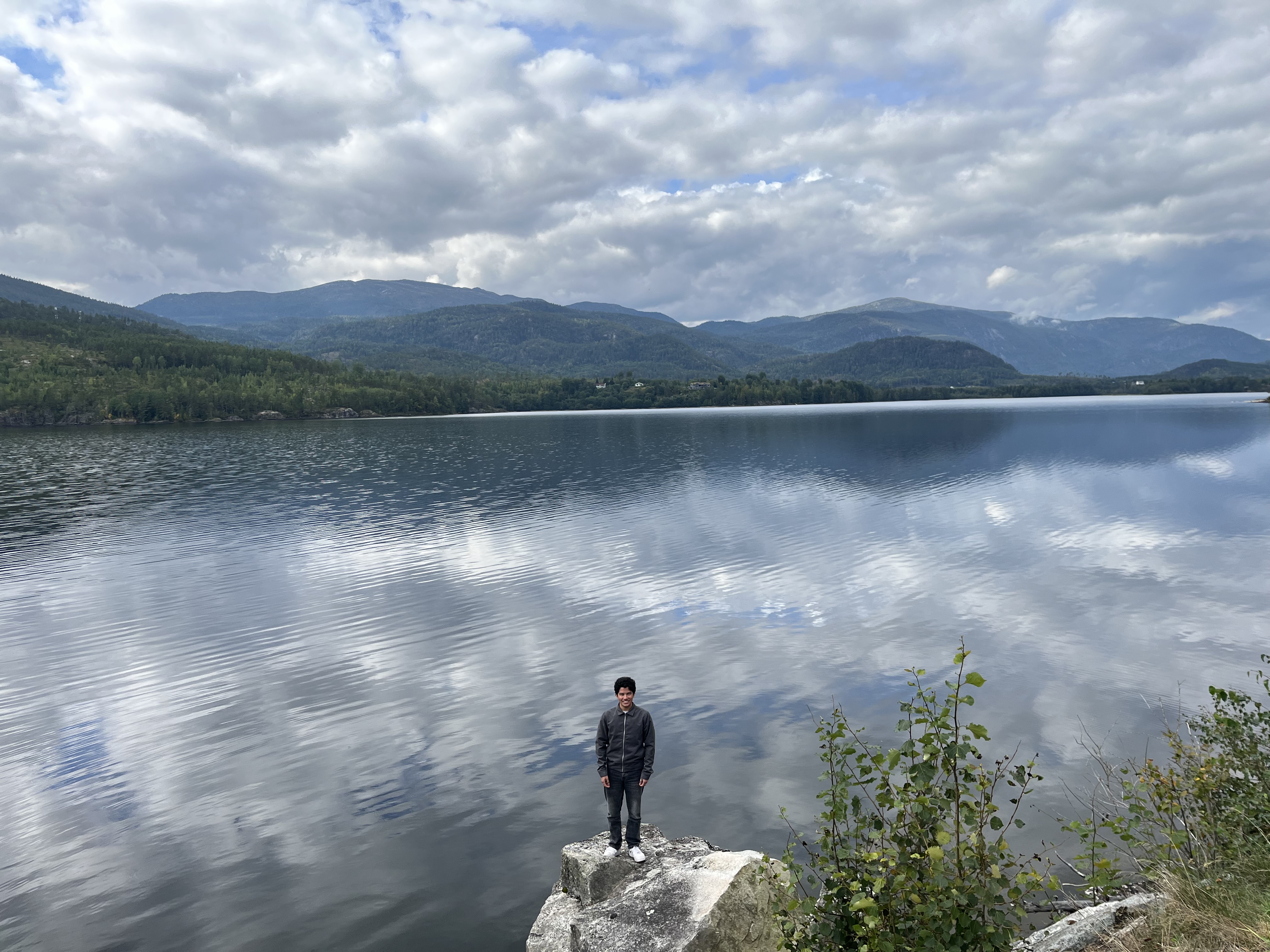
My son stands on a rock, between sky and water. I feel like it is a poetic description of my son’s mixed-race identity. Taken during one of our roadside stops in Norway.
My youngest brother sent me a message, asking if I’d read my father’s unfinished memoir. I told him I hadn’t been able to because in the chaos following my father’s unexpected death, we lost track of his documents. After this reply, my brother told me he’d found it, but it wasn’t finished and it needed editing. I am thinking and processing some of what I’ve read so far and am in touch with other members of the family as I seek to fill in the blanks.
I remember asking my father lots of questions about his parents. He’d say that we would sit down and talk about it some time. Except, that never really happened. My grandma told me that they’d been part of the resistance during the Japanese occupation. I’d often wondered if it was just a story or if it really happened.
In his memoir, my Dad writes vividly about that period. His account relays the complexity of growing up in that time with an awareness of the work his parents were doing while at the same time living alongside the presence of the Japanese soldiers. There are moments of quiet, like the period before his parents were discovered and they were forced to flee from hideout to hideout while the Japanese hunted for them. My Dad doesn’t dramatise and yet there is drama. It’s also an absorbing read because of the level of detail that he remembers. Names of resistance fighters, their commanding officer, places where they hid, and the locality where they eventually were able to find refuge. Nico on bluesky makes a comment about this being a historical document and I think that it could be described as such. The curious person in me wants to book a flight to The Philippines and go do research. Instead of doing that, I decide to patiently read some more.
My father writes about life after the war. About moving locations until they settle in Gingoog City. My grandfather builds a practice. My grandmother works as a respected teacher. Their home life seems to be a stable one. And then, in the year that he finishes high school, his parents break up for good. He writes about the break-up quite dryly. It’s a mutual decision. His parents have decided that it’s time for them to live separate from one another. It turns out that my grandfather was a womaniser. All throughout, my grandmother looked the other way, but this last adventure (my father writes) was the straw that broke the camel’s back. My grandfather leaves them. He leaves my grandmother and his three sons and goes away. My father doesn’t know where he’s gone and he loses touch with his father until much much later when he finally tracks him down in Zamboanga city where his father has a thriving surgical practice. It’s there that he meets his father’s other family.
My Dad’s younger half-sister tells me a story of my father showing up at their house one day. Just out of the blue. He’s there. My Dad, demanding that he see his father and telling his father that he is going to med school and as he is unable to pay for his tuition, he feels his father must pay for his tuition. She’s very insistent about how her mother impresses on Lolo that he must pay for the tuition of his son. After all, they have the money to pay for it.
It’s quite something to think about this after reading about my father working at different odd jobs. He is fifteen or sixteen at the time and when his mother’s younger brother comes across him working instead of studying. He is then brought to meet his maternal grandfather who tells him he should study and it is his grandfather who makes him apply for Ateneo de Agusan.
I want to know what happened in between the break-up and my granduncle finding him. I think about my grandmother’s proud nature. I think about her younger sister telling me that my grandmother was very stubborn and had married my grandfather against her father’s wishes. It feels plausible that my grandmother might have hidden the break-up from her family until it’s found out.
I recall someone telling me that my grandfather couldn’t remain where he was. That he had to move away because of how people viewed their break-up and because of all the things that were said. In that time period, it was, of course, a scandal. In present day Philippines, separation is still viewed as a scandal. I remember someone saying to my sister once that divorce was a sin. My sister, who holds a masters in Theology, answered quite sharply: “Where in the Bible does it say so, because I can point you to multiple passages that contradict what you’re saying.”
My father mentions my grandfather two more times in his account. One when his father comes to visit him after my Dad loses one of his patients and the second time when my grandfather comes to Banaue to die.
My grandfather’s death feels like a punctuation.
I think about memory and pain and wonder. Perhaps when a memory is too painful, we decide to overlay those hard memories with something easier for us to live with.
I also think about myth making and how myth can tell us a truth that a factual and chronological narration of facts cannot.
Beyond all expectation, I find myself writing about family; about my father and his parents and about the life that he lived. In conversation with someone, I speak about my father’s life of faith and how in the end the overarching theme in my father’s life is that of grace. He became who he was not because he was exceptional or special. He became who he was because he found grace for living.
I’m not sure how to go on from here. I do think that we are all in a constant process of transformation. We don’t stand still. We change as our lives are touched by other lives and we change too in the process of touching other lives. When we make the choice to live with intention, it is just like that.
In a way, reading my father’s memoir is like hearing his voice speaking from the other side. I have so many questions, I say to that voice. But you’re not here to answer them.
A voice in my head says: What if the answers aren’t as important as the process of asking? If you keep asking how and why and what does it mean, and when you acknowledge that you don’t know all the answers, but are also searching, then perhaps you’ll find better answers than the ones that exist today.
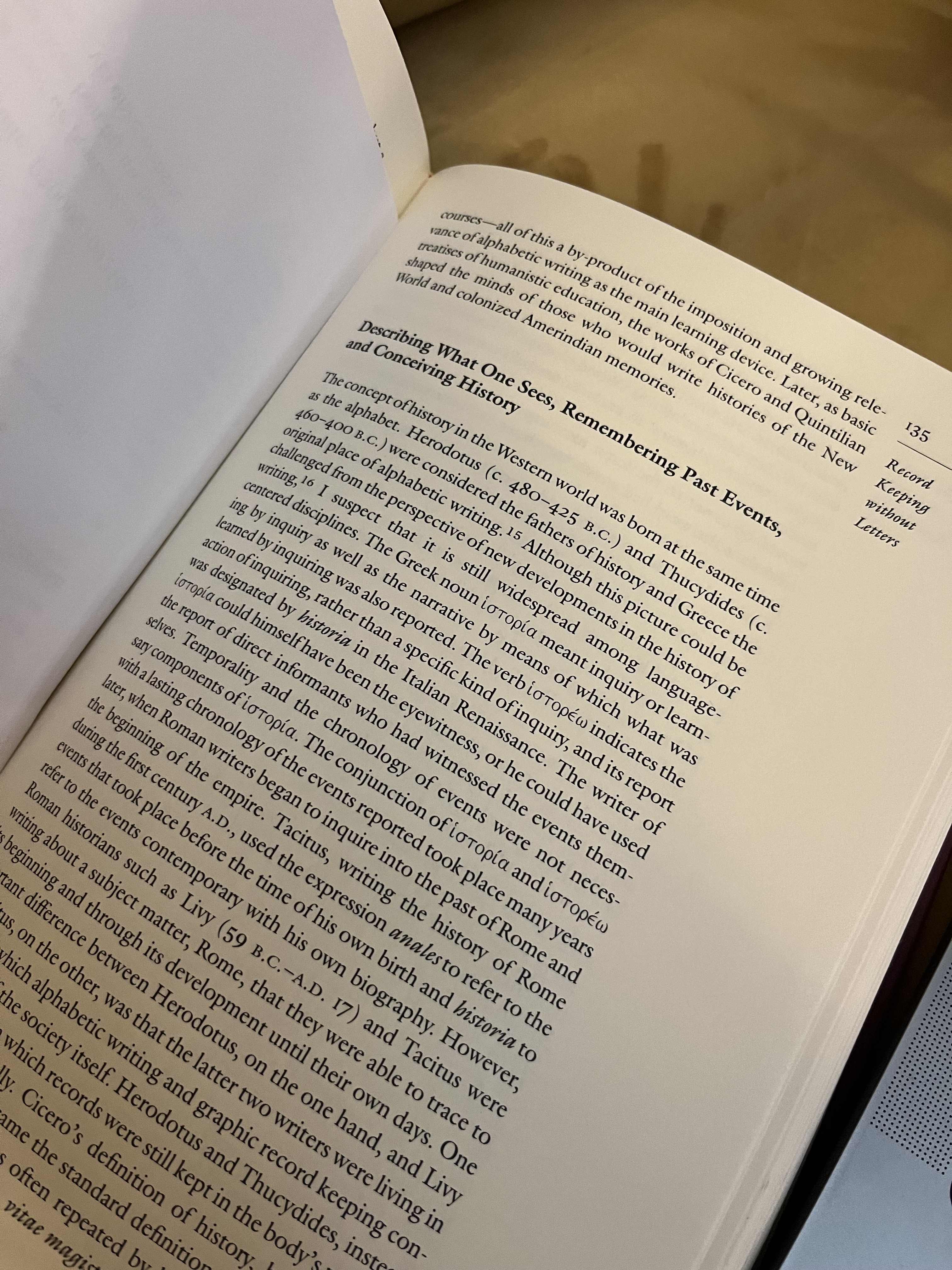
In The Darker Side of the Renaissance, Walter D. Mignolo quotes Isidore in the chapter on Record Keeping without Letters. He quotes this from Isidore: For among the ancients, without exception, only those who were witnesses and who had seen the things they narrated wrote history, for we understand what we have seen better than what we know by hearsay.
I had a conversation with a cousin who is older than I am, who might know more about the history of my grandparents. They might know more, not just because they are older, but they might know more because of how they were situated in physical proximity to my grandfather. My cousins lived in Cagayan de Oro and this cousin tells me that our grandfather visited them often and the story they tell about my grandfather is one of a gentle and kindhearted giant of a man. Someone whose visits they looked forward to and whose presence was very much welcomed.
Our family was located far from where the rest of my father’s family lived. In fact, we were located on the opposite end of the archipelago. My sister and I grew up in the mountains of Ifugao, my brothers were born there too, and we spent our childhood blissfully unaware of any drama that might be taking part in that place that could just as well be another country. We were far from where my grandmother was located. Also far from where my grandfather and his second family lived. Back then, the trip from where they were to where we were would have been almost the same as traveling from The Netherlands to the Philippines. By Filipino standards, it still is a costly trip.
My cousin tells me that my Dad, being the youngest, was his mother’s favourite and so he didn’t receive the same kind of harsh corporal discipline that his elder brothers received when they were growing up. My memories of my grandma are those of a rather strict lady. I thought at that time that it was because she had Spanish blood and Spanish people are strict (right?). She was always affectionate towards our Dad and the affection was reciprocated.
The story of familial relation unfolds differently when told from the perspective of my cousin who tells of the horror that came with growing up in the proximity of my grandmother. According to this account, my grandmother was more than strict. Indeed, she was quite unreasonable, more than demanding, and even cruel. Any sign of enjoyment when she was visiting with them, was punished with a lengthy sermon that would end only after one of my cousins was punished for an imagined wrongdoing.
My cousin relates this to me from her perspective. We didn’t see, she tells me. We didn’t know what our grandmother was really like. And so, she wants to relate what we never witnessed or experienced for ourselves because of distance. The grandmother she knew and the grandmother I knew seem to be two different people.
A memory arises from a time when my grandmother took me with her to visit her younger sister in Manila. She was fussy about my comfort and then when we arrived at her sister’s house, she was devastated to find out that she’d forgotten to pack extra underwear for me. I think I must have thrown some kind of a tantrum (I was a bit of a handful as a child) and she just didn’t know what to do or how to get me out of the bathroom as I kept on blaming her for not knowing that kids are supposed to have clean undies everyday. She was strict, but not more strict than my own mother and she didn’t spank me for throwing a tantrum. She waited and then made me do what she wanted me to do. (Just as my mom would have done.)
By the time my grandmother came to live out her days with us, she had been gentled by years. She had had had a stroke, but she was recovering even though she wasn’t very mobile. She loved telling stories about the past while I massaged her legs and listened eagerly.
I loved hearing her talk because my Dad didn’t tell us very much.
Later, when we were much older and after my grandma was no longer with us, my Mom tells us an entire story of how she would warn my Dad each time my grandma came to visit: Bantay ka! (watch out). Your Mom isn’t going to lay a finger on one of my kids.
None of us ever experienced such harsh punishments or treatments as those described by my cousins. We might have been subjected to some nagging, but our mother would send us out to play and even though we were scolded by my grandmother, I always had this idea that it was because she wanted the best for us. Did this have to do with how my mother stood between us and her? Was it because of the close bond between her and my father? Or are these things that I have imagined because there is a lot I do not know.
I can remember the sound of my grandmother’s voice whenever she called out to my Dad.
“Nonoy,” she would say.
Now that I have children, I recognise that tone of affection that one reserves for one’s own children, and in particular, for the youngest one.
For a long time, until my grandfather came to visit, my sister and I believed my grandmother was a widow. And then, when we found out that there was a grandfather, we thought he must have done some dastardly crime because no one spoke about him.
I suppose this speculation was natural considering how we grew up far from anyone belonging to my father’s family, in our defence, we only ever met him once.
My sister and I met our grandfather for the first time when he was already sick. By the time he came to visit us in Ifugao, he was dying. But he came to see us, or perhaps he came to see my father. No one spoke about why he’d come; not even afterwards, so I can only speculate. Did he come to mend broken bridges? I don’t know.
In my mind, I see my grandfather as a tall man with a gaunt and lonely face trying to connect with us kids. I can still see him towering over us, trying to win us over by showing us his magic slippers.
This memory is overshadowed by whispers and a feeling of tension. It seemed as if we saw him only that one afternoon, but I’m sure it must have been more than that one afternoon. I remember my mother trying to keep my father from going away to the city on an errand and my father’s stubborn insistence on going and how while my father was gone, my grandfather died.
My mother talked about how she had to have a casket made. It must have been a while before my father arrived because I remember visiting the carpenter’s shop and the carpenter explaining to me how he was making a casket for my grandfather. I thought I should feel properly sad, but I didn’t know how to feel about the tall stranger with magic slippers who now lay in a casket in our living room while the voices of visitors filled our living room. I felt uncomfortable and impatient for my father to return.
It’s interesting what kinds of snapshots the mind retains. I see one of myself frozen in the moment when my father arrives. The house is teeming with people, but the living room is in the shadows. I am standing on the stairs looking down onto the porch as my father climbs up toward my mother. He doesn’t look up to where I am, all that is him is focused on my mother and then a sound breaks from him. After my sister died, I understood what that sound was and what kind of deep grief that sound contains.
Is this the memory that colours my recollection of my father’s pain?
Did I imagine my father’s feelings towards my grandfather? I know we hardly spoke about him and when I did try, he tended to be quite abrupt. Was he in pain because he wasn’t there when his father died? Had he left because he didn’t know what to say after so many years of not seeing each other? Had something been left unsaid or undone? I can only speculate.
The person writing about my father’s life writes from the perspective of someone who spent time in conversation with my Dad, long after the pain had been healed. Their conversations took place after a transformation had taken place. It gives me peace to know that my father was no longer angry. He was no longer in pain. He had reconciled his grief and pain and he had become the beautiful self everyone remembers–a man filled with compassion, gentled by time, always present and in service of those who needed him.
If we are to take Isidore at his word, then it means I can only write what I have seen and what I have understood from that seeing. As Mignolo writes, Isidore wasn’t concerned with the distinction between a narrative of witnessed events (which will become past events from a future perspective) and a narrative of the narrative of witnessed events.)
Again, Mignolo quotes Isidore: Things that are seen are reported without any ambiguity. This discipline pertains to grammar, for only the things deemed worthy of memory were written down.
These entries are (for me) a way of processing. Thinking about family history as I think on what I am reading. Blessings and peace to you who read this and Daghang Salamat for passing by.
I’m chatting with a person who’s writing about my father’s life while reading this section called Describing what one sees, Remembering Past Events, and Conceiving History in Walter D. Mignolo’s The Darker Side of the Renaissance: Literacy, Territoriality and Colonization. I am seated in the lounge of the Royal Library of The Hague and it’s nice and cool with the small sounds coming from different occupants of the library. In a corner of this lounge, someone is snoring. The seats are comfortable and conducive to a siesta and I am seated on a comfy sofa with my belongings around me–it’s kind of like being at home but being able to focus in a way that’s more library-like (if you know what I mean, you know what I mean). I think about history–family histories–the things that are said and that aren’t said–what we pick up without words having to be said and how we carry these histories with us and how we don’t speak about the painful or dark parts of familial pasts.
Reading Mignolo, I reflect on how histories are made and passed onward from generation to generation. Mignolo writes about histories being kept in the body memory, of histories being transmitted orally. And somehow, I find myself thinking of history that we keep in our bodies.
Recently, a friend of ours spoke of finding out that the father she’d grown up with wasn’t her biological father and the pathway to connecting with her biological family from the side of her biological father all came down to taking a DNA test that matched her with a niece who for some unknown reason decided to also take a DNA test. This connection eventually led to her finding the sister who had been searching for her for a long time.
A whole puzzle with unmatched edges fell into place. Character traits she’d wondered about finally made sense, once she spoke to her sister. Conversations that were cut-off mid-sentence. Hints of something secret–dates that didn’t match. Unspoken tensions that she somehow registered. She had this feeling that maybe there was something hidden, but it wasn’t until it was time to clear out her mother’s attic that she discovered the secret of her paternity.
In an age where histories are being re-shaped, re-written and erased, it feels urgent to think about the position from where histories are being told. Who is telling this history? Under what terms is that history being told? In what form and in what shape and with what words or means is that history being put in place?
It feels necessary too to keep a record of what is happening in the world around us as we keep a record of our own histories.
I think about my father and I wonder what he would say about the ongoing conflicts in the world today. I want to think he would also feel urgency and the need to speak out against injustice. The truth is, I don’t know what his response would be were we in conversation today. That’s because my last memory of him is one of heated conversation where we disagreed on what was just and what was unjust and how we left it in the middle as something we would come back to later on.
Familial history often feels episodic. When we talk about memories and things that happened in the past, we remember in bits and pieces and then we look to each other for confirmation.
I’m going back to reading Mignolo. I want to think about memory and the fallibility of memory and how we tend to remember people in a different light once they are no longer in the world.
Blessings and peace to you who read this. May you find joy in the journey.
 From the Beloved Country
You must be logged in to post a comment.