How is it Wednesday already?

Weirdly, I find myself thinking about the phrase ‘time flies’ and how there must be a better phrase to express how quickly we move through time. As Treebeard from LOTR says: us two-legged creatures are always rushing about and wanting to hurry things up.

And so, I find myself in Wednesday and thinking of how my Monday and Tuesday were so quickly filled with things like seeing my youngest son to the airport. I still keep seeing him as this curly-haired mischievous toddler, only now he’s taller than I am. He still is curly-haired and thankfully, he is still mischievous.

Yesterday, I was looking through some old photos from when the boys were little beings. I came across pictures of us taking picnics in our backyard. I thought of that one summer when we couldn’t take a holiday, so we set up the tent and our eldest spent the better part of a week camping. I sent these pictures to my eldest and he sent me a message saying how those were some of the best times ever.

We think it’s giving our kids everything that will make them happy, but I don’t think they noticed how our holidays were always truncated–not two weeks away like other families but one mid-week (which was more within our budget). Once, we managed to score a great midweek at this out of the way holiday park with a whirlpool bathtub. That was a feast for the boys. I think I stressed about how to get there, but now that I look back, I can’t help but smile. Good times.

On Tuesday, I had my regular CT-scan and they also took some blood. Bah. I know this is all part of it and I did sign up for this trial, but I am looking forward to when these appointments become more of a quarterly or twice yearly thing. (Here I am thinking again about time)

I want to write about Sunday’s celebration, but at present, I’m finding it hard to find the right words. I think about why I feel I should write about it and realise that this is a thing I have put upon myself. And so, it’s something I can let go of. I recognise that some things aren’t meant to be written about so quickly. I can move back and forth in time, thinking on this and that. Dipping into a book, thinking again, writing down notes, going back in memory. Breathing. Listening to my heart. Paying attention to what’s going on in the body and in the spirit. Time isn’t rushing forward. It’s just there waiting for me to step into it.

I breathe again.

I hope that you who read this will step into that pocket of time where you can breathe. Listen. Pay attention. And then breathe again. Blessings and peace. Maraming salamat for stopping by.

I wish it were Sunday already

It’s been quite a hectic week as we head towards the closing event for the LIMBO workshops. FramerFramed is hosting LIMBO for this event and Maison the Faux has invited LIMBO to make use of their podiums. When we first talked about this closing event, we thought of creating a similar atmosphere to the LIMBO workshops–intimate and cozy, with time to check in individually and converse. But as the programme bloomed and volunteers raised their hands, we now have a full-blown programme complete with a Waacking Dance Workshop and a pole dance presentation from one of LIMBO’s participants.

I do hope that there will be space for cozy conversations as being in FramerFramed does mean that it’s always possible to wander away from the main space for a tete-a-tete.

I heard back from one of the PhD students who visited LIMBO sometime ago with the hope of creating a space with a similar vibe to LIMBO. I remember that we had a lovely call where we talked about possibilities and what can be done to make the space feel welcoming and safe and how presence and intentionality are key elements to such spaces. It was lovely to hear about the success of their project and also to hear that this particular student was able to complete their thesis. I’m hoping we meet again as I would love so much to hear what it was like for them and also to compare notes.

LIMBO’s future is a bit up in the air at the moment as the last grant request wasn’t successful, but I’m sure that whether it’s in this form or another form, LIMBO will continue on and the people who make up the community will find ways to keep meeting and supporting one another.

I also think it’s good for facilitators and organisers to have room to self-reflect, to recuperate and to think on what kinds of spaces we might want to be in and how we would like to continue working and supporting communities in the future.

While I am looking through the fiction work that I have on my drive, my main thought at this period is thematising and gathering together the nonfiction writing that I’ve done. Part of which is almost done as I finally managed to divide the themes into five sections. There remains the matter of collecting the pieces that belong with each theme and then perhaps editing/expanding/completing them.

There have been times when I’ve felt like I was less than because I haven’t completed my novel yet. I sometimes felt that my voice was of less value than the voices of those who had won awards or been recognised as great authors. But a beloved friend of mine sent me such a heartwarming message reminding me that it’s not writing a bestselling book that makes our voices matter in the world. Dear reader, I cried listening to that audio message.

I was reminded of the joy that blossoms in my heart when I hear someone share a story or a poem or a piece of art accompanied by story. There was this one woman who shared how they’d never imagined they would be able to write and express themselves because they’d constantly been told their grammar was always wrong. I was like: “screw grammar. That part you can worry about if your objective is getting published. But now, at this point where you only want to share a story, just write.”

Often, we believe that we can’t because we’re told we haven’t mastered the language well enough. But I can testify to how if you can write in the same way that you would say it, a good editor will help you polish and refine your work so what you want to say comes across in the way you meant it. Don’t use chatgpt or whatever google translate. It won’t get your meaning across. Write it in your own words. We keep talking about decolonisation, but we still keep wringing ourselves into spaghetti forms to fit into something we are not.

Let language (esp the English) flow in the way it flows in your head. When I’m writing in the space of my stories, I’m not thinking English the way USians or British people think or write English. I’m thinking and writing English the way I hear the people in my head speak it. And that’s English that reflects the different influences on my tongue. Like how my son will say: You have a very Filipino accent. But my brother will say: your accent is no longer Filipino. And a Dutch friend says: Oh, you sound American. Lol. Yes. I have a mongrel tongue and I also do have a tendency to absorb the way friends who have grown up in different non-white settings speak. Those are the people on my tongue and in my ears. So yeah. It’s different.

At the first workshop I gave for LIMBO, I said to the participants–as we all do not come from the same language stream, don’t make yourself write in English. Don’t make yourself write in Dutch. Write in the language that comes to you naturally. We will understand the emotion. And we always do.

Anyway, I was intending to write about LIMBO’s upcoming booklet launch and somehow this post has turned into an all out discussion of me with myself as I think about writing. During the Spring School Co-creation Lab at the VU (Vrije Universiteit Amsterdam), I asked Saba Hamzah who is a Yemeni poet to read to us from work she’d written. It was a memorable moment to be listening to her read a piece she’d written in the three languages in which she lives. Yemeni, Dutch and English. To me such work is a reflection of the world we live in. We are multi-language, multi-culture, multi-faceted. Our work reflects that too. (Please click on Saba’s name to get to her website.)

Thank you for taking time to read this “hak op de tak” post. May you find joy in the small moments of everyday.

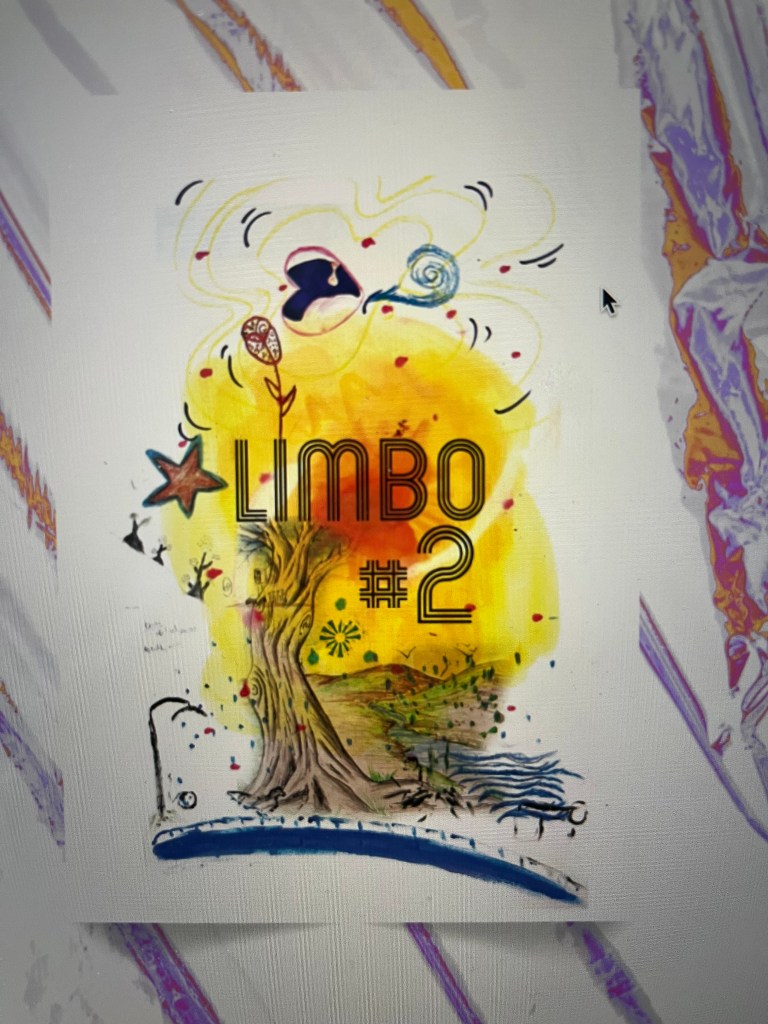
LIMBO’s booklet launch is this coming Sunday, 20th of July. Click on the image to get to the announcement.

This cover for LIMBO’s second booklet was designed by the wonderful visionary artist Ariya.

**I’ve picked a new book to read and possibly write about. Check the sidebar.

Sitting with the discomfort

I’m thinking again today about Aminata Cairo’s visit with us in LIMBO and the talk she gave about what it means to hold space for one another and how while we long for safe spaces, even such spaces can be fraught because of how we are. So, how do we hold space for one another? How do we make it possible for us to continue to be in community and to share space and make it feel safe and joyful and loving for all who share the space?

It’s something I’ve been thinking on as recent conversations keep pointing me in this direction, including one where I inadvertently created some discomfort because I wasn’t intentional. I think about intentionality and mindfulness and how these words are more than buzz words. I mean, the wellness industry has hijacked mindfulness so the word has kind of become one of those buzzwords–it’s not wrong usage, but its meaning has kind of diluted.

To be mindful is to be present in the moment and therapists often use being mindful to refer to therapy techniques such as meditation. Often when we speak of mindfulness, we think: Oh, let me do breathing exercises or let me do grounding work or let me be present in my body. And people then say: I’m practicing mindfulness. These are all great things to do but mindfulness isn’t just that.

To be mindful is to be conscious of how our words and our actions ripple and echo in spaces. Our actions and words, even the emotions we express if done without intention can hurt even when hurt or harm is the farthest from our minds. I tend to be less mindful when I’m tired or when I’m in a hurry or when I’m distracted. It’s why I try to put away my phone when I know I’m going to meet people. It’s okay if I don’t get that selfie. I was fully present and focused on the person I was meeting. (Although I’m kicking myself now because I should have thought about asking for one, but I just didn’t think about it.)

So what happens when discomfort arises in communal spaces? How do we resolve the discomfort? I think the best starting point is to start from knowing where the other person is coming from. Was it intentional? Or was it simply thoughtlessness? It helps when we raise the point and say: hey, could you be a little more mindful about this matter?

How do we respond when we cause the discomfort?

In a conversation with a very good friend, we talked about the discomfort that arises when we feel that something is happening and we can’t put our finger on it. It’s similar to discomfort that arises when white people enter spaces meant for people of colour and proceed to take the lead or take a positions of leadership even when they are not asked to do so. What do we do about that discomfort?

The question I would ask is: are we able to live with that discomfort? Can we put it aside and still be our full self in the space? If we can’t, do we feel safe enough and seen enough to open a conversation about it? For the person faced with this kind of honesty, the question becomes how do we receive it? Because honestly, it’s not enough to say I’m sorry. Sorry is just a first step, the next step is doing better. (Hence, self-examination.) As I say to my son, making mistakes is inevitable in life. What’s important is what we do when we make them and whether we learn from them or proceed to just do them all over again. And sometimes self-examination means removing yourself from the space and allowing people space to breathe. I know, it feels drastic. But it’s not for others to appease me if I am the cause of discomfort. It’s my job to do the work so I can be in community again.

I’m writing as I process these things because I want to make space in my head to write about Maison the Faux’s The Tail (not giving away spoilers) and I also want to make space to write about Nisi Shawl’s excellent Everfair. I’m 40% in! And as one of my dear friends said with a laugh: “Rochita, this is how I know you are reading on a kindle reader because you don’t tell me what page you’re on but you’re telling me you’re so many percent into a book.” (You can laugh now. Times have certainly changed.)

If you’d like to sponsor me during the Clarion West write-a-thon, here’s the link:

Blessings and peace and thanks again for dropping by.

(I actually inserted that button because I have no graphics for the page and wordpress won’t let me embed the page.)

De Nederlandse Norm van Gezond Bewegen or the Dutch standard for healthy activity

After the exercise portion of our physiotherapy class today, we spent time thinking on what healthy activity meant to us and what plans we could make for ourselves now that recovery and balance classes are coming to an end.

All through the various phases of treatment, from surgery to recovery from surgery through radiotherapy and chemo and immunotherapy, I had more or less been able to maintain some form of exercise. Whether it was walking 10,000 steps a day or going to physiotherapy class, I was able to do that. But the last round that I had with chemo depleted my stores so much that I sometimes felt frustrated by my inability to be stronger. I kept telling myself that I would get stronger.

For more than a year, oncological physiotherapy served like a tether or a safety net. Sure, I wasn’t very strong, but I was doing something and that gave me a feeling of some control.

At one point, I said to our physiotherapist: I probably just have to accept that it is what it is.

Thankfully, she didn’t agree. Thankfully, she suggested that I go on to recovery and balance class which was more intense, but she believed it was the best class to get me to where I wanted to be.

As recovery and balance class nears a close, I am thankful. Even when I grumbled about how hard the class was, I now have the tools I need to balance myself. Today, I was surprised to find that I can do a full plank again. Doing the plank helped me recognise that I can trust my body to carry me and as long as I listen to what my body is saying, I can know that it will continue to serve me well.

Writing this, I have to think about a feisty woman who must have been just a little bit older than me. She was in my first physiotherapy class, but opted not to continue with classes focused on oncological patients.

“It becomes comfortable,” she said. “You get stuck in that grove of belonging with patients who are in recovery, but you have to get out of it. You have to move out of that comfortable space.”

While our physiotherapist didn’t say the exact same words today, they had a similar resonance.

“You’ve built up your core strength, we’ve talked through how to balance and where to go if you need support. Another three months of oncological physiotherapy won’t benefit you more than going out and taking up the challenge of being active again on your own.”

So, even though the option exists to continue in a similar space, I have decided to leave the comfort of being in a space where everyone has been through similar experiences. In some ways, it’s scary. But in other ways, I realise this is a natural progression. As we leave our comfortable spaces, we discover new things. Our horizon expands. We discover new strengths and we learn that we have the capacity to continue to grow and to become even stronger than we are now.

It’s okay to retreat into our cozy spaces from time to time, but we’re not meant to dwell there. We’re meant to be out in the world. Living and thriving and growing and sharing and becoming all that we are meant to be.

(NNGB: 30 minutes a day of active movement whether brisk walking or biking with a normal bike or briskly walking up and down the stairs when done 5 days a week are considered healthy activity. There are other parameters of course, but basically 30 minutes of daily movement is good for you. Movement makes you more resilient and studies have shown that it prolongs life expectancy.)

Blessings and peace to you who read this and thank you for stopping by.

Create and co-create

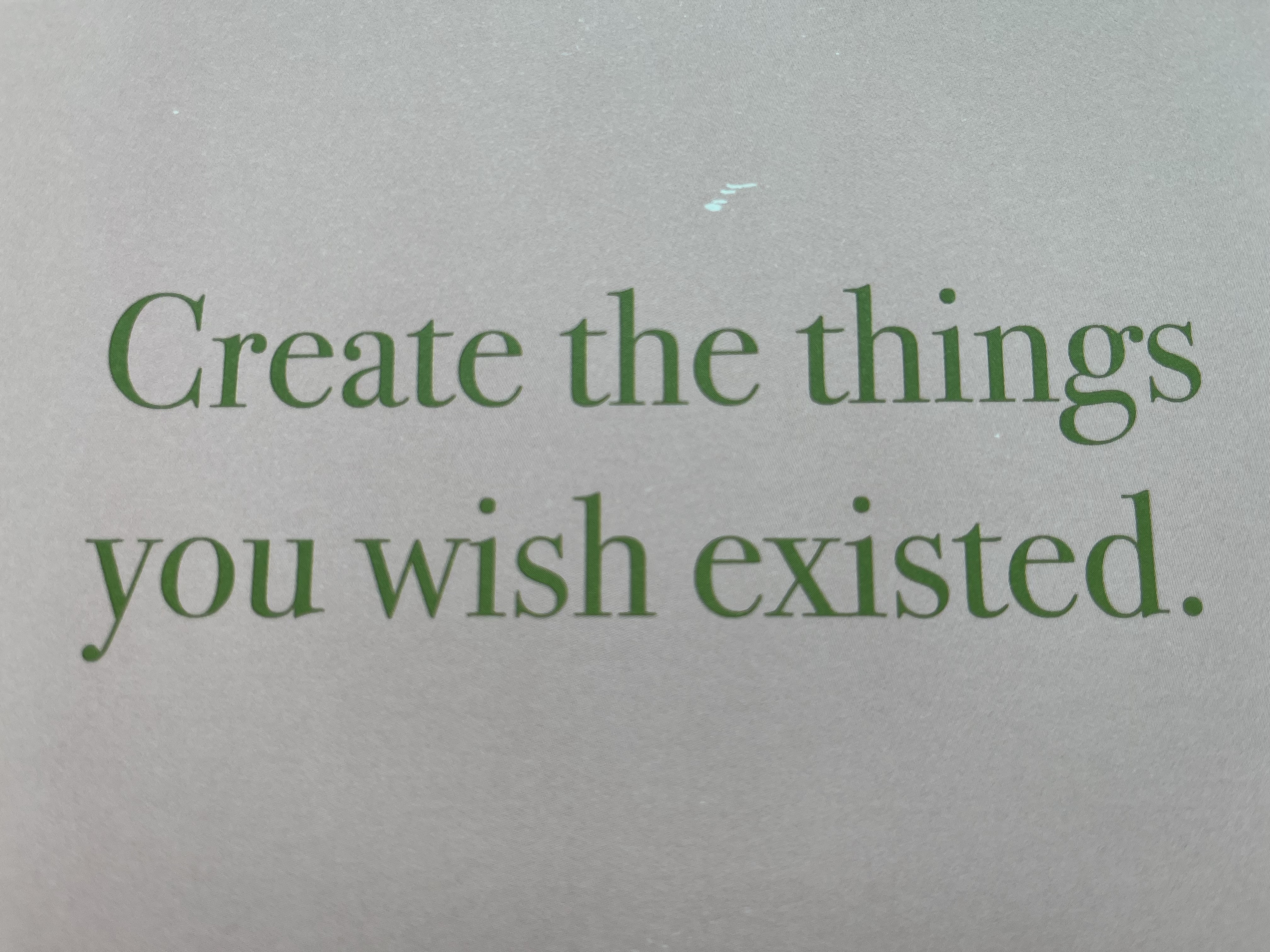
On my wall, there’s a postcard with the words: Create the things you wish existed. It’s a card that came with an order of art supplies and I loved the words so much I pasted it up where I can see it as a reminder.

From one of the mailing lists that I subscribe to, there’s a link to the work of an amazing artist named Leilah Babirye. If you have time, click on the link leading to the video as it’s so inspiring and a great reminder that when we are engaged in art, we can’t be afraid.

I’m thinking about this as I think about LIMBO and the participants who come to share and create together. More than the things that we produce or make during the time together, it’s about how we hold space for one another and create together the kind feeling that exists in that time. When it’s my turn to give the workshop, I step into the space and think about who’s here and what do they need. Where Leilah talks about reading and listening to the piece, facilitating means listening to the space and reading with the heart. I bring to the workshop all the things that I have learned from other practitioners and I bring also what I have learned from my own journey.

Yesterday, we engaged in making rhythmic combinations, dance steps and improvisations as well as song. I had in mind this idea that we needed to give an answer to the wishlist that had been presented by participants sometime at the start of the season–the wish to create a LIMBO dance as well as a song that comes from us and expresses us.

There was laughter, there was singing, there was lots of body movement and dancing and there was a beautiful musical rendition gifted to us that afternoon by one of LIMBO’s participants.

I love how moments like these give rise to spontaneous sharing. It’s a testimony to how participants feel safe to talk about what they’re going through and what they’re feeling in the moment. To me, it’s this precious quality that we need to take care of when we talk about community.

Today, I am thankful for the privilege of being invited and included in this community. One of the things I’ve learned and continue to be reminded about in LIMBO is how it doesn’t matter that there are moments of discomfort and unease–that sometimes topics can become fraught–that people will have differences. But this is okay. I think of Aminata Cairo talking about family gatherings and how there may be that uncomfortable relation who can get argumentative and you think: Oh, I will just keep a distance. But even so, if we believe we are all connected, then there is still space for discomfort. We don’t always need to resolve it, but we can acknowledge it.

(I want to note here that I do think it’s important to draw a line at abusive and harmful behaviour.)

At present, I’m already looking toward our next gathering which will be on the 1st of June. I’m thinking of how to approach this workshop as we prepare for the launch of LIMBO’s second booklet. For the launch, which will be on the 20th of July, we’ll be going back to FramerFramed as a podium has been offered to us for use against the backdrop of an exhibition about transformation. It’s so very apt. I’m thinking of festive feelings. Of glitter make-up and shiny clothes, of dancing and singing and color and joy. We’ll be creating this programme together, creating this launch, creating this space and holding it for one another.

To you who read this, take time to listen to a beat and move your feet. Thank you for stopping by. Blessings and peace be with you.

All the things and how do I choose?

In my previous life, goal setting was a little bit like this thing I would do in intervals. Like at the start of the year, I might set a couple of things for myself and at a certain point a sense of panic would creep in when I realised there were still things I hadn’t done.

Yesterday, as I was reading through the life after treatment module, the goal setting part of it had me thinking. For instance, if I say I want to travel more. What exactly do I mean when I say that? If I say I want to spend more time with my family, what do I really mean by that? And what about getting back to writing and finally finishing that work in progress? What about leaving a legacy and creating space for others? How and where do I even start? That familiar sense of panic came over me–that sense of I’m not sure I have enough time to do all the things.

To be honest, I didn’t actually think about these things when I first listed things down. I basically just filled in whatever and went on my merry way. But yesterday, I realised that I had a rather long list of things I want to do and it’s probably one of the reasons why I’m feeling a bit out of breath because how does one choose and where do I even start?

Thankfully, the module provides the following questions in support, some of which are:

How far along are you in regard to this goal?

What do you need to accomplish this goal?

Do you have all you need to get there?

One of the things on my list is to plan at least one weekend every year when all of us spend time as a family in one house. Last year, we went to Spa in Belgium. We are rather fond of Formula One and I’ve always wanted to visit a race track. Not only is the Spa circuit legendary, it’s also a beautiful track surrounded by lots of nature.

As I was in treatment at the time, my youngest spent most of our visit to the famous Spa circuit pushing me in the wheelchair. I didn’t get to climb up to the viewpoint tower but I loved that the kids got to do that and see it for themselves. It was only for a weekend, but we had a lot of fun with time together as well as time separately.

This year, I’m thinking of a place closer to home with more possibilities for going out into nature and taking walks because I’m more mobile than I was last year and I have more energy than I had.

But while I can plan things and organise things, while music and artmaking and teaching are proving to be quite friendly and within my grasp, I’ve discovered that getting back to writing is a lot more challenging than I had imagined.

Do I struggle with the writing because my brain isn’t quite up to it yet? Or do I struggle with the writing because writing (even when it’s fiction) feels very close somehow and I’m not yet ready to go there? It’s telling that I’m writing about not being ready because that’s actually probably what it is. Will I be ready to go there?

Writing even when it’s fiction has often been a way for me to work through whatever is weighing on my mind at the moment. I doubt that my work is commercially appealing because writing to an audience has probably been the last thing I’ve thought about. I’m not sure if that makes me a bad writer–but basically I write things that tug at me and call to me and make me take that deep dive and a lot of times the dive is personal and involved with the body and how the body moves through society and navigates all these questions that arise. What impact does space have on the body? How does society impact the body? And can one body have an impact or influence in the space they occupy? If so, in what way? (Yep, that’s one example of the process my brain goes through and maybe it’s helpful that I’m writing about it because this is probably a step towards getting there.)

I wish that answers were easy, but often answers are complex and require time and patience and a lot of times solutions to problems are never easy. The concept of good or bad and black and white is simplistic when we live in a nuanced world where many different shades go into what we imagine is one color.

So, this leads me back to goal setting and the objective of it.

Perhaps it’s so we don’t get this feeling of empty hours or days that we must feel. Maybe that’s it. Maybe it’s to give us a sense of purpose. Perhaps it’s to make us feel useful or accomplished. Oh hey, I did this task and that. I cleaned the bathroom without breaking down and I still had the energy to iron some clothes. That’s a win.

Now that I think about it, this sense of time running out is an illusion. We get caught up in the rush of “I must do this” and “I have to accomplish this” or “I must be useful” or whatever narrative we say to ourselves.

I think that we all have the time we need/ to do what we need to do/ and /time never runs out/. We may think that time runs out when we close our eyes in final sleep, but actually time keeps on running and what we accomplish as warm bodies reverberates even after our bodies are gone from the timeline.

Writing about this has helped me shed the rush. What needs to be done will be done and if it’s not done perfectly or as exactly as I imagine it could be, it will be enough. When I look at the timeline, I realise that actually what matters is now. From a minute ago to this minute to the minute that follows after this one. These are the moments that I can make count. Maybe I can give my son a hug or by practice my brush strokes (I’m learning how to use watercolour), or I can go out and find rocks to use for an exercise with the group. Maybe it’s something else. There’s no rush, there’s no panic. Time isn’t running out. I am moving exactly as I am meant to move within the time I occupy.

As usual, this is me thinking out loud on the page. I hope that it’s helpful to someone. Take time to do what matters to you now and if you’re feeling rushed, breathe.

Thank you for taking time to read this. I wish you blessings and peace. Maraming Salamat.
Breathe in, Breathe out

February turned out to be a more challenging month as the flu struck and just as I was feeling better, shingles happened. I had this idea that I could get through shingles with just paracetamol, but after enduring a night with no sleep and pain that I can’t describe, I caved and asked my doctor for stronger pain relief. Thankfully, my doctor prescribed pain relief quickly and I have been able to sleep through the night which accounts for why I no longer need the pain relief. I do have this incredible itch where the shingles outbreak happened and a burning sensation pretty much like when you have a bad sunburn.

Recovery from shingles is a process, but I’m glad I’m able to come upstairs to the workroom and do some art practice as well as a little bit of writing.

I was inspired quite a bit by some of the work that I saw when I visited the art fair and had a conversation with an artist who was doing some live painting. That conversation made me think about my own approach to art and art making.

During our conversation, the artist told me that what’s important is to find your own gestures and your own signature. What is it about your art that makes you the artist that you are? Every artist has a signature–not the name you sign, but it’s in the language that exists between the artist and the blank canvas/page.

I think about this conversation as I draw without having a particular goal. I draw repetitions of shapes as a way of tuning in to what am I feeling, what am I thinking, and what is going on in my body and in my spirit today.

Breathe in, breathe out.

In today’s world where everyone seems to want to rush towards a goal or to achieve something or to become someone, being in the moment frees us of all those stresses. When we are free from those stresses of becoming something, we can listen to what our bodies tell us.

Small circles, gridlines, spirals, repetitive mark making and repetitive movements. All of these things are practices that ground us in the body and in the moment. And being grounded allows us to transcend to where we can see beyond the mundane.

I’m stopping here for today.

To you who reads this, thank you for dropping by. Blessings and peace.

some thoughts on boundaries and flow

Yesterday, I attended a workshop called Envisioning 2024 which was organised and led by my LIMBO partner, Lana Jelenjev. I didn’t make the first part of the session as I have students to teach but I was able to join the second half of the workshop in which we were led to think on what Flow and Boundaries mean to us and what kind of response thinking about Flow and Boundaries produces in our bodies.

Thinking on boundaries, I was surprised to discover how my feelings towards boundaries had shifted and changed and how I’d come to see boundaries like an embrace that keeps me from using up all that I am. Boundaries are there to protect and not restrict and so when someone tells me where their boundaries are, it also makes me see that this isn’t a rejection of myself, but it is the other person asking me to recognise what I can do to take care of them too.

I think of boundaries in terms of the culture that exists within the Filipino community where there is often a tendency to cross over and push beyond boundaries set by a person. ‘Sige na’, we tend to say or ‘kahit saglit lang’. It’s harder when the person pushing is an older person because respect for our elders is so ingrained in us that sticking to our boundaries can be made to feel like disrespect. I want to say here that it is not disrespect to say “these are my limitations”. And saying yes to every ask or crossing our own boundaries can be more harmful than helpful to us and to others.

During the course of my treatment, I’ve had someone ask me to be present at gatherings and in response to my “no”, I’ve sometimes been told that just showing my face should be enough and I should remember this is my community. It’s a response that isn’t worth an answer because it tells me enough about the person saying it. I do not always have to be present and if my absence means I am no longer part of the community, then perhaps the community never considered me part of it. It may sound harsh saying it like that, but my community and my family are those who understand why I can’t always be there. Why I can’t always say yes. Why retreating into my shell is necessary for me and how not being present is also part of my healing.

There is a beauty about the way in which the community I am in, right now, approaches this. An offer is made and it is up to the person who needs to come up and say: now, I need. Or now, I want to be present. Or now, I am ready to speak or to be in the group. It’s not that you are forgotten when you don’t speak or are not present–people do check-in from time to time just to ask how are you today. But the beauty of this is how it is absent of pressure that often leads to stress.

Thinking on this, my thoughts circle back to LIMBO and how much being in this space has enriched my understanding of the kinds of worlds that are possible if we allow ourselves to let go of existing learned systems. I think of communities where care is central–not just care for another but care for the self.

You don’t always have to have the answer. You don’t always have to solve the problem. You don’t always have to be present. You can always say: I hear you. I acknowledge your need. But in this moment, I need to not be present. In this moment, I don’t have the answer. I don’t know. I don’t have the answer. And maybe not knowing or not having the answer or not being able to do anything makes us feel vulnerable, but maybe this kind of honesty opens the door to the other so they too can be vulnerable and free.

Blessings and peace to you who read this and Agyamanac Unay for stopping by.