I’m still basking in the IFFR glow of watching our young filmmakers from Moving Love having that epiphany of: I am a filmmaker.
They finished the course, they made these films, and so they are deserving of that title: filmmaker. I’m looking forward to the premiere when all of the moving portraits will be seen in one space. At present, we continue to send out feelers for other possible locations as we want to bring these films all over The Netherlands and hopefully beyond The Netherlands.
My role as consultant and coach for this project is coming to a close, but I still feel connected to these young people. I very much wish that as they continue on with their journey, they will be able to find people who will help them grow further in their craft.
On Friday’s IFFR film-showing, I met a young filmmaker from Berlin whose film called Unbelong moved me so much. Pars Lorenis a non-binary artist and filmmaker and for those interested in finding out more about them, they have an online presence on instagram.
Unbelong is like a visual poem. It has beautifully haunting imagery combining footage from Pars’s life with other archival footage. All throughout the film, we hear Pars’s voice telling us a story, we are invited to be part of the inner world of the self. Unbelong is vulnerable and intensely personal, and it speaks to us on a plane where we connect with that vulnerability and acknowledge the courage it takes to be so. If you ever have the chance to see this film, I want to encourage you to do so.
Unbelong will be shown during an Anatolian filmmakers in Exile event in Berlin on the 14th of February. This event is a Turkish event. but there will be another showing on the 7th of May at the Frauenzentrum (in Berlin) in English and in German for those who prefer English or German.
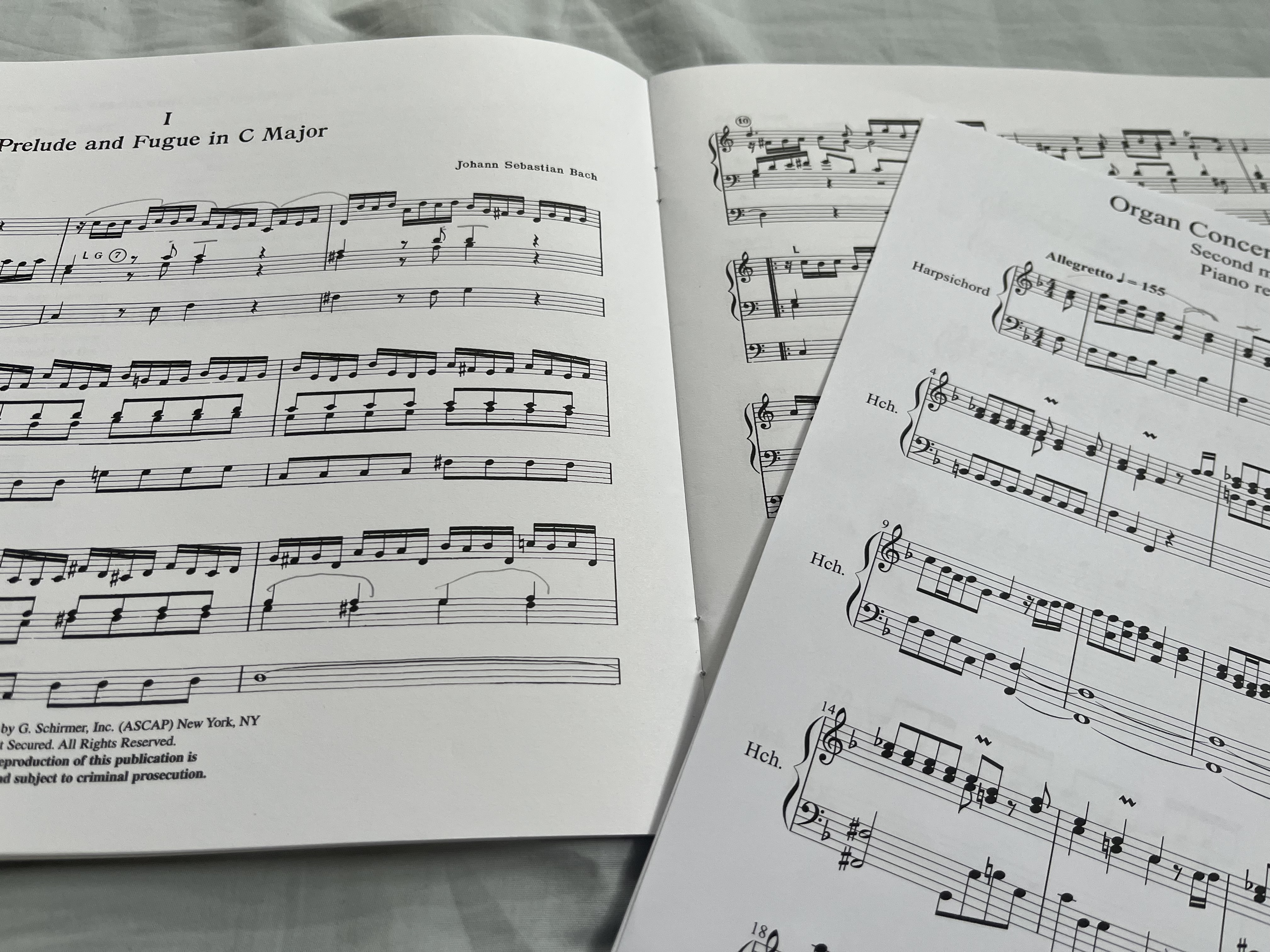
On another note: I started organ lessons this Monday and am feeling quite rejuvenated and excited. It’s a feeling pretty similar to when I was studying at the conservatory back home in The Philippines. But where I used to dread piano lessons, I’m looking forward to my organ lessons. I can’t fit an organ in my house, but the digitaal piano has an organ set-up which helps in terms of understanding the difference in technique. I’m starting with the first of Bach’s eight preludes and fugues for the organ and with the second movement of Handel’s Organ Concerto HVW 295, which I’m told is called the Cuckoo concerto.
There are still a number of things to write about, but I thought I’d keep it to this for this post.
May blessings and peace be with you always and thank you for dropping by.
(If you prefer, you can also listen to this blog.)
I have a memory of hiding under my bed as a child. My mother was quite insistent about teaching us how to play the piano and before we were allowed to go outdoors, we were required to spend some time practicing the piano. To my mind, I really didn’t see the point. I mean, my sister was the gifted one. She had a beautiful touch and she had the diligence to sit and master a piece of music, while I fidgeted on the piano seat, impatient for practice time to be over. So, I devised this plan of hiding under the bed. Surely, my mother would grow tired of waiting. Surely, she would rise and leave the room and then I wouldn’t have to practice.
Of course, I never won the waiting game.
Later, when we moved to the city, my mother stopped requiring me to practice daily. She had a thriving piano practice, she had other students who didn’t hide under the bed when it was time for piano lessons. My older and more talented sister stopped playing the piano at some point and now that my mother wasn’t pushing me to practice daily, I let piano practice slide.
I actually don’t know why my Mom thought I would make a good conservatory student. Maybe it was my sister’s decision to pursue computer science instead of music that decided it for her. But when it was my turn to decide on a study, she declared that one of her kids would definitely become a pianist and that kid was going to be me. I protested, saying that I would like to do something else, I just wasn’t sure what yet.
“Since you don’t know, you will go to the conservatory,” that’s what my mom said.
And she spent the following month steamrolling me through a repertoire that she said would guarantee my admission. She also called up one of her former teachers. On the basis of that connection, I played Mozart’s sonata in C (not just the first movement but all three), a Bach invention (I don’t recall which one), and a Czerny study. When the panel asked me to play the scale in D major, I turned to my mother and went: what are they talking about. And my Mom went: 2 sharps. And that was how I got into the conservatory at the University of Santo Tomas.
The teacher my mom had contacted was Ms. Fule. She was a dragon lady and quite a character. Books write about characters who bark, Ms. Fule was like that. She barked out commandments and woe to anyone who dared gainsay her. Not only did I have to take my piano lessons with Ms. Fule, I also had theory and counterpoint with her. If I skipped class, she would call my mother.
“Where is Rochita? Why wasn’t she in class today?”
There was no escape.
Piano lessons were like torture. I would sit in the hallway beside other students waiting for their turn. Ms. Fule sometimes ran late, but she expected her students to be ahead of time. If we were late, we got an earful. It would have been great if the earful was limited to us, but the windows of Ms. Fule’s studio opened out into a courtyard surrounded by the buildings of the education department and so the entire college knew whenever Ms. Fule was berating someone. Woe to the student who made mistakes while playing the required homework.
Sometime after I departed that particular conservatory, I heard that one of the students had filed a complaint of abuse against Ms. Fule. It wasn’t surprising at all. I had had my own share of pinches and at one time, she kicked me for not playing well enough to her liking.
News of this complaint found its way to the college of music where I had enrolled under a different piano teacher. This teacher had been close friends with my mother’s former piano teacher. I had a good technique, an excellent touché (according to my teacher), and I was expressive–sometimes a bit too dramatic. My teacher’s complaint was the same complaint Ms. Fule had: you don’t practice enough.
At that time, I was playing for the church as well as for the church choir. I had also decided that it was a good idea to start a newsletter about the department of music and I felt that writing reviews about recitals was one way of bringing attention to what was going on in our department.
My teacher grumbled about my writing. She grumbled about how much time I spent interviewing other students when I should be practicing. Like Ms. Fule, she called my mother to complain about my lack of due diligence. My final year at the college of music, I spent six to eight hours of everyday playing the piano. I played the piano until I was soaked in sweat. Over and over again, until I felt sick of the piano.
After my last round of chemotherapy, the joints of my hands were so affected that playing the piano became painful.
I was reminded of a moment soon after I moved to The Netherlands where I imagined that I could survive without playing the piano.
“No,” I said to Jan. “I don’t need a piano. I can live without one. In fact, I would be very happy not to see a piano again for a very long time.”
I managed to go for a month before I felt like I would crawl up the walls for want of a piano.
When we moved to our new home, my partner bought me a restored vintage Grotrian-Steinweg. It had survived two world wars, had been cherished and sheltered in the same family until it went to a piano tuner who restored it to former glory. I remember playing this piano for the first time and falling in love. Regardless of its idiosyncrasies (old pianos have those) I love the way its keys respond to the touch. It can be as gentle or as dramatic as I want it to be, when I want it to be. I fell in love with playing the piano because of this piano. Each time our tuner came to visit, he would say: “I can tell that you play this piano almost everyday.”
“Well,” I said to my hands. “There’s no help for it. One must do what one must in order to continue to stay alive.”
And then I cried.
I put a brave face on it and the one thing that dragged me through treatment and helped me come out on the other side was because in that same period, my youngest son somehow decided he wanted to learn how to play that beloved theme from Howl’s Moving Castle. In that period, he learned to play Fur Elisé (the full version) too. He also played some of Vangelion (although only what he liked) and he also started on Aragonaise (never finished).
I didn’t mind not playing if my youngest son was playing. Hearing him play comforted me on the baddest of bad days.
My mother would ask me regularly if I was still playing the piano. Play everyday, she would say. Music keeps us alive. My mom has a form of dementia where she quickly forgets what she’s been told. Having to remind her that my hands hurt when I played the piano was just too painful. So I simply nodded and said yes.
They say that the farther away you are from treatment, the better things become. Recovery can take anywhere from six months to a year, to two years, sometimes side-effects remain with you for the rest of your life. I remember touching the piano keys for the first time after treatment. My hands hurt. I couldn’t exert any pressure. The most I could do was lightly brush the keys with the tips of my fingers. It was nothing.
My joints hurt. Maybe my piano days were over. I couldn’t play the piano, I couldn’t hold words in my head. What was I going to do now?
I still kept trying.
Then one day, six months down the road, I sat down and decided I would play. I started with something light and simple.
My hands still hurt, but I decided that I would do a little bit everyday. My mother was still playing even though she had dementia, even though she had days where her bones hurt. She was still playing. How could I possibly just give up?
My hands came back to me, around the same time I started writing again.
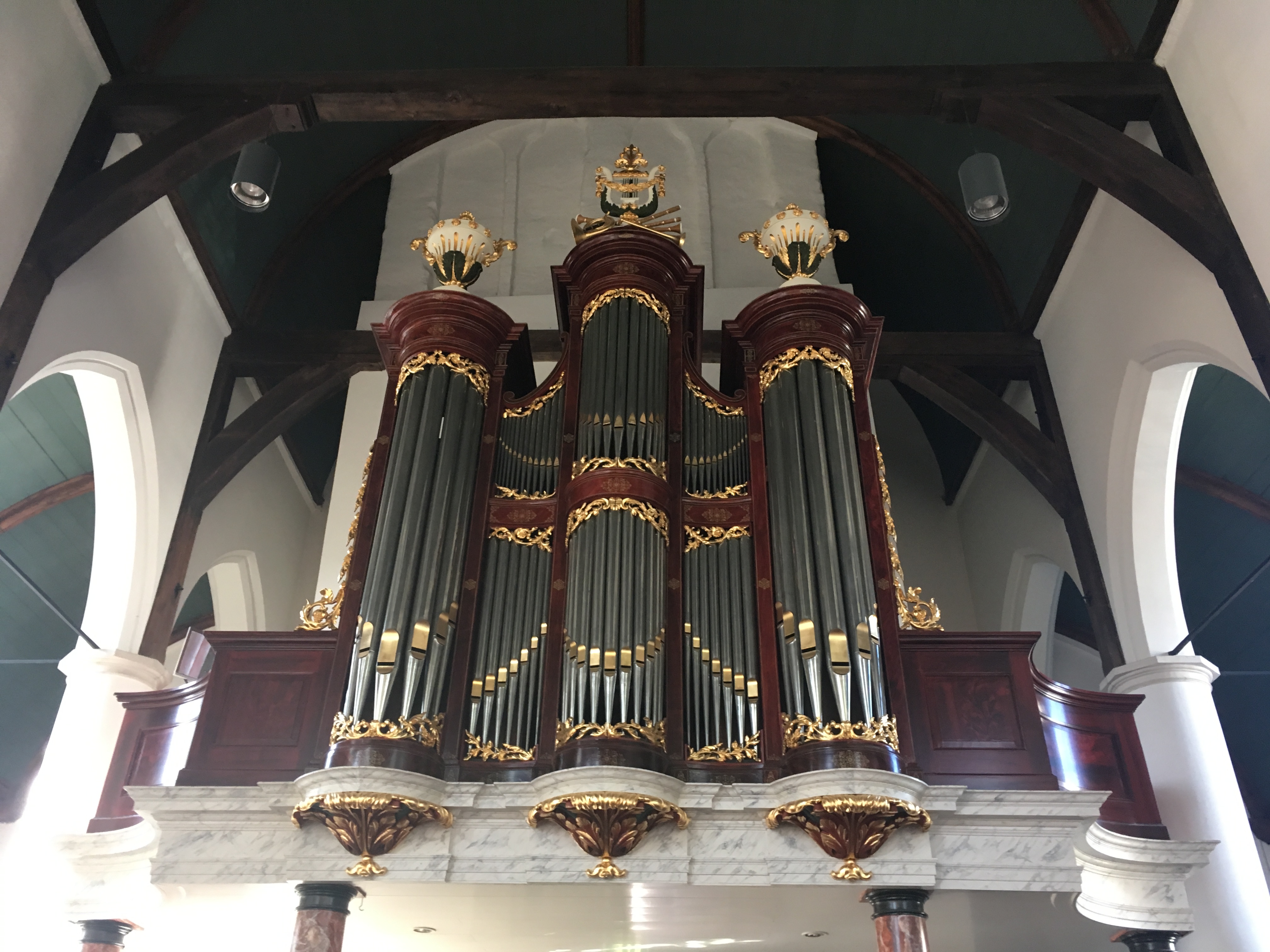
Yesterday, I visited a church with an organ the size of a building. Ever since I’d heard the pipe organ, I’d been curious about it. There was this force of attraction that pulled at me, but I didn’t dare to try. But the organist invited me up to his perch, he let me sit down at the bench and he simply said: well, play something.
Thinking about it, I realised that this might have been the first time I said I wanted to learn an instrument. I never really had an option when it came to choosing a musical instrument. Also, there’s not really much to choose from when you grow up in the mountains. It just so happened that my mother came from a part of the Philippines where the piano was part of her life. She brought her piano to the mountains, and teaching us to play was her logical path. For us, there was nothing else to choose from.
I’d never stopped to consider that I could decide to choose to study something else other than the piano.
Life remains full of unexpected surprises. We are never too old to learn new things. It is never to late to choose things other than what we have always been used to.
I told the organist that I am in what I call my Bach Era. What better way to celebrate life than to learn how to play Bach on the church organ.
After a while, the portrait I’d been wrestling with made me feel so dissatisfied, I decided to turn its face away from me. Maybe it was the colours I’d been using, maybe it was because I needed a break, but the more I worked on it, the more I felt as if I wasn’t getting anywhere near where I wanted to be. It’s funny to write this when during my last entry, I felt as if I’d had a breakthrough.
So, I decided to step away from the portrait. I didn’t work on it for a couple of days. I didn’t even look at it. I played with my watercolours and didn’t require myself to do anything that was like a project.
There wasn’t really much time to dwell because I had the regular check-up which consists of a bloodwork and a CT scan. I didn’t have time to dwell on the CT-scan because my youngest son was leaving for the traditional end-of-school holiday (it’s a Dutch thing where young people go on holiday with their mates at the end of senior high). It’s kind of difficult to stress about a scan when you’re making sure that your son won’t miss his flight and it’s kind of difficult to stress about a portrait when you remember you have to go to the hospital.
After a busy couple of days, I decided I needed a break. I made a date to meet up with my eldest son in the city and we went shopping for some things (in my case it was art supplies).
The great thing about taking such a break is how there’s time to think while on the train ride to and from the big city. I thought about that little voice that makes tiny sounds of disapproval in the back of our heads. We don’t register it as disapproval because we’re so used to hearing it. It’s a voice that says: Oh, that’s not good enough. Oh, that nose doesn’t look right. Oh, are you sure you want to use that shade of red? Oh. Now you’ve done it. You’re overworking it. You’re doing it all wrong. You’ll never be good at this.
It doesn’t matter whether it’s a painting or a story or a book report, our first and harshest critic is that tiny voice that causes us to tense up and become so focused on being perfect we end up helplessly throwing our hands up in the air and saying: I cannot.
There’s a great little clip I stumbled upon on youtube where a pianist is playing one of Chopin’s etudes (I forget the name but it’s one my mom played a lot). Over a section of the clip with the beautiful cascading tones of the piano, there’s a caption: What the audience hears when the pianist plays this piece. Right after this, there’s a section where the notes are clanging together in disharmony. The caption says: what the pianist hears when playing this piece.
It’s a funny clip, but it’s so apt. It doesn’t matter what art form we practice. Whether it’s making music or making art or writing, somehow we tend to hyperfocus on that one thing that just isn’t working. And it’s all that tiny little self-critical voice will let us focus on.
I laugh as I write this because it seems like this is a lesson that keeps returning to me. In the chase after an elusive perfection, we lose sight of what makes us love the things that we do.
Blessings and peace to you who read this. Thank you for dropping by.
You must be logged in to post a comment.