A very short update

I have been quite immersed in the novel draft since end of August and it’s a bit of a surprise to look up and realise that we are already in November. That’s almost three months of non-stop writing at varying speeds and wordages, but I am happy to say that I am heading over the halfway mark as I hope to achieve 65k sometime within the next few days. I’ll likely hit 70k sometime end of the month or early December, but I am steadily moving onward. As my friend, Tricia, reminded me: I must finish.

I acknowledge that one of the things I love the most about writing is when I get to create new worlds. I love exploring different worlds and dimensions, the idea of creating different kinds of being in the world–sometimes similar to, but also other than how we are in the world today. It leads to some complexity when my head is thinking around matters like decoloniality and decolonisation and also when I contemplate kinship and connectedness and how might I bring this all into my on the ground workshop practice.

This November, a project I’ve been involved with for a little while, is starting up with a programme put together by different facilitators and arranged in such a way that we build up towards where participants can create their own micro films. It’s been quite a satisfying experience and I’m looking forward to the start of the workshop when we get to see all of these things manifest in practice space. When the time is right, I might share links to the eventual exhibit of the works that come from this project.

I shared with some participants during the co-creation lab, how putting together this programme was a satisfying act of collaboration and co-creation as we brainstormed together and also asked members of the community what would benefit participants the most. At the heart of the matter are the needs of the community whose voices we want to amplify. So, we want to create this space where it’s more than just the project space, but also beyond that there are possibilities to grow further as a creative, as a storyteller or as a filmmaker. I think that’s one of the aspects I love about this vision: where participants are empowered and given access to the networks so they can move and grow as they wish to.

I shared how one of our facilitators expressed how they wished this kind of programme existed back in the day because of how the programme speaks to the experience of us who are traditionally marginalised. One of our team members said: perhaps this too can be part of the impact of the project.

And because I am a world-builder, I started to imagine a world where curriculums are built and composed differently from how curriculums are today. My science fictional brain and my real world brain collide and I remind myself we are living in the present.

Reciprocity when we go to communities means we are also thinking of how we can encourage people to hope beyond the present. To see a vision beyond now and even if we cannot fund everything, the knowledge that someone has your back and is there encouraging and supporting your vision could already be enough. (To this day, my sister’s voice continues to encourage me even if she’s no longer physically here in this world.)

I still have lots of things I want to write about, but I will end this here as I still have to work on my novel. I am thankful to celebrate a year without treatments. A year wherein the report has come back still in remission and stable. For this I am very grateful.

Maraming salamat for taking time to read. May blessings and peace be with you as you continue on your journey.

At World Fantasy

Here at World Fantasy, I am learning how to balance my energy in a more intense way than I have had to since my last treatment at the end of 2024. I’m not exactly sure what made me decide to come to World Fantasy, but I think it might have had to do with wondering if I could still go to conventions on my own. A convention closer to home felt safer than a convention somewhere like in the US. After all, I managed to complete the co-creation summer workshop, which was also pretty intense, but in a different way. So when Aliette de Bodard told me that World Fantasy was in Brighton, I thought: Oh, I think I can go. It’s also a plus that I get to share a room with Aliette.

World Fantasy is quite intense in the way most conventions are intense. I had quite forgotten the noise level and how draining that can be. It brings home the fact that while I may be recovering really well, I am not yet at 100%. I’m very thankful then for friends who have introduced me to their friends. I was very happy to reconnect with Julie Philips who wrote James Tiptree Jr., The Double Life of Alice Sheldon and The Baby on the Fire Escape. Julie lives in Amsterdam, but it’s been a long time since we last met, so I was so happy when she told me she was coming to WFC. Julie introduced us (me) to Theodora Goss who just as lovely and as elegant as her prose is. I was quite starstruck and speechless for a moment. Like what are words? I remember reading In the Forest of Forgetting when I first learned that such a thing as genre existed and being quite blown away by the beauty of it. I’m pretty sure I’m mangling something up in the process of writing this, but I feel like I want to write this short blog before the feeling of now fades and I run out of gas.

An interesting new writer to me, is M.K. Hardy. I met the M of M.K. and enjoyed listening to her talk about their novel and the underlying themes in their work. I’m quite intrigued by the aspect of co-creating and writing together as it feels like an enriching process and I hope to get to ask about that part one of these days. I was very much engaged in Morag sharing about how the novel thinks around matters related to Scotland’s history as part of an Imperial project. I wished again that my sister were here because they would probably have got on like a house on fire.

While reflecting on this feeling of missing, I realised that even though my sister isn’t with me, she is still with me. I wrote a short piece reflecting on it and will share it here. Early on, after I realised that my ability to socialise is still at recovery stage, I decided not to rush out in the mornings. The panels I circled on my programme are wishlists not must do’s and it’s perfectly fine to spend time in the hotel room writing or wandering along the shorefront or doing other things not convention related. In the meantime, the manuscript has grown beyond 50k. I am embracing it and recognising how ambitious this project actually is and so I do need to take more time with it, to let it breathe and become what it is meant to be.

I have this hope that thinking around these ideas will lead to connect with others who are also thinking around these ideas of kinship and entanglement and not looking away from, but staying with the trouble as Donna Haraway would say.

There’s still more to write, but I need to end this post here. Sharing this short reflection on Grief and presence in the hope that it will mean something to you who have stopped by to read.

Grief makes us awkward. 

We are carrying these wounds with us, but we have no way to heal them because we have imbibed the narrative that tells us we must keep moving forward. 

But grief is also healing. 

In remembering, we make alive again the ones who we have lost. Their presence walks beside us in a different way. We can gain strength from that presence. From the knowledge that we have loved and are continuing to love. We have been entangled and continue to be entangled. They are not really gone from us. It is simply that idea of presence as being physical that we need to let go of. 

My sister is here, present with me. Just as present with me as she was when I could touch her hand. 

Blessings and peace to you who read this and Maraming Salamat for passing by.

Current doings

I’m waiting for CT scan results and I thought it would be good to post this before I get distracted.

I’ve been writing and rewriting the work in progress which expands in size, decreases in size and expands again as I write on it. At the same time, I’ve found myself asking questions of myself as I write. For instance: I think I might have fallen into the trap of trying to write something that’s commercially in line with what’s already out there. You know: a nice hooky opening. Action and bam we are in the middle of the story. It’s not bad, but a part of me was raising an eyebrow and going: what did you want to achieve with that?

I am a bit of an over thinker and I found myself asking what I really enjoy about writing science fiction and fantasy. The answer really isn’t very deep. One of the reasons I enjoy science fiction and fantasy is how there’s this wild space where you get to imagine all kinds of strange or weird worlds that may or may not be related to this world.

Of course, I write about the things I’m passionate about and I write about matters that are on my mind and things I want to work through. But most of all, I love the freedom to create outside of the expectation that I will be writing about my culture or about my experience of displacement or as someone once said at a symposium I attended: I don’t want to tell you another story about my pain.

Perhaps the most freeing thing we can do is to unshackle ourselves from the having to be something and instead embrace what gives us joy and freedom. For example, I’m invested in the furniture of strange worlds and I enjoy the experience of wandering through it in a documentary film kind of way. Oh look, shiny curtains. What are they made of? Oh wow. They’re alive. These plants can tell stories: I’ll sit here and let the trees talk to me now. (I confess, I also do this in real life.)

But as I progressed, I realised that my first draft wasn’t really all that great. It was fun, but it was kind of meh. So, I asked myself a few more questions: Oh hey, Rochita, I know your subconscious does this for you most of the time, but let me ask you if you are aware of who the stakeholders are in your world? I had a short laugh at how I progressed from “yay, sentient furniture” to “here’s my project proposal”. But also, I find myself thinking of how it’s not just about the motions of living, it’s the why are you living there and how are you living there. There’s a part of me that thinks back to the conversations had around the table as we discussed TTRPG creation and where I asked out loud if villains or enemies or oppressors were a necessity in story. (I know I’m gonna eat my question because I’m not sure if a big world story is possible without one of those things coming up and even if the conflict comes organically from the direction of ‘player A does not recognise your innate ability to become an amazing superhero’, there is still going to be an acting opposition, right?)

In the midst of all this wrestling, I read an article penned by someone (I forgot who) where they write about this experiment they did with an AI writing machine while working on a column. They were using a particular program and they fed it with a prompt and with an instruction to check out their blog and write something in the same style and voice. The machine spit out something which the writer then proceeded to rewrite and adjust and by the end of it the only things left over from what the machine had given her were articles like a and the. It was rather fascinating to observe the writer defending the use of an LLM because they ended up writing their column in under an hour instead of more than an hour. A part of me was like: Uh…I’m not so sure why you did this exercise, but it seems to me sitting down and writing the entire thing on your own would have been better. (Also, damn girl, you are a good writer. Why would you do that to yourself?)

I think about the journey I’m taking with this work in progress and how I’m discovering the world as it unfolds on the page and how there are bits of the world that I’m writing now that will likely not make it to the final cut, because I’ve already put them in my notepad under the header: cuts. But I really really like those bits and I had so much fun writing them. (I’m having some thoughts around waste and intentionality and how using an LLM in this way makes me think of landfills and fast fashion. I know. It’s how my brain works.)

After my last posting (How thinking of language leads to thinking about other things) a friend asked me how we could possibly escape the machine if the machine also copies our imperfections. I thought about this for quite a while and then I was reminded of the various movements in the art world and how all of these movements were a fighting against and a coming up against and a wrestling with what is established. History tells a story of invention and reinvention, of how there are always ways of escaping something that becomes establishment and the norm and also I find myself thinking about impositions and how artists don’t really like impositions. So I find myself rather invested in what our answer to this question will be. (If you have any thoughts on it, I’d be interested in them.)

In the meantime, I thought I’d share the link to a weirdly wonderful story which involves playing with language from my lovely friend Weegbree. If you have time, do click to read Brood/Pain/Pan: A Breadtale in Three Movements.

Blessings and peace to you who read this and Agayamanac Unay for passing by.

How thinking of language leads to other things

I’ve been struggling with a cold all week, so my plan to go to Amsterdam today did not push through. Instead, I found myself watching a friend defend her PhD on the livestream. I was a bit disappointed not to be there in person, but life is life and even the best laid plans don’t always work as we want them to.

Later on, I find myself reflecting on the use of language and also how I appreciated how most of the language used felt accessible to me who is not at all an academic.

It had me thinking about a conversation I had with another friend on the purpose of academic writing and who it’s for and why it’s done. If research and the results of research are only exchanged inside the university or the academy or among peers, if the language is not accessible to people who don’t have doctorates or access to that kind of language, what is the use of the research? Maybe we can argue that it has a trickle down effect into policy, but how long before that happens? In particular when we talk about social sciences which have to do with community and with the masses, isn’t it better to use language that will invite inclusion rather than exclusion?

I think about language because, of course, as a writer it’s part of my daily life. Like for instance, the visceral response I have to Spanish. Which I love the sound of it, and yet it also reminds me that we have this long history under Spanish occupation and that’s why the sound of Spanish can have this kind of mesmerising effect and also at the same time serves as reminder of a history that is painful. I wonder how it would be to learn Spanish simply because it’s a beautiful language and not feel as if I am helplessly caught in this net where I know in parts but don’t know because the way I know it is in the expressions that linger like remnants in Filipino consciousness.

Language remains a matter that I wrestle with because of the complexity of our history and it is related not just to colonialism but also to displacement, to the experience of being othered, to that experience of being seen as “little brother” or “model migrant”.

Whether I am writing in English or Dutch, I wrestle with how this language that I use carries so many layers.

So, maybe this is on a tangent, but I admit to side-eying advocates for using AI if you are not a native speaker of a language.

Of course, I agree, a properly constructed sentence helps us communicate better, but if I utilise an AI to take away that wrestling with language, then the story of that struggle is absent from my text. It’s absented because I allow an artificial intelligence to erase it for me. My question then becomes this: what are we afraid of that we cannot write as we speak? And who are we writing for if we opt to allow AI to write for us?

For me, writing isn’t just about producing a cohesive text. Often, it’s not. Writing is about struggling with things and maybe the conclusion isn’t neat or maybe I have to go back and think about it again, or maybe I have to argue with myself again. Maybe there is no resolution or conclusion and that’s okay. If the ends aren’t neatly tied up and the package isn’t neatly wrapped, does it mean it’s of lesser worth?

I suppose what I mean to say is that our use of language reflects the imperfections of our lives.

Writing this, I have to think of the impulse of consumerism and materialism to erase everything that isn’t perfect. Erasing wrinkles. Erasing lines. Erasing imperfections that we may have been born with. All these in the hope of creating perfection. Often, we end up with shallow and grotesque expressions that reflect the soullessness in that pursuit of perfection.

It’s the same with writing or with art. Without the wrestling, without the struggle, without the imperfection, we empty our work of what makes it meaningful.

I’d rather keep my imperfections and keep my soul.

How we conceive a familial history

In The Darker Side of the Renaissance, Walter D. Mignolo quotes Isidore in the chapter on Record Keeping without Letters. He quotes this from Isidore: For among the ancients, without exception, only those who were witnesses and who had seen the things they narrated wrote history, for we understand what we have seen better than what we know by hearsay.

I had a conversation with a cousin who is older than I am, who might know more about the history of my grandparents. They might know more, not just because they are older, but they might know more because of how they were situated in physical proximity to my grandfather. My cousins lived in Cagayan de Oro and this cousin tells me that our grandfather visited them often and the story they tell about my grandfather is one of a gentle and kindhearted giant of a man. Someone whose visits they looked forward to and whose presence was very much welcomed.

Our family was located far from where the rest of my father’s family lived. In fact, we were located on the opposite end of the archipelago. My sister and I grew up in the mountains of Ifugao, my brothers were born there too, and we spent our childhood blissfully unaware of any drama that might be taking part in that place that could just as well be another country. We were far from where my grandmother was located. Also far from where my grandfather and his second family lived. Back then, the trip from where they were to where we were would have been almost the same as traveling from The Netherlands to the Philippines. By Filipino standards, it still is a costly trip.

My cousin tells me that my Dad, being the youngest, was his mother’s favourite and so he didn’t receive the same kind of harsh corporal discipline that his elder brothers received when they were growing up. My memories of my grandma are those of a rather strict lady. I thought at that time that it was because she had Spanish blood and Spanish people are strict (right?). She was always affectionate towards our Dad and the affection was reciprocated.

The story of familial relation unfolds differently when told from the perspective of my cousin who tells of the horror that came with growing up in the proximity of my grandmother. According to this account, my grandmother was more than strict. Indeed, she was quite unreasonable, more than demanding, and even cruel. Any sign of enjoyment when she was visiting with them, was punished with a lengthy sermon that would end only after one of my cousins was punished for an imagined wrongdoing.

My cousin relates this to me from her perspective. We didn’t see, she tells me. We didn’t know what our grandmother was really like. And so, she wants to relate what we never witnessed or experienced for ourselves because of distance. The grandmother she knew and the grandmother I knew seem to be two different people.

A memory arises from a time when my grandmother took me with her to visit her younger sister in Manila. She was fussy about my comfort and then when we arrived at her sister’s house, she was devastated to find out that she’d forgotten to pack extra underwear for me. I think I must have thrown some kind of a tantrum (I was a bit of a handful as a child) and she just didn’t know what to do or how to get me out of the bathroom as I kept on blaming her for not knowing that kids are supposed to have clean undies everyday. She was strict, but not more strict than my own mother and she didn’t spank me for throwing a tantrum. She waited and then made me do what she wanted me to do. (Just as my mom would have done.)

By the time my grandmother came to live out her days with us, she had been gentled by years. She had had had a stroke, but she was recovering even though she wasn’t very mobile. She loved telling stories about the past while I massaged her legs and listened eagerly.

I loved hearing her talk because my Dad didn’t tell us very much.

Later, when we were much older and after my grandma was no longer with us, my Mom tells us an entire story of how she would warn my Dad each time my grandma came to visit: Bantay ka! (watch out). Your Mom isn’t going to lay a finger on one of my kids.

None of us ever experienced such harsh punishments or treatments as those described by my cousins. We might have been subjected to some nagging, but our mother would send us out to play and even though we were scolded by my grandmother, I always had this idea that it was because she wanted the best for us. Did this have to do with how my mother stood between us and her? Was it because of the close bond between her and my father? Or are these things that I have imagined because there is a lot I do not know.

I can remember the sound of my grandmother’s voice whenever she called out to my Dad.

“Nonoy,” she would say.

Now that I have children, I recognise that tone of affection that one reserves for one’s own children, and in particular, for the youngest one.

For a long time, until my grandfather came to visit, my sister and I believed my grandmother was a widow. And then, when we found out that there was a grandfather, we thought he must have done some dastardly crime because no one spoke about him.

I suppose this speculation was natural considering how we grew up far from anyone belonging to my father’s family, in our defence, we only ever met him once.

My sister and I met our grandfather for the first time when he was already sick. By the time he came to visit us in Ifugao, he was dying. But he came to see us, or perhaps he came to see my father. No one spoke about why he’d come; not even afterwards, so I can only speculate. Did he come to mend broken bridges? I don’t know.

In my mind, I see my grandfather as a tall man with a gaunt and lonely face trying to connect with us kids. I can still see him towering over us, trying to win us over by showing us his magic slippers.

This memory is overshadowed by whispers and a feeling of tension. It seemed as if we saw him only that one afternoon, but I’m sure it must have been more than that one afternoon. I remember my mother trying to keep my father from going away to the city on an errand and my father’s stubborn insistence on going and how while my father was gone, my grandfather died.

My mother talked about how she had to have a casket made. It must have been a while before my father arrived because I remember visiting the carpenter’s shop and the carpenter explaining to me how he was making a casket for my grandfather. I thought I should feel properly sad, but I didn’t know how to feel about the tall stranger with magic slippers who now lay in a casket in our living room while the voices of visitors filled our living room. I felt uncomfortable and impatient for my father to return.

It’s interesting what kinds of snapshots the mind retains. I see one of myself frozen in the moment when my father arrives. The house is teeming with people, but the living room is in the shadows. I am standing on the stairs looking down onto the porch as my father climbs up toward my mother. He doesn’t look up to where I am, all that is him is focused on my mother and then a sound breaks from him. After my sister died, I understood what that sound was and what kind of deep grief that sound contains.

Is this the memory that colours my recollection of my father’s pain?

Did I imagine my father’s feelings towards my grandfather? I know we hardly spoke about him and when I did try, he tended to be quite abrupt. Was he in pain because he wasn’t there when his father died? Had he left because he didn’t know what to say after so many years of not seeing each other? Had something been left unsaid or undone? I can only speculate.

The person writing about my father’s life writes from the perspective of someone who spent time in conversation with my Dad, long after the pain had been healed. Their conversations took place after a transformation had taken place. It gives me peace to know that my father was no longer angry. He was no longer in pain. He had reconciled his grief and pain and he had become the beautiful self everyone remembers–a man filled with compassion, gentled by time, always present and in service of those who needed him.

If we are to take Isidore at his word, then it means I can only write what I have seen and what I have understood from that seeing. As Mignolo writes, Isidore wasn’t concerned with the distinction between a narrative of witnessed events (which will become past events from a future perspective) and a narrative of the narrative of witnessed events.)

Again, Mignolo quotes Isidore: Things that are seen are reported without any ambiguity. This discipline pertains to grammar, for only the things deemed worthy of memory were written down.

These entries are (for me) a way of processing. Thinking about family history as I think on what I am reading. Blessings and peace to you who read this and Daghang Salamat for passing by.

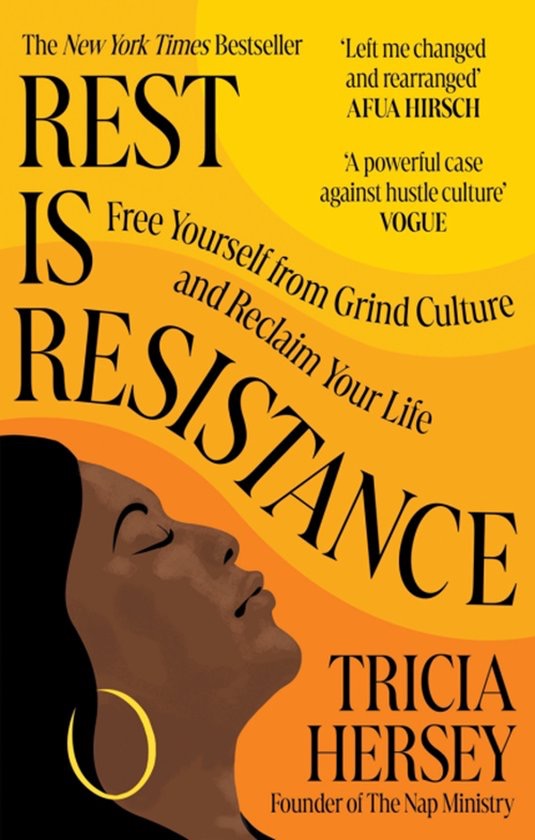
Downtime and Tricia Hersey’s Rest is Resistance

It’s the first proper week of my summer break and I have to admit that I’m really enjoying the time to just chill and do whatever I want. Downtime is a great period to relax and reflect–do a little bit of dreaming, think about lessons learned, about the work that’s been done and what it means. I also find myself thinking on how to encourage a younger generation of activists and collaborators because community work can eat you up if you don’t get the support and the rest that you need.

I recently shared a book with one of my dear friends and a fellow collaborator. It’s a book that came across my timeline and the title of the book drew my attention because it speaks to something I hear coming from workers in different spaces.

“I am tired.”

“I feel like I need more sleep.”

“I want to recharge.”

I hear different variations on this theme of needing rest. So when Rest is Resistance by Tricia Hersey came across my timeline, I felt moved enough to put it into my basket.

Hersey’s book is a quick read, but it is a good read. Reading it, I found myself thinking of how easily a body can be trained to forget about rest. For instance, when I first moved to The Netherlands, I still practiced siesta time (like we do in The Philippines). My in-laws were rather shocked/surprised and I was shocked/surprised to find that Dutch people do not do siesta unless you’re old or sick. I had to un-learn siesta pretty quick because being caught in siesta resulted in that disapproving look that made me feel like I had committed a crime. Nowadays, I’m like: I do not care…I will siesta if I feel like I need a siesta.

Hersey’s story about her father–his life of work, in service to God, in service to family, in service to community, reminded me so much of my father. My father was the youngest of three brothers, all three who were raised by my grandmother who became a single mother when her husband left them for someone else. There are many ways to justify a man leaving his wife and family. My Grandma was quite a character and I have been told repeatedly by other people that living with my grandma was hard for my grandpa and so when he met this lovely young woman who became his second wife, it was understandable that he chose to leave my grandma. I know how much my Dad valued my grandma and how much his Dad’s leaving hurt him. I don’t doubt my Dad had heard all the reasons. He didn’t blame the woman his Dad left them for, but it didn’t make his pain less and it doesn’t make his pain invalid.

All throughout his life, my Dad was determined to be there for us, even as he also lived his life in service to the community and in service to God. He was a doctor, and a lot of times, he would be opening the door to patients when it was way past midnight. Later on, he organised medical missions to places where medical care was inaccessible. Free clinics for those who couldn’t afford it. He was always on the go.

On the day he died, he was preparing for another medical mission.

I think of how the life of my father was punctuated by constant movement. He was so invested in providing for us and protecting us. He wanted to keep my Mom free of stress and worry. He was taking care of so many people and so many things, he didn’t tell us he had a heart condition.

I thought of how the pattern of my life ran similar to my Dad’s because my Dad was my hero and I wanted to be just like him. So, I almost never said no to anything. I found it hard to refuse help. I found it hard to set boundaries and to say: I can’t or until here and that’s it. Then I had a burnout where my body literally refused to function. Then, Jan died. Then, the diagnosis happened. And I was forced to rethink my life and say “no, I cannot”. “No, I don’t have the energy for that.” “No, I have to prioritise something else first.”

It took my body breaking down for me to re-learn rest.

The funny thing is–once you come face to face with it, you understand that the human body isn’t meant to keep going like an engine. Rest and sleep are essential to the recovery process. When I was going through treatment, I thought of how the emphasis is often on the parts of us that are sick or that carry disease. So, I thought to myself. So, there’s this small nodule somewhere. But it’s not everywhere. I can’t do much about the nodule, but the parts of my body that are well, can be made stronger. Can be made stress-resistant, can be helped to be healthier. So, no one knows how much time I’ve got, but no one else on earth knows that either. So, what I can do is be as alive as I can be right now. When my body was weak from chemo, I remembered what gives life to the body is not the body itself, rather there is that source that is beyond human explanation. We are, after all, more than these vessels we occupy and the spirit that is inside us travels on a path undefinable and unconfined by human parameters.

After my last treatment, there was moment where I could feel life gaining momentum. I was working more, I had more energy, I was more focused. I thought: I can do this. Oh, I can do that. Oh, yes. But I also felt this jealous guarding of my alone time–the downtime. Time to recuperate. Time to gather my thoughts. Time to be alone with a book. Time to nap. Time to tune in to that other space–to that other timeless space where dreaming happens.

A lot of what Hersey writes about is recognisable. My hope is that those who read it won’t just read it as this best-selling book where after reading it, they can put a checkmark beside the title. Read that. Liked it. Next book. (That would so defeat the purpose of it.)

I am reminded that my body is a vessel that carries me through life. I can’t accomplish what I want to do with this life, if I’m not taking care of my body and taking time to rest, recuperate and dream.

Writing this, I am reminded again of The Sabbath and Heschel’s thoughts on time and how time is like this cathedral we live inside of. Time isn’t going anywhere. We just need to dwell here and be here and do what we need to do where we are right now.

Maraming salamat for reading. May blessings and peace go with you as you journey on.

Sitting with the discomfort

I’m thinking again today about Aminata Cairo’s visit with us in LIMBO and the talk she gave about what it means to hold space for one another and how while we long for safe spaces, even such spaces can be fraught because of how we are. So, how do we hold space for one another? How do we make it possible for us to continue to be in community and to share space and make it feel safe and joyful and loving for all who share the space?

It’s something I’ve been thinking on as recent conversations keep pointing me in this direction, including one where I inadvertently created some discomfort because I wasn’t intentional. I think about intentionality and mindfulness and how these words are more than buzz words. I mean, the wellness industry has hijacked mindfulness so the word has kind of become one of those buzzwords–it’s not wrong usage, but its meaning has kind of diluted.

To be mindful is to be present in the moment and therapists often use being mindful to refer to therapy techniques such as meditation. Often when we speak of mindfulness, we think: Oh, let me do breathing exercises or let me do grounding work or let me be present in my body. And people then say: I’m practicing mindfulness. These are all great things to do but mindfulness isn’t just that.

To be mindful is to be conscious of how our words and our actions ripple and echo in spaces. Our actions and words, even the emotions we express if done without intention can hurt even when hurt or harm is the farthest from our minds. I tend to be less mindful when I’m tired or when I’m in a hurry or when I’m distracted. It’s why I try to put away my phone when I know I’m going to meet people. It’s okay if I don’t get that selfie. I was fully present and focused on the person I was meeting. (Although I’m kicking myself now because I should have thought about asking for one, but I just didn’t think about it.)

So what happens when discomfort arises in communal spaces? How do we resolve the discomfort? I think the best starting point is to start from knowing where the other person is coming from. Was it intentional? Or was it simply thoughtlessness? It helps when we raise the point and say: hey, could you be a little more mindful about this matter?

How do we respond when we cause the discomfort?

In a conversation with a very good friend, we talked about the discomfort that arises when we feel that something is happening and we can’t put our finger on it. It’s similar to discomfort that arises when white people enter spaces meant for people of colour and proceed to take the lead or take a positions of leadership even when they are not asked to do so. What do we do about that discomfort?

The question I would ask is: are we able to live with that discomfort? Can we put it aside and still be our full self in the space? If we can’t, do we feel safe enough and seen enough to open a conversation about it? For the person faced with this kind of honesty, the question becomes how do we receive it? Because honestly, it’s not enough to say I’m sorry. Sorry is just a first step, the next step is doing better. (Hence, self-examination.) As I say to my son, making mistakes is inevitable in life. What’s important is what we do when we make them and whether we learn from them or proceed to just do them all over again. And sometimes self-examination means removing yourself from the space and allowing people space to breathe. I know, it feels drastic. But it’s not for others to appease me if I am the cause of discomfort. It’s my job to do the work so I can be in community again.

I’m writing as I process these things because I want to make space in my head to write about Maison the Faux’s The Tail (not giving away spoilers) and I also want to make space to write about Nisi Shawl’s excellent Everfair. I’m 40% in! And as one of my dear friends said with a laugh: “Rochita, this is how I know you are reading on a kindle reader because you don’t tell me what page you’re on but you’re telling me you’re so many percent into a book.” (You can laugh now. Times have certainly changed.)

If you’d like to sponsor me during the Clarion West write-a-thon, here’s the link:

Blessings and peace and thanks again for dropping by.

(I actually inserted that button because I have no graphics for the page and wordpress won’t let me embed the page.)

De Nederlandse Norm van Gezond Bewegen or the Dutch standard for healthy activity

After the exercise portion of our physiotherapy class today, we spent time thinking on what healthy activity meant to us and what plans we could make for ourselves now that recovery and balance classes are coming to an end.

All through the various phases of treatment, from surgery to recovery from surgery through radiotherapy and chemo and immunotherapy, I had more or less been able to maintain some form of exercise. Whether it was walking 10,000 steps a day or going to physiotherapy class, I was able to do that. But the last round that I had with chemo depleted my stores so much that I sometimes felt frustrated by my inability to be stronger. I kept telling myself that I would get stronger.

For more than a year, oncological physiotherapy served like a tether or a safety net. Sure, I wasn’t very strong, but I was doing something and that gave me a feeling of some control.

At one point, I said to our physiotherapist: I probably just have to accept that it is what it is.

Thankfully, she didn’t agree. Thankfully, she suggested that I go on to recovery and balance class which was more intense, but she believed it was the best class to get me to where I wanted to be.

As recovery and balance class nears a close, I am thankful. Even when I grumbled about how hard the class was, I now have the tools I need to balance myself. Today, I was surprised to find that I can do a full plank again. Doing the plank helped me recognise that I can trust my body to carry me and as long as I listen to what my body is saying, I can know that it will continue to serve me well.

Writing this, I have to think about a feisty woman who must have been just a little bit older than me. She was in my first physiotherapy class, but opted not to continue with classes focused on oncological patients.

“It becomes comfortable,” she said. “You get stuck in that grove of belonging with patients who are in recovery, but you have to get out of it. You have to move out of that comfortable space.”

While our physiotherapist didn’t say the exact same words today, they had a similar resonance.

“You’ve built up your core strength, we’ve talked through how to balance and where to go if you need support. Another three months of oncological physiotherapy won’t benefit you more than going out and taking up the challenge of being active again on your own.”

So, even though the option exists to continue in a similar space, I have decided to leave the comfort of being in a space where everyone has been through similar experiences. In some ways, it’s scary. But in other ways, I realise this is a natural progression. As we leave our comfortable spaces, we discover new things. Our horizon expands. We discover new strengths and we learn that we have the capacity to continue to grow and to become even stronger than we are now.

It’s okay to retreat into our cozy spaces from time to time, but we’re not meant to dwell there. We’re meant to be out in the world. Living and thriving and growing and sharing and becoming all that we are meant to be.

(NNGB: 30 minutes a day of active movement whether brisk walking or biking with a normal bike or briskly walking up and down the stairs when done 5 days a week are considered healthy activity. There are other parameters of course, but basically 30 minutes of daily movement is good for you. Movement makes you more resilient and studies have shown that it prolongs life expectancy.)

Blessings and peace to you who read this and thank you for stopping by.

Stable

Everyone who’s had a brush with cancer is familiar with scanxiety. Last week, I had a new scan but I was able avoid being anxious about it as last week’s schedule was so packed. It wasn’t until I was reminded that my oncologist would call with the results that I started to feel some of the usual tension.

Traveling back and forth from Amsterdam, and going to the VU for Spring School was so inspiring and invigorating. I felt like I was back to being more like myself before the diagnosis and all the treatments.

But yesterday came around and I felt a little bit of tension waiting for the phone call. To keep myself from checking my file and making my own interpretations of things that aren’t my expertise, I proposed traveling to an art shop to pick up more paper. I have a thing about paper. Even before I ventured into artmaking, paper has always been a fascination for me. I have a bit of thing for notebooks and have a preference for unlined ones that don’t have bright white pages. I can’t explain why, I just do.

Anyway, my oncologist called towards the end of the afternoon. By the time the call came, I was so engrossed in trying to make sense of my messy filing system that I was a bit surprised. So when she told me that it was good news and my scans were stable, I was a little bit unsure how to feel about it. I mean…last time the news was surprising and wonderful. Despite being out of treatment for almost five months, the remaining nodules continued to shrink. Now, six months later, we are stable.

What does it mean?

In a practical sense, my oncologist said that we’ll just go on as we are and she’ll schedule another scan towards end of July. My scans take place every two months as I am being monitored in the context of a clinical trial.

A friend said to me that it’s a good thing to be constantly under medical supervision. That they have another friend who pays out of pocket to have scans done every six months because they’ve been declared cured and dismissed out of the system. The thing is, being declared cured doesn’t really mean much because you never know. I can understand this. I was declared cured once, except a few months later, I wasn’t really.

Stable.

It’s good news and yet I wept a little bit. I want so much for the remaining nodules to be just gone. But stable is good. It means there is no growth. It means I can slowly start to dream again. I can think of enrolling in another art class. I can think of committing again to the work that I’m doing with LIMBO. I can think of doing more for the community and I can give more in terms of attention, focus and energy. I like this me who is present and focused.

And so, I’m piecing together the histories of my life and I’m thankful that even though the files on my computer are messy, my work is there to remind me that I was reaching for something before cancer happened. I can’t go back, but I can move forward.

Nothing in life is guaranteed. We can only do what we can do in this moment. In this now. My encouragement is to live life to the fullest. Be present now and (cliche as it sounds) be the difference that you want to see in the world.

Blessings and peace to you who read this and thank you for stopping by.

From my desk: A small relaxing play with watercolors.

Letting go of perfection

After a while, the portrait I’d been wrestling with made me feel so dissatisfied, I decided to turn its face away from me. Maybe it was the colours I’d been using, maybe it was because I needed a break, but the more I worked on it, the more I felt as if I wasn’t getting anywhere near where I wanted to be. It’s funny to write this when during my last entry, I felt as if I’d had a breakthrough.

So, I decided to step away from the portrait. I didn’t work on it for a couple of days. I didn’t even look at it. I played with my watercolours and didn’t require myself to do anything that was like a project.

There wasn’t really much time to dwell because I had the regular check-up which consists of a bloodwork and a CT scan. I didn’t have time to dwell on the CT-scan because my youngest son was leaving for the traditional end-of-school holiday (it’s a Dutch thing where young people go on holiday with their mates at the end of senior high). It’s kind of difficult to stress about a scan when you’re making sure that your son won’t miss his flight and it’s kind of difficult to stress about a portrait when you remember you have to go to the hospital.

After a busy couple of days, I decided I needed a break. I made a date to meet up with my eldest son in the city and we went shopping for some things (in my case it was art supplies).

The great thing about taking such a break is how there’s time to think while on the train ride to and from the big city. I thought about that little voice that makes tiny sounds of disapproval in the back of our heads. We don’t register it as disapproval because we’re so used to hearing it. It’s a voice that says: Oh, that’s not good enough. Oh, that nose doesn’t look right. Oh, are you sure you want to use that shade of red? Oh. Now you’ve done it. You’re overworking it. You’re doing it all wrong. You’ll never be good at this.

It doesn’t matter whether it’s a painting or a story or a book report, our first and harshest critic is that tiny voice that causes us to tense up and become so focused on being perfect we end up helplessly throwing our hands up in the air and saying: I cannot.

There’s a great little clip I stumbled upon on youtube where a pianist is playing one of Chopin’s etudes (I forget the name but it’s one my mom played a lot). Over a section of the clip with the beautiful cascading tones of the piano, there’s a caption: What the audience hears when the pianist plays this piece. Right after this, there’s a section where the notes are clanging together in disharmony. The caption says: what the pianist hears when playing this piece.

It’s a funny clip, but it’s so apt. It doesn’t matter what art form we practice. Whether it’s making music or making art or writing, somehow we tend to hyperfocus on that one thing that just isn’t working. And it’s all that tiny little self-critical voice will let us focus on.

I laugh as I write this because it seems like this is a lesson that keeps returning to me. In the chase after an elusive perfection, we lose sight of what makes us love the things that we do.

Blessings and peace to you who read this. Thank you for dropping by.