thoughts that could be random but also connected

While the summer break is now behind us, I still have a couple of days before regular scheduling fills my calendar and I’m taking these days to think around what I hope to do for the rest of 2025. There is some tentative and hopeful planning around 2026 as well. Being in Norway made me realise just how much I need to be intentional in freeing up time to focus on the kind of thinking and writing that I want to do. Going back home to the Philippines is still on my wish list and I am hoping that when we hit the one year mark, my hospital visits will be spaced out a lot more so I don’t feel like time is being squashed and I can only do so many things before my headspace is cluttered by hospital anxiety.

I ended up writing a lot on a manuscript that I’d been working on before I was diagnosed. It surprised me to discover that it was almost full-fledged. All that’s missing is the ending which I am working toward. I have no idea how long this story is going to end up as, but I like that I’m not falling asleep while writing it and that it remains on my mind in a way that I’m poking at it and thinking about it and still thinking: I am enjoying this.

At the same time, because I was reading a lot and thinking a lot about and with Mignolo’s work and Glissant’s work, I found myself also asking who in the Philippines or from the Philippines is thinking along similar lines around decoloniality and decolonial practice. I was very happy to find a recent paper written by Simoun Magsalin. Notes towards a Decolonial Anarchism for Creoles who are Neither Indigenous nor Settler is thought-provoking and makes my mind wander in all sorts of directions as I think around the subjects of history making, uprootment, nomad life and also as I think about my own history.

Reflecting on Filipino identity, I’ve thought on the waves of migration, intermarriages, the interweaving of different cultures resulting from that, and then as an added layer, the different occupations and colonisations that happened and how that changed and influenced not just our genetics but also how it has affected and impacted the DNA of our culture.

It feels very much like serendipity that all these thinkings are emerging, meeting at junctions, connecting like lattices or (as someone has said) like fractals. I like the word Creole and how it speaks of that kind of blending and mixing. It feels also so much like the universe conspiring to bring up food for thought at this time when I am thinking on my father’s history, my mother’s history and how that relates to us who are descendants of them.

I am also attracted to Glissant writing about uprootment and circular nomadism as opposite to arrowlike nomadism and I find myself pulled towards thinking around creolization and how that has worked through in Filipino culture and identity. There is so much to think about and I feel like I want to sit with this for a while.

In Notes towards a Decolonial Anarchism for Creole who are Neither Indigenous nor settler, Magsalin writes and lays out what decolonization is not while thinking around decolonial anarchy and what it would mean for the Philippines. ( It would be interesting to hear what people think after they’ve read this writing.)

In particular, I liked this line: Importantly, we do decolonial anarchy as creoles and as post-colonized subjects, not appropriative of Indigeneity.

I’m always surprised and happy when people tell me they’ve read what I write on this blog. I hope it encourages conversations and thinking around things that matter to you who read it.

Daghang Salamat for taking the time to read. May blessings and peace be with you.

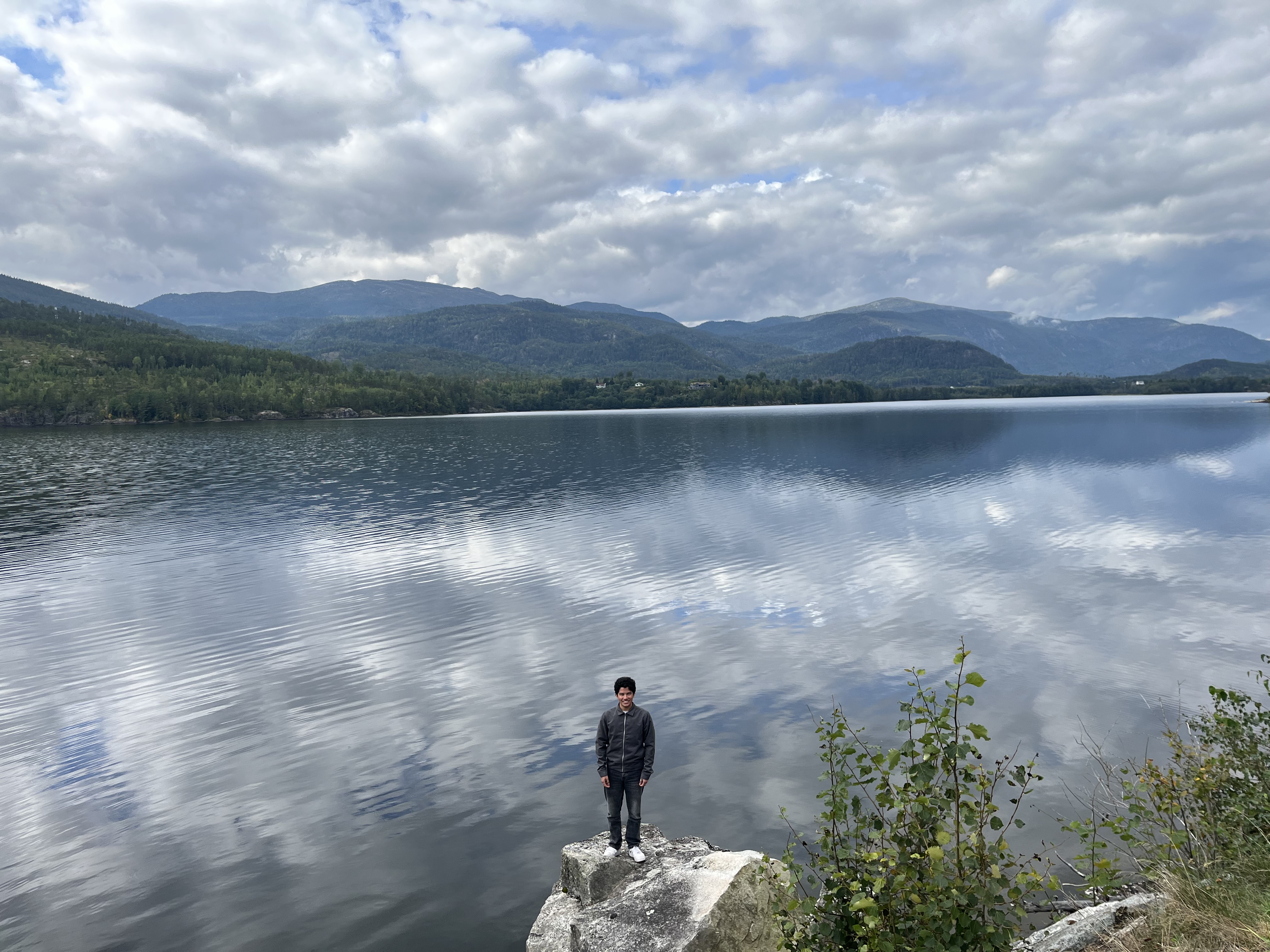
My son stands on a rock, between sky and water. I feel like it is a poetic description of my son’s mixed-race identity. Taken during one of our roadside stops in Norway.

On Reading Kate Elliott’s The Witch Roads while travelling

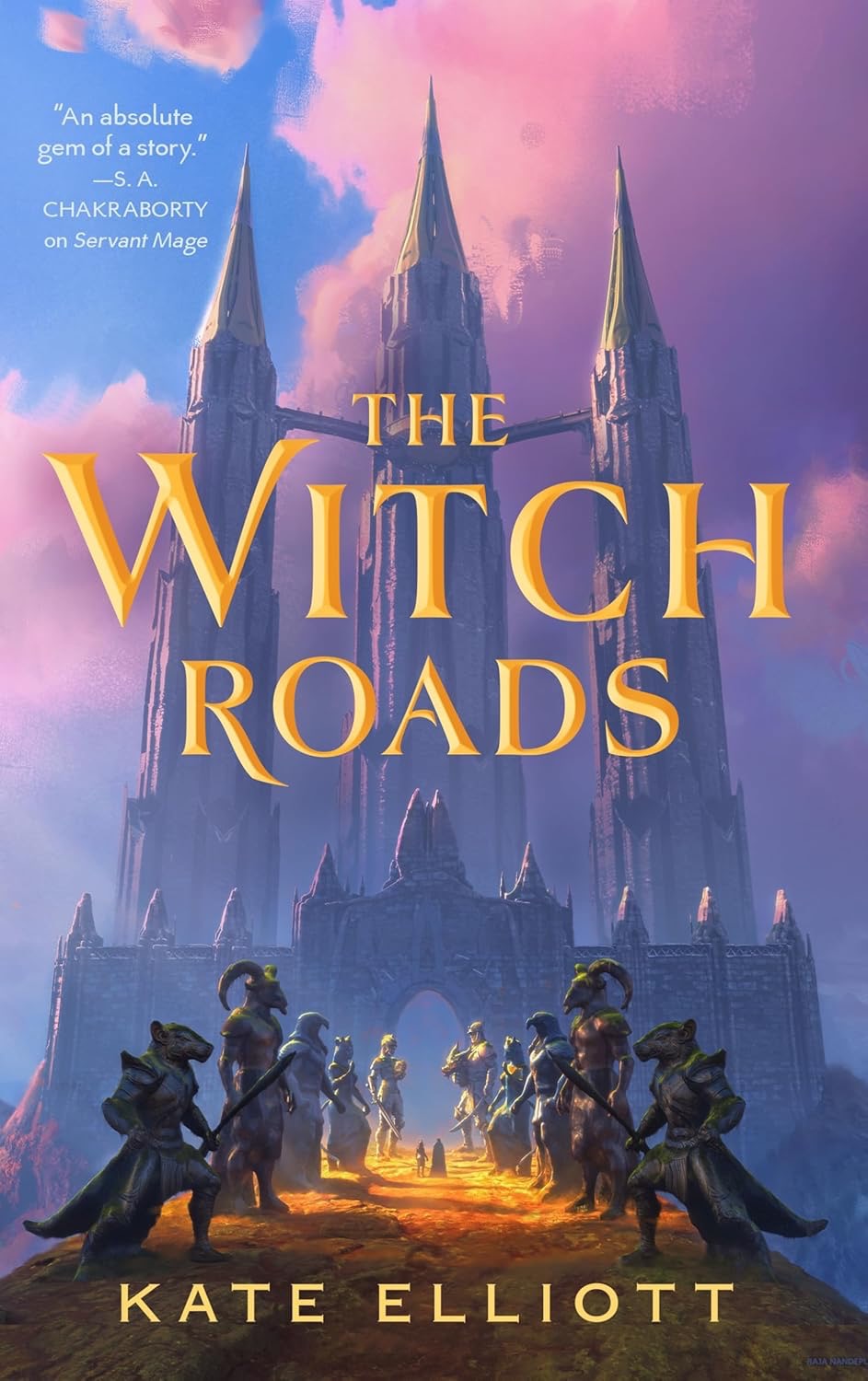
I read Kate Elliott’s The Witch Roads while travelling in Norway and I feel like this was the perfect companion book for my travels as each time I looked up at the mountains or hiked a path, I would think about Elen and her crew travelling through the lands of the Tranquil Empire. Of course, the roads we walked and the paths we hiked were not at all as rough or as challenging as say the crossing Elen and company make at Grinder’s Cut (also there is no pall in Norway). But still, it gave me a sense of satisfaction to observe how time passes when your main form of transportation are your legs. Of course, there are also carriages and horses in this book, but the pace of travel is perfectly done and also a perfect way for the reader to get to see and know this world and its perils (mind you, it’s not just all peril. There is also sense of wonder in walking through this world). I found myself quite enchanted by the pacing of this novel which wasn’t a quick read because I had so much going on that I also had to keep putting it down. I’ve had some books where I eventually give up because I have to start all over again, but this wasn’t a problem with The Witch Roads. Picking up where I’d left off wasn’t a problem with this novel. Rather, it felt like picking up the thread of a journey once again and going: Oh, yes. We did this yesterday and so we’re going onwards.

If I’m giving the impression that The Witch Roads is a tame read, let me disillusion you. The Witch Roads is far from tame. There is an imperial prince and there is a haunt. There is danger because the company must stay wary not only of possible ambush, but also they need to stay wary of spores and the pall. There is magic and there is all kinds of love, from filial love to love born of allegiance to the kind of love that transcends. There are also lots of secrets and I feel like there is even more intrigue and danger waiting in book two.

There are so many deep and speaking lines in this novel. I thought I should post some of them, but I’m just gonna say: go read the book and highlight your favourites.

The Witch Roads is not just Elen’s journey or the haunt’s journey or the Prince’s journey, it’s also Kem’s journey and there’s something so beautiful about how Kate Elliott weaves all these things together and by the time I reach the end of this novel, I find myself thinking again about the question of who is the centre and where is the centre and from whose perspective narratives take place and it’s beautiful how Kate Elliott reveals the ways in which this journey has changed the different characters in different ways. Bringing them to places where they understand theirselves and those around them better.

Yesterday, I was at the Bryggen’s Museum, observing tapestries made by the tapestry artist Ragna Breivik (currently on exhibit at the museum). While observing the loom on which she worked and thinking about all the different threads and shadings and the amount of detail and work that went into making tapestries that continue to speak to this day, I thought of the way Kate Elliott’s work does this kind of tapestry making with her words where all the little threads come seamlessly together forming a story with different shades of meaning and texture.

The Witch Roads gives us a world that’s rich and full. Complex characters, each with their own path and their own priorities. We get the narratives around inequalities and the different relations that exist between different strata in society within the world but these are done not in an intrusive or shouty way. Thread by thread, shade by shade, with intention, Kate Elliott gives us this world that is rich and full peopled by complex characters who we can identify with and love.

For all that this first book ends with a foreshadowing of what might come in book two, book one leaves me feeling satisfied. I’m a bit impatient to know what happens next (of course), but there’s a lot to reflect on and think on about the first book and I’m very happy about making the choice to pick up this novel and read it (even though I tend to try and not read unfinished series).

On the dedication page, Kate Elliott writes about how The Witch Roads duology reignited her love for writing during a rough period when she wondered if she should just quit. I am so thankful she decided to keep on writing and I hope she will continue to do so because the world is a better place for having her books in it.

The Witch Roads is published by Tor Publishing Group.

Important note: I purchased my own copy of this novel, as I have done with most books that I write about. Reviews or thoughts on these books appear as time and energy permit.

How we conceive a familial history

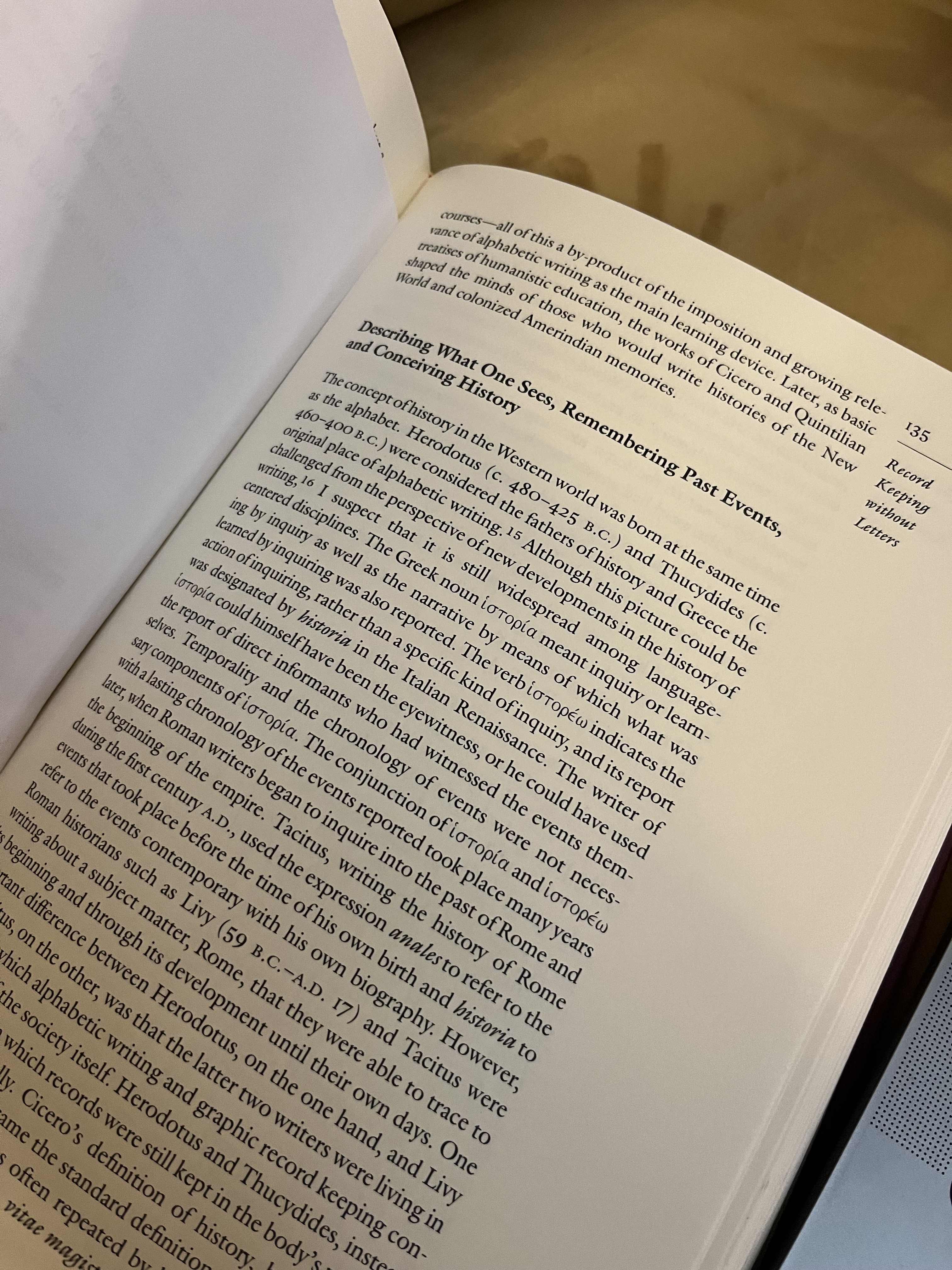
In The Darker Side of the Renaissance, Walter D. Mignolo quotes Isidore in the chapter on Record Keeping without Letters. He quotes this from Isidore: For among the ancients, without exception, only those who were witnesses and who had seen the things they narrated wrote history, for we understand what we have seen better than what we know by hearsay.

I had a conversation with a cousin who is older than I am, who might know more about the history of my grandparents. They might know more, not just because they are older, but they might know more because of how they were situated in physical proximity to my grandfather. My cousins lived in Cagayan de Oro and this cousin tells me that our grandfather visited them often and the story they tell about my grandfather is one of a gentle and kindhearted giant of a man. Someone whose visits they looked forward to and whose presence was very much welcomed.

Our family was located far from where the rest of my father’s family lived. In fact, we were located on the opposite end of the archipelago. My sister and I grew up in the mountains of Ifugao, my brothers were born there too, and we spent our childhood blissfully unaware of any drama that might be taking part in that place that could just as well be another country. We were far from where my grandmother was located. Also far from where my grandfather and his second family lived. Back then, the trip from where they were to where we were would have been almost the same as traveling from The Netherlands to the Philippines. By Filipino standards, it still is a costly trip.

My cousin tells me that my Dad, being the youngest, was his mother’s favourite and so he didn’t receive the same kind of harsh corporal discipline that his elder brothers received when they were growing up. My memories of my grandma are those of a rather strict lady. I thought at that time that it was because she had Spanish blood and Spanish people are strict (right?). She was always affectionate towards our Dad and the affection was reciprocated.

The story of familial relation unfolds differently when told from the perspective of my cousin who tells of the horror that came with growing up in the proximity of my grandmother. According to this account, my grandmother was more than strict. Indeed, she was quite unreasonable, more than demanding, and even cruel. Any sign of enjoyment when she was visiting with them, was punished with a lengthy sermon that would end only after one of my cousins was punished for an imagined wrongdoing.

My cousin relates this to me from her perspective. We didn’t see, she tells me. We didn’t know what our grandmother was really like. And so, she wants to relate what we never witnessed or experienced for ourselves because of distance. The grandmother she knew and the grandmother I knew seem to be two different people.

A memory arises from a time when my grandmother took me with her to visit her younger sister in Manila. She was fussy about my comfort and then when we arrived at her sister’s house, she was devastated to find out that she’d forgotten to pack extra underwear for me. I think I must have thrown some kind of a tantrum (I was a bit of a handful as a child) and she just didn’t know what to do or how to get me out of the bathroom as I kept on blaming her for not knowing that kids are supposed to have clean undies everyday. She was strict, but not more strict than my own mother and she didn’t spank me for throwing a tantrum. She waited and then made me do what she wanted me to do. (Just as my mom would have done.)

By the time my grandmother came to live out her days with us, she had been gentled by years. She had had had a stroke, but she was recovering even though she wasn’t very mobile. She loved telling stories about the past while I massaged her legs and listened eagerly.

I loved hearing her talk because my Dad didn’t tell us very much.

Later, when we were much older and after my grandma was no longer with us, my Mom tells us an entire story of how she would warn my Dad each time my grandma came to visit: Bantay ka! (watch out). Your Mom isn’t going to lay a finger on one of my kids.

None of us ever experienced such harsh punishments or treatments as those described by my cousins. We might have been subjected to some nagging, but our mother would send us out to play and even though we were scolded by my grandmother, I always had this idea that it was because she wanted the best for us. Did this have to do with how my mother stood between us and her? Was it because of the close bond between her and my father? Or are these things that I have imagined because there is a lot I do not know.

I can remember the sound of my grandmother’s voice whenever she called out to my Dad.

“Nonoy,” she would say.

Now that I have children, I recognise that tone of affection that one reserves for one’s own children, and in particular, for the youngest one.

For a long time, until my grandfather came to visit, my sister and I believed my grandmother was a widow. And then, when we found out that there was a grandfather, we thought he must have done some dastardly crime because no one spoke about him.

I suppose this speculation was natural considering how we grew up far from anyone belonging to my father’s family, in our defence, we only ever met him once.

My sister and I met our grandfather for the first time when he was already sick. By the time he came to visit us in Ifugao, he was dying. But he came to see us, or perhaps he came to see my father. No one spoke about why he’d come; not even afterwards, so I can only speculate. Did he come to mend broken bridges? I don’t know.

In my mind, I see my grandfather as a tall man with a gaunt and lonely face trying to connect with us kids. I can still see him towering over us, trying to win us over by showing us his magic slippers.

This memory is overshadowed by whispers and a feeling of tension. It seemed as if we saw him only that one afternoon, but I’m sure it must have been more than that one afternoon. I remember my mother trying to keep my father from going away to the city on an errand and my father’s stubborn insistence on going and how while my father was gone, my grandfather died.

My mother talked about how she had to have a casket made. It must have been a while before my father arrived because I remember visiting the carpenter’s shop and the carpenter explaining to me how he was making a casket for my grandfather. I thought I should feel properly sad, but I didn’t know how to feel about the tall stranger with magic slippers who now lay in a casket in our living room while the voices of visitors filled our living room. I felt uncomfortable and impatient for my father to return.

It’s interesting what kinds of snapshots the mind retains. I see one of myself frozen in the moment when my father arrives. The house is teeming with people, but the living room is in the shadows. I am standing on the stairs looking down onto the porch as my father climbs up toward my mother. He doesn’t look up to where I am, all that is him is focused on my mother and then a sound breaks from him. After my sister died, I understood what that sound was and what kind of deep grief that sound contains.

Is this the memory that colours my recollection of my father’s pain?

Did I imagine my father’s feelings towards my grandfather? I know we hardly spoke about him and when I did try, he tended to be quite abrupt. Was he in pain because he wasn’t there when his father died? Had he left because he didn’t know what to say after so many years of not seeing each other? Had something been left unsaid or undone? I can only speculate.

The person writing about my father’s life writes from the perspective of someone who spent time in conversation with my Dad, long after the pain had been healed. Their conversations took place after a transformation had taken place. It gives me peace to know that my father was no longer angry. He was no longer in pain. He had reconciled his grief and pain and he had become the beautiful self everyone remembers–a man filled with compassion, gentled by time, always present and in service of those who needed him.

If we are to take Isidore at his word, then it means I can only write what I have seen and what I have understood from that seeing. As Mignolo writes, Isidore wasn’t concerned with the distinction between a narrative of witnessed events (which will become past events from a future perspective) and a narrative of the narrative of witnessed events.)

Again, Mignolo quotes Isidore: Things that are seen are reported without any ambiguity. This discipline pertains to grammar, for only the things deemed worthy of memory were written down.

These entries are (for me) a way of processing. Thinking about family history as I think on what I am reading. Blessings and peace to you who read this and Daghang Salamat for passing by.
History in episodes

I’m chatting with a person who’s writing about my father’s life while reading this section called Describing what one sees, Remembering Past Events, and Conceiving History in Walter D. Mignolo’s The Darker Side of the Renaissance: Literacy, Territoriality and Colonization. I am seated in the lounge of the Royal Library of The Hague and it’s nice and cool with the small sounds coming from different occupants of the library. In a corner of this lounge, someone is snoring. The seats are comfortable and conducive to a siesta and I am seated on a comfy sofa with my belongings around me–it’s kind of like being at home but being able to focus in a way that’s more library-like (if you know what I mean, you know what I mean). I think about history–family histories–the things that are said and that aren’t said–what we pick up without words having to be said and how we carry these histories with us and how we don’t speak about the painful or dark parts of familial pasts.

Reading Mignolo, I reflect on how histories are made and passed onward from generation to generation. Mignolo writes about histories being kept in the body memory, of histories being transmitted orally. And somehow, I find myself thinking of history that we keep in our bodies.

Recently, a friend of ours spoke of finding out that the father she’d grown up with wasn’t her biological father and the pathway to connecting with her biological family from the side of her biological father all came down to taking a DNA test that matched her with a niece who for some unknown reason decided to also take a DNA test. This connection eventually led to her finding the sister who had been searching for her for a long time.

A whole puzzle with unmatched edges fell into place. Character traits she’d wondered about finally made sense, once she spoke to her sister. Conversations that were cut-off mid-sentence. Hints of something secret–dates that didn’t match. Unspoken tensions that she somehow registered. She had this feeling that maybe there was something hidden, but it wasn’t until it was time to clear out her mother’s attic that she discovered the secret of her paternity.

In an age where histories are being re-shaped, re-written and erased, it feels urgent to think about the position from where histories are being told. Who is telling this history? Under what terms is that history being told? In what form and in what shape and with what words or means is that history being put in place?

It feels necessary too to keep a record of what is happening in the world around us as we keep a record of our own histories.

I think about my father and I wonder what he would say about the ongoing conflicts in the world today. I want to think he would also feel urgency and the need to speak out against injustice. The truth is, I don’t know what his response would be were we in conversation today. That’s because my last memory of him is one of heated conversation where we disagreed on what was just and what was unjust and how we left it in the middle as something we would come back to later on.

Familial history often feels episodic. When we talk about memories and things that happened in the past, we remember in bits and pieces and then we look to each other for confirmation.

I’m going back to reading Mignolo. I want to think about memory and the fallibility of memory and how we tend to remember people in a different light once they are no longer in the world.

Blessings and peace to you who read this. May you find joy in the journey.

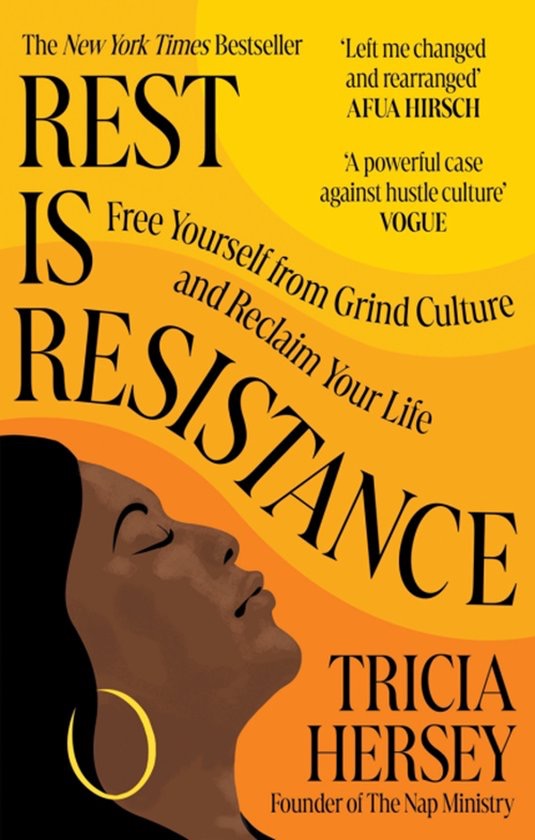
Downtime and Tricia Hersey’s Rest is Resistance

It’s the first proper week of my summer break and I have to admit that I’m really enjoying the time to just chill and do whatever I want. Downtime is a great period to relax and reflect–do a little bit of dreaming, think about lessons learned, about the work that’s been done and what it means. I also find myself thinking on how to encourage a younger generation of activists and collaborators because community work can eat you up if you don’t get the support and the rest that you need.

I recently shared a book with one of my dear friends and a fellow collaborator. It’s a book that came across my timeline and the title of the book drew my attention because it speaks to something I hear coming from workers in different spaces.

“I am tired.”

“I feel like I need more sleep.”

“I want to recharge.”

I hear different variations on this theme of needing rest. So when Rest is Resistance by Tricia Hersey came across my timeline, I felt moved enough to put it into my basket.

Hersey’s book is a quick read, but it is a good read. Reading it, I found myself thinking of how easily a body can be trained to forget about rest. For instance, when I first moved to The Netherlands, I still practiced siesta time (like we do in The Philippines). My in-laws were rather shocked/surprised and I was shocked/surprised to find that Dutch people do not do siesta unless you’re old or sick. I had to un-learn siesta pretty quick because being caught in siesta resulted in that disapproving look that made me feel like I had committed a crime. Nowadays, I’m like: I do not care…I will siesta if I feel like I need a siesta.

Hersey’s story about her father–his life of work, in service to God, in service to family, in service to community, reminded me so much of my father. My father was the youngest of three brothers, all three who were raised by my grandmother who became a single mother when her husband left them for someone else. There are many ways to justify a man leaving his wife and family. My Grandma was quite a character and I have been told repeatedly by other people that living with my grandma was hard for my grandpa and so when he met this lovely young woman who became his second wife, it was understandable that he chose to leave my grandma. I know how much my Dad valued my grandma and how much his Dad’s leaving hurt him. I don’t doubt my Dad had heard all the reasons. He didn’t blame the woman his Dad left them for, but it didn’t make his pain less and it doesn’t make his pain invalid.

All throughout his life, my Dad was determined to be there for us, even as he also lived his life in service to the community and in service to God. He was a doctor, and a lot of times, he would be opening the door to patients when it was way past midnight. Later on, he organised medical missions to places where medical care was inaccessible. Free clinics for those who couldn’t afford it. He was always on the go.

On the day he died, he was preparing for another medical mission.

I think of how the life of my father was punctuated by constant movement. He was so invested in providing for us and protecting us. He wanted to keep my Mom free of stress and worry. He was taking care of so many people and so many things, he didn’t tell us he had a heart condition.

I thought of how the pattern of my life ran similar to my Dad’s because my Dad was my hero and I wanted to be just like him. So, I almost never said no to anything. I found it hard to refuse help. I found it hard to set boundaries and to say: I can’t or until here and that’s it. Then I had a burnout where my body literally refused to function. Then, Jan died. Then, the diagnosis happened. And I was forced to rethink my life and say “no, I cannot”. “No, I don’t have the energy for that.” “No, I have to prioritise something else first.”

It took my body breaking down for me to re-learn rest.

The funny thing is–once you come face to face with it, you understand that the human body isn’t meant to keep going like an engine. Rest and sleep are essential to the recovery process. When I was going through treatment, I thought of how the emphasis is often on the parts of us that are sick or that carry disease. So, I thought to myself. So, there’s this small nodule somewhere. But it’s not everywhere. I can’t do much about the nodule, but the parts of my body that are well, can be made stronger. Can be made stress-resistant, can be helped to be healthier. So, no one knows how much time I’ve got, but no one else on earth knows that either. So, what I can do is be as alive as I can be right now. When my body was weak from chemo, I remembered what gives life to the body is not the body itself, rather there is that source that is beyond human explanation. We are, after all, more than these vessels we occupy and the spirit that is inside us travels on a path undefinable and unconfined by human parameters.

After my last treatment, there was moment where I could feel life gaining momentum. I was working more, I had more energy, I was more focused. I thought: I can do this. Oh, I can do that. Oh, yes. But I also felt this jealous guarding of my alone time–the downtime. Time to recuperate. Time to gather my thoughts. Time to be alone with a book. Time to nap. Time to tune in to that other space–to that other timeless space where dreaming happens.

A lot of what Hersey writes about is recognisable. My hope is that those who read it won’t just read it as this best-selling book where after reading it, they can put a checkmark beside the title. Read that. Liked it. Next book. (That would so defeat the purpose of it.)

I am reminded that my body is a vessel that carries me through life. I can’t accomplish what I want to do with this life, if I’m not taking care of my body and taking time to rest, recuperate and dream.

Writing this, I am reminded again of The Sabbath and Heschel’s thoughts on time and how time is like this cathedral we live inside of. Time isn’t going anywhere. We just need to dwell here and be here and do what we need to do where we are right now.

Maraming salamat for reading. May blessings and peace go with you as you journey on.

Fruits of my write-a-thon

If you’ll look at the sidebar (or if you’re on the phone, it’s probably going to be the footer), you’ll notice that I’ve posted two lovely badges from the Clarion West Write-a-thon. It’s been a while since I felt up to participating in the write-a-thon, but this year felt like an important year. I wanted to find a way to write about books again. For some reason going back to the bookblog felt too raw. The place she left behind is still right there and I had a jolt when I realised that it’s been nine years since we last talked about books.

Every memory I have of me and my sister is related to us reading books together, arguing over who would read what book first, complaining about how slow the other person was at finishing a book (no backtracking allowed), arguing over what kinds of books were best, discussing the pros and cons of a book, disagreeing over characters and how things unfolded in a book–and a really bad phase when I was so snobbish about my sister’s love of romance books that I got her some of those body rippers for a present. (She really hated me for that and I regretted it a lot because it wasn’t a very loving thing to do.)

I couldn’t understand the appeal of Mills & Boons romances with men treating women like trash and women still going back to those kinds of men because of ‘melt’. We argued about that too and discussed alternative endings where women would look down their noses at those men and say: ‘I am perfectly fine on my own and who needs love if it means being treated like you are less than just because.’

So, when I got my reading mojo back and tentatively started reading novels again, I missed being able to send her an email and ask her what she thought. I imagined us having face time conversations about details in books that we noticed. What we liked and what we didn’t like and what we wished were different or what we wished we could see more of.

Perhaps it was my sister nudging this bright idea towards me from where she now lives. Why not just blog about the books I was reading alongside blogging my thoughts on the work I was doing? Why not make that a write-a-thon goal alongside revisiting The Cartographer and finding out what I needed to do to make it work this time? Make it not too stressful because writing a thousand words a day might not be doable after not writing for a long time.

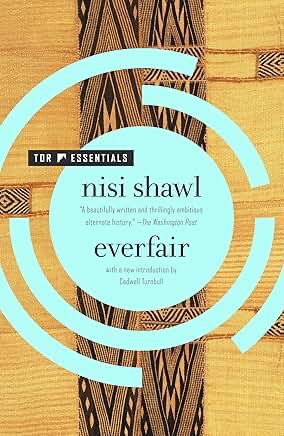
It took me reading and writing about Nisi Shawl’s book to find a way to keep the conversation going with my sister. In some way, Everfair unlocked that space where I could write without feeling pressured to review. It was like writing to my sister and trying not to give away spoilers about this novel I’d read. I loved it so much and wanted so much to talk about it with her that I wanted her to read it too. I might give away bits and pieces but not all because she would really scold me if I did that in the real. Writing about Everfair connected me to that part belonging to my sister and the history of books between us.

In between EverFair and preparing for LIMBO’s booklet event, I decided to go read other books on my reader. Long train rides are really great for catching up on reading. I finished R.S.A. Garcia’s The Nightward in less than a week while traveling back and forth to Amsterdam. I finished reading Martha Wells’s City of Bones even quicker because i was traveling almost everyday. Along the way, I noticed how my reading speed seemed to be improving along with my ability to keep focus. (I do have notes and plan to write that reading post sometime soon.)

Perhaps one of the realisations I’ve had is how when we love to read, we tend to take it for granted. I started reading at an early age, so did my sister. I never imagined that I would be not able to read until chemo affected my ability to focus and hold onto things I’d read. I had to learn to be kind to myself and also I grieved a little bit because I didn’t know if I’d get my reading mojo back. Now, reading feels like a miracle. It’s something I’m so thankful for and it’s a reminder not to take things for granted.

I didn’t realise that today was the last day of the write-a-thon until I got the email. It was also stunning to get the mail telling me that a good friend had pushed my write-a-thon goal way past my original funding goal. I am incredibly moved.

During the worldbuilding workshop that I gave for the Springschool Co-creation Lab, I talked about the potential of science fiction to help us think around possibilities. How science fiction at its very best challenges us to think of different ways of being in the world. Science Fiction has this potential for us to dream of different kinds of worlds, different ways of being in community and in relation to and with one another.

It’s my hope that we continue to encourage one another not just to think about how to write great stories, but more importantly to think on how we can create small movements that could lead to change in the spaces we move in. Let’s encourage each other to keep asking questions, to think of different ways of being in the world, to question why we do what we do when we do them and to live and create with intentionality.

Thank you for passing by. Maraming salamat and may blessings and peace be with you.

*Big shoutout to my dear friend, Vicki, who pushed me way past my writeathon goal. Thank you so so much.

**If you want to help us achieve 100%, the fundraiser is still open. Click on this sentence to visit the writeathon page.

Some thoughts on Nisi Shawl’s Everfair

If you’ve taken the time to come visit my blog, it must mean that you enjoy discovering new works and reading almost as much as I do. Nisi Shawl’s Everfair was published in 2016, but at that time I was going through some challenging stuff. I made a note of it and somewhere along the timeline, I bought the e-book. But as happens in life, it took me until this year to get around to reading it. I’ve since found out that there is a book 0.5. and other books as well. It probably means there are things that have happened before this book that I might not be aware of, but it doesn’t take away from the joy of reading volume one.

What to say beyond simply saying: buy this book or read this book?

I want to say that Everfair is not an easy read. It’s not the kind of book that you just breeze through. It’s also not a lighthearted summer read. It’s the kind of novel that takes you on a journey–a journey that happens in a timeline that’s historically different from ours. Along the way, you decide to make notes. You might put the book down for a while, to take a breath of air, but then it calls you back and you keep on reading. It’s the kind of book where you look up from its pages and scan the clouds because there might be air canoes floating up there. The attention to detail is amazing.

In the beginning, it took me a while to sort out the personages. I tend to be a bit forgetful, but Nisi does a great job of reminding us who this character is and where we first met them. I found it pretty intriguing to witness the transformation Thomas undergoes (for instance). And I like how things are not always explained.

One of the joys of this novel is how Nisi Shawl gives us characters we can root and feel for. Characters we care about and it is those characters who we travel with and through whose eyes we see the world as it changes and evolves. It’s interesting to think about how Nisi Shawl makes use of riding cats (for instance) because in a manner of speaking we are riding the novel as we discover and learn more about Everfair. The politics of the Mote was interesting to me as well as the politics and the power struggles that take place inside and outside of Everfair. There is spionage and adventure enough to thrill the heart of anyone who loves spy novels. Relationships are never simple even personal relationships. I love how Nisi brings nuance to all these things. I found myself thinking on where and how I would draw a line where relationships are concerned. (I’m not gonna spoiler but you will find out when you read the book.)

Afterwards, I found myself still thinking on the questions around loyalties, allegiances, friendships and relationships. What makes us loyal to places and people? How do we determine loyalties? What about the dynamics that exist in friendships? And is it possible to have real friendship when there is a power imbalance? Those sorts of questions rise to mind when I think about Everfair.

Everfair would not be Everfair if it didn’t acknowledge the historical conflicts that took place in and around the Congo of our timeline. The conflict first with the Belgians, then with countries interested in what can be mined or taken from the Congo, and then the war that breaks out when King Mwende makes this decree where all who are foreigners must leave and return to their own countries. (How different would the world have been if the Belgians had been defeated in their mission to colonise the Congo?)

Everfair also speaks to ongoing discussions in the real world where the line “go back to your own country” has become a go to phrase when someone says something we don’t agree with. And while my kneejerk reaction was the same as King Mwende and I was like: ‘yes, go back to your own country.’ Nisi Shawl asks us: what do we really mean by that? What does it mean to be of a country? And how do we determine that?

I love how King Mwende with the help of Queen Josina (one of my favorite characters) realises that saying “leave and go back to your own country” is not the solution and that war is waste–primarily a waste of human life.

Nisi Shawl creates this world that isn’t utopian even though it starts with a utopian dream from those who first founded of Everfair. I like how Nisi doesn’t back down from knotty problems that occur when you’re trying to build a nation that’s home to and for everyone regardless of race, regardless of creed. It takes a while (for example) for one of the characters (Daisy) to come face to face with her own prejudices, her privilege and assumptions.

I’ve sometimes read books with relationships that feel forced, as if the author doesn’t understand how queer relationships or mixed race relationships work, but just wants to include them. Nisi does such a beautiful job at showing us not just how these relationships unfold but also how there is a lot of work that goes into making such relationships successful. Nisi doesn’t take a shortcut or take the easy way out. Yes, these relationships are complex, but Nisi also gives us joy.

Reader, I’m pretty sure that if you wanted me to tell you about historical things and what genre this novel might belong to, you would just head over to Amazon.com or google for one of the many reviews far more in-depth than this. I thought I would write this as if I were writing a letter to my sister who also loved reading books like these. I wish she could have read Everfair along with me.

If you enjoyed reading this topsy-turvy response to Nisi Shawl’s Everfair, I hope you’ll consider helping me reach 100% of my Clarion West Writeathon goal. There’s a button on the top right of this page that will lead you to my page.

Thank you for reading. And may joy accompany you on the journey.

Sitting with the discomfort

I’m thinking again today about Aminata Cairo’s visit with us in LIMBO and the talk she gave about what it means to hold space for one another and how while we long for safe spaces, even such spaces can be fraught because of how we are. So, how do we hold space for one another? How do we make it possible for us to continue to be in community and to share space and make it feel safe and joyful and loving for all who share the space?

It’s something I’ve been thinking on as recent conversations keep pointing me in this direction, including one where I inadvertently created some discomfort because I wasn’t intentional. I think about intentionality and mindfulness and how these words are more than buzz words. I mean, the wellness industry has hijacked mindfulness so the word has kind of become one of those buzzwords–it’s not wrong usage, but its meaning has kind of diluted.

To be mindful is to be present in the moment and therapists often use being mindful to refer to therapy techniques such as meditation. Often when we speak of mindfulness, we think: Oh, let me do breathing exercises or let me do grounding work or let me be present in my body. And people then say: I’m practicing mindfulness. These are all great things to do but mindfulness isn’t just that.

To be mindful is to be conscious of how our words and our actions ripple and echo in spaces. Our actions and words, even the emotions we express if done without intention can hurt even when hurt or harm is the farthest from our minds. I tend to be less mindful when I’m tired or when I’m in a hurry or when I’m distracted. It’s why I try to put away my phone when I know I’m going to meet people. It’s okay if I don’t get that selfie. I was fully present and focused on the person I was meeting. (Although I’m kicking myself now because I should have thought about asking for one, but I just didn’t think about it.)

So what happens when discomfort arises in communal spaces? How do we resolve the discomfort? I think the best starting point is to start from knowing where the other person is coming from. Was it intentional? Or was it simply thoughtlessness? It helps when we raise the point and say: hey, could you be a little more mindful about this matter?

How do we respond when we cause the discomfort?

In a conversation with a very good friend, we talked about the discomfort that arises when we feel that something is happening and we can’t put our finger on it. It’s similar to discomfort that arises when white people enter spaces meant for people of colour and proceed to take the lead or take a positions of leadership even when they are not asked to do so. What do we do about that discomfort?

The question I would ask is: are we able to live with that discomfort? Can we put it aside and still be our full self in the space? If we can’t, do we feel safe enough and seen enough to open a conversation about it? For the person faced with this kind of honesty, the question becomes how do we receive it? Because honestly, it’s not enough to say I’m sorry. Sorry is just a first step, the next step is doing better. (Hence, self-examination.) As I say to my son, making mistakes is inevitable in life. What’s important is what we do when we make them and whether we learn from them or proceed to just do them all over again. And sometimes self-examination means removing yourself from the space and allowing people space to breathe. I know, it feels drastic. But it’s not for others to appease me if I am the cause of discomfort. It’s my job to do the work so I can be in community again.

I’m writing as I process these things because I want to make space in my head to write about Maison the Faux’s The Tail (not giving away spoilers) and I also want to make space to write about Nisi Shawl’s excellent Everfair. I’m 40% in! And as one of my dear friends said with a laugh: “Rochita, this is how I know you are reading on a kindle reader because you don’t tell me what page you’re on but you’re telling me you’re so many percent into a book.” (You can laugh now. Times have certainly changed.)

If you’d like to sponsor me during the Clarion West write-a-thon, here’s the link:

Blessings and peace and thanks again for dropping by.

(I actually inserted that button because I have no graphics for the page and wordpress won’t let me embed the page.)

Returning to the world of the Body Cartographer

Sometime in August, the English version of the story published in De Komeet is going up on Philippine Genre Stories. I’m very grateful to Mia Tijam for her patience with me as replies have been often delayed. I have a tendency to think I have done things and find out I haven’t. Chemo-brain sounds like an easy excuse, but this tendency is common with a lot of people who’ve gone through chemotherapy. It gets better with time and the longer you’re away from the last chemotherapy treatment, the more clarity you get as well. So I am very thankful for the gentle nudges and the patience coming from editors during the period I was in treatment as well as the period of recovery.

The publication of this story works like a jumpstart of sorts. I started thinking about the works in progress that I still had on my drive and when the call to join the Clarion West Write-a-thon landed in my inbox, I carefully considered whether I would be able to do it. A conversation I had with Marielle (Wegbree)made me think that the write-a-thon would give me an easy way to slide back into writing with some accountability. I thought that I could at least do some book reviews on the blog as a measure of how much work I was doing. But in the process, I found myself returning to my one drive. I had this idea that the drafts I’d been working on were still quite messy.

My first thinking was to go back to writing in the world of Raissa and Anghe. But somehow I found myself pulled back into the Body Cartographer’s world. (If anyone wants to read Song of the Body Cartographer, it’s still available online.) After my first round with radiation therapy, I started working on this long piece again except somehow it felt almost confronting. Mainly because it starts with the main character waking up after a moment of crisis, after a near death experience that changes her so much that she is no longer exactly as she was. Yep. I wrote those parts before I was diagnosed and continuing to write those parts felt too close, I had to put it away.

But now, six months after being declared in remission and after being told that the last treatment worked, I find myself drawn back into that world and I recognise the place my main character is at. Having a deeper understanding of what it takes to recover from crises and how life-altering that can be helps me to also see where I was making the journey to recovery too smooth for my character. But I also see how this crises doesn’t define my character. It has to become part of her life if she’s to really live her life. And I am reminded again of my oncologist telling me: you are more than cancer.

We are more than the physical challenges that we face. We are more than the crises we have had to overcome. We are more than our traumas and our illnesses. We are more than that. And so I want my main character to reach that realisation too because loss has been very much a part of this character’s life but those losses do not define her. Instead, I hope that she emerges stronger and more herself.

I’m thinking about worlds today because I’m going back to the team I’m working with and I think we are going to set world parameters or at least I hope we are. I would very much like to get away from the D&D model and I am hoping that this is a shared vision. If it’s not then I have to think on whether I’m okay with that and how to go about that. Of the games that I’ve played, the one that appeals the most to me is a game built on Belonging outside Belonging. I love it for the spontaneous creativity that it gives rise to–and yes unpredictable silliness which even if you know it’s silly, you just go with it because it is fun to be silly with friends.

So I suppose July is building up to be a month of lots of thinking and reading and writing happening. Something I would not have been able to predict a couple of months ago when I was down in the dumps about not being able to write. I am evidence that the Recovery and Balance programme pays off in spades.

Finally, if you’d like to support my quest to raise funds for Clarion West, please feel free to visit my fundraising page and press the donate button. I would love for us to go over our combined goal as that means more support for the workshop and the writers who will be going there. WordPress doesn’t seem to support embedding my page, but here’s the link to it:

https://givebutter.com/2025cw-writeathon/rochitaloenenruiz

Thanks so much for taking the time to read. I am quietly surprised when I discover people have read what I write here. I hope it offers some food for thought, some inspiration or anything that you can take with you on the journey. Blessings and peace and thank you for dropping by.

What I have read and what I am reading

Now that I’ve regained enough focus to read whole novels, I find myself missing the conversations I used to have with my sister. A lot of our conversations used to revolve around books we’d read and what we thought about the story or how the writer managed to do something well or not well enough. I think my sister was the original bookworm in our family and I simply followed in her footsteps because whatever my sister read, I had to read too. Anyway, I’ve started reading the books I downloaded onto my reader and I thought I would write a little bit about the one I’ve just started reading as well as the one that I just finished reading. I thought I’d switch between fiction and non-fiction. Non-fiction often takes me longer as I like to reflect on what I’ve just read.

Fiction Read:

I’ve just finished Tade Thompson’s excellent Far From the Light of Heaven. I’m pretty sure Tade has written and published a bunch of novels since this one, but I just got around to reading again and the title of Tade’s excellent murder mystery called to me. It took me a week and a half to finish reading (this is my current reading speed for novels) but I never once lost track of the thread of the story. I’m also glad that I decided to get a tablet because it’s made it easier for me to just open a book and read when I’m on the train or when I remember that I am in the midst of reading a book.

I understand the importance of titles now because for some reason, that title just kept jumping out at me each time I clicked on my reader and I decided that once I had enough focus I would read that novel first. Far From the Light of Heaven makes use of elements of space opera and science fiction but at the heart of it, Far From the Light of Heaven is a murder mystery. The stakes are high and I liked how the characters feel real. I have to admit a fondness for Shell Campion’s Uncle Larry. I could relate to that feeling of wanting to protect someone younger who you consider part of your family. I found myself quite intrigued by the Lambers as a race and I want to know more about them. Reading this book, I also had to think about conversations around AI and the use of AI. I like how Tade doesn’t take sides on that, but tries to show how AI can be useful but also how it has its vulnerabilities and can be subverted in a way that it becomes a danger. I don’t know if this was intentional, but it felt very much so.

One of the things I loved about this novel is how we get to see how what happens on and to Ragtime affects the world the characters live in. It’s a reminder of how actions taken reverberate in the world. The question becomes this: do those actions lead to understanding that brings lasting change or do those actions lead to polarisation and division in the society around us? I may very well be putting my own interpretation on it, but this is something I thought about when I got to that part. Another memorable scene for me is the communal rite of grief/processing trauma.

I won’t say anymore as I might spoil the book for those who haven’t read it yet, but if you enjoy murder mysteries that are more than just murder mysteries, this might be just the book for you. Highly recommended.

I have a rather lengthy TBR list and I think I would like to try and write about as many of them as I can. I’m pretty sure there are things I’ve read in the past three years and a half that I forgot to write about.

Current Non-Fiction reads:

As I tend to dip into multiple non-fiction books at one time, I might write about my impressions from those books every now and then.

I’ve started on Karen Barad’s Meeting the Universe Halfway. I don’t even know who recommended this book or why I decided to buy it, but I’m pretty sure the person who recommended it made an impression on me. Anyway, I’ve just started reading it and there’s a line in the preface that just resonates so much with me. In the preface, the author writes about entanglements and how to be entangled is not simply being intertwined but it’s more than that. It’s a really great preface and if you’re interested in quantum physics, it does look like an engaging read.

A recent book I’ve recommended and gifted to fellow community workers is Aminata Cairo’s Holding Space. Aminata was one of the guest facilitators for LIMBO and the workshop she gave was joyful and beautiful and one that opened up space for stories to be shared and told. In this book, Aminata talks not just about holding space, but shares her own journey towards holding space. It’s a book that calls for reading and re-reading and for dipping back into when you feel the need.

Just yesterday, I had a lovely conversation with a friend who shared this line with me from a conversation she had with an older Dutchwoman. In that conversation, the Dutchwoman spoke of her husband, not as passed away or dead, but as someone who had stepped out of this timeline. I rather liked that phrase and it makes me think that entries like these are like missives sent to where my sister now lives–in a timeline that is outside of this timeline. It’s a lovely, lovely thought.

What are you reading now and what from those readings do you choose to keep with you?