Thinking about co-creation

Traveling to and from destinations is helping me catch up with my reading list. I find it sometimes surprising when I recognise how much traveling I’m doing. I live very close to a train station and from here it’s easy to catch a train to Amsterdam or Utrecht or Rotterdam or The Hague. I haven’t been to The Hague in a while and my library card has lapsed, but I want to return to writing and reading in the Royal Library sometime late in July after the projects I’m involved with have moved into the summer holiday phase. I also want to think more around what I want to do when the season starts up again. What is necessary to me? What do I want to keep on doing? What do I need to let go of and what do I need to prioritise?

I’m currently working together with a team that was put together with the goal of creating a table top rpg. It’s a process that’s new to most of us, but one of our team is an experienced Game Master and that helps the process along as we think around gameplay and building something that is interesting, fun and hopefully thought-provoking. We’ve been thinking around themes that we want to see as well as the kind of world and stories we hope to explore.

It’s a process that I needed time to wrap my head around as perhaps the biggest difference between writing alone and writing in the team is the work of coming to agreement. There’s also the process of making space for how we will not always agree and how we are fine with that.

We might fall into thinking that co-creation is some harmonious zen process. It can be, but by large it depends on the size of the team, it depends on the kinds of participants and the dynamics in a group, it depends on a lot of factors so co-creation can be as zen or as gnarly and messy as all get out, but it needs to be what it needs to be and there is no way to go around that and effectively co-create. I realise that going through the gnarly mess is a good thing. It’s good when we are able to show our faces to each other, to say: I don’t agree with you on this and I don’t want things to go in this direction and I actually would like to go elsewhere. When that kind of freedom exists, that holds a promise of something extraordinary coming into being.

Co-creation is a process that takes time because when we are creating together, it means we have to give a little and be willing to compromise in order to reach our common goal. I don’t think it can be hurried along and I think the best thing we take away from such engagements is how creating together allows us to quickly move away from surface and shallow niceties into spaces where we feel safe and seen and where we know that just because our thoughts and ideas are not shared by everyone, it doesn’t mean they are of lesser importance.

[Some questions I’m thinking around in relation to the work and the projects I’m working on: Do we want to build community? Do we want to share stories? Do we want to heal ourselves? What do we need and what do we want and how do we get there?) ]

At the heart of it, co-creation has to do with relationships. It’s related to how we’re entangled and connected to one another. If we are open and ready to make space for ideas and ways of thinking that are not the same to how we think and if we are willing to let go of control or if we are willing to step into the gap when we recognise a gap. Does this then mean that there is no space for individuality or for the individual choice?

I like to think that there can be room for both. That we can share and compromise and adapt while leaving space and room for ourselves to do and to create and to work around what speaks to us individually. I think that leaving space for individuals to come to terms with what works and what doesn’t is necessary if we want to come to satisfying conclusions.

I’m ruminating on this because creating world in a team feels very actual to the discussion around co-creation and I also am interested in how that translates into community building and creating together outside of fiction spaces.

Where ttrpg is concerned, we can try to think of directions in which we want players to go towards, but we can’t control or predict and while we can prepare for some scenarios, it’s quite possible that players will go towards outcomes we don’t expect or even want and that’s perfectly fine. I like to think that’s a good thing because there should definitely be room for insights and outcomes other than what we want.

Perhaps the most important takeaway for me from this process is to let go of the self that goes: ‘oh but actually’. Instead, I should just let the part of me that carries on snarky and whacky conversations with my other parts come out and play.

Throughout this writing, I keep thinking of that phrase from Donna Haraway from Staying With the Trouble: “It matters what matters we use to think other matters with; it matters what stories we tell to tell other stories with; it matters what knots knot knots, what thoughts think thoughts, what descriptions describe descriptions, what ties tie ties. It matters what stories make worlds, what worlds make stories.”

Blessings and peace to you who read this and maraming salamat for passing by.
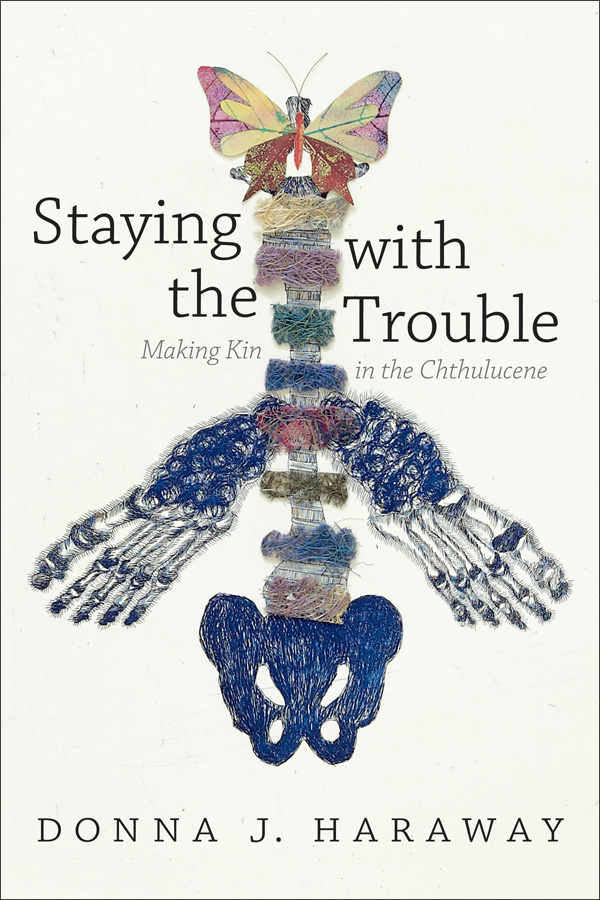
Staying with the Trouble is available from Duke University Press and from other booksellers.

(editing to add my thanks to Aliette de Bodard and Vida Cruz-Borja for listening to me while I worked through this process.)
De Nederlandse Norm van Gezond Bewegen or the Dutch standard for healthy activity

After the exercise portion of our physiotherapy class today, we spent time thinking on what healthy activity meant to us and what plans we could make for ourselves now that recovery and balance classes are coming to an end.

All through the various phases of treatment, from surgery to recovery from surgery through radiotherapy and chemo and immunotherapy, I had more or less been able to maintain some form of exercise. Whether it was walking 10,000 steps a day or going to physiotherapy class, I was able to do that. But the last round that I had with chemo depleted my stores so much that I sometimes felt frustrated by my inability to be stronger. I kept telling myself that I would get stronger.

For more than a year, oncological physiotherapy served like a tether or a safety net. Sure, I wasn’t very strong, but I was doing something and that gave me a feeling of some control.

At one point, I said to our physiotherapist: I probably just have to accept that it is what it is.

Thankfully, she didn’t agree. Thankfully, she suggested that I go on to recovery and balance class which was more intense, but she believed it was the best class to get me to where I wanted to be.

As recovery and balance class nears a close, I am thankful. Even when I grumbled about how hard the class was, I now have the tools I need to balance myself. Today, I was surprised to find that I can do a full plank again. Doing the plank helped me recognise that I can trust my body to carry me and as long as I listen to what my body is saying, I can know that it will continue to serve me well.

Writing this, I have to think about a feisty woman who must have been just a little bit older than me. She was in my first physiotherapy class, but opted not to continue with classes focused on oncological patients.

“It becomes comfortable,” she said. “You get stuck in that grove of belonging with patients who are in recovery, but you have to get out of it. You have to move out of that comfortable space.”

While our physiotherapist didn’t say the exact same words today, they had a similar resonance.

“You’ve built up your core strength, we’ve talked through how to balance and where to go if you need support. Another three months of oncological physiotherapy won’t benefit you more than going out and taking up the challenge of being active again on your own.”

So, even though the option exists to continue in a similar space, I have decided to leave the comfort of being in a space where everyone has been through similar experiences. In some ways, it’s scary. But in other ways, I realise this is a natural progression. As we leave our comfortable spaces, we discover new things. Our horizon expands. We discover new strengths and we learn that we have the capacity to continue to grow and to become even stronger than we are now.

It’s okay to retreat into our cozy spaces from time to time, but we’re not meant to dwell there. We’re meant to be out in the world. Living and thriving and growing and sharing and becoming all that we are meant to be.

(NNGB: 30 minutes a day of active movement whether brisk walking or biking with a normal bike or briskly walking up and down the stairs when done 5 days a week are considered healthy activity. There are other parameters of course, but basically 30 minutes of daily movement is good for you. Movement makes you more resilient and studies have shown that it prolongs life expectancy.)

Blessings and peace to you who read this and thank you for stopping by.

Stable

Everyone who’s had a brush with cancer is familiar with scanxiety. Last week, I had a new scan but I was able avoid being anxious about it as last week’s schedule was so packed. It wasn’t until I was reminded that my oncologist would call with the results that I started to feel some of the usual tension.

Traveling back and forth from Amsterdam, and going to the VU for Spring School was so inspiring and invigorating. I felt like I was back to being more like myself before the diagnosis and all the treatments.

But yesterday came around and I felt a little bit of tension waiting for the phone call. To keep myself from checking my file and making my own interpretations of things that aren’t my expertise, I proposed traveling to an art shop to pick up more paper. I have a thing about paper. Even before I ventured into artmaking, paper has always been a fascination for me. I have a bit of thing for notebooks and have a preference for unlined ones that don’t have bright white pages. I can’t explain why, I just do.

Anyway, my oncologist called towards the end of the afternoon. By the time the call came, I was so engrossed in trying to make sense of my messy filing system that I was a bit surprised. So when she told me that it was good news and my scans were stable, I was a little bit unsure how to feel about it. I mean…last time the news was surprising and wonderful. Despite being out of treatment for almost five months, the remaining nodules continued to shrink. Now, six months later, we are stable.

What does it mean?

In a practical sense, my oncologist said that we’ll just go on as we are and she’ll schedule another scan towards end of July. My scans take place every two months as I am being monitored in the context of a clinical trial.

A friend said to me that it’s a good thing to be constantly under medical supervision. That they have another friend who pays out of pocket to have scans done every six months because they’ve been declared cured and dismissed out of the system. The thing is, being declared cured doesn’t really mean much because you never know. I can understand this. I was declared cured once, except a few months later, I wasn’t really.

Stable.

It’s good news and yet I wept a little bit. I want so much for the remaining nodules to be just gone. But stable is good. It means there is no growth. It means I can slowly start to dream again. I can think of enrolling in another art class. I can think of committing again to the work that I’m doing with LIMBO. I can think of doing more for the community and I can give more in terms of attention, focus and energy. I like this me who is present and focused.

And so, I’m piecing together the histories of my life and I’m thankful that even though the files on my computer are messy, my work is there to remind me that I was reaching for something before cancer happened. I can’t go back, but I can move forward.

Nothing in life is guaranteed. We can only do what we can do in this moment. In this now. My encouragement is to live life to the fullest. Be present now and (cliche as it sounds) be the difference that you want to see in the world.

Blessings and peace to you who read this and thank you for stopping by.

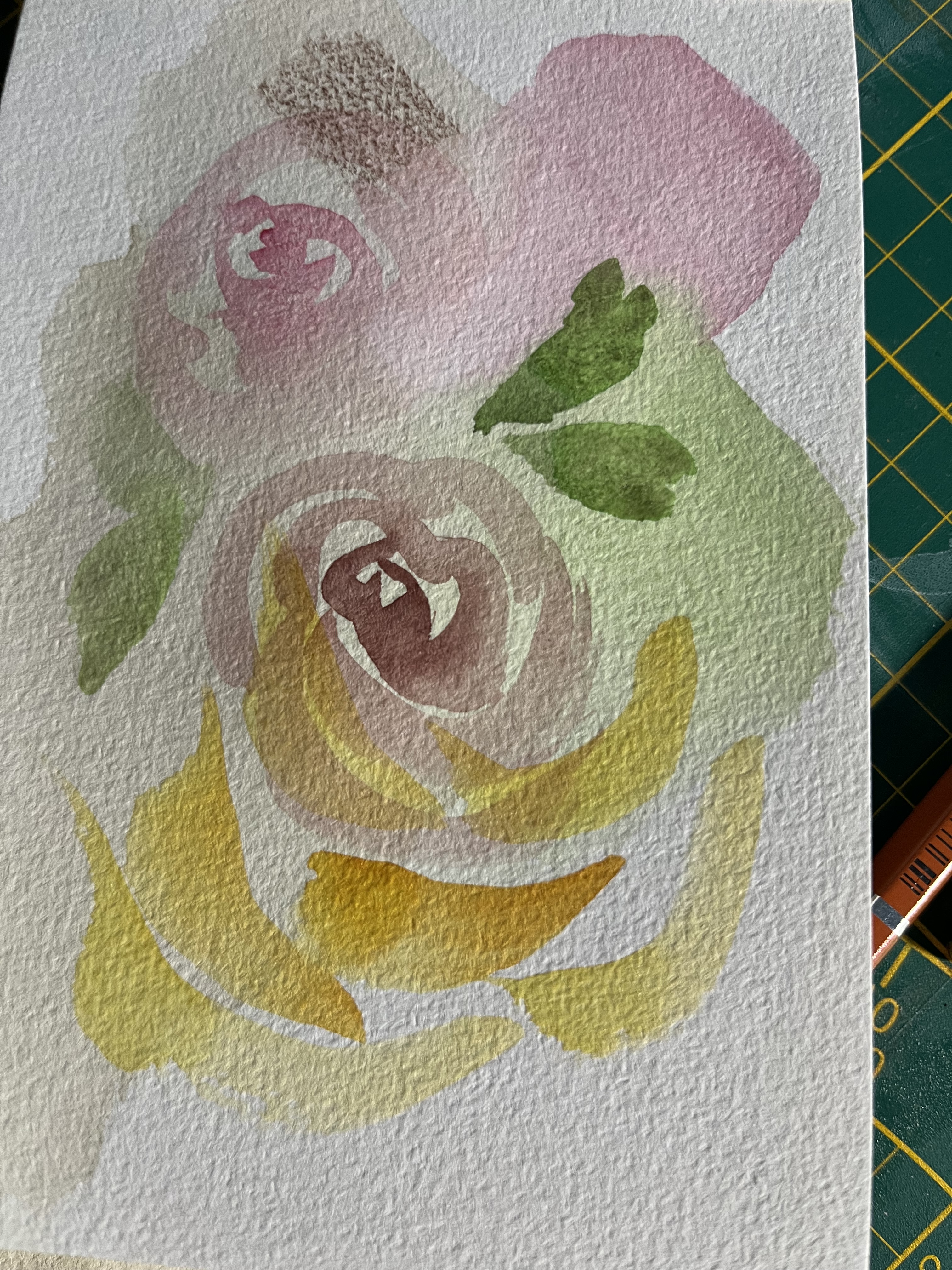
From my desk: A small relaxing play with watercolors.

Letting go of perfection

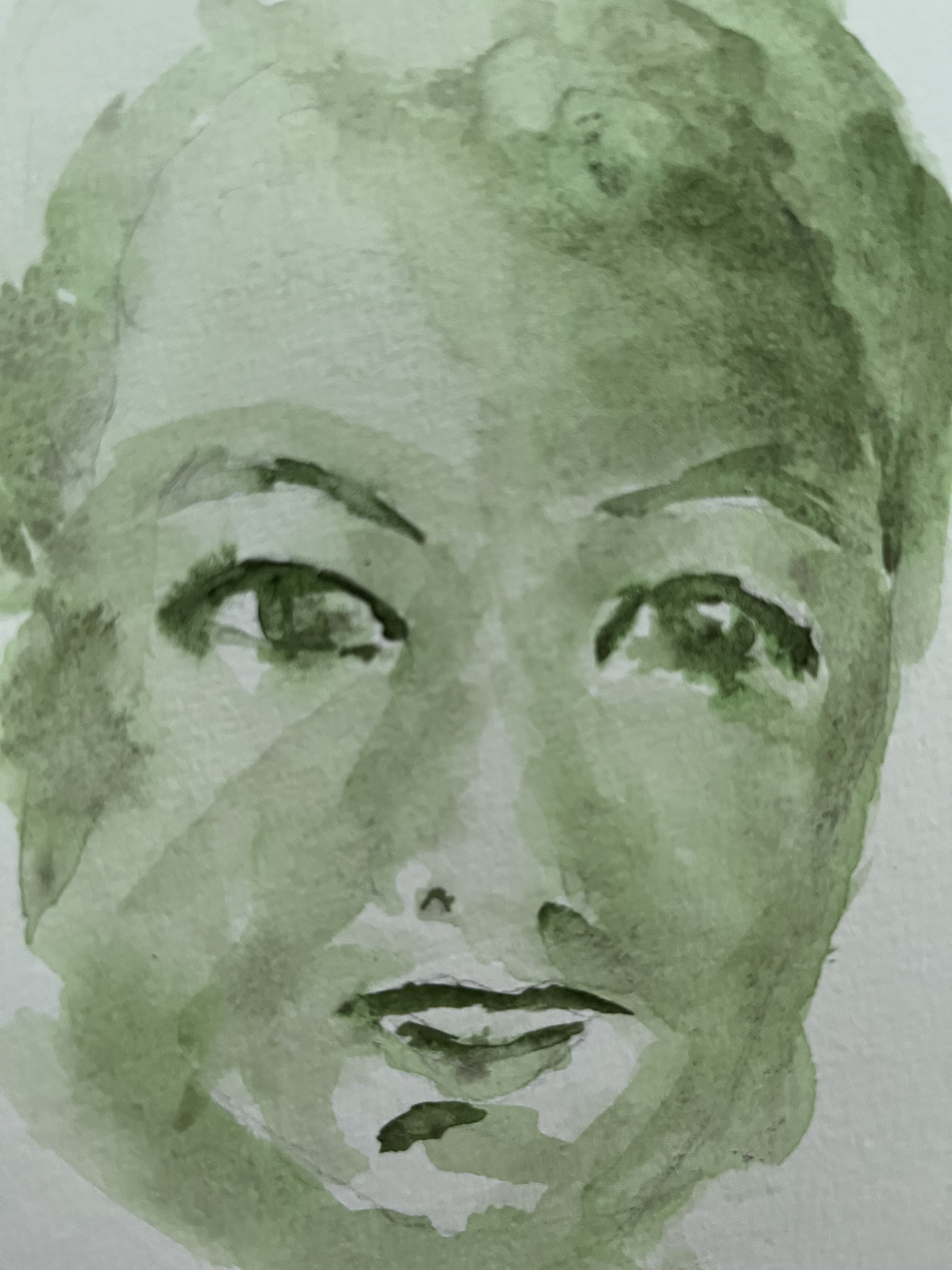
After a while, the portrait I’d been wrestling with made me feel so dissatisfied, I decided to turn its face away from me. Maybe it was the colours I’d been using, maybe it was because I needed a break, but the more I worked on it, the more I felt as if I wasn’t getting anywhere near where I wanted to be. It’s funny to write this when during my last entry, I felt as if I’d had a breakthrough.

So, I decided to step away from the portrait. I didn’t work on it for a couple of days. I didn’t even look at it. I played with my watercolours and didn’t require myself to do anything that was like a project.

There wasn’t really much time to dwell because I had the regular check-up which consists of a bloodwork and a CT scan. I didn’t have time to dwell on the CT-scan because my youngest son was leaving for the traditional end-of-school holiday (it’s a Dutch thing where young people go on holiday with their mates at the end of senior high). It’s kind of difficult to stress about a scan when you’re making sure that your son won’t miss his flight and it’s kind of difficult to stress about a portrait when you remember you have to go to the hospital.

After a busy couple of days, I decided I needed a break. I made a date to meet up with my eldest son in the city and we went shopping for some things (in my case it was art supplies).

The great thing about taking such a break is how there’s time to think while on the train ride to and from the big city. I thought about that little voice that makes tiny sounds of disapproval in the back of our heads. We don’t register it as disapproval because we’re so used to hearing it. It’s a voice that says: Oh, that’s not good enough. Oh, that nose doesn’t look right. Oh, are you sure you want to use that shade of red? Oh. Now you’ve done it. You’re overworking it. You’re doing it all wrong. You’ll never be good at this.

It doesn’t matter whether it’s a painting or a story or a book report, our first and harshest critic is that tiny voice that causes us to tense up and become so focused on being perfect we end up helplessly throwing our hands up in the air and saying: I cannot.

There’s a great little clip I stumbled upon on youtube where a pianist is playing one of Chopin’s etudes (I forget the name but it’s one my mom played a lot). Over a section of the clip with the beautiful cascading tones of the piano, there’s a caption: What the audience hears when the pianist plays this piece. Right after this, there’s a section where the notes are clanging together in disharmony. The caption says: what the pianist hears when playing this piece.

It’s a funny clip, but it’s so apt. It doesn’t matter what art form we practice. Whether it’s making music or making art or writing, somehow we tend to hyperfocus on that one thing that just isn’t working. And it’s all that tiny little self-critical voice will let us focus on.

I laugh as I write this because it seems like this is a lesson that keeps returning to me. In the chase after an elusive perfection, we lose sight of what makes us love the things that we do.

Blessings and peace to you who read this. Thank you for dropping by.

Create and co-create

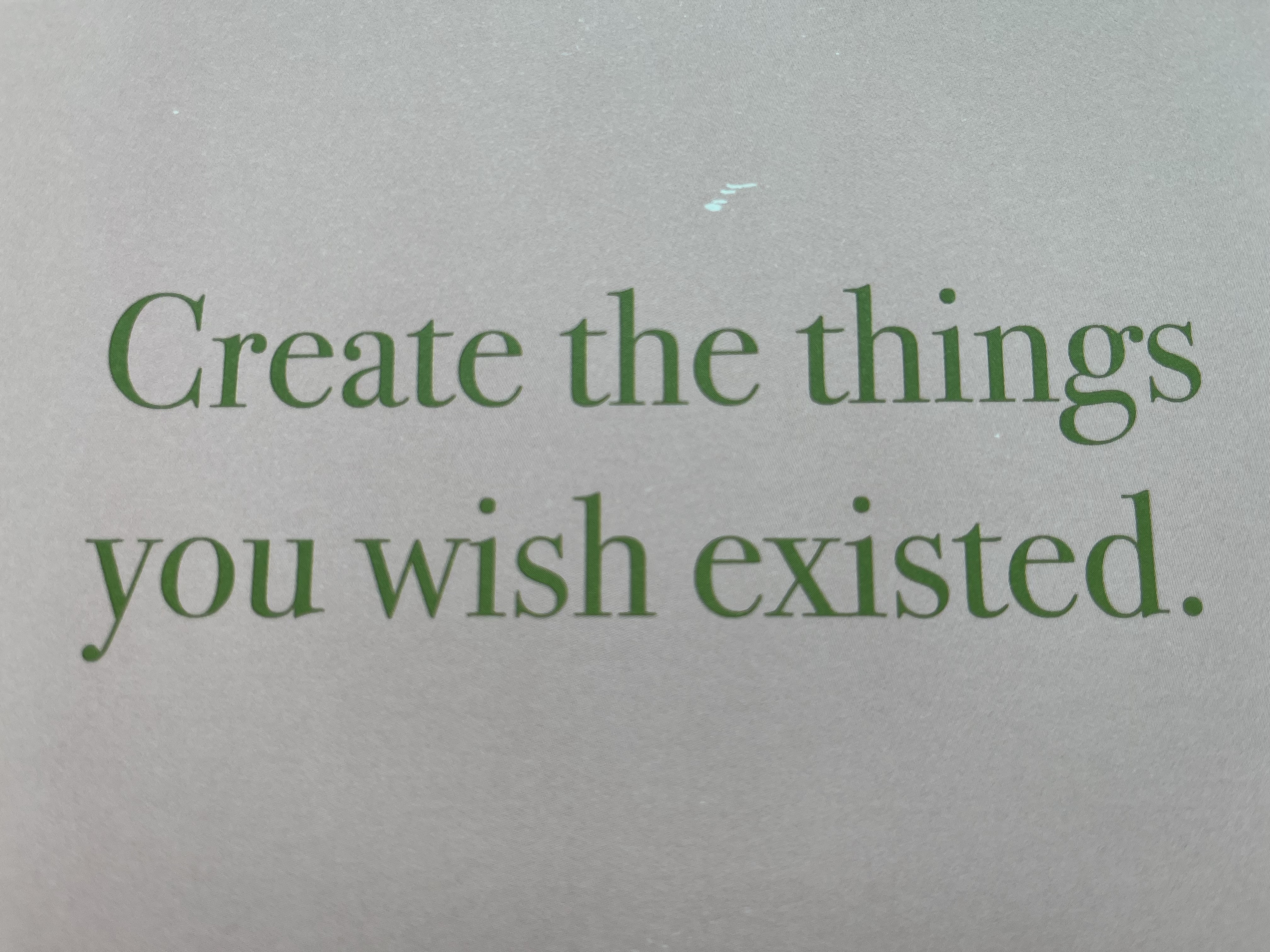
On my wall, there’s a postcard with the words: Create the things you wish existed. It’s a card that came with an order of art supplies and I loved the words so much I pasted it up where I can see it as a reminder.

From one of the mailing lists that I subscribe to, there’s a link to the work of an amazing artist named Leilah Babirye. If you have time, click on the link leading to the video as it’s so inspiring and a great reminder that when we are engaged in art, we can’t be afraid.

I’m thinking about this as I think about LIMBO and the participants who come to share and create together. More than the things that we produce or make during the time together, it’s about how we hold space for one another and create together the kind feeling that exists in that time. When it’s my turn to give the workshop, I step into the space and think about who’s here and what do they need. Where Leilah talks about reading and listening to the piece, facilitating means listening to the space and reading with the heart. I bring to the workshop all the things that I have learned from other practitioners and I bring also what I have learned from my own journey.

Yesterday, we engaged in making rhythmic combinations, dance steps and improvisations as well as song. I had in mind this idea that we needed to give an answer to the wishlist that had been presented by participants sometime at the start of the season–the wish to create a LIMBO dance as well as a song that comes from us and expresses us.

There was laughter, there was singing, there was lots of body movement and dancing and there was a beautiful musical rendition gifted to us that afternoon by one of LIMBO’s participants.

I love how moments like these give rise to spontaneous sharing. It’s a testimony to how participants feel safe to talk about what they’re going through and what they’re feeling in the moment. To me, it’s this precious quality that we need to take care of when we talk about community.

Today, I am thankful for the privilege of being invited and included in this community. One of the things I’ve learned and continue to be reminded about in LIMBO is how it doesn’t matter that there are moments of discomfort and unease–that sometimes topics can become fraught–that people will have differences. But this is okay. I think of Aminata Cairo talking about family gatherings and how there may be that uncomfortable relation who can get argumentative and you think: Oh, I will just keep a distance. But even so, if we believe we are all connected, then there is still space for discomfort. We don’t always need to resolve it, but we can acknowledge it.

(I want to note here that I do think it’s important to draw a line at abusive and harmful behaviour.)

At present, I’m already looking toward our next gathering which will be on the 1st of June. I’m thinking of how to approach this workshop as we prepare for the launch of LIMBO’s second booklet. For the launch, which will be on the 20th of July, we’ll be going back to FramerFramed as a podium has been offered to us for use against the backdrop of an exhibition about transformation. It’s so very apt. I’m thinking of festive feelings. Of glitter make-up and shiny clothes, of dancing and singing and color and joy. We’ll be creating this programme together, creating this launch, creating this space and holding it for one another.

To you who read this, take time to listen to a beat and move your feet. Thank you for stopping by. Blessings and peace be with you.

All the things and how do I choose?

In my previous life, goal setting was a little bit like this thing I would do in intervals. Like at the start of the year, I might set a couple of things for myself and at a certain point a sense of panic would creep in when I realised there were still things I hadn’t done.

Yesterday, as I was reading through the life after treatment module, the goal setting part of it had me thinking. For instance, if I say I want to travel more. What exactly do I mean when I say that? If I say I want to spend more time with my family, what do I really mean by that? And what about getting back to writing and finally finishing that work in progress? What about leaving a legacy and creating space for others? How and where do I even start? That familiar sense of panic came over me–that sense of I’m not sure I have enough time to do all the things.

To be honest, I didn’t actually think about these things when I first listed things down. I basically just filled in whatever and went on my merry way. But yesterday, I realised that I had a rather long list of things I want to do and it’s probably one of the reasons why I’m feeling a bit out of breath because how does one choose and where do I even start?

Thankfully, the module provides the following questions in support, some of which are:

How far along are you in regard to this goal?

What do you need to accomplish this goal?

Do you have all you need to get there?

One of the things on my list is to plan at least one weekend every year when all of us spend time as a family in one house. Last year, we went to Spa in Belgium. We are rather fond of Formula One and I’ve always wanted to visit a race track. Not only is the Spa circuit legendary, it’s also a beautiful track surrounded by lots of nature.

As I was in treatment at the time, my youngest spent most of our visit to the famous Spa circuit pushing me in the wheelchair. I didn’t get to climb up to the viewpoint tower but I loved that the kids got to do that and see it for themselves. It was only for a weekend, but we had a lot of fun with time together as well as time separately.

This year, I’m thinking of a place closer to home with more possibilities for going out into nature and taking walks because I’m more mobile than I was last year and I have more energy than I had.

But while I can plan things and organise things, while music and artmaking and teaching are proving to be quite friendly and within my grasp, I’ve discovered that getting back to writing is a lot more challenging than I had imagined.

Do I struggle with the writing because my brain isn’t quite up to it yet? Or do I struggle with the writing because writing (even when it’s fiction) feels very close somehow and I’m not yet ready to go there? It’s telling that I’m writing about not being ready because that’s actually probably what it is. Will I be ready to go there?

Writing even when it’s fiction has often been a way for me to work through whatever is weighing on my mind at the moment. I doubt that my work is commercially appealing because writing to an audience has probably been the last thing I’ve thought about. I’m not sure if that makes me a bad writer–but basically I write things that tug at me and call to me and make me take that deep dive and a lot of times the dive is personal and involved with the body and how the body moves through society and navigates all these questions that arise. What impact does space have on the body? How does society impact the body? And can one body have an impact or influence in the space they occupy? If so, in what way? (Yep, that’s one example of the process my brain goes through and maybe it’s helpful that I’m writing about it because this is probably a step towards getting there.)

I wish that answers were easy, but often answers are complex and require time and patience and a lot of times solutions to problems are never easy. The concept of good or bad and black and white is simplistic when we live in a nuanced world where many different shades go into what we imagine is one color.

So, this leads me back to goal setting and the objective of it.

Perhaps it’s so we don’t get this feeling of empty hours or days that we must feel. Maybe that’s it. Maybe it’s to give us a sense of purpose. Perhaps it’s to make us feel useful or accomplished. Oh hey, I did this task and that. I cleaned the bathroom without breaking down and I still had the energy to iron some clothes. That’s a win.

Now that I think about it, this sense of time running out is an illusion. We get caught up in the rush of “I must do this” and “I have to accomplish this” or “I must be useful” or whatever narrative we say to ourselves.

I think that we all have the time we need/ to do what we need to do/ and /time never runs out/. We may think that time runs out when we close our eyes in final sleep, but actually time keeps on running and what we accomplish as warm bodies reverberates even after our bodies are gone from the timeline.

Writing about this has helped me shed the rush. What needs to be done will be done and if it’s not done perfectly or as exactly as I imagine it could be, it will be enough. When I look at the timeline, I realise that actually what matters is now. From a minute ago to this minute to the minute that follows after this one. These are the moments that I can make count. Maybe I can give my son a hug or by practice my brush strokes (I’m learning how to use watercolour), or I can go out and find rocks to use for an exercise with the group. Maybe it’s something else. There’s no rush, there’s no panic. Time isn’t running out. I am moving exactly as I am meant to move within the time I occupy.

As usual, this is me thinking out loud on the page. I hope that it’s helpful to someone. Take time to do what matters to you now and if you’re feeling rushed, breathe.

Thank you for taking time to read this. I wish you blessings and peace. Maraming Salamat.

Oh hey! It’s another Tuesday post

Sometimes the words just flow and sometimes they don’t. Today, I was working on the module that comes with the a new program from the physiotherapy class that I signed up for. This class is an intensive three month program which usually is offered after active treatment and it includes not only the physical rehabilitation part of things, but it also offers a module which walks you through a process of reflecting on what’s happened and what you would like to happen moving forward. It’s a module divided into six sessions and signing up for the module includes a page where you list down everything from the moment of diagnosis up to your last active treatment.

It was rather something to look back and realise that from 2022 up to the end of 2024, I was in constant treatment and my days were marked by hospital visits. It’s also good to recognise that I’ve been out of active treatment for five months.

I find myself no longer planning in terms of “if treatment will allow” to thinking in terms of “Oh hey, I can do that thing and take that course and I can play together with the band and go to workshop”. It seems like a small change, but it is actually a huge change from not knowing to some sort of knowing and where planning can now occur in two month stages instead of the one week when I feel good stage. I actually had this idea that I’d dealt with the stages of grief during those three years, but having looked at the dates reminds me that it wasn’t nothing. So here I am thinking on it and feeling thankful that I made it through all those treatments. I am thankful that I’m still here.

I’ve learned that even when we think we can’t, we still can and there is nothing more precious than today and if there’s something worth doing, there’s no sense in delaying the doing of that something.

There was a short period after treatment when I had a sense of “Oh, my days are stretching out now” and “so what do I do?”

Lately, I’ve been filling my days with watercolour practice. As I said to my therapy mates, I didn’t have the opportunity to learn how to use all these different materials when I was young, but I’m learning them now and it’s like a world has opened up in front of me. I didn’t know, for instance, that getting a good result in watercolours has a lot to do with the materials that you use. Of course, it’s the same for all other things, but watercolours are pickier than pastels and acrylics and if you use bad paper, it’s a given that your watercolours will look more grisly than if you used something that’s a better grade. I’m practicing on Aquapad paper which is thick enough and satisfying enough. (Arches are the best, but I feel like I need to get to that point where I can justify spending lots of cash on Arches.)

I’m happy that I have art making to keep me company, because it seems my fiction brain isn’t quite ready yet. I did the thing last week where I decided to just grit my teeth and open the work in progress and after reading the first page, I just had no idea. The sense of overwhelm was such that I decided to close the document and re-think my strategy. Maybe I’m not ready yet to face a work I left at 70k words. Maybe I need to section it up into smaller units that my brain can focus on in small bursts. I’m not sure yet. The work is niggling on the edges of my awareness, it’s just getting down to it that costs more than I can spend at the moment.

In the meantime, the watercolours are spread open on my desk. Brushes and pens and paper with some grisly attempts at portraiture. For the first time, I did manage a reasonable study in values. Not bad, I thought. I put a date at the top. Maybe I’ll look back at it in a hundred days and say: Oh wow. I started there, huh.

For you who have taken the time to drop by and read this, I want to say thank you. Blessings and peace and may your days be filled with good things.

I’ve fallen quite in love with Daniel Smith’s Green Apatite Genuine.

Spring is in the air

It’s been quite a busy period as not only is it exam week for the youngest one, it’s also been a week of appointments and events. I visited the municipal hall last week and handed in my application for a new passport along with a new id picture. It’s probably the first time since I’ve had a passport made that my passport picture doesn’t look like I’m running from the law.

A few days before I went to the municipal hall, I had new pictures taken. On my walk to the shop, I found myself ruminating on my previous passport picture and I decided to ask the photographer if it was possible to have one that was somewhat friendlier. As tends to happen, I walked into the shop and blurted out my thoughts to all and sundry including two surprised customers who burst out laughing when I announced that my last passport picture had me looking like I was a fugitive from the law.

It made for a lighthearted moment and I can happily say that for the first time, I have a passport picture that is somewhat friendlier.

At the municipal hall, there was some difficulty registering my fingerprints. I learned that intense treatments like chemotherapy has this effect of where fingerprints become a bit more hazy. It made me wonder if we ever lose our fingerprints.

“It happens with old people too,” the lady behind the counter says to me. “Not that fingerprints are ever erased, it’s just they don’t register anymore. But we also see this in people like you who have undergone chemo.”

And it somehow strikes me that she hasn’t tagged me as an old person but as someone who has undergone intense treatment.

On Saturday, I travel to Rotterdam. I’m headed there to support the project called Project Take Away. Take Away started as a neighbourhood initiative led by friends Marielle and her partner at ook_huis. It’s a lovely initiative which started with refugees and neighbours coming together to share coffee and talk about coffee and different ways of making coffee and as time progressed it evolved into something more. To celebrate their third year, Take Away released a book documenting three years of work. It’s an impressive volume with beautiful images but most importantly it reflects the vibrant life of this group of people who have been working together, caring for this community and for the neighbourhood and growing into this rich and beautiful art collective.

I think of how we forget the power of small movements like these. How practicing care in the community setting is a radical act in a society that’s grown more and more disjointed and disconnected. It’s not the size of the movement that matters, that we are doing a movement with intention is what matters. The intention drives the movement, drives momentum and leads to change.

I think of how these small movements are so vital when it comes to changing perceptions. When it comes to changing how we see each other and when it comes to making space and holding space for one another. I understand the antipathy that exists on one side of society towards asylumseekers, but I also want society to understand that if it were possible to live humanly where they are, people would not be seeking asylum. Living means more than surviving, living means being able to grow and thrive and fulfil your potential as a human being. This is why we can’t turn our backs or close our eyes to the circumstances that cause people to flee the countries of their birth.

It’s callous to say: ‘go back to where you came from’, when we don’t know the full story.

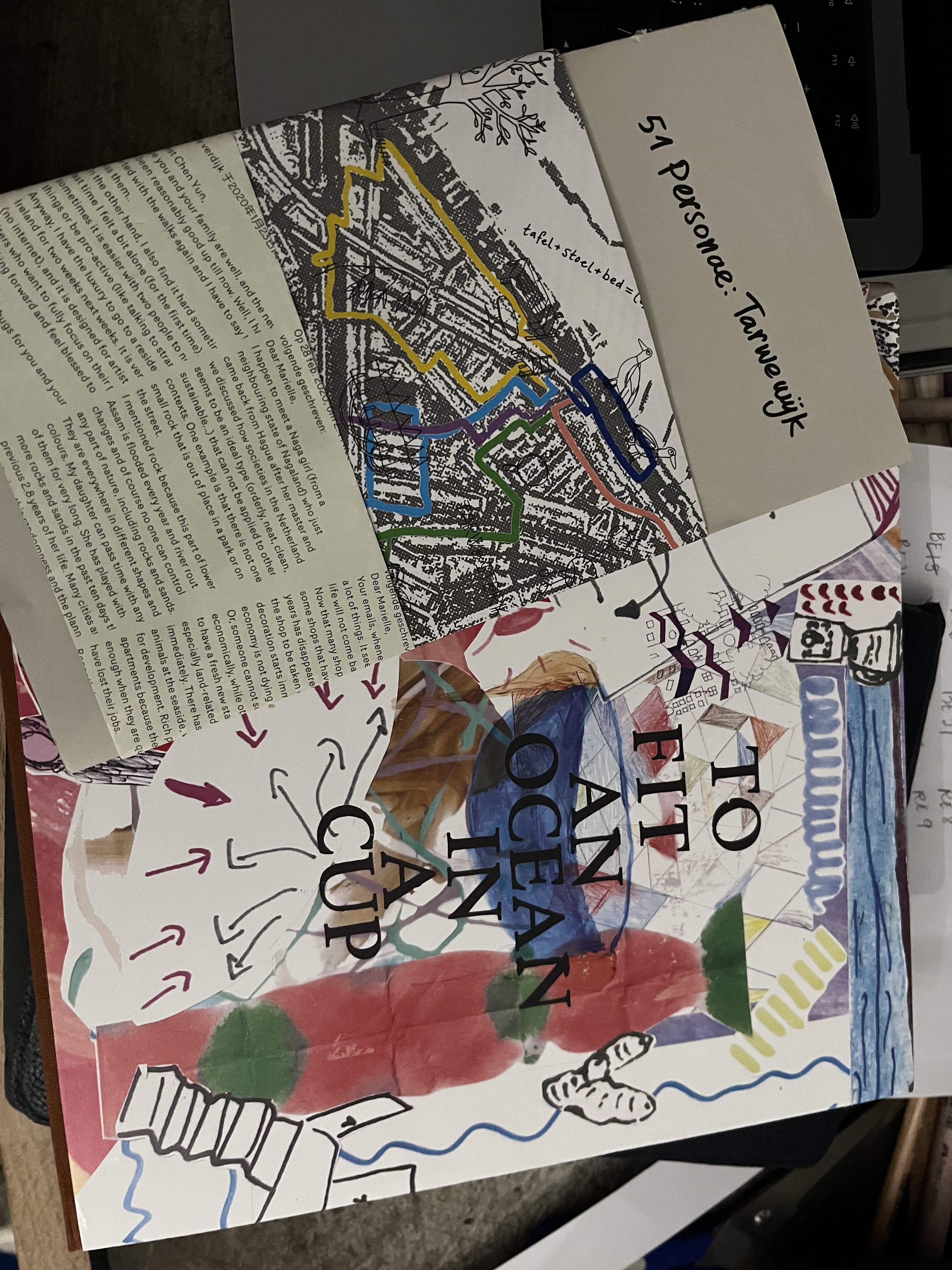
After the meeting at the Take Away space, we traveled to where Marielle was holding a reading/talk around a book she’d collaborated on together with the artist Chen Yun. This book, titled 51 Personae:Tarwewijk was five years in the making. It’s a unique and beautiful work documenting walks around the Rotterdam neighbourhood of Tarwewijk. What I love most about this work is how in the final publication, it contains the text from these walks in Dutch, English and Chinese. Not on separate pages, but these texts exist side by side on the same page or as extensions of each other.

It made me think of how it’s beautifully representative of the multicultural nature of society and how the world is made up of many different people speaking many different languages and there is room for all of us to live side by side.

Copies of this book are available at Available & The Rat.

I feel like I should write a little bit more about Available & The Rat, but I will do so another time. It’s a space that’s definitely worth visiting.

Spring is in the air. Out in the garden, things are growing. Our prunus tree has grown a bit more sturdy and is spreading out its arms. From the small seat by the water, I have a lovely view of back gardens with tulips coming up, a magnolia tree in bloom and a cherry blossom tree.

I have resolved to go and sit out beside the water as much as I can. For now, I’m ending this lengthy post.

Take some time out of your busy schedule to just sit and reflect on how you want to greet this new season. Life brings with it unexpected things, but when you take time to connect to what’s strong in you, you won’t be easily shaken.

Blessings and peace to you who read this and thank you for dropping by.

Breathe in, Breathe out

February turned out to be a more challenging month as the flu struck and just as I was feeling better, shingles happened. I had this idea that I could get through shingles with just paracetamol, but after enduring a night with no sleep and pain that I can’t describe, I caved and asked my doctor for stronger pain relief. Thankfully, my doctor prescribed pain relief quickly and I have been able to sleep through the night which accounts for why I no longer need the pain relief. I do have this incredible itch where the shingles outbreak happened and a burning sensation pretty much like when you have a bad sunburn.

Recovery from shingles is a process, but I’m glad I’m able to come upstairs to the workroom and do some art practice as well as a little bit of writing.

I was inspired quite a bit by some of the work that I saw when I visited the art fair and had a conversation with an artist who was doing some live painting. That conversation made me think about my own approach to art and art making.

During our conversation, the artist told me that what’s important is to find your own gestures and your own signature. What is it about your art that makes you the artist that you are? Every artist has a signature–not the name you sign, but it’s in the language that exists between the artist and the blank canvas/page.

I think about this conversation as I draw without having a particular goal. I draw repetitions of shapes as a way of tuning in to what am I feeling, what am I thinking, and what is going on in my body and in my spirit today.

Breathe in, breathe out.

In today’s world where everyone seems to want to rush towards a goal or to achieve something or to become someone, being in the moment frees us of all those stresses. When we are free from those stresses of becoming something, we can listen to what our bodies tell us.

Small circles, gridlines, spirals, repetitive mark making and repetitive movements. All of these things are practices that ground us in the body and in the moment. And being grounded allows us to transcend to where we can see beyond the mundane.

I’m stopping here for today.

To you who reads this, thank you for dropping by. Blessings and peace.

Reflecting on what was and what is now

Today, I think of my father standing in the only hospital in Banaue, right after an armed conflict between the government forces and the NPA. (This incident took place during the martial law period when my dad was the only doctor in the mountains.) I think of him being made to choose: Doctor, if you treat one of theirs, we will shoot you. And my father, who was the only doctor in the mountains at that time said to these men: I don’t see government military or NPA, all I see are wounded in need of care. You can shoot me, if you want, but who will take care of your wounded?

And he took care of all the wounded, and in that space of time when he was taking care of their wounded, while they were waiting for him to do his work, the hospital compound became neutral ground.

We are grieving. We grieve for the ones who suffer the consequences of war. We grieve for those who are lost, for those who suffer, for those who have lost. We grieve for what is broken. We grieve for the innocent and for the loss of innocence. We grieve for the brokenness that is in the world.

I think of these things as I prepare for LIMBO, and I think of how we keep spaces safe and how we hold space for those who are vulnerable and need this space. I don’t have much power but I have now and I can ask: What do you need now? What do you need today? How can I help or facilitate or support in such a way that this need is met in this moment that I am with you?

From this point of beginning, I can think in possibilities. I think of mapping the world we dream about, of making visible what is strong and resilient and hopeful and beautiful inside each one of us. I think of how, in a world where conflict has become the norm, liminal spaces are necessary spaces.

Of course, we knew that when they left the hospital, some of my father’s patients continued on with their conflict. We heard their guns in the distance and we knew there were places where it was not safe. But for a moment, when they were in the hospital compound, there was peace.

I want to walk in my father’s footsteps. To say: I am here to serve. If you leave this space feeling stronger, feeling more hopeful, feeling a little more able to face what life throws at you, feeling more connected than disconnected, then that’s good enough for me. I wish I had the power to right all the wrongs in the world, to heal the pains and the illnesses, to bind up what is broken. I don’t have that power, but I can say: I am here in this now. I am also here for you.

This post is more of a personal reflection than one that offers solutions. Because all things in life are connected, because art and life flow seamlessly into and through one another, it becomes inevitable that this too makes its way into my own work.

May lovingkindness surround you and may peace be with you who read these words.

*Having written this, I am thinking of how my father’s stance was an act of resistance. In choosing not to take a side but to address the problem, he opened a path to neutral ground.