thinking about language again

I’ve been writing in Dutch and this has me thinking about language again and how it relates to taking up space in the world (or making space) and how gatekeeping in language and use of language relates to the question around permissions. Why do we need borders when the world belongs to all of us? Why do we need permissions to cross from one place to another? And why do we as societies feel this need to create perimeters and conditions keeping people from traveling or moving into spaces we have labeled as “ours”?

I have a complex relationship with language. Perhaps this explains my fascination with it. I am also something of a geek and language and the conversations around language have also fascinated me.

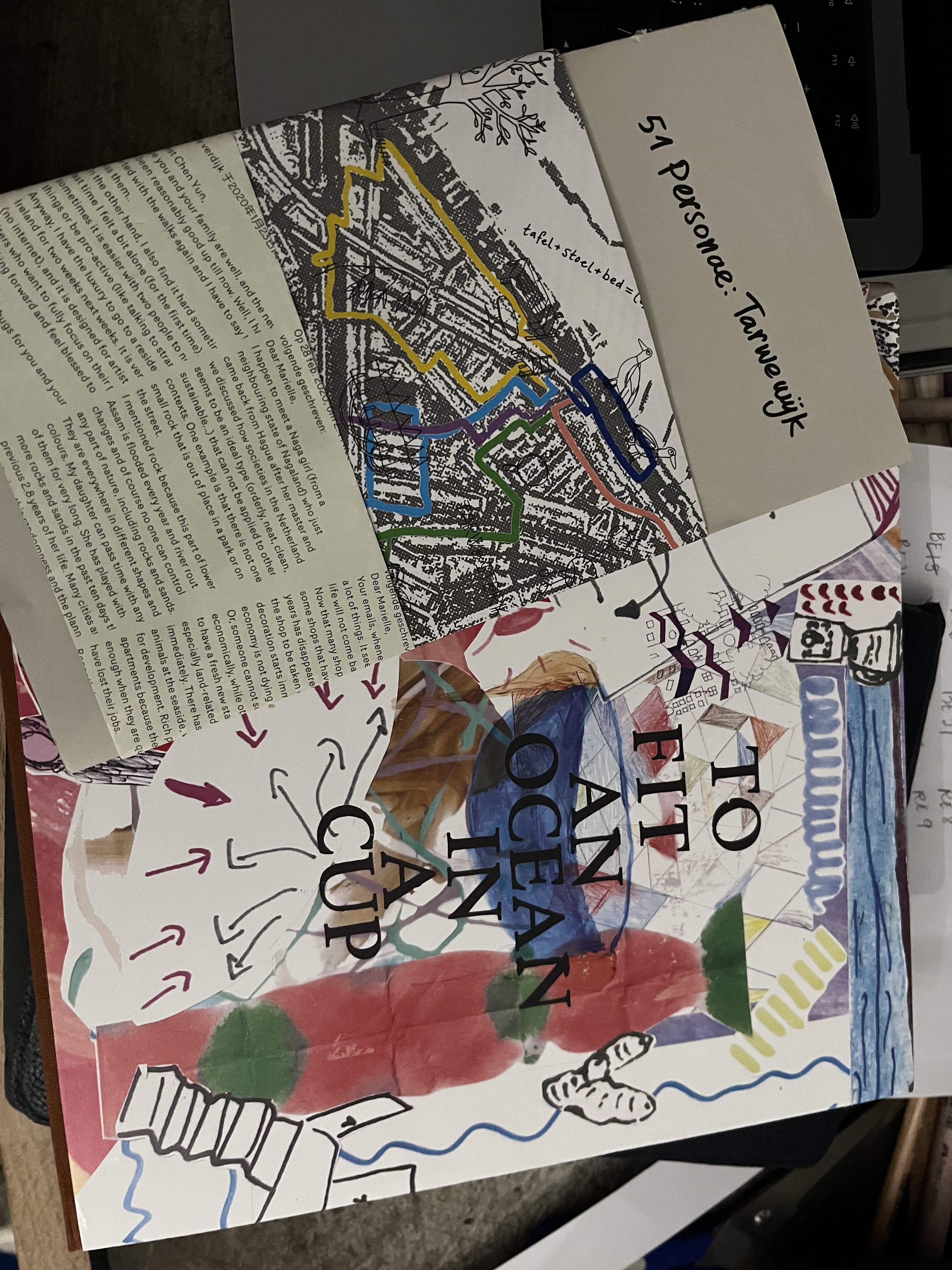
Small as the Dutch publishing landscape may be (compared to the US or the UK), it’s still predominantly comprised of white native Dutch speakers. I made a decision to at least attempt to write and publish in Dutch because I believe it’s important to make space not just for my work, but for the work of those who like me were not born or raised in The Netherlands, but have come here from non-western countries.

In 2021, when Martijn Lindeboom and Vamba Sharif asked me to participate in De Komeet, a specfic anthology from diverse writers in NL released by a De Geus, I said an immediate yes. When the anthology was published, some people I know who read my story said that they were at first a bit hesitant because of the use of nb pronouns, but were quite surprised to find it wasn’t preachy as they feared (yay). It was also favourably reviewed in De Telegraaf which is a major Dutch newspaper (so Yay again). The comment I do get from people I know (who’ve read it) is how the reader can tell that I’m not a native Dutch speaker because of my use of language. Here’s where I admit that I did have an editor and first readers who tried to tell me to rewrite some sentences but the rhythm and the off-center use of language made me happy, so I kept them.

I can’t pass for a native Dutch speaker and to be honest, I don’t even want to. It’s the same as I don’t pass as a UK or US raised English speaker, and I don’t want to. The way I use language reflects how I have acquired the language, it reflects the rhythms by which I have learned to speak it or write it. It may seem like a minor thing, but there is a deliberate reasoning behind this. I understand the importance of the rules of language–grammar and such. But as one reader said to me: the use of language in an alien setting by alien characters, reminded me that my characters are aliens and the emotion came across because of the way “the language was used in a way I am not used to”. (That kind of made me go: yep. That was the intention.) (Of course, I have no doubt there were readers who were just irritated and went “another outsider who wants to write in Dutch”. Lol.)

There are different ways of using language and by opening ourselves to these differences, we expand our borders and our perimeters.

Mind you, I’m not advocating for using wrong grammar. I am advocating for knowing and having a grasp of language and at the same time remaining faithful to the rhythm that echoes in your inner ear. (I did adapt a lot of suggested edits because I am aware that while I may be proficient in Dutch, I tend to be more English in my grammar use. But there were definitely one or two sentences where I just said to the editors–this just feels right to me. It conveys an emotion that I want to convey.) So, I am perfectly okay when faced with the criticism that the language use isn’t perfectly Dutch or Dutch as it’s meant to be. It is not meant to perfect, it’s not meant to conform. (Sorry not sorry for being a rebel.)

When we engage in writing in LIMBO, I like to encourage participants to write in the language they are most comfortable in. Perhaps a majority will opt to write in English, but I have discovered that when someone chooses to write in the language closest to them, while we may not understand the words, we are often able to hear the movement of the writer’s heart in the movement of the language they use.

It’s this kind of rhythm and this kind of movement that we want to capture when we decide to write in an acquired language. Maybe it’s not perfect. Maybe the grammer is not 100%. But all these things are cosmetic. They can be fixed in edits, they can be discussed.

We are a multicultural society and when traveling through the city, I hear a rich tapestry of sounds and voices–different languages, different accents, different ways of using language. Dutch interspersed with Middle Eastern languages, Filipino mingled with Dutch and interestingly too–Dutchies who bend Dutch words to make them sound somewhat like English. Language, like society, like culture, doesn’t remain static. It’s never standing still and every year new words are added to our ever-changing vocabulary–not all these words are rooted in the Dutch language.

Yep. I can keep going about language. But I’ll stop here as I have a bunch of things on my to-do list. I am interested in comparing notes though. How do you write in an acquired language and how does the language you’re most skilled at using influence the way you write in another language? And if you’re writing in an acquired language, what made you decide to write in it?

Blessings and peace to you who read this and Agyamanac Unay for dropping by.

Hello 2024

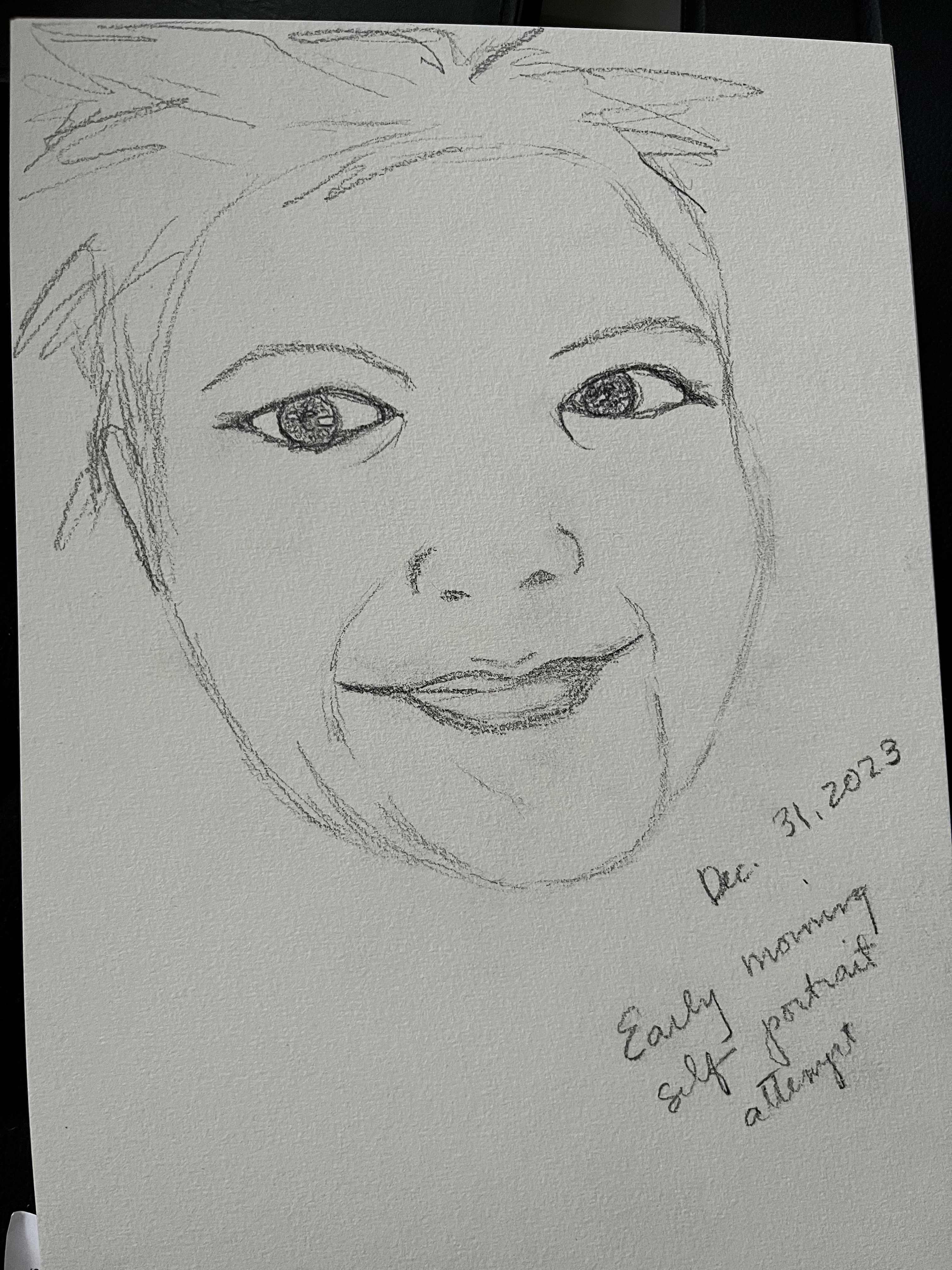
I am learning how to do freehand protraits–relying less on a grid and training my eyes and my pencil. I still need to work on proportions, but the results have been surprising. Did you know that turning a picture upside down will actually help you focus more on shapes and lines and will give you a more satisfying rendition than if you are looking directly at a thing? For most of 2023, I had to practice at home by myself as my energy would often run out and I would end up having to skip art classes.

Towards the end of 2023 though, I was able to attend five art classes (what luxury). It became important to me to go to class with a goal. What is it that I’m struggling with, right now? What questions can I ask and how can I put the answers to practice when I am unable to attend class?

There are so many similarities between making art and writing and life and the parallels fascinate me. Because we often start out with a draft–with an idea of where we would like to go–or in my case, I sometimes find myself caught up in an emotion and I let that emotion move my body and take me to what comes out on the canvas. I suppose I am very much a pantser on canvas as I am a pantser with words. Portraiture though is teaching me the discipline of looking and seeing and translating what I see in lines and shadows and angles on the page. We don’t know what we’re making until we see the finished project and even then, it can be tempting to keep tweaking. For the artist, the art is learning when it’s time to stop. There is no such thing as perfection in art, simply the question of: have I managed to convey what I wanted to convey? And does the meaning the viewer attaches to the image make me say: Oh…that interpretation works just as well.

It is satisfying though when you get your meaning across and it’s the same with working with words. Stories work when they mean something to the maker and to the person reading or receiving the story. And in this way, stories become an act of co-creation. The writer creates the world, the characters and the story, but the reader attaches meaning to it and the art becomes the ability to draw the reader in and invite them to create together with the writer.

I’m not a very good fanfiction writer but I find myself in awe of writers of fanfiction who expand the universe and the worlds of stories that have captured their imagination. To have a fanfiction made of your work is, I think, the best possible compliment an artist can hope for. Why? Because it means you’ve made something that has become full of meaning for another person to the extent they wish to co-create with what exists.

Life itself is an act of co-creation. We co-create together with God and with our fellow inhabitants of the earth and together we weave this massive story that is the story of humanity. And it sucks a lot at times. It makes us cry and feel frustrated at times. It makes us angry. It moves us. It makes us want to hit out and hurt someone sometimes. It makes us decide to take action. Co-creating means, we don’t just let life happen. We decide to take part in life becoming.

Reading back, I think this is what 2024 is shaping up to be for me. I spent 2022 trying to stay alive, trying to recover, trying to survive. My 2023, had me learning how to deal with setbacks. It had me on a path of discovering what it was that I really wanted to keep on doing. Here I am in 2024, still alive. I am present. I am doing what I need to do, here and now…bedhead and all.

Agyamanac Unay for stopping by. May peace and love be with you.

Evolution

There’s a Dutch phrase that captures the emotion for what we have gone through–het laat mij niet in de koude kleren zitten. Which means that all we’ve gone through as a family, all I’ve gone through as a person, these things have not left me unchanged or unmoved.

It’s a good thing to be moved and to be changed because it means I am still alive. I am still feeling, I am still living and I am constantly in transition, evolving, changing, not standing still. I think about this as I find myself surprised at how this season, this moment of being in a state of limbo, has feed the creative in me. I write, because I love to write. I make music because I love to make music. I teach because I love seeing how those I teach bloom into their potential. And I make art because a lot of times, when I am making art, I find myself in conversation with my maker.

Before 2022, I never imagined I would be making art as I do today. Or that it would become so important to me or that it would help me talk about what I am going through or that it would be a pathway to growing and knowing myself better. (I used to say that I write because I can’t paint or draw and am basically useless at art.)

When I told my Mom about my diagnosis in 2022, her command was for me to go ask God what his purpose was with me. At that time, I had no words for writing anything. I couldn’t even speak about what I was going through. Imagine being a writer unable to write or say anything about the storm going on inside you?

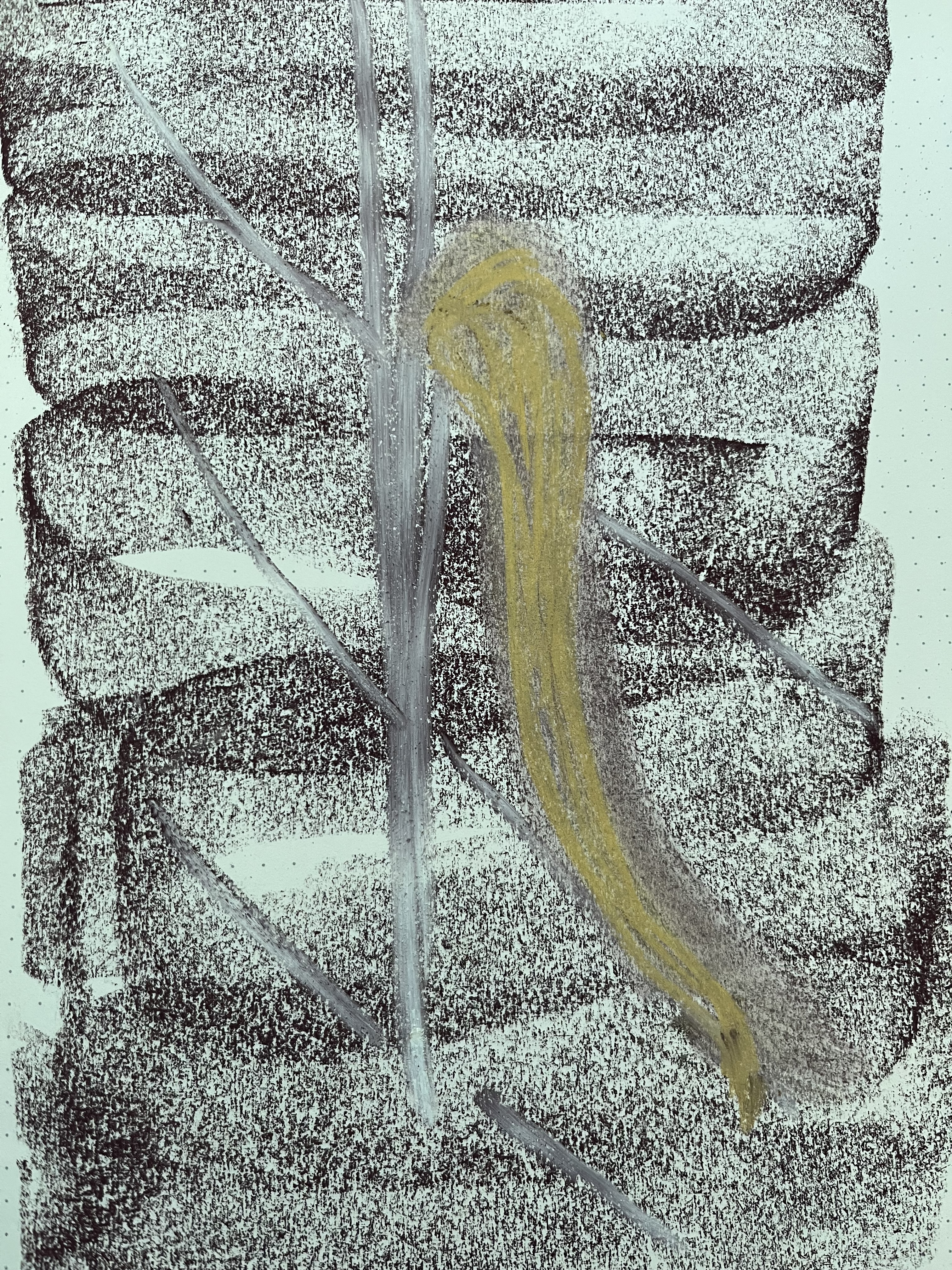
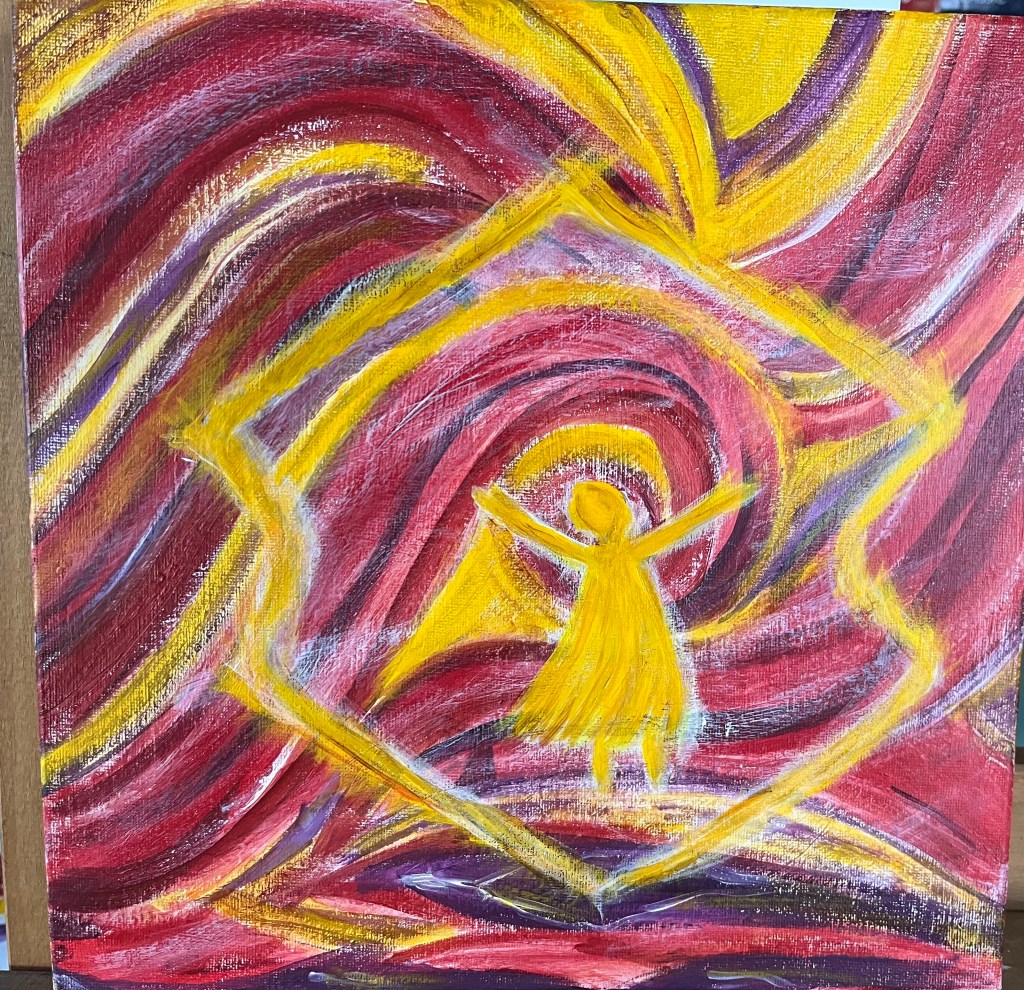
This was one of the first images I made which expresses what I was going through at the time. It was hope and agony and my soul just crying out. It was: God, if you really see me, then do something.

From that moment, telling the story of that time happened through images. Sometime in 2022, a friend proposed that I should try making use of acrylics. My first approach to painting was to simply splash color on the canvas. To try and put on the canvas or on paper what was in my head or in my heart at the moment.

This stormy canvas was just me saying: here I am in the middle of this storm and the storm is so big, I can’t even begin to describe it.

Making something visual happened because I had no words. But when you are without words for more than a year, and when you are engaging with art making almost everyday for a year, your work changes. One day, early this year, something told me that the way I was working was going to change and so was the art.

I think about the process of art making and how making art led me back to writing and how art that’s on the canvas tells a story just as the words on a page tell a story. We create because we have stories inside us that we want to share and stories will find their way out of the person bearing those stories. If not through words, it will be through other means of telling. (Just consider the plethora of youtube stories, audio stories, film stories..etc., etc.)

The more we engage with telling stories, the better we become at them. The more we engage with a certain medium, the better we become at that medium. Before my diagnosis, I would never have dreamed that I would someday tell stories through painting. After diagnosis, I thought I would never be able to tell stories through words again.

There are a lot of famous saying about life and art, but for the life of me, I can’t remember a proper one at the moment, but I do believe that art and life are intertwined. If anything, being diagnosed has made me more conscious of how important it is to live a life with purpose. To create marks with deliberation and care, to engage fully and be present in the moment, to look–really look, to really see and to also rest and be in the moment and allow moments to flow over me and change me and transform me so I can bring that back to whatever I am working on at the moment whether it is on art, on writing or my relationships.

I keep thinking of that friend who said to me “if only we knew how much time we had”. The truth is, we know. We know our time on this planet is not infinite. We know it, we just don’t want to acknowledge it.

I think about this as I contemplate the story of my life and I find myself wondering about the overall arch and how the completed story will read like or look like if it were in a book or hanging in a gallery. When we are in the process, we only see now. We only see this moment.

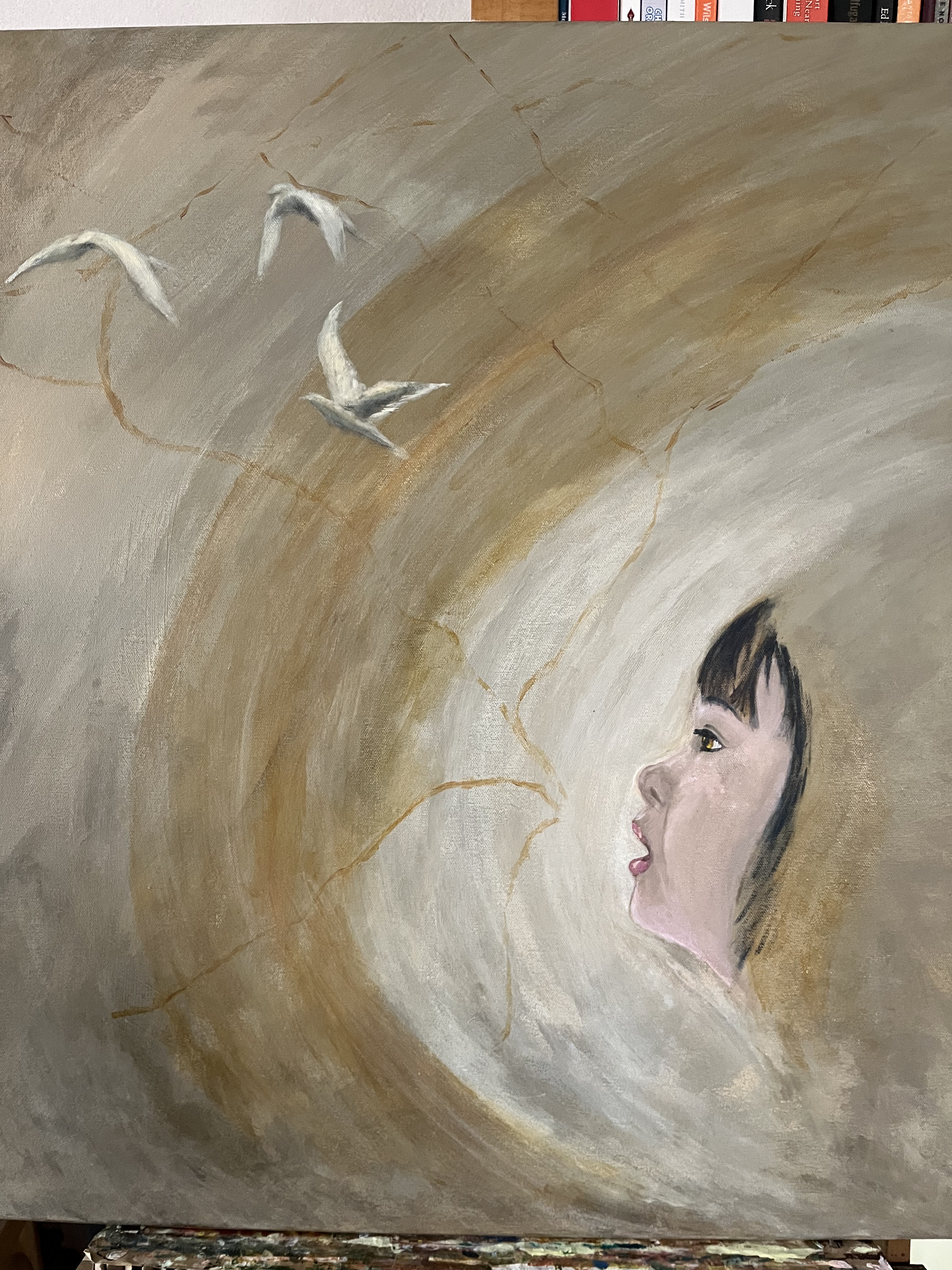
This is one of my latest works in progress (yup, I have more than one). I’ve been working on it for almost two months. I do a little work. I put it away. Think about it. Work on it some more. Right now, it’s missing one more element which I am thinking about.

I can honestly say that I don’t know why I am writing this or sharing this at this moment. It just felt good to do so. I don’t know what 2024 holds. I don’t even know what will happen tomorrow or next week or the weeks after that. Today, I am heading to the hospital. I am getting a CT scan. I am doing what I can to keep my body healthy. I am spending time with my kids and with my loved ones. I am writing. I am alive.

Blessings and peace to you who read this. Choose life.

Titles are a challenge

Titles are not my strong point. I am currently working on the second draft of a novel titled The Fifth Woman. Don’t ask me why…it probably just felt cool at that time or maybe I was just like: whatever. Let’s just call it this as a sort of jumpstart. So far, I haven’t found anything in the draft that talks about a fifth woman. It’s a pretty amazing feeling though to have been writing consistently everyday for the past two months as prior to that time, my brain often felt like a jumble of words and there was not enough quiet to properly focus on fiction. To my surprise, I have passed 15k on second draft and it looks like it’s still going.

Before I found The Fifth Woman, I had been writing away at The Cartographer novel which I’ve left stranded at 85k because the world was getting so big and unwieldy I had to step back from its noise for a bit.

Finding The Fifth Woman (first draft from end of 2021 before cancer struck) was like finding a gift because there was enough distance for me to appreciate and see where I’d gone off the rails with it ( characters with names like ‘this person’s dad’ and lazy shorthand place names ‘let’s just call this place wherever’ and I’ll call this form of transport something unpronounceable). Clearly, I was just in a rush to finish first draft. When I read it for the first time after regaining my focus, I thought it was someone else’s work, until I got to some place names and memory hit me…oh right. I wrote this while doing the Munabol online workshop for BIPOC kids. And then…Oh. This thing is long. It’s super-long. What is it? Is it a novel? Is it finished? (Yes. It was indeed a first draft clocked in at a little above 65k.) That was two weeks ago.

My current writing speed is an average of 1000 words a day (sometimes 1500), but at the end of a writing session my brain refuses to focus and I just want to go watch Formula one or something mindless for a while. (I have become quite the Formula One and bike racing addict. Tour de France, the Giro, Vuelta, and then there are the classics. Cobblestones! I can hardly watch but I still do anyway.)

I’ve noticed that there is a lot of messiness in my head the closer I get to the appointments for my bloodtest and immunotherapy. As I said to people closest to me, it’s quite weird because it doesn’t hurt, but I have an increasing aversion to being stuck with needles. It melts away once the bloodtest and immunotherapy week have passed and for most of the time I forget that I am under treatment. My oncologist tells me we are on this road for two more years and then we’ll see. It’s an interesting space to be in because no one really knows and I think that’s okay.

Just a little while ago, I bumped into an acquaintance who I hadn’t seen in a long while. Upon hearing about my diagnosis and about all the treatment things, she went: But you’re too young… (I won’t insert what was implied here because it took me aback). It’s one of those really odd responses that makes me want to laugh out loud. I know it’s well-intentioned and well-meant, but I remind people that I am not dead and I have no intention of dying anytime soon. I am completely in the land of the living and I believe I’ll still be here for as long as I am meant to be here. It’s the thought that comes to me when anxiety strikes: Peace. I remind myself. As my mother said to me at the start: you go ask God what he wants to do with you because until He’s done with you, you’re not done doing.

My mother, a cancer survivor, was diagnosed with metastasised cancer when she was 46. It had spread to her bones and she was given one year to live. Today, she’s 85. She laughs talking about it: ‘Actually,’ she says. ‘I decided I wouldn’t die because I didn’t want your Dad marrying someone else.’

There’s this thing about coming face to face with mortality. You come to understand what it means to be alive. I think about one of the participants to the workshop saying: this is my now.

It’s a pretty radical thing to say and to do. To be present in the now. To rest in this moment. To give as well as to take pleasure, to share in what is funny, what makes you laugh, what makes you cry, what warms your heart, what melts you–to choose to be here in now is such a powerful and radical act because it is the essence of being alive.

It’s easy to get pulled into the rat race. To think: I’ll make time for what matters and what makes me happy when I have more time. Time is an ephemera. It’s an illusion we create for ourselves. Time that matters is now. What am I doing now? How am I being present now? What am I sharing of myself now? What kind of memories and legacies am I putting in place now? It’s in this now moment that we are doing and creating and making and establishing connections and as I said to someone precious to me: humans and relationships are more important than things. Wealth, status and possessions you can replace. Connections, relationships and humans you cannot.

Perhaps it’s why I’ve become so invested in The Fifth Woman. Because it’s a messy novel about messy relationships. It’s about the now space versus the could be space. It’s about family and relationships and all the pressures that are exerted upon that precious space of simply being. It could be fantasy, but it could also be science fiction. I really do not know. I’m just writing it. In the now.

Blessings and Peace and Agyamanac Unay for reading.

Quick update and an invite

The update:

My family and I are in the middle of quite an intense season. Early 2022, I was diagnosed with stage 3 uterine cancer. Because the cancer was aggressive, we did not know what to expect, except that I needed major surgery and possibly more things after that. I had a complete hysterectomy in March 2022 followed by 27 sessions of radiotherapy and we hoped that that was that. Unfortunately, in the second half of 2022, we discovered that we were not done.

At that time, we were offered two options, take part in a clinical trial which offered the possibility of immunotherapy which isn’t standard treatment yet for ovarian cancer in the Netherlands, or go the traditional route which was chemotherapy and more chemotherapy. We opted for the clinical trial, got lotted in for six rounds of chemotherapy which seemed to have a hopeful result, except the results weren’t enough and my values just kept dipping so we had to keep postponing almost every other session. After six rounds, my oncologist looked at the results and decided to move me from the chemo arm of the trial into the immunotherapy arm of the trial.

In the midst of all these things, I somehow managed to send off two short stories–one for New Suns 2 (which I have been dreadful at promoting since chemo-brain is a real thing) and one for a Dutch anthology titled De Komeet. Hymne van de Overlevers is my first Dutch story ever and I am thankful for the patience of my editors and thankful to my awesome friend, Marielle who went through the final edits for me when brain fog meant I couldn’t even remember what my story looked like and couldn’t keep my characters names straight. (She thinks she did a minor thing, but trust me, it was major for me.)

My final round with chemotherapy was almost three months ago and I am waiting for immunotherapy to start. I have a tumor in my armpit which creeps me out a bit and we hope that with immunotherapy, this tumor will be brought under control. We don’t know if it will ever go away, but I am quite healthy (aside from this thing) and interestingly, the chronic hypertension for which I took daily meds to keep under control has been miraculously cured. I am no longer hypertensive. I just have cancer. A disease which I abhor utterly since I have lost a number of friends to this disease already. I hate cancer and I am sure God hates cancer more than I do.

In the meantime, my hair has started to grow out and thankfully the brian fog is less of a problem. I believe I can properly talk about my work again and recently, I have contemplated writing again. As usual, the question is: where do I start?

The fight against cancer is an ongoing one.

Where I’ll be at:

I have said yes to a number of things related to De Komeet. On May 29, I will be in Nijmegen doing a panel together with other authors at a convention called Novio Magica. It feels like forever since I’ve done anything related to science fiction and fantasy and I confess to feeling a bit shaky–it’s also been a while since I have been anywhere that isn’t hospital or church related, but I am looking forward to it. If you happen to be in the neighbourhood, do drop by and say hi.

How cool is it that they made a poster and my name is one of the names on it.

(*making a correction to this entry as the literal translation is uterine and not ovarian)

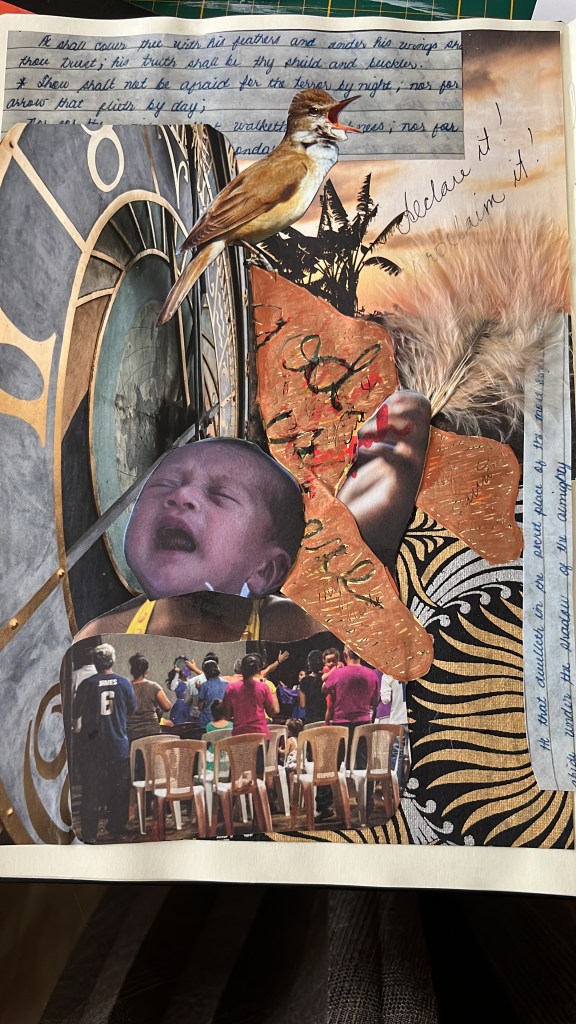
the writer’s notebook

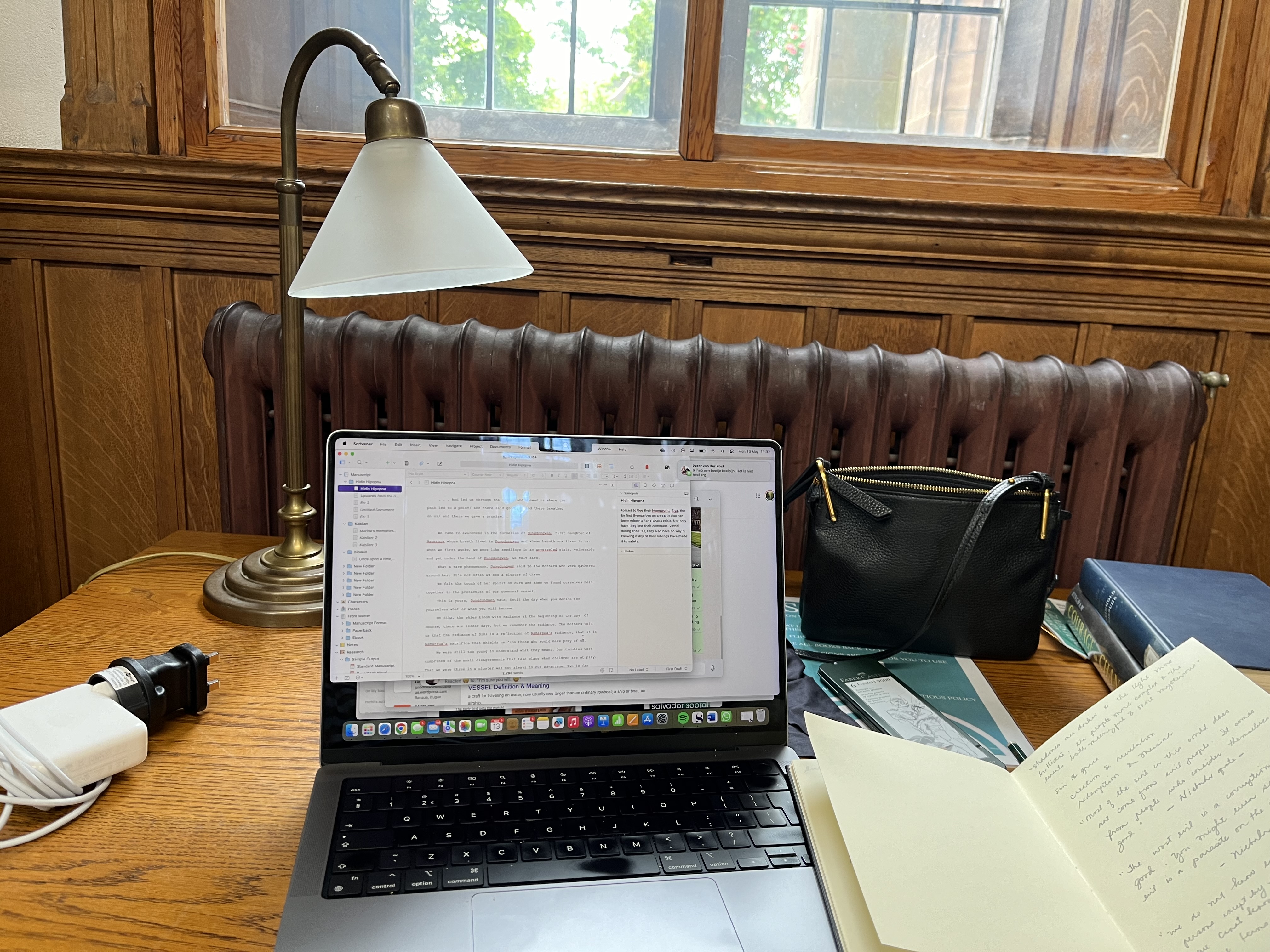
I’ve returned to making use of my physical notebooks–to writing down notes and thoughts longhand, and to thinking through projects, as well as taking notes from lectures or books that I’ve been attending or reading. My favourites are unlined notebooks with thick paper and while a lot of it is note-taking and recording of thoughts and possible scenarios, I also unabashedly include mundane lists for daily tasks or groceries or things to remember. I also like to draw diagrams because visuals help me a lot and that act of capturing something in a drawing even if I’m not great at it, helps me as I process through to what I want to say or write about.

I shared this process with the nibling during our once-a-week scheduled convo and as the nibling is a budding artist, I decided to send them a couple of journals like mine as I totally get how attention can drift when you’re listening to a lecture online and sometimes diagramming the lectures or drawing a weird head speaking the lecturer’s words will help make things more interesting.

I also showed them some of my awkward attempts at visualising stuff from inside my head which was funny and fun to do. As I said to them, I have all these images in my head, but I’m not good at drawing, so I write because I want to get them out of my head onto the page.

Anyway, the notebook is a hodgepodge. It’s not neat or academic. It’s more of a collection of all the things that catch my attention–things I obsess about–subjects I hunt down as I try to figure out what it is my brain is obsessing about.

I’m thinking again about Jeremy Kamal talking about how we may think we’re obsessed with the apple until we find ourselves obsessed by a fire hydrant or a firetruck and then as we track these obsessions we realise that what we’re really obsessed with is the color red.

It’s a thought I’ve taken with me in my process and the truth in those words is reflected in the search and the resulting pieces. For instance, in a recently completed piece, I thought I was obsessed with black holes, when in fact, what I was obsessed with was grief and saying goodbye. This is something that had me sitting back a bit as it’s something I still struggle with although it is true that time takes the sharp edges away.

What is personal to us or what comes from that place where our emotions reside can be scary, but as Kiini Ibura Salam in her book, Finding Your Voice, says it can also be the place where some of our strongest work comes from (I am saying it as I understood it). I am thinking of this as I work on various pieces and the notebooks help a lot as I find that creating diagrams of my thoughts or simply just wrestling with ideas using actual pen and paper does help me find some resolution or some direction when it comes to what I am working on.

I find myself thinking too about the instrument to body connection and what it represents or what it means for makers–writers, visual artists–all of us who make things. Perhaps, it’s this connection–the slowing down of process, the taking time to reflect and think and be in the moment with the work in progress that has made me feel less anxious and more capable of believing in what it is that I want to bring into the world.

During one of the lectures I recently attended, the speaker spoke of how what’s important isn’t having or finding all the answers, but rather finding the questions that we want to ask. This speaks too to what Jeremy Kamal has said about finding what it is you’re obsessed with.

As we enter the fall season, I’ve started working together with various makers. Writers and artists. Thinkers and creators whose work excites me and makes me see how the boundaries between the worlds of making are more porous than we imagine them to be. There is a lot waiting to be discovered and a lot of questions waiting to be asked. For the time I have been given and the opportunities that arise, I am truly grateful.

To you who are on the journey, don’t be afraid to ask questions. As has been said: curiosity is the mother of invention.

Some of my most recent notebooks. The smallest one fits easily in any purse, the purple one is already full, the open one is the current notebook but I am close to the end of it, so I have a new one waiting for when the current one is full.

Process: approaching the work

Am I still a writer?

In the time that has passed, I’ve asked this question on and off. I’ve wondered why I can’t just sit down and make myself write.

Sometimes, just the thought of writing is enough to make me anxious. I sit down and look at the page and wonder if what I write will be good enough. Will I be able to say what I want to say? How did I write before the world changed? And why must the world start up and go at full speed while I am still dragging my heels and waiting?

The work summons me. It calls to me. My gut churns. I want to throw up.

I know the work is waiting and even if I try to cover it up, inside my head, the work is already taking shape. It is simply waiting for me to sit down and write.

But when I sit down, my attention is led away by other things.

My eldest son must be reminded of projects he must finish if he is to graduate this year. Youngest son must focus and finish his homework. Paperwork beckons. We must make a decision on our house. We must speak to the insurance people. We must speak with the builders about the damage the last storm inflicted on our roof. We must. . . .

There is no end to the list of tasks.

But the work beckons and cannot be ignored and so, I sit and look at what I have written and think of how I will go on from here.

I think of loneliness, of displacement, of the world becoming empty and bare and of how the landscape changes and how we change.

When does the stranger’s touch become the touch of a friend? When does a lover’s embrace become a shelter? When does the foreigner become part of the landscape? When does the stranger start to call the foreign country, home?

How do we get there?

How?

I think of the world in its sad state and of how easy it would be to give in to despair.

I think of life and of being in a state of change. I think of the gaps between the spaces.

I think of what it means to go out on a journey, of what it means to leave everything behind.

I sit down.

The writing isn’t perfect. As always, it is flawed.

Updatery and such

It still continues to be busy. In some ways, it’s busier than it was. In other ways, it’s a bit more quiet. I like that I get to have alone time when I can do whatever I like but the house has its demands and there are things that need to be done.

This past month, I finished working on an essay I’d promised Maurice Broaddus. I think of the encouragement that comes to me in emails, in publications (Magnifica Angelica Superable was published on Lightspeed this month), and in conversations had with beloved ones. It may sound strange but I feel like I am coming back from a long way away.

I think of Laura telling me how deaths of those close to us change us. I think of one of our friends telling me that when his father died, the world narrowed down and became somehow sharper. Different.

I think of what it’s like to fall in-between cracks and how there is that moment between losing someone and being alive when it feels like the left behind are hovering somewhere in a place like indefinite limbo while the world goes on.

It feels just right that I am reading a Terry Pratchett’s The Amazing Maurice and His Intelligent Rodents with my youngest son. Youngest son can read the book all by himself, but we borrowed this book expressly to read together. A bedtime ritual where he listens and imagines while I try to make the story feel as real as possible with the reading of it.

There is death in this book. In the past two nights, two of the intelligent rodents have died. Pratchett doesn’t turn away from those deaths. Rather he lays it on the page, factual and clear. It happened. A rat died. We stand still for a moment, thinking on that death and then Pratchett moves us onward–the story continues. It’s not that the death doesn’t matter. It does, but life goes on and characters move forward and think about what happens next.

On some days, it’s a dilemma. How to make it so that a child doesn’t sink into the quagmire of sorrow and despair.

Tearing a book out of Pratchett’s page, I acknowledge my child’s sorrow. It’s sad and it’s a terrible thing, but tomorrow is a promise. Let’s think about what we want to do tomorrow. Where do you want to go? What do you want to see? What about next week? What about next month? What about next year?

I understand very well that grief doesn’t ever go away. That grief is not a neat and orderly process but it comes in waves and flags and sometimes at the most inconvenient and untidy of moments. It is as it is. There is no changing the reality. But we go on. We hang together. And then, I find myself thankful and glad that I can still be here for my children.

Process: Fire and Life and Story

Wrote 1647 words to the wip yesterday.

Worked on that story that I let lie for a long long time.

I am sitting at my writing desk–butt in chair, eyes to the screen. I plan to write and I plan to keep on writing.

I think of conversations had with friends about the writer’s life and the act of writing. I think of stories and I think of fire and I think of how what is twisted and cold and hateful will always try to kill what is warm and passionate and alive.

Fire and life.

I think of how we come to story from many different backgrounds. Half-scared out of our skins because to write story is to bare yourself to the world. It is to make yourself vulnerable and open to possible derision, to possible shaming, to possible rejection, to possible pain. And yet, we keep doing it. Again and again and again.

While sorting through the business of paperwork and thinking through how I should go on, I told the accountant who was helping me to deal with the finance side of stuff that I was working on my first novel. She smiled and told me that it’s a rare writer who is able to make a living off of their writing. I know this. I know this very well.

Still, I write.

I write because stories are life. They remind me of hope and joy and of the passion that is so vital to life. I know what it’s like to walk in this world carrying worlds inside my body–to have that feeling of knowing a place that is beyond the space my physical self occupies.


Story is a fire. It is my job to open the door, to make the fire so inviting that the reader can’t help but come in. It is my job to make the world I carry inside me become just as real to the reader as it is to me.

There is enough killing hatred in the world. There are enough people who populate the world with killing words and killing deeds.

Words have power. (Fantasy reminds us of this.)

I write to remember that the world is filled with infinite possibilities, that there is still hope, that we have the power to change, that we can change ourselves and the world around us.

Blow fire into your story.  Keep hold of your hope. Be contagious.

The stories we write. . .

This year’s write-a-thon seems to be really good for me. In the past two weeks, I’ve written close to 10,000 words including words from two new short stories.

One of the stories takes place during a period of Ifugao history that is surprisingly well-documented. I’m talking of the period when American colonizers took a large number of Ifugao to the US where they were put on display as living exhibits. I remember visiting the Folk Museum in Seattle and seeing newspaper clippings about this period there. I wish I’d taken the time to ask for copies of these clippings but I was feeling quite upset at the time. I thought of growing up with men and women who were very proud of the culture and to see it being written about in a condescending manner– I had no words for what I felt. I still don’t.

This is one of the most intense stories I’ve written and I find that the more I delve into history, the more it becomes impossible to be unmoved by it. I find myself wondering what it must have been like.The years when we lived away from the mountains were like years in exile. Now I live in the Netherlands, but for all that I am surrounded by green things, I have moments when I feel very much like an exile. My personal narrative contains that longing for home and the desire to return. I suppose it’s inevitable that this finds its way into story.

The second story I wrote, which is still in full first draft glory, intersects with Alternate Girl’s life story. For quite sometime now, this character named Adventure Boy has been lingering in the back of my mind. I kept trying to write his story, but kept coming up with the wrong words for it. Then, last week, I sat down and in two days, the first draft for Return to Metal City was written. I need to do a bit of tweaking and probably need to do a major overhaul on one section, but aside from that, it’s the story I’ve had in my head for quite a long time.

Right now, I’m back to working on the Body Cartographer novel. I’m hoping to write at least 5,000 more words to it by weekend. I’m terrible at updating but I will post excerpts sometime soon.