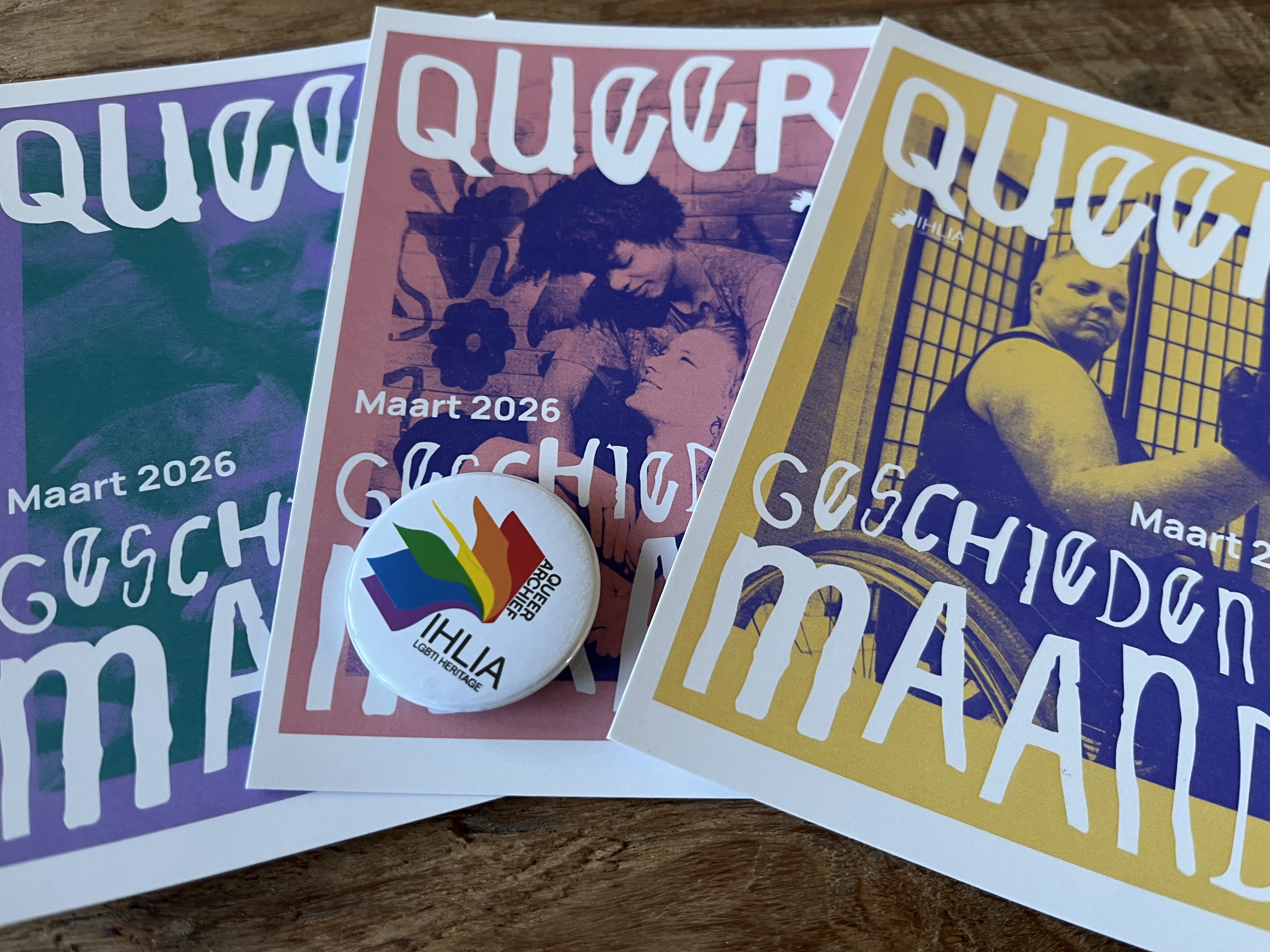
On Friday, I attended IHLIA‘s programme for the sixth edition of Queer History Month. The first part was taken up by a keynote speech (in Dutch), and a panel (in Dutch) which included the keynote speaker and the curator overseeing an exposition for World Pride at the Nieuwe Kerk in Amsterdam. For a while, I felt like I was attending a college lecture. The keynote being one where the speaker, Tamara Kloppers (a researcher at the museum) presented her findings from researching art and objects in the museum that speak of queer history.
We already know that Queer History has always been there, except it’s often been muffled or hidden away or pushed aside because history is often dictated by those who hold power (and money). But it is interesting in an intellectual brainy kind of way where yeah…look we have found this in the archives and here is the evidence.
I did find myself wondering what these findings and discoveries could mean for those coming from queer refugee communities.
As Sorab Roustayar (founder of Queer City and Fite Club) succinctly put it, “Who are these recovered items for anyway? Many of us don’t have a museum card and entrance fees to museums is really expensive.”
So yeah…who does the research serve? Does it serve the community? Or does it serve the insitutions?
What stood out to me was the story of how these pieces of art became part of museum archives. I suppose researchers don’t speculate on the reasoning behind these donations, but I can’t help but think of how a lot of history is personal as well as political.
How does what is uncovered or recovered echo in current spaces? In what ways do we want these findings to echo onwards? Queer bodies continue to be marginalised and pushed aside even in spaces and institutions that want to be seen as queer-friendly.
I have to think of the sharp contrast between the insitutional vibe and the community vibe because once the community panel came on, you could feel the vibe shift in the room. Yes, we still talk about history, but we talk about history that’s happening now and how marginalised communities are making histories which are often elided, underfunded and even undocumented.
(I hope we are not making these records only to have them be hidden in the archives.)
I have to say that I like the IHLIA crew. They’re warm, approachable and friendly. It’s nice to know that there is this possibility to send an email and someone will respond who will remember your name and who will say: okay, just send me an email and we can talk if you need help with your community or your projects. It’s these kinds of connections that help us feel supported. Community work can sometimes feel like shouting into the void. But, as Arlo (from the last panel) says: “you keep showing up because that’s what community is about. You just have to keep showing up.”
You can still visit the annual exposition Queer History month exhibit at the IHLIA plein in the Openbare Bibliotheek Amsterdam (the one at the East Dock near Amsterdam Central Station). Collections from five participating museums are on display together with archive materials from IHLIA to put these objects in context.
There was a really excellent spoken word performance from Duraa. You can check out her website here.
Thanks again for reading. Small movements lead to big movements. May grace and peace be always with you.
 From the Beloved Country
You must be logged in to post a comment.