Out of the Summer break

World Pride 2026 brought with it a host of activities. Fully agenda’s, the pride marches, the canal parade, the book lunch which was the culmination of a project called A Letter Full of Love to an Unknown Person. It was very rewarding to sit and share knowledge as well and exchange insights with this group of passionate and talented writers, and while the project has come to an end, it is my hope that these young writers will continue to practice and write.

I’ve updated my projects page to reflect projects I’ve been involved with.

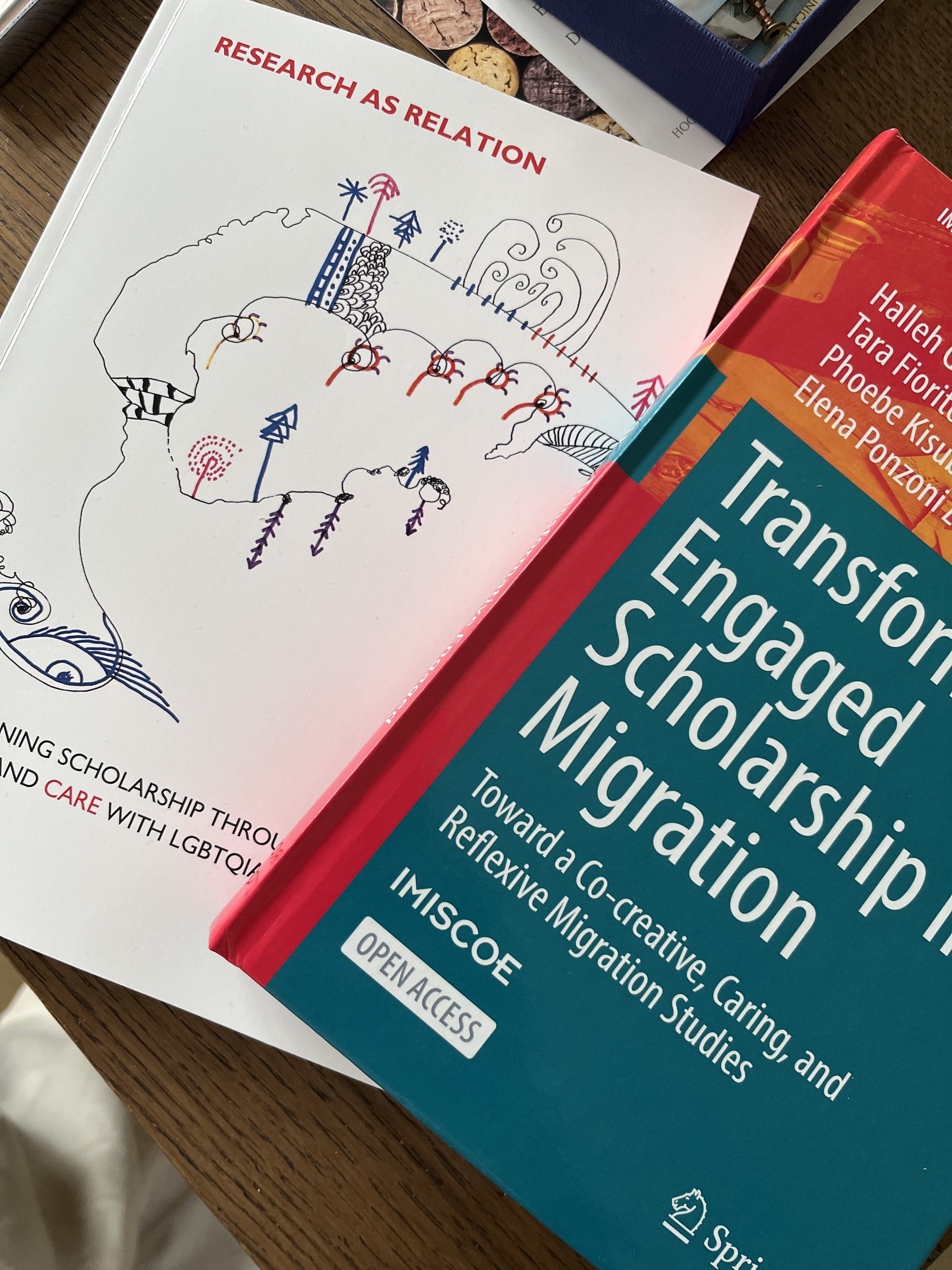
I also am happy to have in my personal library two books which contain record of the work that we have been doing in community. Transformative Engaged Scholarship in Migration edited by Halleh Ghorashi, Tara Fiorito, Phoebe Kisubi Mbasalaki and Elena Ponzoni, is now out and available as an open access resource. Interested parties can purchase it as a hardcover book or can download it from Springer Nature. It’s an honour to be included in this work and I’m very thankful to my dear friend, Dr. Fabian Y. Holle whose defence I was privileged to witness this September. I also have Fabian’s book, Research as Relation, in my collection now.

Immediately after the hectic pace of everything, we had a small crisis at home which resulted in making a decision to take a break away from everything even if it was only for a week. We went away to Hoge Kempen Nature Park in Belgium.

We visited the limestone caves in Kanne and saw mushrooms being grown underground. I’ve always been fascinated by caves and underground structures, and visiting the Limestone caves made me think of these structures which are part of cultural heritage and of course, this led to thinking about other kinds of structures, but that’s for another time.

During our tour of the cave complex, we heard the story of a great cave-in that occurred around a hundred years ago. Even then, mushrooms were already being harvested in this cave complex at the same time that limestone blocks were being mined. It’s a tragic story, particularly since not all bodies were found.

I think of the world as being this great living, intelligent, sentient being whose language many of us haven’t properly tuned into yet. But the message of the world is laid out for us, written out clear as day, broadcasted to us if we would only care to pay attention.

The breakdown of society, the disconnections that we experience, the way in which the world has become so polarized are symptomatic of how broken our relationship is not just with each other, but show us how broken our relationship is with the natural world.

While we took this break because I wanted to spend time together with my youngest son, I realised just how important it was for me. I was at the end of a busy season, coming into a period where I needed to make decisions about what I want to do next. I realised something which a good number of my dearest friends kept trying to tell me: it’s important to think about my own work as well and to sit down and face up to the writing.

Working with the LGBTQ+ asylumseeker community continues to be one of the most important aspects of my life. While I won’t be in Amsterdam as much as I used to, I will always carry this community with me. I said as much to the younger generation of coaches and facilitators who have risen up out of LIMBO. It’s in their hands now and this auntie is happy to cheer you on and support and help brainstorm and network and do what I can so the work will continue. This is necessary work in the face of rising hostility towards the LGBTQ+ community.

During the workshop series held in Framer Framed, we heard from Queer Volt’s Tom Doesburg about hostility and acts of violence and aggression towards people from the queer community. What’s frightening is how those who carry out these acts feel validated and supported by rhetoric coming from people who hold power. It’s a grievous use of power and influence to validate hatred and prejudice. World, we can do better than that. Surely, we must be better than that.

Even though the world seems to be going up in flames, I still want to reach for a better future. I think of Octavia Butler who has always been like a shining beacon for me. I think of my Dad who when we were growing up reminded us that we can make a choice to leave the world a better place in the places we have been. We can only influence so much and we can only reach so many, but if by the grace of God, he extends the reach of our tent, then we have to do all we can to make things better for those who will follow after us.

These are my early morning thoughts in the month of October. I am launching out on new adventures. Maraming salamat for reading. May blessings and peace go with you and may you live long and prosper.
Moving Love Premiere

It’s a happy thing to note that Moving Love will be on exhibit in Amsterdam during WorldPride 2026. I’m not yet sure how much I can share about this just yet but suffice to say, I’m really happy that we were able to find a location that’s accessible to lots of people and also a space that’s friendly to the community of LGBTQ+ asylumseekers.

This week, Moving Love is going into Premiere. Kudos to Vera Born of ImpactMakers (Moving Love producer) for finding a wonderful location for this premiere at the Utrecht Schouwburg. Tickets to this event are free, so click on the link and get yours. It will be great to see support for these young filmmakers.

There’s also more news on the bookmaking front as we are approaching Refugee Welcome Week and the writers from the Queer Work letter writing workshop will be on programme as we share the work that’s been done in relation to this collection of different letters gathered together in a book titled: A Letter Full of Love to An Unknown Person. We’re headed towards the final meeting together with this group of young writers, but the wonderful Sajad Salmanpour just shared with us that we’ve been granted a wonderful festive space where we can hold the launch of this collection of letters during World Pride.

I had been planning to post an update to this blog earlier, but I came down with the flu. So, It’s a good thing I got the flu at a time when most people were out on the school holiday. I had time to rest and recover and didn’t have to cancel a lot of appointments.

I did manage to make practice day on the Van Dam pipe organ in the town of Haastrecht. I recorded some bits from my practice there and am thinking of an interesting way to share them. In the meantime, I’m glad I’ve recovered enough to write a proper entry about Moving Love’s premiere. If you are in The Netherlands and have the time and opportunity to visit the Utrecht Schouwburg on the 7th of May, it would be great to see you there.

Friday’s event for Queer History Month

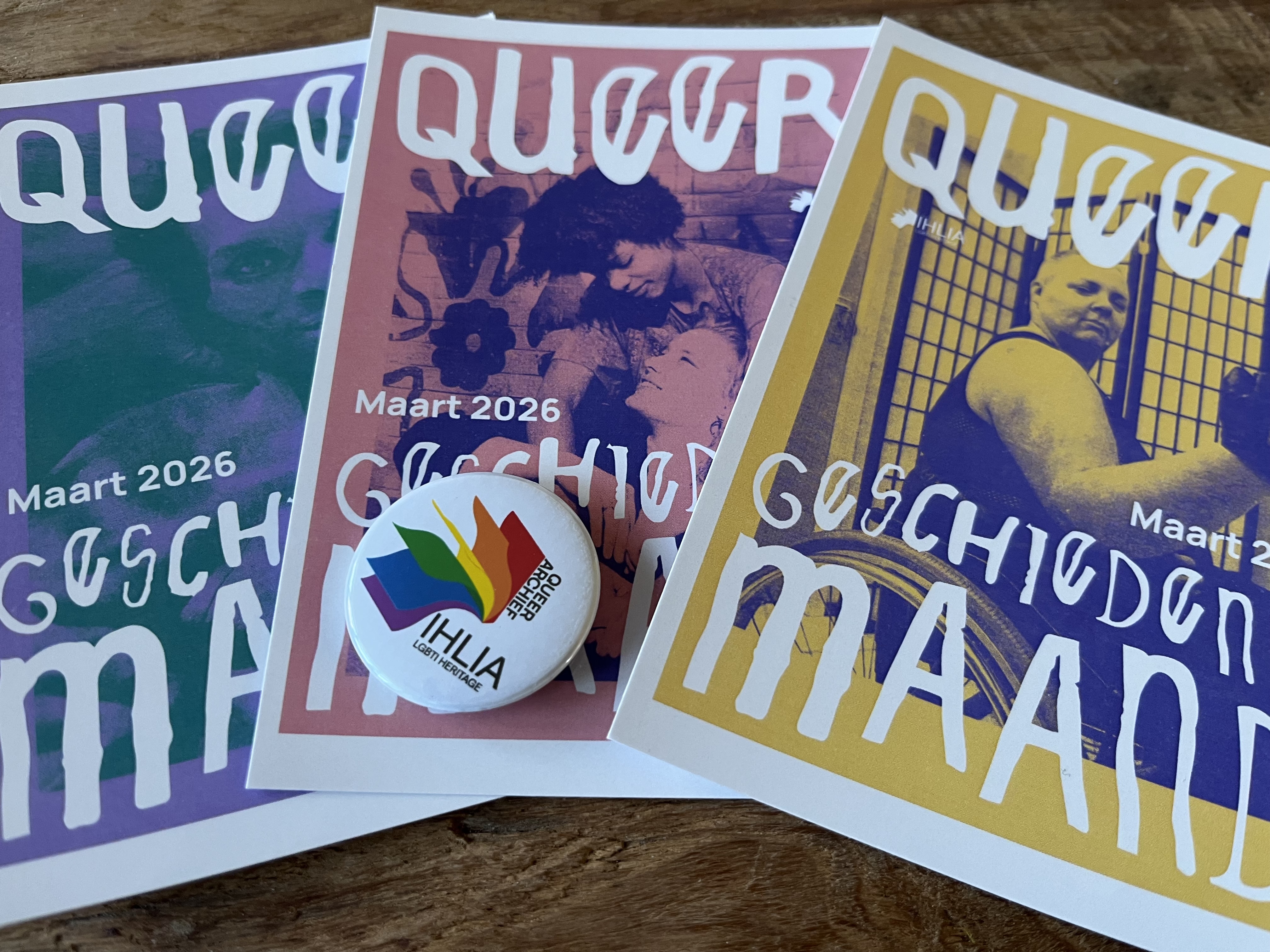
On Friday, I attended IHLIA‘s programme for the sixth edition of Queer History Month. The first part was taken up by a keynote speech (in Dutch), and a panel (in Dutch) which included the keynote speaker and the curator overseeing an exposition for World Pride at the Nieuwe Kerk in Amsterdam. For a while, I felt like I was attending a college lecture. The keynote being one where the speaker, Tamara Kloppers (a researcher at the museum) presented her findings from researching art and objects in the museum that speak of queer history.

We already know that Queer History has always been there, except it’s often been muffled or hidden away or pushed aside because history is often dictated by those who hold power (and money). But it is interesting in an intellectual brainy kind of way where yeah…look we have found this in the archives and here is the evidence.

I did find myself wondering what these findings and discoveries could mean for those coming from queer refugee communities.

As Sorab Roustayar (founder of Queer City and Fite Club) succinctly put it, “Who are these recovered items for anyway? Many of us don’t have a museum card and entrance fees to museums is really expensive.”

So yeah…who does the research serve? Does it serve the community? Or does it serve the insitutions?

What stood out to me was the story of how these pieces of art became part of museum archives. I suppose researchers don’t speculate on the reasoning behind these donations, but I can’t help but think of how a lot of history is personal as well as political.

How does what is uncovered or recovered echo in current spaces? In what ways do we want these findings to echo onwards? Queer bodies continue to be marginalised and pushed aside even in spaces and institutions that want to be seen as queer-friendly.

I have to think of the sharp contrast between the insitutional vibe and the community vibe because once the community panel came on, you could feel the vibe shift in the room. Yes, we still talk about history, but we talk about history that’s happening now and how marginalised communities are making histories which are often elided, underfunded and even undocumented.

(I hope we are not making these records only to have them be hidden in the archives.)

I have to say that I like the IHLIA crew. They’re warm, approachable and friendly. It’s nice to know that there is this possibility to send an email and someone will respond who will remember your name and who will say: okay, just send me an email and we can talk if you need help with your community or your projects. It’s these kinds of connections that help us feel supported. Community work can sometimes feel like shouting into the void. But, as Arlo (from the last panel) says: “you keep showing up because that’s what community is about. You just have to keep showing up.”

You can still visit the annual exposition Queer History month exhibit at the IHLIA plein in the Openbare Bibliotheek Amsterdam (the one at the East Dock near Amsterdam Central Station). Collections from five participating museums are on display together with archive materials from IHLIA to put these objects in context.

There was a really excellent spoken word performance from Duraa. You can check out her website here.

Thanks again for reading. Small movements lead to big movements. May grace and peace be always with you.

Saturday morning signal-boost

I thought I’d share a recorded excerpt from Vida Cruz-Borja’s story, “Have your #Hugot harvested at this Diwata-owned Cafe”. This is a story that’s available online at Strange Horizons and if you click on the title line, it will take you there. For some reason the podcast doesn’t work for me (I also didn’t realise there was already a podcast of this story, but this is an excerpt and not the whole thing.)

“Have your #Hugot harvested at this Diwata-owned Cafe” is one of the stories in Vida’s Song of the Mango and Other New Myths which is available from the Ateneo de Manila university press. I’m pretty sure it’s also available from outlets like Amazon.

Vida’s fundraiser which has been up since May 2025 has only just tapped 10% of what she needs to raise for her medical needs. Cost of medication has never been cheap in The Philippines, and with the rising cost, her need has become more urgent.

In the Philippines, we have this tradition of bayanihan which originates from when a house needed to be moved from place to another, an entire community would show up to transfer the house from its current location to wherever it needed to be by carrying the entire house on their shoulders. It’s also symbolic of how we help one another as communities.

I’m writing this post and sharing this excerpt in the spirit of Bayanihan. If you feel so moved, do feel free to share, to signal-boost, to donate whatever you can.

I hope you enjoy the excerpt and if you’d like me to record a full story, just let me know. When we reach 50% Vida’s goal, I’ll be happy to record one of Vida’s stories or one of mine.

Here is the excerpt from a section in the story titled: Eating One’s Feelings.

I hope you enjoyed this excerpt.

Blessings and peace to you who read this and maraming salamat for passing by.

Editing to highlight: Click to Vida’s fundraiser.

What I have been up to

In November and December, we had the workshops for Moving Love which is a film project for LGBTQ+ asylumseekers in the Netherlands where participants who are interested in film-making are given the basic knowledge and training needed to help them on the journey towards making a film.

We had three intense day-long workshops in Ede-Wageningen which is more than an hour away by public transport. It meant an early start on the road and a late return home, but it was incredibly rewarding and I learned quite a bit too about how films are made. After the workshop days, participants were scheduled for their own shoots. The intention being for each participant to create two 1-2 minute moving portraits or micro films. I didn’t get to attend the shooting days as my presence wasn’t needed during those days, but I did get some small insight into how those shooting days went and what glimpses I got looked amazing.

On the 6th of February, raw versions of some of the film portraits will be shown at the Fenix in Rotterdam as part of the IFFR Filmclub x COC Rotterdam x Queer Gym programme. Entrance is free and I understand that there will be a q&a for participants.

This January has been quite busy as I am facilitating for a community writing project under Queer Work. It’s quite a lovely project and one after my own heart as we talk about writing and memoir. I’ve experimented with making a video invitation for this project and have also learned how to make a proper voice recording. It’s quite fun to try out new things.

On the 5th of February, I will be giving a workshop at the Vrije University of Amsterdam. I’m looking forward to talking about the work I do and to share the tools that I use as part of my work. Let’s see. The plan is to make this something fun and collaborative.

During the December break, I had time to read Karin Tidbeck’s beautiful book, The Memory Theater. To my mind, there’s no one who writes like Karin. Karin’s prose is like an enchantment, and I found myself quite immersed in the world of the garden, but more importantly, I found myself just traveling along with Dora and Thistle and wanting to know what happens next. It is a fairytale, one that doesn’t evade what’s harsh or cruel about the world, but it also reveals to us the beauty in relations and connections and it opens us to the possibilities of the world beyond what the eye can see. Reading this book made me miss conversations had with Karin. I know I must make time to look up email addresses and write. A lot of times, I write letters in my mind, but then I forget when I sit down again.

Talking about letters, I have been dipping into Sister Love: The Letters of Audre Lorde and Pat Parker 1974-1989. I tried making a recording of one of the letters and if I succeed in doing so, I might post an attempt at an audio recording. I’m practicing with audacity and with another programme as the possibility of doing a podcast has arisen in the course of conversations with another group of friends. We’ll see. We’ll see.

2026 is an open door and I am thankful for time and for how there is always room to learn and explore new things.

There is a lot to worry about with what’s going on with the world. Sometimes, it seems like the madness of the garden has appeared in the world we live in, but in the midst of all the mayhem, I hope that we will continue to remember joy and magic and that we hold on to what connects us to one another.

(I want to apologise for some mispronounciations. I did try my best to get the names right. Non-native English speaker here.)

Thanks so much for passing by. May you find pockets of peace in your daily life.

A very short update

I have been quite immersed in the novel draft since end of August and it’s a bit of a surprise to look up and realise that we are already in November. That’s almost three months of non-stop writing at varying speeds and wordages, but I am happy to say that I am heading over the halfway mark as I hope to achieve 65k sometime within the next few days. I’ll likely hit 70k sometime end of the month or early December, but I am steadily moving onward. As my friend, Tricia, reminded me: I must finish.

I acknowledge that one of the things I love the most about writing is when I get to create new worlds. I love exploring different worlds and dimensions, the idea of creating different kinds of being in the world–sometimes similar to, but also other than how we are in the world today. It leads to some complexity when my head is thinking around matters like decoloniality and decolonisation and also when I contemplate kinship and connectedness and how might I bring this all into my on the ground workshop practice.

This November, a project I’ve been involved with for a little while, is starting up with a programme put together by different facilitators and arranged in such a way that we build up towards where participants can create their own micro films. It’s been quite a satisfying experience and I’m looking forward to the start of the workshop when we get to see all of these things manifest in practice space. When the time is right, I might share links to the eventual exhibit of the works that come from this project.

I shared with some participants during the co-creation lab, how putting together this programme was a satisfying act of collaboration and co-creation as we brainstormed together and also asked members of the community what would benefit participants the most. At the heart of the matter are the needs of the community whose voices we want to amplify. So, we want to create this space where it’s more than just the project space, but also beyond that there are possibilities to grow further as a creative, as a storyteller or as a filmmaker. I think that’s one of the aspects I love about this vision: where participants are empowered and given access to the networks so they can move and grow as they wish to.

I shared how one of our facilitators expressed how they wished this kind of programme existed back in the day because of how the programme speaks to the experience of us who are traditionally marginalised. One of our team members said: perhaps this too can be part of the impact of the project.

And because I am a world-builder, I started to imagine a world where curriculums are built and composed differently from how curriculums are today. My science fictional brain and my real world brain collide and I remind myself we are living in the present.

Reciprocity when we go to communities means we are also thinking of how we can encourage people to hope beyond the present. To see a vision beyond now and even if we cannot fund everything, the knowledge that someone has your back and is there encouraging and supporting your vision could already be enough. (To this day, my sister’s voice continues to encourage me even if she’s no longer physically here in this world.)

I still have lots of things I want to write about, but I will end this here as I still have to work on my novel. I am thankful to celebrate a year without treatments. A year wherein the report has come back still in remission and stable. For this I am very grateful.

Maraming salamat for taking time to read. May blessings and peace be with you as you continue on your journey.

At World Fantasy

Here at World Fantasy, I am learning how to balance my energy in a more intense way than I have had to since my last treatment at the end of 2024. I’m not exactly sure what made me decide to come to World Fantasy, but I think it might have had to do with wondering if I could still go to conventions on my own. A convention closer to home felt safer than a convention somewhere like in the US. After all, I managed to complete the co-creation summer workshop, which was also pretty intense, but in a different way. So when Aliette de Bodard told me that World Fantasy was in Brighton, I thought: Oh, I think I can go. It’s also a plus that I get to share a room with Aliette.

World Fantasy is quite intense in the way most conventions are intense. I had quite forgotten the noise level and how draining that can be. It brings home the fact that while I may be recovering really well, I am not yet at 100%. I’m very thankful then for friends who have introduced me to their friends. I was very happy to reconnect with Julie Philips who wrote James Tiptree Jr., The Double Life of Alice Sheldon and The Baby on the Fire Escape. Julie lives in Amsterdam, but it’s been a long time since we last met, so I was so happy when she told me she was coming to WFC. Julie introduced us (me) to Theodora Goss who just as lovely and as elegant as her prose is. I was quite starstruck and speechless for a moment. Like what are words? I remember reading In the Forest of Forgetting when I first learned that such a thing as genre existed and being quite blown away by the beauty of it. I’m pretty sure I’m mangling something up in the process of writing this, but I feel like I want to write this short blog before the feeling of now fades and I run out of gas.

An interesting new writer to me, is M.K. Hardy. I met the M of M.K. and enjoyed listening to her talk about their novel and the underlying themes in their work. I’m quite intrigued by the aspect of co-creating and writing together as it feels like an enriching process and I hope to get to ask about that part one of these days. I was very much engaged in Morag sharing about how the novel thinks around matters related to Scotland’s history as part of an Imperial project. I wished again that my sister were here because they would probably have got on like a house on fire.

While reflecting on this feeling of missing, I realised that even though my sister isn’t with me, she is still with me. I wrote a short piece reflecting on it and will share it here. Early on, after I realised that my ability to socialise is still at recovery stage, I decided not to rush out in the mornings. The panels I circled on my programme are wishlists not must do’s and it’s perfectly fine to spend time in the hotel room writing or wandering along the shorefront or doing other things not convention related. In the meantime, the manuscript has grown beyond 50k. I am embracing it and recognising how ambitious this project actually is and so I do need to take more time with it, to let it breathe and become what it is meant to be.

I have this hope that thinking around these ideas will lead to connect with others who are also thinking around these ideas of kinship and entanglement and not looking away from, but staying with the trouble as Donna Haraway would say.

There’s still more to write, but I need to end this post here. Sharing this short reflection on Grief and presence in the hope that it will mean something to you who have stopped by to read.

Grief makes us awkward. 

We are carrying these wounds with us, but we have no way to heal them because we have imbibed the narrative that tells us we must keep moving forward. 

But grief is also healing. 

In remembering, we make alive again the ones who we have lost. Their presence walks beside us in a different way. We can gain strength from that presence. From the knowledge that we have loved and are continuing to love. We have been entangled and continue to be entangled. They are not really gone from us. It is simply that idea of presence as being physical that we need to let go of. 

My sister is here, present with me. Just as present with me as she was when I could touch her hand. 

Blessings and peace to you who read this and Maraming Salamat for passing by.

Current doings

I’m waiting for CT scan results and I thought it would be good to post this before I get distracted.

I’ve been writing and rewriting the work in progress which expands in size, decreases in size and expands again as I write on it. At the same time, I’ve found myself asking questions of myself as I write. For instance: I think I might have fallen into the trap of trying to write something that’s commercially in line with what’s already out there. You know: a nice hooky opening. Action and bam we are in the middle of the story. It’s not bad, but a part of me was raising an eyebrow and going: what did you want to achieve with that?

I am a bit of an over thinker and I found myself asking what I really enjoy about writing science fiction and fantasy. The answer really isn’t very deep. One of the reasons I enjoy science fiction and fantasy is how there’s this wild space where you get to imagine all kinds of strange or weird worlds that may or may not be related to this world.

Of course, I write about the things I’m passionate about and I write about matters that are on my mind and things I want to work through. But most of all, I love the freedom to create outside of the expectation that I will be writing about my culture or about my experience of displacement or as someone once said at a symposium I attended: I don’t want to tell you another story about my pain.

Perhaps the most freeing thing we can do is to unshackle ourselves from the having to be something and instead embrace what gives us joy and freedom. For example, I’m invested in the furniture of strange worlds and I enjoy the experience of wandering through it in a documentary film kind of way. Oh look, shiny curtains. What are they made of? Oh wow. They’re alive. These plants can tell stories: I’ll sit here and let the trees talk to me now. (I confess, I also do this in real life.)

But as I progressed, I realised that my first draft wasn’t really all that great. It was fun, but it was kind of meh. So, I asked myself a few more questions: Oh hey, Rochita, I know your subconscious does this for you most of the time, but let me ask you if you are aware of who the stakeholders are in your world? I had a short laugh at how I progressed from “yay, sentient furniture” to “here’s my project proposal”. But also, I find myself thinking of how it’s not just about the motions of living, it’s the why are you living there and how are you living there. There’s a part of me that thinks back to the conversations had around the table as we discussed TTRPG creation and where I asked out loud if villains or enemies or oppressors were a necessity in story. (I know I’m gonna eat my question because I’m not sure if a big world story is possible without one of those things coming up and even if the conflict comes organically from the direction of ‘player A does not recognise your innate ability to become an amazing superhero’, there is still going to be an acting opposition, right?)

In the midst of all this wrestling, I read an article penned by someone (I forgot who) where they write about this experiment they did with an AI writing machine while working on a column. They were using a particular program and they fed it with a prompt and with an instruction to check out their blog and write something in the same style and voice. The machine spit out something which the writer then proceeded to rewrite and adjust and by the end of it the only things left over from what the machine had given her were articles like a and the. It was rather fascinating to observe the writer defending the use of an LLM because they ended up writing their column in under an hour instead of more than an hour. A part of me was like: Uh…I’m not so sure why you did this exercise, but it seems to me sitting down and writing the entire thing on your own would have been better. (Also, damn girl, you are a good writer. Why would you do that to yourself?)

I think about the journey I’m taking with this work in progress and how I’m discovering the world as it unfolds on the page and how there are bits of the world that I’m writing now that will likely not make it to the final cut, because I’ve already put them in my notepad under the header: cuts. But I really really like those bits and I had so much fun writing them. (I’m having some thoughts around waste and intentionality and how using an LLM in this way makes me think of landfills and fast fashion. I know. It’s how my brain works.)

After my last posting (How thinking of language leads to thinking about other things) a friend asked me how we could possibly escape the machine if the machine also copies our imperfections. I thought about this for quite a while and then I was reminded of the various movements in the art world and how all of these movements were a fighting against and a coming up against and a wrestling with what is established. History tells a story of invention and reinvention, of how there are always ways of escaping something that becomes establishment and the norm and also I find myself thinking about impositions and how artists don’t really like impositions. So I find myself rather invested in what our answer to this question will be. (If you have any thoughts on it, I’d be interested in them.)

In the meantime, I thought I’d share the link to a weirdly wonderful story which involves playing with language from my lovely friend Weegbree. If you have time, do click to read Brood/Pain/Pan: A Breadtale in Three Movements.

Blessings and peace to you who read this and Agayamanac Unay for passing by.

thoughts that could be random but also connected

While the summer break is now behind us, I still have a couple of days before regular scheduling fills my calendar and I’m taking these days to think around what I hope to do for the rest of 2025. There is some tentative and hopeful planning around 2026 as well. Being in Norway made me realise just how much I need to be intentional in freeing up time to focus on the kind of thinking and writing that I want to do. Going back home to the Philippines is still on my wish list and I am hoping that when we hit the one year mark, my hospital visits will be spaced out a lot more so I don’t feel like time is being squashed and I can only do so many things before my headspace is cluttered by hospital anxiety.

I ended up writing a lot on a manuscript that I’d been working on before I was diagnosed. It surprised me to discover that it was almost full-fledged. All that’s missing is the ending which I am working toward. I have no idea how long this story is going to end up as, but I like that I’m not falling asleep while writing it and that it remains on my mind in a way that I’m poking at it and thinking about it and still thinking: I am enjoying this.

At the same time, because I was reading a lot and thinking a lot about and with Mignolo’s work and Glissant’s work, I found myself also asking who in the Philippines or from the Philippines is thinking along similar lines around decoloniality and decolonial practice. I was very happy to find a recent paper written by Simoun Magsalin. Notes towards a Decolonial Anarchism for Creoles who are Neither Indigenous nor Settler is thought-provoking and makes my mind wander in all sorts of directions as I think around the subjects of history making, uprootment, nomad life and also as I think about my own history.

Reflecting on Filipino identity, I’ve thought on the waves of migration, intermarriages, the interweaving of different cultures resulting from that, and then as an added layer, the different occupations and colonisations that happened and how that changed and influenced not just our genetics but also how it has affected and impacted the DNA of our culture.

It feels very much like serendipity that all these thinkings are emerging, meeting at junctions, connecting like lattices or (as someone has said) like fractals. I like the word Creole and how it speaks of that kind of blending and mixing. It feels also so much like the universe conspiring to bring up food for thought at this time when I am thinking on my father’s history, my mother’s history and how that relates to us who are descendants of them.

I am also attracted to Glissant writing about uprootment and circular nomadism as opposite to arrowlike nomadism and I find myself pulled towards thinking around creolization and how that has worked through in Filipino culture and identity. There is so much to think about and I feel like I want to sit with this for a while.

In Notes towards a Decolonial Anarchism for Creole who are Neither Indigenous nor settler, Magsalin writes and lays out what decolonization is not while thinking around decolonial anarchy and what it would mean for the Philippines. ( It would be interesting to hear what people think after they’ve read this writing.)

In particular, I liked this line: Importantly, we do decolonial anarchy as creoles and as post-colonized subjects, not appropriative of Indigeneity.

I’m always surprised and happy when people tell me they’ve read what I write on this blog. I hope it encourages conversations and thinking around things that matter to you who read it.

Daghang Salamat for taking the time to read. May blessings and peace be with you.

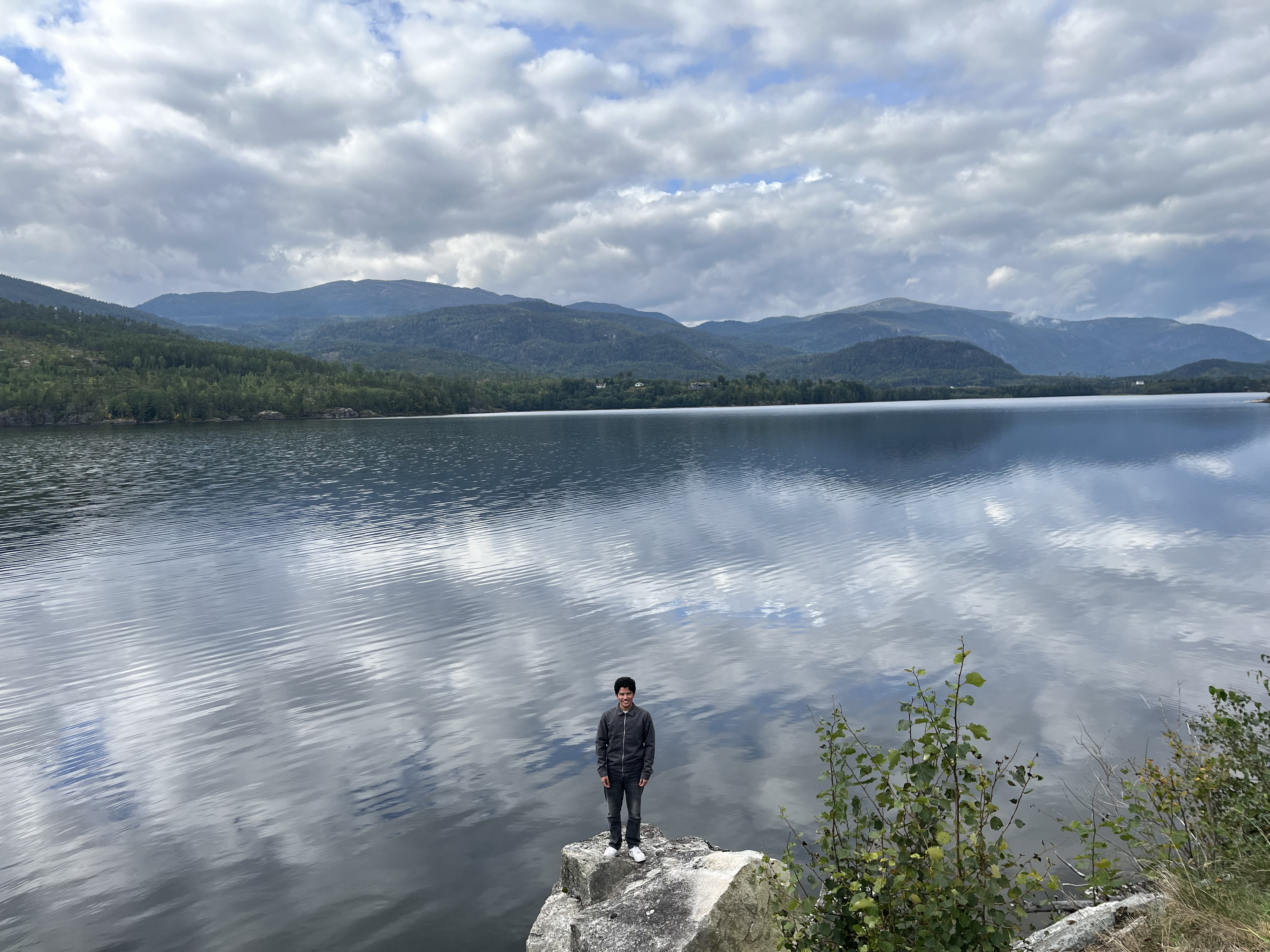
My son stands on a rock, between sky and water. I feel like it is a poetic description of my son’s mixed-race identity. Taken during one of our roadside stops in Norway.

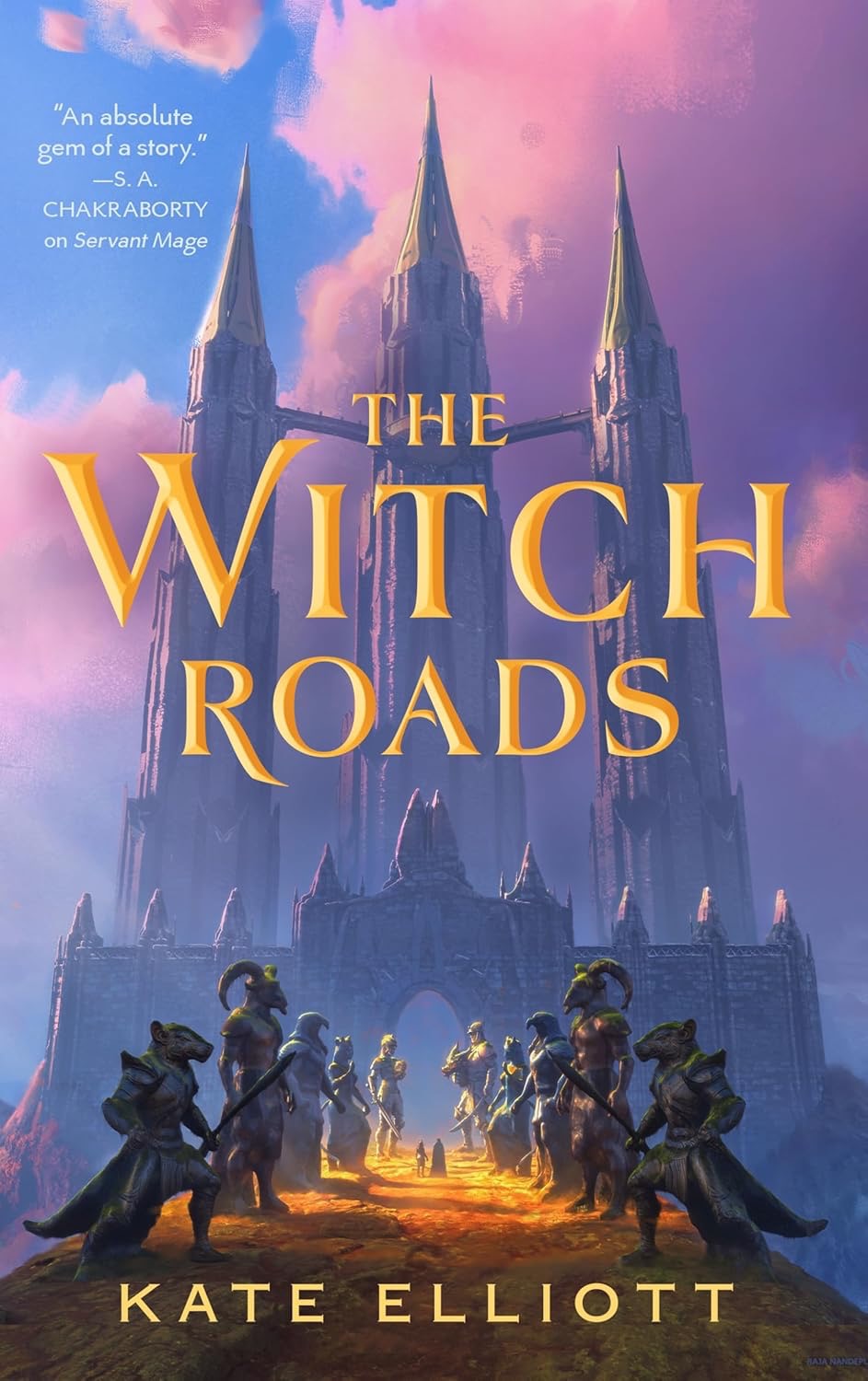
On Reading Kate Elliott’s The Witch Roads while travelling

I read Kate Elliott’s The Witch Roads while travelling in Norway and I feel like this was the perfect companion book for my travels as each time I looked up at the mountains or hiked a path, I would think about Elen and her crew travelling through the lands of the Tranquil Empire. Of course, the roads we walked and the paths we hiked were not at all as rough or as challenging as say the crossing Elen and company make at Grinder’s Cut (also there is no pall in Norway). But still, it gave me a sense of satisfaction to observe how time passes when your main form of transportation are your legs. Of course, there are also carriages and horses in this book, but the pace of travel is perfectly done and also a perfect way for the reader to get to see and know this world and its perils (mind you, it’s not just all peril. There is also sense of wonder in walking through this world). I found myself quite enchanted by the pacing of this novel which wasn’t a quick read because I had so much going on that I also had to keep putting it down. I’ve had some books where I eventually give up because I have to start all over again, but this wasn’t a problem with The Witch Roads. Picking up where I’d left off wasn’t a problem with this novel. Rather, it felt like picking up the thread of a journey once again and going: Oh, yes. We did this yesterday and so we’re going onwards.

If I’m giving the impression that The Witch Roads is a tame read, let me disillusion you. The Witch Roads is far from tame. There is an imperial prince and there is a haunt. There is danger because the company must stay wary not only of possible ambush, but also they need to stay wary of spores and the pall. There is magic and there is all kinds of love, from filial love to love born of allegiance to the kind of love that transcends. There are also lots of secrets and I feel like there is even more intrigue and danger waiting in book two.

There are so many deep and speaking lines in this novel. I thought I should post some of them, but I’m just gonna say: go read the book and highlight your favourites.

The Witch Roads is not just Elen’s journey or the haunt’s journey or the Prince’s journey, it’s also Kem’s journey and there’s something so beautiful about how Kate Elliott weaves all these things together and by the time I reach the end of this novel, I find myself thinking again about the question of who is the centre and where is the centre and from whose perspective narratives take place and it’s beautiful how Kate Elliott reveals the ways in which this journey has changed the different characters in different ways. Bringing them to places where they understand theirselves and those around them better.

Yesterday, I was at the Bryggen’s Museum, observing tapestries made by the tapestry artist Ragna Breivik (currently on exhibit at the museum). While observing the loom on which she worked and thinking about all the different threads and shadings and the amount of detail and work that went into making tapestries that continue to speak to this day, I thought of the way Kate Elliott’s work does this kind of tapestry making with her words where all the little threads come seamlessly together forming a story with different shades of meaning and texture.

The Witch Roads gives us a world that’s rich and full. Complex characters, each with their own path and their own priorities. We get the narratives around inequalities and the different relations that exist between different strata in society within the world but these are done not in an intrusive or shouty way. Thread by thread, shade by shade, with intention, Kate Elliott gives us this world that is rich and full peopled by complex characters who we can identify with and love.

For all that this first book ends with a foreshadowing of what might come in book two, book one leaves me feeling satisfied. I’m a bit impatient to know what happens next (of course), but there’s a lot to reflect on and think on about the first book and I’m very happy about making the choice to pick up this novel and read it (even though I tend to try and not read unfinished series).

On the dedication page, Kate Elliott writes about how The Witch Roads duology reignited her love for writing during a rough period when she wondered if she should just quit. I am so thankful she decided to keep on writing and I hope she will continue to do so because the world is a better place for having her books in it.

The Witch Roads is published by Tor Publishing Group.

Important note: I purchased my own copy of this novel, as I have done with most books that I write about. Reviews or thoughts on these books appear as time and energy permit.