Thinking about co-creation

Traveling to and from destinations is helping me catch up with my reading list. I find it sometimes surprising when I recognise how much traveling I’m doing. I live very close to a train station and from here it’s easy to catch a train to Amsterdam or Utrecht or Rotterdam or The Hague. I haven’t been to The Hague in a while and my library card has lapsed, but I want to return to writing and reading in the Royal Library sometime late in July after the projects I’m involved with have moved into the summer holiday phase. I also want to think more around what I want to do when the season starts up again. What is necessary to me? What do I want to keep on doing? What do I need to let go of and what do I need to prioritise?

I’m currently working together with a team that was put together with the goal of creating a table top rpg. It’s a process that’s new to most of us, but one of our team is an experienced Game Master and that helps the process along as we think around gameplay and building something that is interesting, fun and hopefully thought-provoking. We’ve been thinking around themes that we want to see as well as the kind of world and stories we hope to explore.

It’s a process that I needed time to wrap my head around as perhaps the biggest difference between writing alone and writing in the team is the work of coming to agreement. There’s also the process of making space for how we will not always agree and how we are fine with that.

We might fall into thinking that co-creation is some harmonious zen process. It can be, but by large it depends on the size of the team, it depends on the kinds of participants and the dynamics in a group, it depends on a lot of factors so co-creation can be as zen or as gnarly and messy as all get out, but it needs to be what it needs to be and there is no way to go around that and effectively co-create. I realise that going through the gnarly mess is a good thing. It’s good when we are able to show our faces to each other, to say: I don’t agree with you on this and I don’t want things to go in this direction and I actually would like to go elsewhere. When that kind of freedom exists, that holds a promise of something extraordinary coming into being.

Co-creation is a process that takes time because when we are creating together, it means we have to give a little and be willing to compromise in order to reach our common goal. I don’t think it can be hurried along and I think the best thing we take away from such engagements is how creating together allows us to quickly move away from surface and shallow niceties into spaces where we feel safe and seen and where we know that just because our thoughts and ideas are not shared by everyone, it doesn’t mean they are of lesser importance.

[Some questions I’m thinking around in relation to the work and the projects I’m working on: Do we want to build community? Do we want to share stories? Do we want to heal ourselves? What do we need and what do we want and how do we get there?) ]

At the heart of it, co-creation has to do with relationships. It’s related to how we’re entangled and connected to one another. If we are open and ready to make space for ideas and ways of thinking that are not the same to how we think and if we are willing to let go of control or if we are willing to step into the gap when we recognise a gap. Does this then mean that there is no space for individuality or for the individual choice?

I like to think that there can be room for both. That we can share and compromise and adapt while leaving space and room for ourselves to do and to create and to work around what speaks to us individually. I think that leaving space for individuals to come to terms with what works and what doesn’t is necessary if we want to come to satisfying conclusions.

I’m ruminating on this because creating world in a team feels very actual to the discussion around co-creation and I also am interested in how that translates into community building and creating together outside of fiction spaces.

Where ttrpg is concerned, we can try to think of directions in which we want players to go towards, but we can’t control or predict and while we can prepare for some scenarios, it’s quite possible that players will go towards outcomes we don’t expect or even want and that’s perfectly fine. I like to think that’s a good thing because there should definitely be room for insights and outcomes other than what we want.

Perhaps the most important takeaway for me from this process is to let go of the self that goes: ‘oh but actually’. Instead, I should just let the part of me that carries on snarky and whacky conversations with my other parts come out and play.

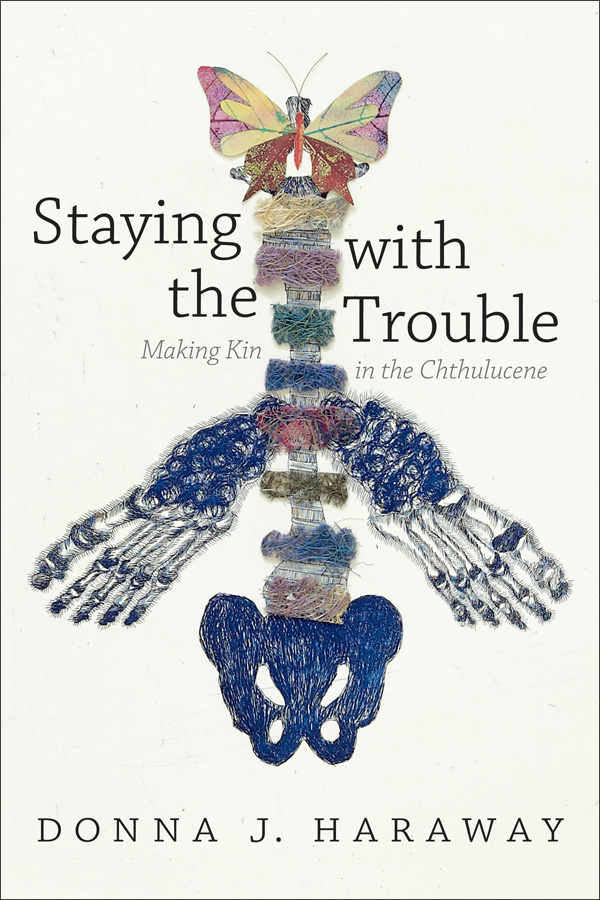
Throughout this writing, I keep thinking of that phrase from Donna Haraway from Staying With the Trouble: β€œIt matters what matters we use to think other matters with; it matters what stories we tell to tell other stories with; it matters what knots knot knots, what thoughts think thoughts, what descriptions describe descriptions, what ties tie ties. It matters what stories make worlds, what worlds make stories.”

Blessings and peace to you who read this and maraming salamat for passing by.

Staying with the Trouble is available from Duke University Press and from other booksellers.

(editing to add my thanks to Aliette de Bodard and Vida Cruz-Borja for listening to me while I worked through this process.)

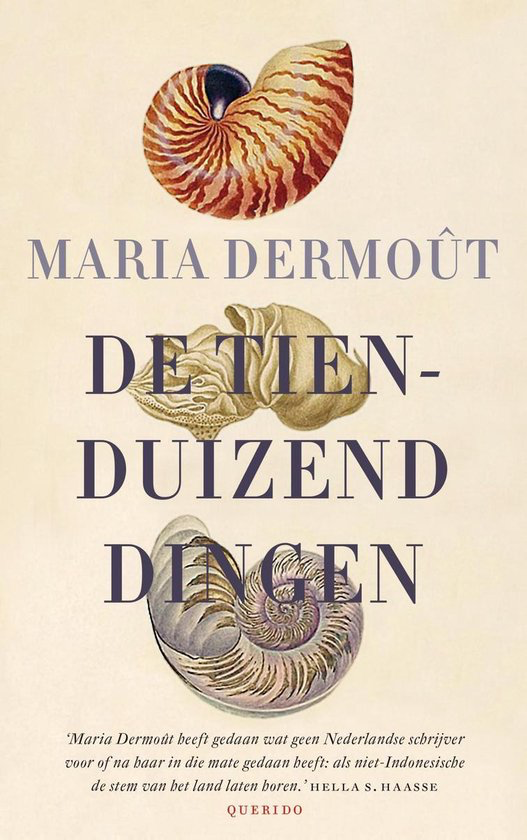
On reading Maria Dermout’s Tien Duizend Dingen

There is a house on an island and there is a garden around the house and in that garden are the graves of three little girls.

I read Maria Dermout’s De Tien Duizend Dingen in Dutch, so the above sentence is as close as I can get to summing up the opening of this Dermout’s beautifully immersive novel.

What captivated me the most about this novel was the intentional use of language and how through language Maria Dermout pulls the reader into the rhythm of a time and a place. It’s beautifully evocative and not only does the writer make us see the house, but we also see the garden, the leviathan who lives near the edge of the water that is in the garden, and then we are made aware of the graves and the possible ghosts of the three dead girls.

There is also the history of a place and of the first Mevrouw Kleyntjes who lived in this house and the second Mevrouw Kleyntjes who still lives in this house. There is the history of these women and the stories of the lives of the people who have interacted with and lived in relation to the house and around them is the history of place.

Somewhere halfway through De Tien Duizend Dingen, I sent a message to the friend who told me about this book. I told her that it made me think of Virginia Woolf. It’s been quite a long time since I read Virginia Woolf, but I remember a similar mesmerising almost hypnotic use of language in The Waves.

We are immersed in the world Maria Dermout writes about. We are transported to a period in time when the then Dutch East Indies (now Indonesia) is heading towards–an upheaval that will lead to a complete social-political change. Through the manner of telling, we can feel the simmering undertone of imminent change. Something is about to happen. What is about to happen is faintly present at the opening of the novel, but as the novel progresses, so does the sense of danger and precariousness–it is enough to make us recognise that at this point in time, the people in this place are no longer willing to simply accept the authority of Dutch masters. In this world, the woman, the house, the garden and its ghosts are relics of a past that will soon be nothing more than a dream.

De Tien Duizend Dingen was published in 1955 by Querido publishing house. It’s also available in English as The Ten Thousand Things.

What I have read and what I am reading

Now that I’ve regained enough focus to read whole novels, I find myself missing the conversations I used to have with my sister. A lot of our conversations used to revolve around books we’d read and what we thought about the story or how the writer managed to do something well or not well enough. I think my sister was the original bookworm in our family and I simply followed in her footsteps because whatever my sister read, I had to read too. Anyway, I’ve started reading the books I downloaded onto my reader and I thought I would write a little bit about the one I’ve just started reading as well as the one that I just finished reading. I thought I’d switch between fiction and non-fiction. Non-fiction often takes me longer as I like to reflect on what I’ve just read.

Fiction Read:

I’ve just finished Tade Thompson’s excellent Far From the Light of Heaven. I’m pretty sure Tade has written and published a bunch of novels since this one, but I just got around to reading again and the title of Tade’s excellent murder mystery called to me. It took me a week and a half to finish reading (this is my current reading speed for novels) but I never once lost track of the thread of the story. I’m also glad that I decided to get a tablet because it’s made it easier for me to just open a book and read when I’m on the train or when I remember that I am in the midst of reading a book.

I understand the importance of titles now because for some reason, that title just kept jumping out at me each time I clicked on my reader and I decided that once I had enough focus I would read that novel first. Far From the Light of Heaven makes use of elements of space opera and science fiction but at the heart of it, Far From the Light of Heaven is a murder mystery. The stakes are high and I liked how the characters feel real. I have to admit a fondness for Shell Campion’s Uncle Larry. I could relate to that feeling of wanting to protect someone younger who you consider part of your family. I found myself quite intrigued by the Lambers as a race and I want to know more about them. Reading this book, I also had to think about conversations around AI and the use of AI. I like how Tade doesn’t take sides on that, but tries to show how AI can be useful but also how it has its vulnerabilities and can be subverted in a way that it becomes a danger. I don’t know if this was intentional, but it felt very much so.

One of the things I loved about this novel is how we get to see how what happens on and to Ragtime affects the world the characters live in. It’s a reminder of how actions taken reverberate in the world. The question becomes this: do those actions lead to understanding that brings lasting change or do those actions lead to polarisation and division in the society around us? I may very well be putting my own interpretation on it, but this is something I thought about when I got to that part. Another memorable scene for me is the communal rite of grief/processing trauma.

I won’t say anymore as I might spoil the book for those who haven’t read it yet, but if you enjoy murder mysteries that are more than just murder mysteries, this might be just the book for you. Highly recommended.

I have a rather lengthy TBR list and I think I would like to try and write about as many of them as I can. I’m pretty sure there are things I’ve read in the past three years and a half that I forgot to write about.

Current Non-Fiction reads:

As I tend to dip into multiple non-fiction books at one time, I might write about my impressions from those books every now and then.

I’ve started on Karen Barad’s Meeting the Universe Halfway. I don’t even know who recommended this book or why I decided to buy it, but I’m pretty sure the person who recommended it made an impression on me. Anyway, I’ve just started reading it and there’s a line in the preface that just resonates so much with me. In the preface, the author writes about entanglements and how to be entangled is not simply being intertwined but it’s more than that. It’s a really great preface and if you’re interested in quantum physics, it does look like an engaging read.

A recent book I’ve recommended and gifted to fellow community workers is Aminata Cairo’s Holding Space. Aminata was one of the guest facilitators for LIMBO and the workshop she gave was joyful and beautiful and one that opened up space for stories to be shared and told. In this book, Aminata talks not just about holding space, but shares her own journey towards holding space. It’s a book that calls for reading and re-reading and for dipping back into when you feel the need.

Just yesterday, I had a lovely conversation with a friend who shared this line with me from a conversation she had with an older Dutchwoman. In that conversation, the Dutchwoman spoke of her husband, not as passed away or dead, but as someone who had stepped out of this timeline. I rather liked that phrase and it makes me think that entries like these are like missives sent to where my sister now lives–in a timeline that is outside of this timeline. It’s a lovely, lovely thought.

What are you reading now and what from those readings do you choose to keep with you?

Things I’m thinking about today

The past week has been quite intense and quite busy as I traveled back and forth from home to Amsterdam. The travel is a little more than an hour and when I get to the station I’m supposed to be at, it takes another 10-12 minutes before I’m at my destination.

Last week, I was at the Vrije Universiteit Amsterdam for most of the week where I participated in the Spring School Co-Creation Lab. This was the first Spring School held at the Faculty of Social Sciences and I believe the intention is to have a repeat of this every year for a period of time. The effect of what’s taking place in the US was quite visible at Spring School as events over there made it impossible for one of the invited guests to travel to us in Amsterdam.

It did give me a chance to talk about science fiction, visionary worldbuilding and science fiction as an instrument that can be used for thinking through issues that concern us and then we did a collaborative world-building exercise.

In asking the questions around collaborative exercises, it reminded me once again that in the work we do where we want to bend the needle towards justice and equality, it’s necessary to remember what our community’s vision is. To consult and collaborate and work together even when the outcome is not what we expected. It reminded me too that in the kind of work that we do where we seek to advocate for and are working for communities on the margins, listening and paying attention are some of the most important things that we can bring to the table. (There are a number of other things too like love and acting on the principle of seeing each other as Kapwa, as connected, as human.)

For myself, attending Spring School made me realise that I have to face up to my own responsibility to my written work. One of the comments I read somewhere said that a lot of the links on my website led to dead-ends and it looked like I hadn’t updated in a while. This is, in fact, true. For a long time, I didn’t have the energy or the focus to update this space. I knew the links were dead-ends, but I kept thinking: who cares anyway?

From listening to the conversations around me, I realised that it was important to keep an accounting and a documentation of things I’d written and published. Not only for me, but also because it might help someone else down the line. So, I found myself searching through my disorganised drive, trying to locate as many of the columns that I wrote for Movements as well as other non-fiction work that I had written around change, decolonisation practice and women’s work. (I’m compiling them to create a pdf that can be downloaded for anyone interested in reading. Suggestions are welcome as to how I can make it available as I’m new to this.)

As I was reviewing the work I’d written, I found myself quite emotional. I remembered how a lot of the non-fiction work that I did is what supported our family through the most difficult periods when Jan didn’t have any work and often pay from whatever writing I managed to get published was what helped keep the children fed. Interestingly, my kids don’t seem to remember that time as a time of hardship. It was more like: we ate noodles for a week and it was great!

Writing this my heart aches because I know there are parents at this time who despair because there is nothing to feed their children with. There are parents who don’t even know if their children will survive to see another day, and there are children without parents to worry over them. Having noodles for an entire week sounds like heaven when food supply has been cut off or withheld by the powers that be. What’s happening in Gaza, what’s happening in Sudan, what’s happening in Ukraine, what’s happening in all the places where war and oppression are taking place happens to all of us and we cannot allow ourselves to become numb or to look the other way.

For those of us who live in places of privilege where there is no war or famine or fear of rockets detonating over our heads, while we may not be able to jump on activist boat like Greta Thunberg, we can still do something. We can listen. We can advocate. We can bear witness.

Blessings and peace to you who read this. May we ever be striving to move the needle towards what is just and true and may we recognise how we are connected in our humanity.

art and narrative

Last Thursday, I moderated a panel discussion on the Fractal Art of Julius Horsthuis at NXT Museum. It was quite an interesting event as not only was the artist on panel, but we also had Dr. Margriet van der Heijden on panel–a physicist who specialised in particle physics at CERN. I’d never thought all that much about fractals before–I mean, if someone said the word fractal, I would understand that they’re talking about self-similar patterns which we often see in nature, but I probably wouldn’t be able to tell you what it is in-depth. For math people, talk about fractals will often lead to thinking about the Mandelbrot equation, but did you know that before Mandelbrot, there was the Julia? (Yep. I learned all these things while doing my prep.)

I also found myself thinking on the question of what makes art. What do we mean when we say a thing is a work of art? And what function do we ascribe to art? Julius Horsthuis says that his focus on Fractals lies in the fact that he hasn’t gotten bored by it yet.

For Julius, documenting or discovering the 3D worlds opened up by the input of various equations is what makes it fascinating for him. He talks about the films Baraka and Samsara which don’t follow a conventional narrative and how these films were an inspiration for the 3D films that he makes.

I certainly think that experiencing this kind of art by being in a space where you are surrounded by it is a different one from that of seeing it onscreen (on your laptop, your pc or your television). There is a mesmeric quality to it, but at the same time there is (as one of the audience said) a feeling of loneliness. Perhaps because there is an absence of characters interacting with the landscape. (Perhaps the person in the space becomes a character interacting with the landscape or could it be the maker himself?)

I watched Baraka and thought about that difference (the absence of humans in Julius’s work) and found myself thinking of how a landscape changes with the presence of humans. As Margriet said to me later on: Humans are not fractals.

I do like the concept of non-conventional narration and how it ties in with how story doesn’t have to conform in order for it to matter.

Later, Julius speaks of how the absence of narration is deliberate, although as he explores the possibilities of bringing his creations to VR, he realises that the absence of narration may not be conducive to people engaging with the art, particularly if they come to the experience for the first time.

Is story an experience? Is art an experience?

I think about these as I deliberate on my own work and process. I think of how as writers of story, there is a certain expectation arising from centuries of stories being told. What happens when story doesn’t conform to expectation? What happens when a story simply wants to show a world in the same way a documentary maker would show the world?

But is showing the world enough? We could argue that the majority of science fiction and fantasy books are about showing the world.

Piranesi, one of the books I read when I finally got my reading brain back, feels very much like that. It’s basically Susanna Clarke showing us the world Piranesi occupies. Piranesi’s voice compels us to come along and see and learn more about the world they live in. The cast of characters is barely there, but we’re seeing the world through Piranesi’s eyes and it’s beautiful and fascinating and a lot of times it is lonely. Piranesi eventually conforms to a story expectation but then not really and the feeling of fascination remains long after the book is finished.

Does Horsthuis’ art work in the same way? I can’t help but wish I had thought to ask how exploring the world of Fractals has changed or enriched the artist as a person. I’m not even sure if this is what the artist is after. Does it even matter? Should our work change us or reflect us or enrich us even? Does a work have to mean something in order for it to have value? Is fascination and sense of wonder enough?

In the light of discussions around the lives of creators, to what extent does the character and life of a creator influence our engagement with the work that they create? And can we separate things made from the people who make them? (Probably something for another post…my brain tends to wander off in tangents and this is my blog. πŸ™‚ )

I think there is room in the world for different kinds of artmaking because every form of creation will find its own audience and will speak to audiences in different ways. Thursday’s event reminded me of that. It reminded me of the beauty of physics, the endless mystery of the world we live in and that joyful feeling that arises when people come together with a desire to create bridges of understanding and knowledge.

If you’re in Amsterdam, I would recommend checking out NXT Museum (check out what’s on exhibit first as it varies). Not only is Julius Horsthuis’s Fractal Art on display, but they also have a fascinating exhibition by the postdigital art group Random International.

Blessings and peace to you who read this. Daghang salamat for passing by.

how it’s going

I’ve been going to physical therapy with a group of oncology patients for a couple of weeks now and have noticed that while mornings are often much better in terms of energy, afternoons are now improving. I’m not as tired as I was during the first afternoon training. I take this to be a good sign.

Upon my return home from Gladstones, the eldest son told me that I could transform his former bedroom into a writing space. Something I hadn’t even thought of doing because it was always his room, a lot of his things are still in it, and perhaps it’s that mother thought in my head that held the space for him just in case. But, as I was reminded, it’s been a year since he moved out. Birds spread their wings, they leave the nest, and go discover the sky.

So finally, after more than twenty years of writing at the dining table and having to move my mess when it’s time to eat, I have this space where the books I am reading can be left as they are. Where my pens and pencils don’t have to be tidied up and where when I am done for the day, I can close the door and let the projects I’m working on percolate.

I can’t help but think again about Virginia Woolf talking about a room of our own and how women who write need this kind of space.

Before I went to Wales, I downloaded a book by Joanna Penn. In the past, I’ve read books on writing that made me go: Oh, that’s nice. But it doesn’t work for me. Joanna Penn’s “How to Write A Novel” is perhaps the first book on novel writing that’s made me stop and say: I recognize that. For one, Joanna Penn calls herself a discovery writer. She talks about how overwhelming the process of writing a novel can be when you’re like her(like me). It was like a letter from a friend saying: look, I get it. Now tell me why you’re not finishing that novel. For me the greatest thing was a sense of overwhelm. I’d get bogged down in the details and before I knew it, I was lost. (I have a bunch of novels with great beginnings where the middles and ends are all squashed together because I got caught in a tide of overwhelm and couldn’t see where things were going anymore.)

But here I am. It is the beginning of the week. I have returned from my therapy class feeling energized and thinking: you know, you’ve come this far. Look at the horizon. Can you see where this story is going? Can you see how it’s going to end? Can you see what the story is about? Coming on close to 50,000 words, it’s really getting there. (Alarming thought.)

I think of how my sister would tell me to write whatever I wanted to write and to never give up. If my sister were still here, this is the novel I would give her. I would tell her, this is the novel I wrote because of all the conversations we’ve had and which we continue to have in my head. There are moments I just wish I could turn to her and say: what do you think about this?

What’s kept me from finishing novels in the past? At the heart of it has always been fear. Fear I wouldn’t have the right words. Fear I wasn’t up to the task. Fear I would screw up.

It’s funny how my sister’s legacy continues in the words she used to speak to me. My youngest son has had some difficult moments at school (understandable in the light of everything) but I’ve said these words my sister used to say to me: “It’s your dream, do something about it.”

Since I got this room, I’ve been coming up everyday to write words because when we see each other again, my sister will probably ask me what I did about my dreams and I don’t want to say that I was too scared or too overwhelmed to do something about it.

Blessings and peace to you who read this. Agyamanac Unay for stopping by.

Hello 2024

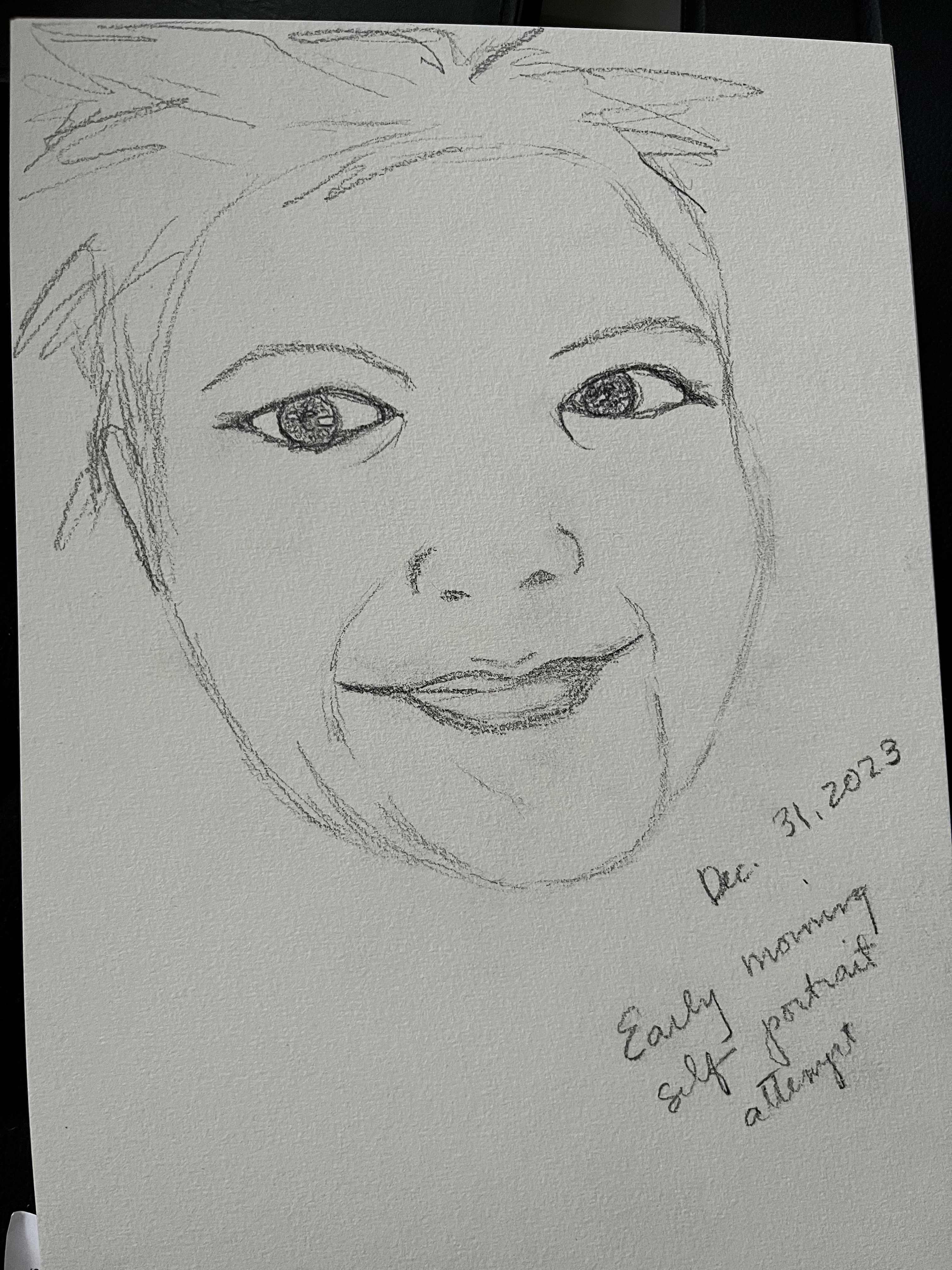
I am learning how to do freehand protraits–relying less on a grid and training my eyes and my pencil. I still need to work on proportions, but the results have been surprising. Did you know that turning a picture upside down will actually help you focus more on shapes and lines and will give you a more satisfying rendition than if you are looking directly at a thing? For most of 2023, I had to practice at home by myself as my energy would often run out and I would end up having to skip art classes.

Towards the end of 2023 though, I was able to attend five art classes (what luxury). It became important to me to go to class with a goal. What is it that I’m struggling with, right now? What questions can I ask and how can I put the answers to practice when I am unable to attend class?

There are so many similarities between making art and writing and life and the parallels fascinate me. Because we often start out with a draft–with an idea of where we would like to go–or in my case, I sometimes find myself caught up in an emotion and I let that emotion move my body and take me to what comes out on the canvas. I suppose I am very much a pantser on canvas as I am a pantser with words. Portraiture though is teaching me the discipline of looking and seeing and translating what I see in lines and shadows and angles on the page. We don’t know what we’re making until we see the finished project and even then, it can be tempting to keep tweaking. For the artist, the art is learning when it’s time to stop. There is no such thing as perfection in art, simply the question of: have I managed to convey what I wanted to convey? And does the meaning the viewer attaches to the image make me say: Oh…that interpretation works just as well.

It is satisfying though when you get your meaning across and it’s the same with working with words. Stories work when they mean something to the maker and to the person reading or receiving the story. And in this way, stories become an act of co-creation. The writer creates the world, the characters and the story, but the reader attaches meaning to it and the art becomes the ability to draw the reader in and invite them to create together with the writer.

I’m not a very good fanfiction writer but I find myself in awe of writers of fanfiction who expand the universe and the worlds of stories that have captured their imagination. To have a fanfiction made of your work is, I think, the best possible compliment an artist can hope for. Why? Because it means you’ve made something that has become full of meaning for another person to the extent they wish to co-create with what exists.

Life itself is an act of co-creation. We co-create together with God and with our fellow inhabitants of the earth and together we weave this massive story that is the story of humanity. And it sucks a lot at times. It makes us cry and feel frustrated at times. It makes us angry. It moves us. It makes us want to hit out and hurt someone sometimes. It makes us decide to take action. Co-creating means, we don’t just let life happen. We decide to take part in life becoming.

Reading back, I think this is what 2024 is shaping up to be for me. I spent 2022 trying to stay alive, trying to recover, trying to survive. My 2023, had me learning how to deal with setbacks. It had me on a path of discovering what it was that I really wanted to keep on doing. Here I am in 2024, still alive. I am present. I am doing what I need to do, here and now…bedhead and all.

Agyamanac Unay for stopping by. May peace and love be with you.