Grief

You can also listen to this blogpost.

My mother passed away on the 27th of May 2026. Just six months short of turning 89. Because of my own personal circumstances, I won’t be going home for the funeral, but there is a livestream and distance is lessened by the daily calls and check-ins with my siblings and other close family members. We are doing what we can to lighten the load from where we are. The past couple of days have been filled with collecting and sifting through photographs and video footage from the life of my mother. It’s become a very Filipino thing to commemorate our loved ones in this way. I rather prefer to think of this moment as a chance to celebrate her life.

When she was 46 years old, my mom was diagnosed with metastatic cancer. It had spread to her bones and even with treatment the best they could give her was a year. So, 42 years is an amazing bonus and a testament to the fact that nobody can really say how long or how short life will be. My mother didn’t have any treatment after she heard the prognosis. Chemotherapy was still in its early stages, taxing on the body and taxing on finances and it wouldn’t change anything at all.

So, my brave mother, decided she would simply pray and ask God for a miracle. Miracles aren’t scientifically proven cures. They belong in the realm of “this is something we cannot explain” or “It is a mystery, but also there is still a lot about the body that we don’t know”.

My Mom lived to be 88 years old. She got to see all of her grandchildren and in her final years, she stayed with my youngest brother. Perhaps it was the joy of being with those little girls, surrounded by the mountains she loved, surrounded by beloved faces that extended her life.

After my father’s passing, she had a heart attack. It happened during one of our visits. We were on the way back from a week at Villa Escudero (a beautiful retreat away from the busyness of Manila). We were stuck in traffic when she started to fall away. My aunt who was in the van with us, monitored her pulse, pressing my mother to cough and not to give in to the urge to fall asleep. We drove against the traffic to the nearest hospital where she was rushed to emergency care.

After that, we pressed her to move in with our youngest brother and his family. His daughters were lively and loving and young and I remembered reading somewhere that grandparents tend to gain fresh energy from being around children and young people. My mother enjoyed life in the province because there she could talk and mingle with friends from way back when. It was much better than Manila where the elderly were confined to their homes because of the government’s policy which hoped to protect the elderly from contracting covid.

Back in 2023, we visited my mother when I was in between treatments. My doctor said: you should go now.

My mother had had a bad fall and we arrived at her bedside, she looked quite gray. She was in pain and I worried that I had gone home just to see her before she died.

And yet, a day after my arrival, she perked up. Two days later, we woke to the sound of her playing the piano.

She regained her strength. She taught her granddaughters piano. But it seemed like she was simply waiting.

My mother’s waiting is over. She has gone to that place beyond the veil where we cannot follow. I think of her smiling and laughing restored to her youthful self, singing and running along beside my father and my sister. Some people say there is nothing after we close our eyes in death. But I believe that the spirit which is our true essence continues on. We travel onward, changed. No longer bound to this earth by the body of flesh. My mother is there in the garden of the Lord who she loved so much.

In early May, I made a raw notation of a melody that came to me. I had been preparing and looking forward to working on the novel which I had to put aside for a while as I focused on various projects and this melody appeared in my mind. I sat down at the piano and started playing, writing down the notes on music paper, thinking to myself: I’ll clean this up later when I have more time. I’m sharing the raw recording of this musical lament for those who wish to hear it.

May those who grieve be comforted. Blessings and peace to you who read this and maraming salamat for dropping by.

Marks on a page

You can choose to listen to this blogpost.

A little while ago, the mother of two of my students passed away. She was still quite young and while I’d only met her briefly, I experienced her passing as a personal loss. Maybe it was because of the care with which she introduced her children to their piano teacher, perhaps it was because I recognised a similar feeling when we talked about the fragility of life and how we really cannot dictate how long or how short life will be. Perhaps it’s because where she was, still resonates with her presence.

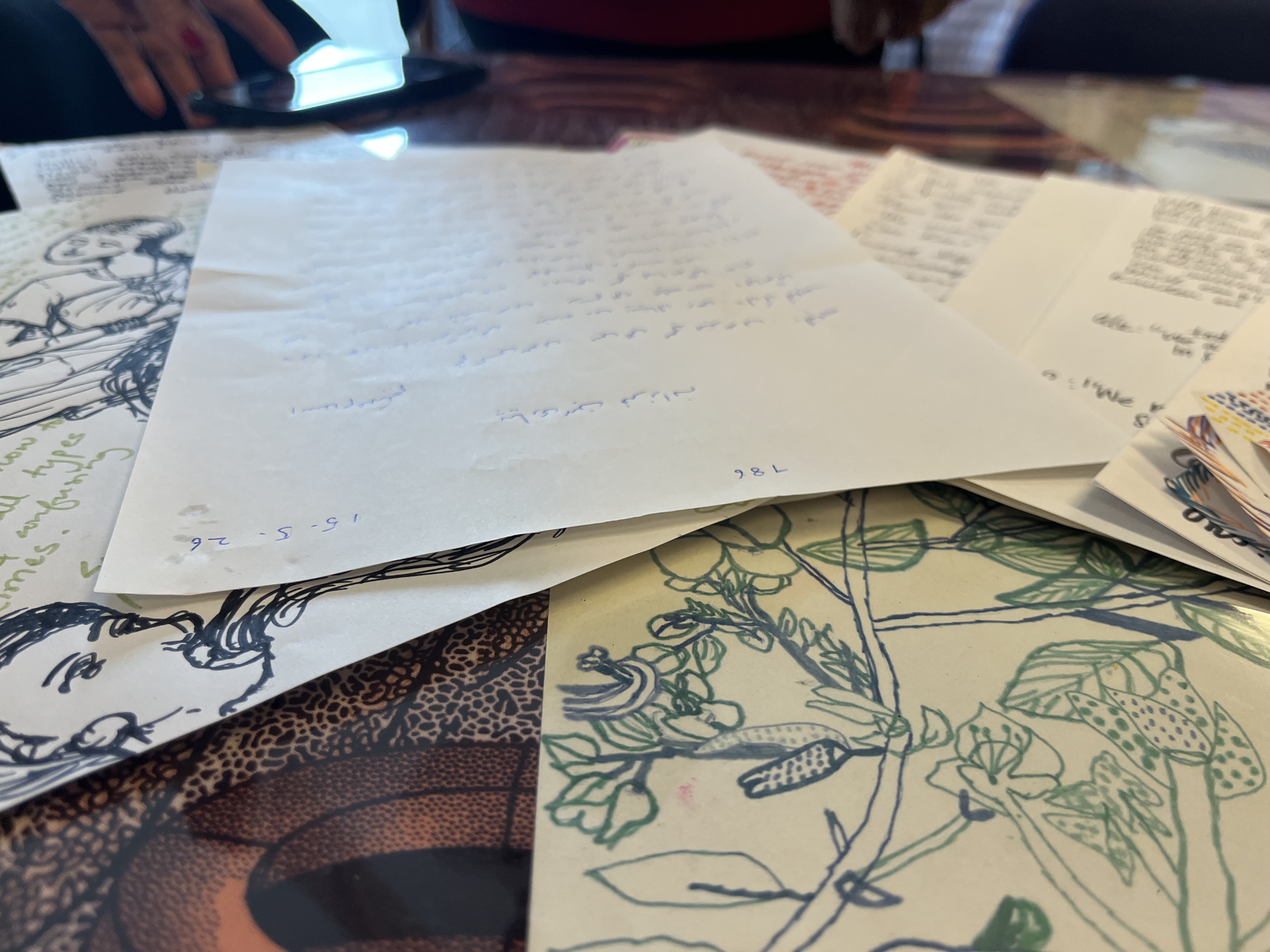
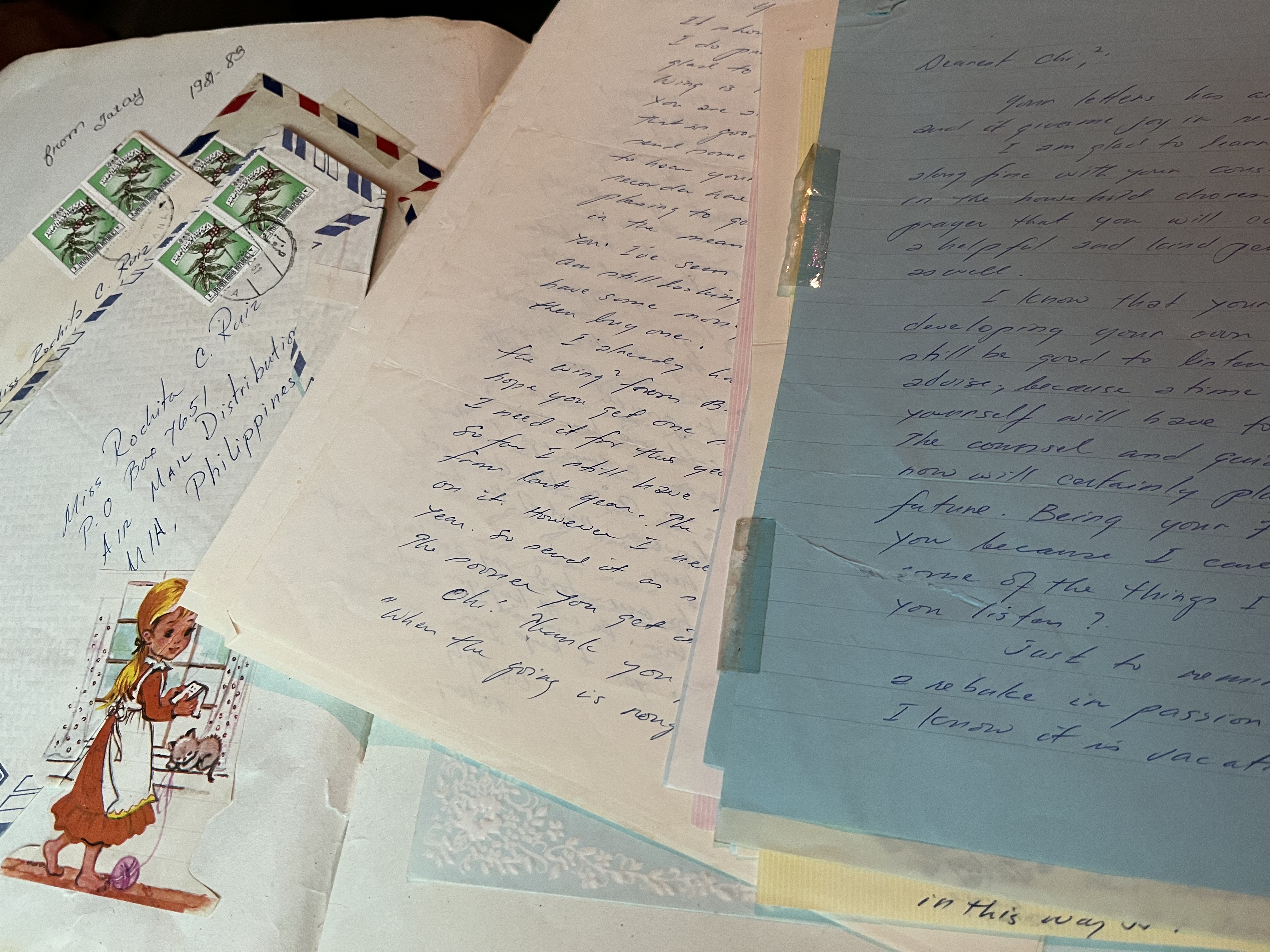
I think about her as I think about the workshop I gave for TakeAway when I was in Rotterdam last week. I went there in connection with TakeAway’s theme for the year which is The Slow Influencer, and for this I brought along a collection of letters sent to me and my siblings during the time that our father worked in Yemen.

I think about connections, about presence and about what’s left behind. My father passed away in 2016, but I can still hear the sound of his voice echoing from these pages. In some ways, it’s as if he is still here.

During the workshop, I asked those present when was the last time they’d received a handwritten letter.

“Does a postcard count?” Someone asked.

In this age where you can send and receive a message without having to make a trip to the post office, hardly anyone posts a handwritten letter anymore.

“Because writing on your phone is convenient,” someone says. “If you make a mistake, you can just erase it. With a letter, it’s different.”

There is also a difference between how one writes a message sent by phone and a handwritten letter. As one of those present says: “On the phone, I tend to use text language or emojis. But now that I am writing a letter, I’m more conscious of what I write.”

Writing a letter by hand is a physical thing. We feel the page under our hand, we hold the pen between our fingers, we shape the words. We lean forward into the page. It takes a little more effort. Maybe you choose a specific letter paper. Perhaps you want to include colourful pictures, perhaps you want to write with a certain script. Afterwards, there is the effort of purchasing an envelope and bringing it away to the post office.

When we pause and reflect on it, we recognise how a letter contains more than the words. We recognise the letter writer who bends their thought to the words they will use, the shape and form of their handwriting and the stories we see in the kind of marks on the page.

I am writing a letter to you, the marks say. My thought, my entire being is bent towards the writing of these thoughts and when I send this letter to you, it carries the energy I put into the writing of it.

I’m sure the mother of my students left letters for her own children. Marks on a page, like affirmations speaking of presence even after we are no longer on this planet.

Blessings and peace to you who read this and maraming salamat for stopping by.

(Image of a collection of letters.)

Musical adventures:Pipe organ with Birds

You can choose to listen to this blogpost. The snippet which I talk about is at the end of this blogpost.

Today, I’m sharing a small audio snippet of a music experiment. For this experiment, I used a recording of birdsong layered with an excerpt from Bach’s small prelude in F which I recorded on the Van Dam Pipe Organ. I quite liked the ensuing effect which makes it seem as if the Pipe Organ is outdoors, with the faint hum of traffic in the background ( wooded areas in the Netherlands are never really all that far from traffic).

On one of my recorded practice sessions, there was a meeting going on in church while I was playing the organ. I found the murmur of voices in the background to be an interesting effect, but it’s not something I would share as the conversation is decipherable. I do like this impression from the recording where we become conscious of the world in which the music is taking place. Perhaps a recording in a market space would be interesting to layer under or on top of a piece. I shall have to venture out on a market day to see what I can capture.

I tried to explain to my organ teacher how when I am writing, I am thinking about more things than words. I am thinking of sound and light, of images and movement and how I have been thinking of composing something that will reflect the world I see and hear in my head. I’m not very good at talking spontaneously about my work, so it came out a bit garbled. But I do want to try and see if I can create something that reflects the sound tapestry of the world I’m currently working on.

On King’s Day, we attended a concert given by my organ teacher. These organ concerts were launched two years ago with the intention of generating funds for the upkeep of the monumental Van Dam organ. Seated in the church, I found myself thinking of the birds, of cathedrals, of sound, of the ways in which we move through time, and through the world.

Sometime ago, I had this brief conversation with my son where we talked about FOMO (fear of missing out) which seems like a spirit that haunts this age. As if we will miss out on something if we are not perpetually visible online or present at gatherings or in chats. To not be in motion or to not be seen seems to bring about a kind of restless anxiety.

I thought about this more deeply and came to the conclusion that there is no need to rush, no need for this anxiety. Even when having a cancer diagnosis means there is no guarantee of how long or short life might be, there’s no need to rush anything. I thought to myself: it’s the same for everyone actually. Just that people with a life-threatening diagnosis experience this awareness more keenly than people who don’t have one.

Perhaps one of the most valuable things I have learned from the work I do is the importance of intention and intentionality. It makes a huge difference in how I step out to meet life. I think of what appointments I make and why I choose to make them.

I suppose this is also why I am enjoying Bach so much. There is a lot of intention and thought in Bach’s work and every note feels like it has a purpose. It’s not just there to be pretty, it’s been set with intention. The challenge for the musician becomes: how do I interpret and bring out that intention.

It’s like life. We can choose how we want to live it. We can choose to retreat, to focus only on ourselves, but we can choose to step out intentionally. We can choose not to close our eyes to what’s going on. We can choose to join our voices and our strength. We can choose to advocate for a better world, for better circumstances, for each of us to be and to do better.

On that note, I’m leaving this small bit of audio from my experimentation of mixing Bach on the pipe organ with birdsong from the park in our neighbourhood. I hope you enjoy listening to it. Until next time, blessings and peace and Maraming Salamat for dropping by.

Excerpt from Bach’s small prelude in F with birdsong

Moving Love Premiere

It’s a happy thing to note that Moving Love will be on exhibit in Amsterdam during WorldPride 2026. I’m not yet sure how much I can share about this just yet but suffice to say, I’m really happy that we were able to find a location that’s accessible to lots of people and also a space that’s friendly to the community of LGBTQ+ asylumseekers.

This week, Moving Love is going into Premiere. Kudos to Vera Born of ImpactMakers (Moving Love producer) for finding a wonderful location for this premiere at the Utrecht Schouwburg. Tickets to this event are free, so click on the link and get yours. It will be great to see support for these young filmmakers.

There’s also more news on the bookmaking front as we are approaching Refugee Welcome Week and the writers from the Queer Work letter writing workshop will be on programme as we share the work that’s been done in relation to this collection of different letters gathered together in a book titled: A Letter Full of Love to An Unknown Person. We’re headed towards the final meeting together with this group of young writers, but the wonderful Sajad Salmanpour just shared with us that we’ve been granted a wonderful festive space where we can hold the launch of this collection of letters during World Pride.

I had been planning to post an update to this blog earlier, but I came down with the flu. So, It’s a good thing I got the flu at a time when most people were out on the school holiday. I had time to rest and recover and didn’t have to cancel a lot of appointments.

I did manage to make practice day on the Van Dam pipe organ in the town of Haastrecht. I recorded some bits from my practice there and am thinking of an interesting way to share them. In the meantime, I’m glad I’ve recovered enough to write a proper entry about Moving Love’s premiere. If you are in The Netherlands and have the time and opportunity to visit the Utrecht Schouwburg on the 7th of May, it would be great to see you there.

Warbles, Barbles and A surprised Bunny

I’m somewhat taken aback to realise that it’s been a little more than a month since I last updated this blog. It’s quite cliche, but things do tend to happen at the same time and a period of intense events just converged and swallowed up the days as we moved through the phases of rounding up and preparing for the premiere of Moving Love. Then, of course, we had the season of Lent and Easter, and I found myself saying Yes when I was asked if I would be up for supporting the alto’s of the local church choir (cantorij).

I think of language again and find myself rather more attracted to the Dutch word for church choir which is cantorij. I have the idea that there must be some other translation for cantorij. Choir translates to koor, but cantorij reminds me of the word cantor which makes me think of chants and somehow this is more in line with the repertoire used in traditional Dutch Reformed churches. (Church chanters? Chanters of sacred songs?)

With all these things going on, we still managed to make time for the acquisition of an older Eminent organ which I now use for at home practice. I read somewhere that in order to learn a new skill, one must count an hour for every year of one’s life and then multiply that by two if one is an older person. This means I will need more than a hundred hours to become somewhat fluent at pedal work. I still have a lot of hours to go, but I am looking forward to discovering what the hundredth hour will bring. I have to say that I am gaining more balance on the organ seat and am sliding off a lot less than I used to.

Where we live, one can hear the birds quite early in the day and so I’ve started a practice of going out for a short walk just as the sky lightens up into the blue. It’s so fascinating to be walking under the cover of trees and I find myself trying to puzzle through the warbling and the fluting that goes on in that birdling chorus. (Is it louder when a car swooshes by?)

This morning, I was holding out my phone in an attempt to capture some birdsong when I saw a small creature running headlong towards me. At first I thought it was little fluffy dog, but as it came closer, I saw that it was a bunny. It was quite a startling surprise for both of us, and I swear I could see the bunny thinking to itself: “Whoops. Human creature.”

It did this movement that I can only describe as a screech-stop before it hopped around and run away in the opposite direction.

I walked for a little bit until I came to what’s called a HeemTuin–something of local ecological garden with a small reserve for wild waterbirds and other kinds of local wildlife.

The benches were still quite damp with dew, but I managed to find a small spot on a bench facing towards the sun. I closed my eyes and listened to the birds, and felt the light against my eyes and for a while it was like being enclosed within a sacred cathedral. In some other world, here would be trees curving towards one another. I felt myself held fast in that beautiful light that embraces all of the world.

I’m very glad for these kinds of spaces and for hours that feel sacred in a world where there hardly seems to be time for anything sacred anymore.

I reflect on what is sacred as I contemplate the rise of generative AI and how quick people are to embrace it.

There is a tendency to excuse the use of it, even when we know its origins, even after we have been told how these tools have been built in an exploitative manner. We say: I just wanted to make this piece of art in just this way.

We forget that the beauty of making lies in how we collaborate and work together with other makers. It lies in the give and take between musicians and text writers, between a screenwriter and a film-maker, between a novelist and their editor and all the other people in-between who enrich not just the work, but enrich us as human beings. The beauty of making isn’t just about the product or the end-result. It’s about discovery and joyful surprise when the unexpected happens.

I was talking about this with someone who works in IT, expressing my feelings about generative AI and his reply to me was quite straight to the point. “If you are wondering why the work comes out sounding European or Western, it’s because the technology was developed in the West. It’s only logical that this technology is skewed towards that kind of sound or that kind of way of formulating things.”

It was something that set me to thinking even as people tell me that “we have to accept that this and that kind of work will soon be obsolete.” (The this and that kind of work often refers to work done by editors or translators or copy editors or writers or songwriters. Like gosh…it covers everything. Soon being human will be obsolete too.)

Other lines I keep hearing: “You just don’t understand how it works.” and “It’s inevitable.”

And maybe that’s true. Maybe in time, a machine will be able to think independently and convey nuance in ways I never imagined…but I still will rage.

I write this thinking about indigeneity and indigenous ways of being. I write thinking about intentions and intentionality. When I sit down to write, I don’t choose words thinking I want to sound like so and so. Whether I am writing or making a piece of art or thinking about which registers to use when I’m practicing on the organ, I am thinking of what I want to convey. I choose my sound with intention, I choose my palette of words and colour with care. I learn from the mistakes I make and often discover that what my son told me at the start of my art-making journey is true: there are no mistakes. There are only happy accidents. Often it’s these happy accidents that enrich us. We learn by failing. We become richer as we forgive ourselves for failing (the forgiving part is a lot harder than it sounds, btw.)

On Sunday, the preacher at the church asked us “what is art?”. And I realised that we need to answer that more clearly and with much more intention in this age when a lot of art, music and literature is being generated by AI. We need to ask ourselves what makes art valuable to us and why do we engage in it? Why do we invest time and effort in it? Why do we value it?

Reading back, I realise that this isn’t a neat and tidy entry. It hops and springs and warbles about. Like birdsong interspersed by the honking of geese and the barking of dogs and the white noise of wheels somewhere in the distance. It’s a fluffy bunny running pell-mell towards something until it realises the shape looming up ahead is a human.

I’ll post this anyway, because it is just like life.

(Some birdsong from this morning’s walk.)

The ongoing journey

I’m still basking in the IFFR glow of watching our young filmmakers from Moving Love having that epiphany of: I am a filmmaker.

They finished the course, they made these films, and so they are deserving of that title: filmmaker. I’m looking forward to the premiere when all of the moving portraits will be seen in one space. At present, we continue to send out feelers for other possible locations as we want to bring these films all over The Netherlands and hopefully beyond The Netherlands.

My role as consultant and coach for this project is coming to a close, but I still feel connected to these young people. I very much wish that as they continue on with their journey, they will be able to find people who will help them grow further in their craft.

On Friday’s IFFR film-showing, I met a young filmmaker from Berlin whose film called Unbelong moved me so much. Pars Loren is a non-binary artist and filmmaker and for those interested in finding out more about them, they have an online presence on instagram.

Unbelong is like a visual poem. It has beautifully haunting imagery combining footage from Pars’s life with other archival footage. All throughout the film, we hear Pars’s voice telling us a story, we are invited to be part of the inner world of the self. Unbelong is vulnerable and intensely personal, and it speaks to us on a plane where we connect with that vulnerability and acknowledge the courage it takes to be so. If you ever have the chance to see this film, I want to encourage you to do so.

Unbelong will be shown during an Anatolian filmmakers in Exile event in Berlin on the 14th of February. This event is a Turkish event. but there will be another showing on the 7th of May at the Frauenzentrum (in Berlin) in English and in German for those who prefer English or German.

Do visit Pars’ website for more details.

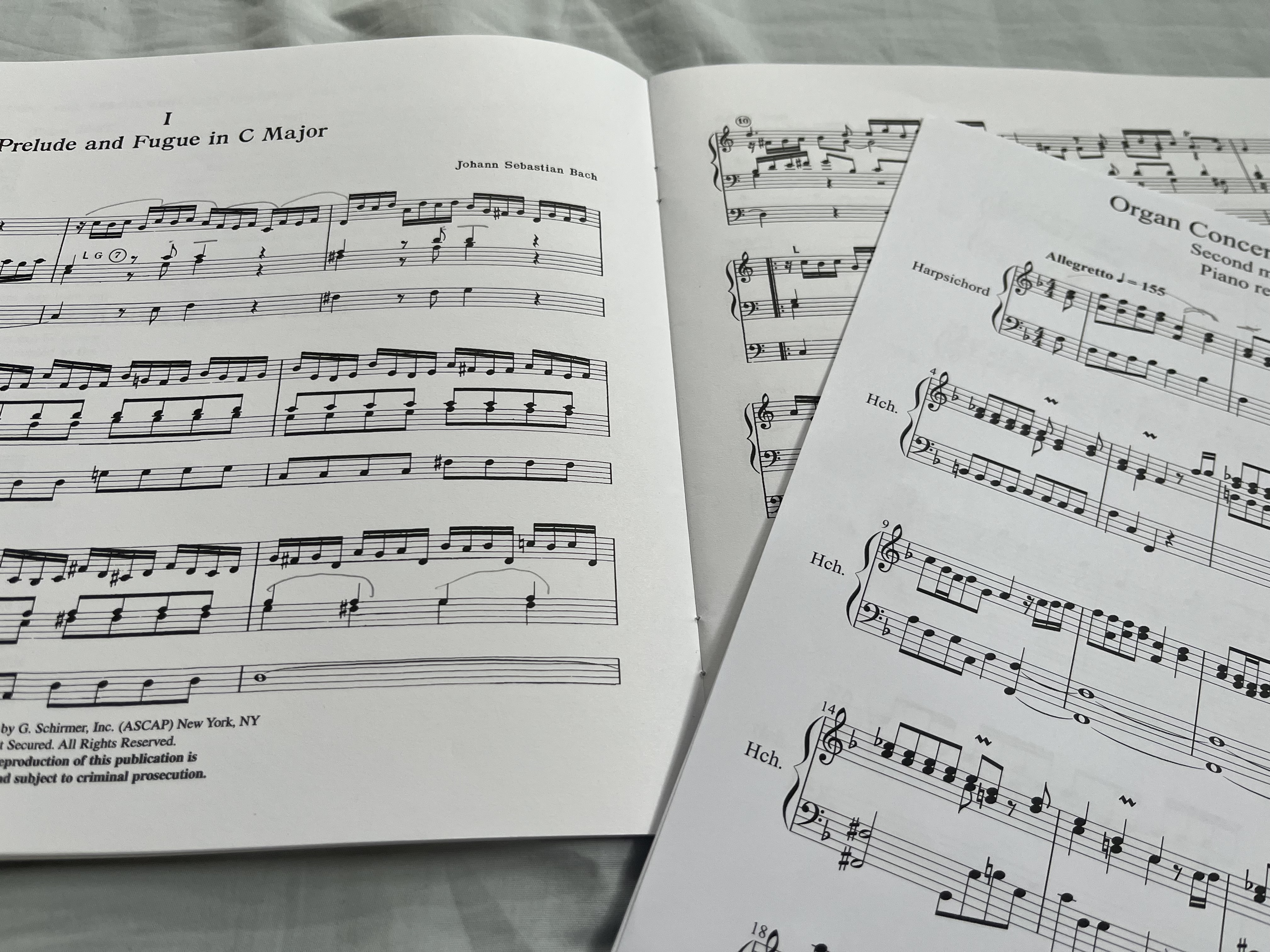
On another note: I started organ lessons this Monday and am feeling quite rejuvenated and excited. It’s a feeling pretty similar to when I was studying at the conservatory back home in The Philippines. But where I used to dread piano lessons, I’m looking forward to my organ lessons. I can’t fit an organ in my house, but the digitaal piano has an organ set-up which helps in terms of understanding the difference in technique. I’m starting with the first of Bach’s eight preludes and fugues for the organ and with the second movement of Handel’s Organ Concerto HVW 295, which I’m told is called the Cuckoo concerto.

There are still a number of things to write about, but I thought I’d keep it to this for this post.

May blessings and peace be with you always and thank you for dropping by.

Music is Life

(If you prefer, you can also listen to this blog.)

I have a memory of hiding under my bed as a child. My mother was quite insistent about teaching us how to play the piano and before we were allowed to go outdoors, we were required to spend some time practicing the piano. To my mind, I really didn’t see the point. I mean, my sister was the gifted one. She had a beautiful touch and she had the diligence to sit and master a piece of music, while I fidgeted on the piano seat, impatient for practice time to be over. So, I devised this plan of hiding under the bed. Surely, my mother would grow tired of waiting. Surely, she would rise and leave the room and then I wouldn’t have to practice.

Of course, I never won the waiting game.

Later, when we moved to the city, my mother stopped requiring me to practice daily. She had a thriving piano practice, she had other students who didn’t hide under the bed when it was time for piano lessons. My older and more talented sister stopped playing the piano at some point and now that my mother wasn’t pushing me to practice daily, I let piano practice slide.

I actually don’t know why my Mom thought I would make a good conservatory student. Maybe it was my sister’s decision to pursue computer science instead of music that decided it for her. But when it was my turn to decide on a study, she declared that one of her kids would definitely become a pianist and that kid was going to be me. I protested, saying that I would like to do something else, I just wasn’t sure what yet.

“Since you don’t know, you will go to the conservatory,” that’s what my mom said.

And she spent the following month steamrolling me through a repertoire that she said would guarantee my admission. She also called up one of her former teachers. On the basis of that connection, I played Mozart’s sonata in C (not just the first movement but all three), a Bach invention (I don’t recall which one), and a Czerny study. When the panel asked me to play the scale in D major, I turned to my mother and went: what are they talking about. And my Mom went: 2 sharps. And that was how I got into the conservatory at the University of Santo Tomas.

The teacher my mom had contacted was Ms. Fule. She was a dragon lady and quite a character. Books write about characters who bark, Ms. Fule was like that. She barked out commandments and woe to anyone who dared gainsay her. Not only did I have to take my piano lessons with Ms. Fule, I also had theory and counterpoint with her. If I skipped class, she would call my mother.

“Where is Rochita? Why wasn’t she in class today?”

There was no escape.

Piano lessons were like torture. I would sit in the hallway beside other students waiting for their turn. Ms. Fule sometimes ran late, but she expected her students to be ahead of time. If we were late, we got an earful. It would have been great if the earful was limited to us, but the windows of Ms. Fule’s studio opened out into a courtyard surrounded by the buildings of the education department and so the entire college knew whenever Ms. Fule was berating someone. Woe to the student who made mistakes while playing the required homework.

Sometime after I departed that particular conservatory, I heard that one of the students had filed a complaint of abuse against Ms. Fule. It wasn’t surprising at all. I had had my own share of pinches and at one time, she kicked me for not playing well enough to her liking.

News of this complaint found its way to the college of music where I had enrolled under a different piano teacher. This teacher had been close friends with my mother’s former piano teacher. I had a good technique, an excellent touché (according to my teacher), and I was expressive–sometimes a bit too dramatic. My teacher’s complaint was the same complaint Ms. Fule had: you don’t practice enough.

At that time, I was playing for the church as well as for the church choir. I had also decided that it was a good idea to start a newsletter about the department of music and I felt that writing reviews about recitals was one way of bringing attention to what was going on in our department.

My teacher grumbled about my writing. She grumbled about how much time I spent interviewing other students when I should be practicing. Like Ms. Fule, she called my mother to complain about my lack of due diligence. My final year at the college of music, I spent six to eight hours of everyday playing the piano. I played the piano until I was soaked in sweat. Over and over again, until I felt sick of the piano.

After my last round of chemotherapy, the joints of my hands were so affected that playing the piano became painful.

I was reminded of a moment soon after I moved to The Netherlands where I imagined that I could survive without playing the piano.

“No,” I said to Jan. “I don’t need a piano. I can live without one. In fact, I would be very happy not to see a piano again for a very long time.”

I managed to go for a month before I felt like I would crawl up the walls for want of a piano.

When we moved to our new home, my partner bought me a restored vintage Grotrian-Steinweg. It had survived two world wars, had been cherished and sheltered in the same family until it went to a piano tuner who restored it to former glory. I remember playing this piano for the first time and falling in love. Regardless of its idiosyncrasies (old pianos have those) I love the way its keys respond to the touch. It can be as gentle or as dramatic as I want it to be, when I want it to be. I fell in love with playing the piano because of this piano. Each time our tuner came to visit, he would say: “I can tell that you play this piano almost everyday.”

“Well,” I said to my hands. “There’s no help for it. One must do what one must in order to continue to stay alive.”

And then I cried.

I put a brave face on it and the one thing that dragged me through treatment and helped me come out on the other side was because in that same period, my youngest son somehow decided he wanted to learn how to play that beloved theme from Howl’s Moving Castle. In that period, he learned to play Fur Elisé (the full version) too. He also played some of Vangelion (although only what he liked) and he also started on Aragonaise (never finished).

I didn’t mind not playing if my youngest son was playing. Hearing him play comforted me on the baddest of bad days.

My mother would ask me regularly if I was still playing the piano. Play everyday, she would say. Music keeps us alive. My mom has a form of dementia where she quickly forgets what she’s been told. Having to remind her that my hands hurt when I played the piano was just too painful. So I simply nodded and said yes.

They say that the farther away you are from treatment, the better things become. Recovery can take anywhere from six months to a year, to two years, sometimes side-effects remain with you for the rest of your life. I remember touching the piano keys for the first time after treatment. My hands hurt. I couldn’t exert any pressure. The most I could do was lightly brush the keys with the tips of my fingers. It was nothing.

My joints hurt. Maybe my piano days were over. I couldn’t play the piano, I couldn’t hold words in my head. What was I going to do now?

I still kept trying.

Then one day, six months down the road, I sat down and decided I would play. I started with something light and simple.

My hands still hurt, but I decided that I would do a little bit everyday. My mother was still playing even though she had dementia, even though she had days where her bones hurt. She was still playing. How could I possibly just give up?

My hands came back to me, around the same time I started writing again.

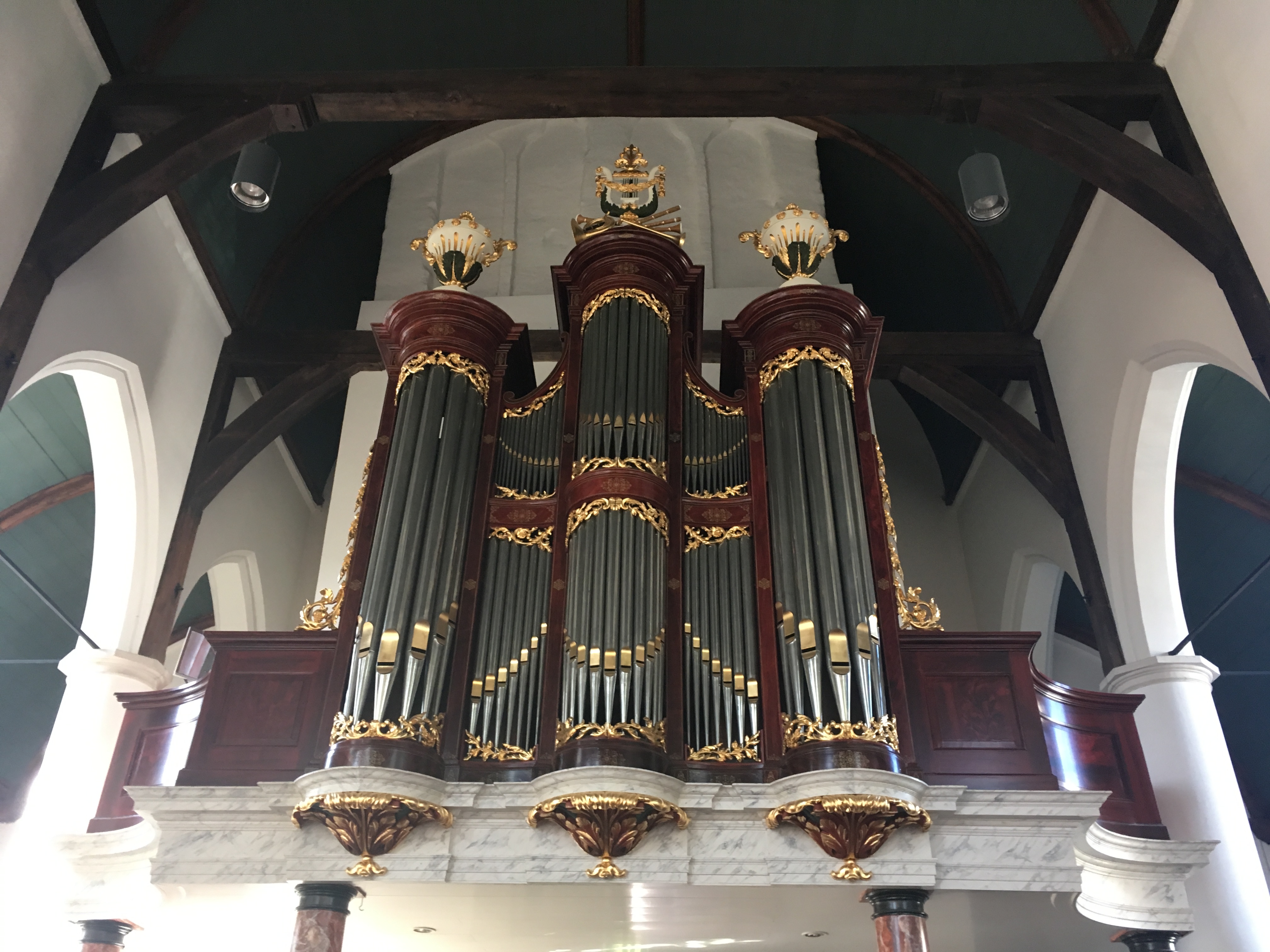
Yesterday, I visited a church with an organ the size of a building. Ever since I’d heard the pipe organ, I’d been curious about it. There was this force of attraction that pulled at me, but I didn’t dare to try. But the organist invited me up to his perch, he let me sit down at the bench and he simply said: well, play something.

Thinking about it, I realised that this might have been the first time I said I wanted to learn an instrument. I never really had an option when it came to choosing a musical instrument. Also, there’s not really much to choose from when you grow up in the mountains. It just so happened that my mother came from a part of the Philippines where the piano was part of her life. She brought her piano to the mountains, and teaching us to play was her logical path. For us, there was nothing else to choose from.

I’d never stopped to consider that I could decide to choose to study something else other than the piano.

Life remains full of unexpected surprises. We are never too old to learn new things. It is never to late to choose things other than what we have always been used to.

I told the organist that I am in what I call my Bach Era. What better way to celebrate life than to learn how to play Bach on the church organ.

(The image is of the pipes of a church organ.)

What I have been up to

In November and December, we had the workshops for Moving Love which is a film project for LGBTQ+ asylumseekers in the Netherlands where participants who are interested in film-making are given the basic knowledge and training needed to help them on the journey towards making a film.

We had three intense day-long workshops in Ede-Wageningen which is more than an hour away by public transport. It meant an early start on the road and a late return home, but it was incredibly rewarding and I learned quite a bit too about how films are made. After the workshop days, participants were scheduled for their own shoots. The intention being for each participant to create two 1-2 minute moving portraits or micro films. I didn’t get to attend the shooting days as my presence wasn’t needed during those days, but I did get some small insight into how those shooting days went and what glimpses I got looked amazing.

On the 6th of February, raw versions of some of the film portraits will be shown at the Fenix in Rotterdam as part of the IFFR Filmclub x COC Rotterdam x Queer Gym programme. Entrance is free and I understand that there will be a q&a for participants.

This January has been quite busy as I am facilitating for a community writing project under Queer Work. It’s quite a lovely project and one after my own heart as we talk about writing and memoir. I’ve experimented with making a video invitation for this project and have also learned how to make a proper voice recording. It’s quite fun to try out new things.

On the 5th of February, I will be giving a workshop at the Vrije University of Amsterdam. I’m looking forward to talking about the work I do and to share the tools that I use as part of my work. Let’s see. The plan is to make this something fun and collaborative.

During the December break, I had time to read Karin Tidbeck’s beautiful book, The Memory Theater. To my mind, there’s no one who writes like Karin. Karin’s prose is like an enchantment, and I found myself quite immersed in the world of the garden, but more importantly, I found myself just traveling along with Dora and Thistle and wanting to know what happens next. It is a fairytale, one that doesn’t evade what’s harsh or cruel about the world, but it also reveals to us the beauty in relations and connections and it opens us to the possibilities of the world beyond what the eye can see. Reading this book made me miss conversations had with Karin. I know I must make time to look up email addresses and write. A lot of times, I write letters in my mind, but then I forget when I sit down again.

Talking about letters, I have been dipping into Sister Love: The Letters of Audre Lorde and Pat Parker 1974-1989. I tried making a recording of one of the letters and if I succeed in doing so, I might post an attempt at an audio recording. I’m practicing with audacity and with another programme as the possibility of doing a podcast has arisen in the course of conversations with another group of friends. We’ll see. We’ll see.

2026 is an open door and I am thankful for time and for how there is always room to learn and explore new things.

There is a lot to worry about with what’s going on with the world. Sometimes, it seems like the madness of the garden has appeared in the world we live in, but in the midst of all the mayhem, I hope that we will continue to remember joy and magic and that we hold on to what connects us to one another.

(I want to apologise for some mispronounciations. I did try my best to get the names right. Non-native English speaker here.)

Thanks so much for passing by. May you find pockets of peace in your daily life.

A very short update

I have been quite immersed in the novel draft since end of August and it’s a bit of a surprise to look up and realise that we are already in November. That’s almost three months of non-stop writing at varying speeds and wordages, but I am happy to say that I am heading over the halfway mark as I hope to achieve 65k sometime within the next few days. I’ll likely hit 70k sometime end of the month or early December, but I am steadily moving onward. As my friend, Tricia, reminded me: I must finish.

I acknowledge that one of the things I love the most about writing is when I get to create new worlds. I love exploring different worlds and dimensions, the idea of creating different kinds of being in the world–sometimes similar to, but also other than how we are in the world today. It leads to some complexity when my head is thinking around matters like decoloniality and decolonisation and also when I contemplate kinship and connectedness and how might I bring this all into my on the ground workshop practice.

This November, a project I’ve been involved with for a little while, is starting up with a programme put together by different facilitators and arranged in such a way that we build up towards where participants can create their own micro films. It’s been quite a satisfying experience and I’m looking forward to the start of the workshop when we get to see all of these things manifest in practice space. When the time is right, I might share links to the eventual exhibit of the works that come from this project.

I shared with some participants during the co-creation lab, how putting together this programme was a satisfying act of collaboration and co-creation as we brainstormed together and also asked members of the community what would benefit participants the most. At the heart of the matter are the needs of the community whose voices we want to amplify. So, we want to create this space where it’s more than just the project space, but also beyond that there are possibilities to grow further as a creative, as a storyteller or as a filmmaker. I think that’s one of the aspects I love about this vision: where participants are empowered and given access to the networks so they can move and grow as they wish to.

I shared how one of our facilitators expressed how they wished this kind of programme existed back in the day because of how the programme speaks to the experience of us who are traditionally marginalised. One of our team members said: perhaps this too can be part of the impact of the project.

And because I am a world-builder, I started to imagine a world where curriculums are built and composed differently from how curriculums are today. My science fictional brain and my real world brain collide and I remind myself we are living in the present.

Reciprocity when we go to communities means we are also thinking of how we can encourage people to hope beyond the present. To see a vision beyond now and even if we cannot fund everything, the knowledge that someone has your back and is there encouraging and supporting your vision could already be enough. (To this day, my sister’s voice continues to encourage me even if she’s no longer physically here in this world.)

I still have lots of things I want to write about, but I will end this here as I still have to work on my novel. I am thankful to celebrate a year without treatments. A year wherein the report has come back still in remission and stable. For this I am very grateful.

Maraming salamat for taking time to read. May blessings and peace be with you as you continue on your journey.