Titles are a challenge

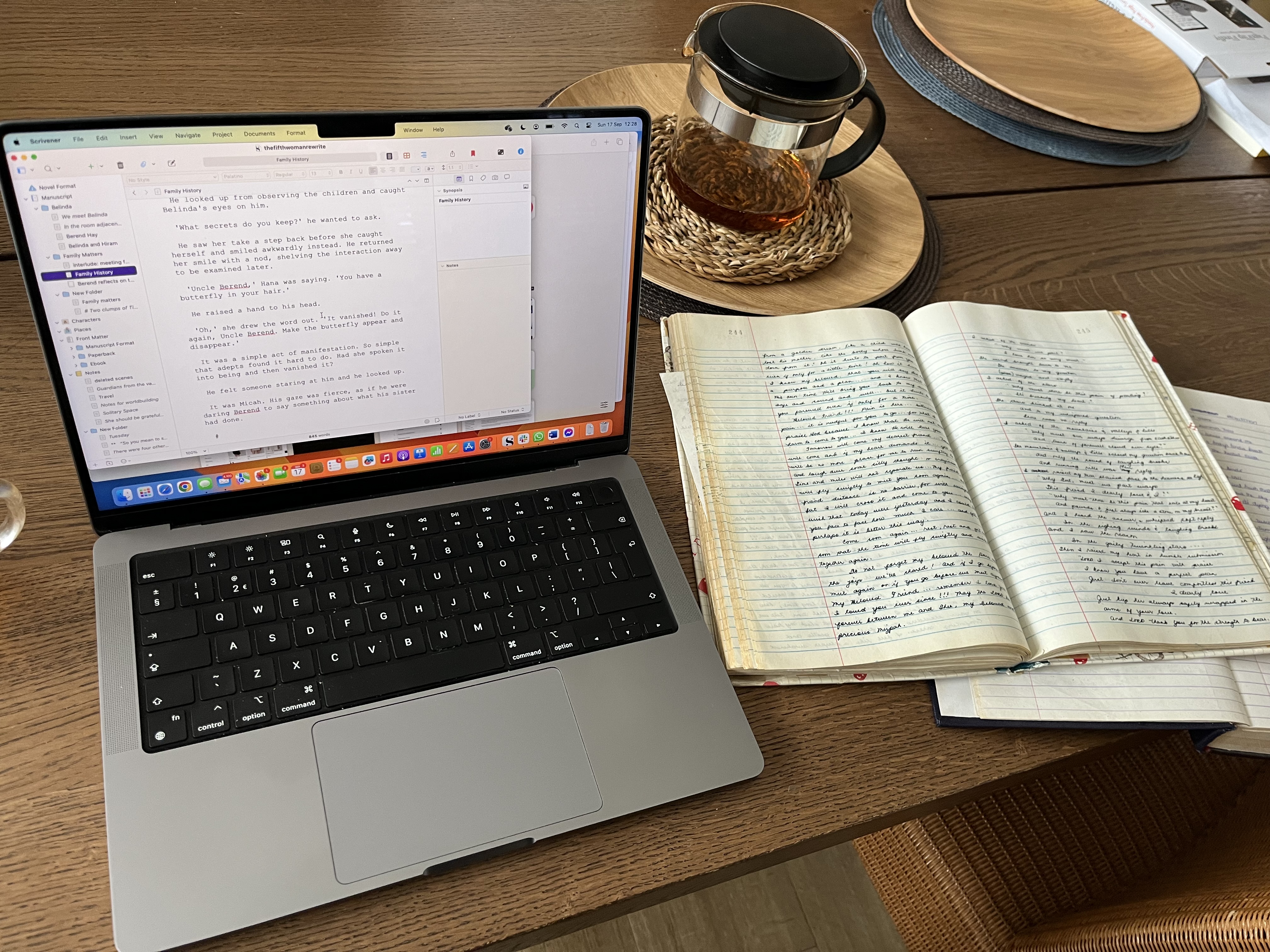
Titles are not my strong point. I am currently working on the second draft of a novel titled The Fifth Woman. Don’t ask me why…it probably just felt cool at that time or maybe I was just like: whatever. Let’s just call it this as a sort of jumpstart. So far, I haven’t found anything in the draft that talks about a fifth woman. It’s a pretty amazing feeling though to have been writing consistently everyday for the past two months as prior to that time, my brain often felt like a jumble of words and there was not enough quiet to properly focus on fiction. To my surprise, I have passed 15k on second draft and it looks like it’s still going.

Before I found The Fifth Woman, I had been writing away at The Cartographer novel which I’ve left stranded at 85k because the world was getting so big and unwieldy I had to step back from its noise for a bit.

Finding The Fifth Woman (first draft from end of 2021 before cancer struck) was like finding a gift because there was enough distance for me to appreciate and see where I’d gone off the rails with it ( characters with names like ‘this person’s dad’ and lazy shorthand place names ‘let’s just call this place wherever’ and I’ll call this form of transport something unpronounceable). Clearly, I was just in a rush to finish first draft. When I read it for the first time after regaining my focus, I thought it was someone else’s work, until I got to some place names and memory hit me…oh right. I wrote this while doing the Munabol online workshop for BIPOC kids. And then…Oh. This thing is long. It’s super-long. What is it? Is it a novel? Is it finished? (Yes. It was indeed a first draft clocked in at a little above 65k.) That was two weeks ago.

My current writing speed is an average of 1000 words a day (sometimes 1500), but at the end of a writing session my brain refuses to focus and I just want to go watch Formula one or something mindless for a while. (I have become quite the Formula One and bike racing addict. Tour de France, the Giro, Vuelta, and then there are the classics. Cobblestones! I can hardly watch but I still do anyway.)

I’ve noticed that there is a lot of messiness in my head the closer I get to the appointments for my bloodtest and immunotherapy. As I said to people closest to me, it’s quite weird because it doesn’t hurt, but I have an increasing aversion to being stuck with needles. It melts away once the bloodtest and immunotherapy week have passed and for most of the time I forget that I am under treatment. My oncologist tells me we are on this road for two more years and then we’ll see. It’s an interesting space to be in because no one really knows and I think that’s okay.

Just a little while ago, I bumped into an acquaintance who I hadn’t seen in a long while. Upon hearing about my diagnosis and about all the treatment things, she went: But you’re too young… (I won’t insert what was implied here because it took me aback). It’s one of those really odd responses that makes me want to laugh out loud. I know it’s well-intentioned and well-meant, but I remind people that I am not dead and I have no intention of dying anytime soon. I am completely in the land of the living and I believe I’ll still be here for as long as I am meant to be here. It’s the thought that comes to me when anxiety strikes: Peace. I remind myself. As my mother said to me at the start: you go ask God what he wants to do with you because until He’s done with you, you’re not done doing.

My mother, a cancer survivor, was diagnosed with metastasised cancer when she was 46. It had spread to her bones and she was given one year to live. Today, she’s 85. She laughs talking about it: ‘Actually,’ she says. ‘I decided I wouldn’t die because I didn’t want your Dad marrying someone else.’

There’s this thing about coming face to face with mortality. You come to understand what it means to be alive. I think about one of the participants to the workshop saying: this is my now.

It’s a pretty radical thing to say and to do. To be present in the now. To rest in this moment. To give as well as to take pleasure, to share in what is funny, what makes you laugh, what makes you cry, what warms your heart, what melts you–to choose to be here in now is such a powerful and radical act because it is the essence of being alive.

It’s easy to get pulled into the rat race. To think: I’ll make time for what matters and what makes me happy when I have more time. Time is an ephemera. It’s an illusion we create for ourselves. Time that matters is now. What am I doing now? How am I being present now? What am I sharing of myself now? What kind of memories and legacies am I putting in place now? It’s in this now moment that we are doing and creating and making and establishing connections and as I said to someone precious to me: humans and relationships are more important than things. Wealth, status and possessions you can replace. Connections, relationships and humans you cannot.

Perhaps it’s why I’ve become so invested in The Fifth Woman. Because it’s a messy novel about messy relationships. It’s about the now space versus the could be space. It’s about family and relationships and all the pressures that are exerted upon that precious space of simply being. It could be fantasy, but it could also be science fiction. I really do not know. I’m just writing it. In the now.

Blessings and Peace and Agyamanac Unay for reading.
Opening a door to story

In my personal preparation for LIMBO, I found myself thinking of how to open the door to story and how to create space for participants to immerse in the act of creation without feeling pressured to perform.

How do we support that limbo state? How do we cherish and protect it? And how do we, at the same time help participants to step into a future they create for themselves?

A realisation came to me that the sessions we are planning are not merely sessions of teaching participants how to work with various materials or tell stories. These aren’t the most important parts of those sessions. Producing something finished or something that can be exhibited or placed on display isn’t the goal. Rather the goal is to empower the participants so they can thrive in the liminal space that so many occupy.

Initially, I had thought to teach working with different mediums with the thought of developing or moving towards a goal.

But I thought of how as a writer among writers, I have sometimes observed how the act of telling story moves from being an act of pleasure to an act where the writer becomes pressured to deliver. These pressures placed upon the creative person can transform what was pleasure into obligation and the result of such obligation isn’t always beneficial to the person who creates or even to the creation itself.

So, how do we invite or open the door for participants to come in and share without pressure? How can I employ what knowledge I have gleaned from life in a way that removes or eases the pressure of creating to an expectation?

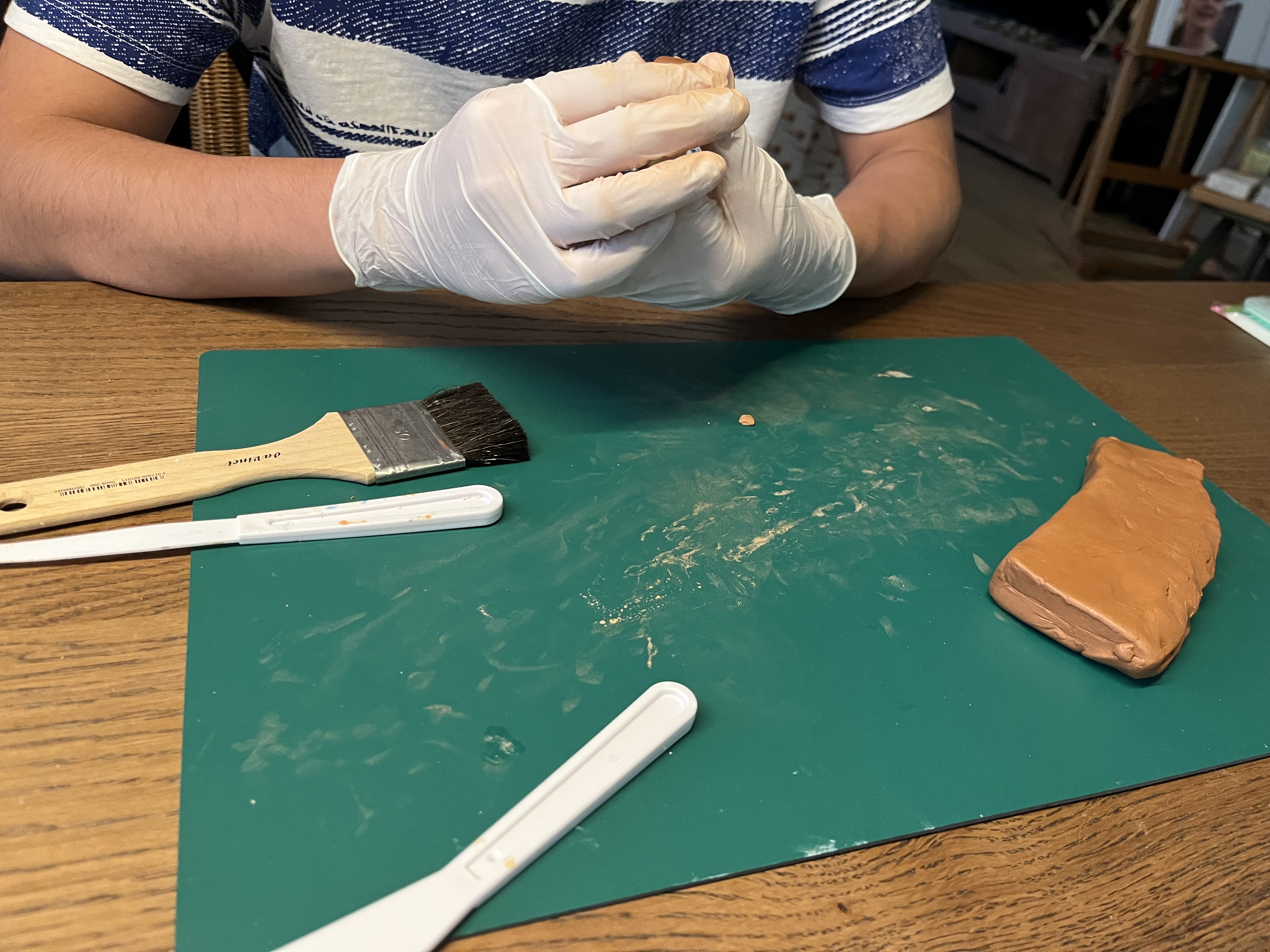
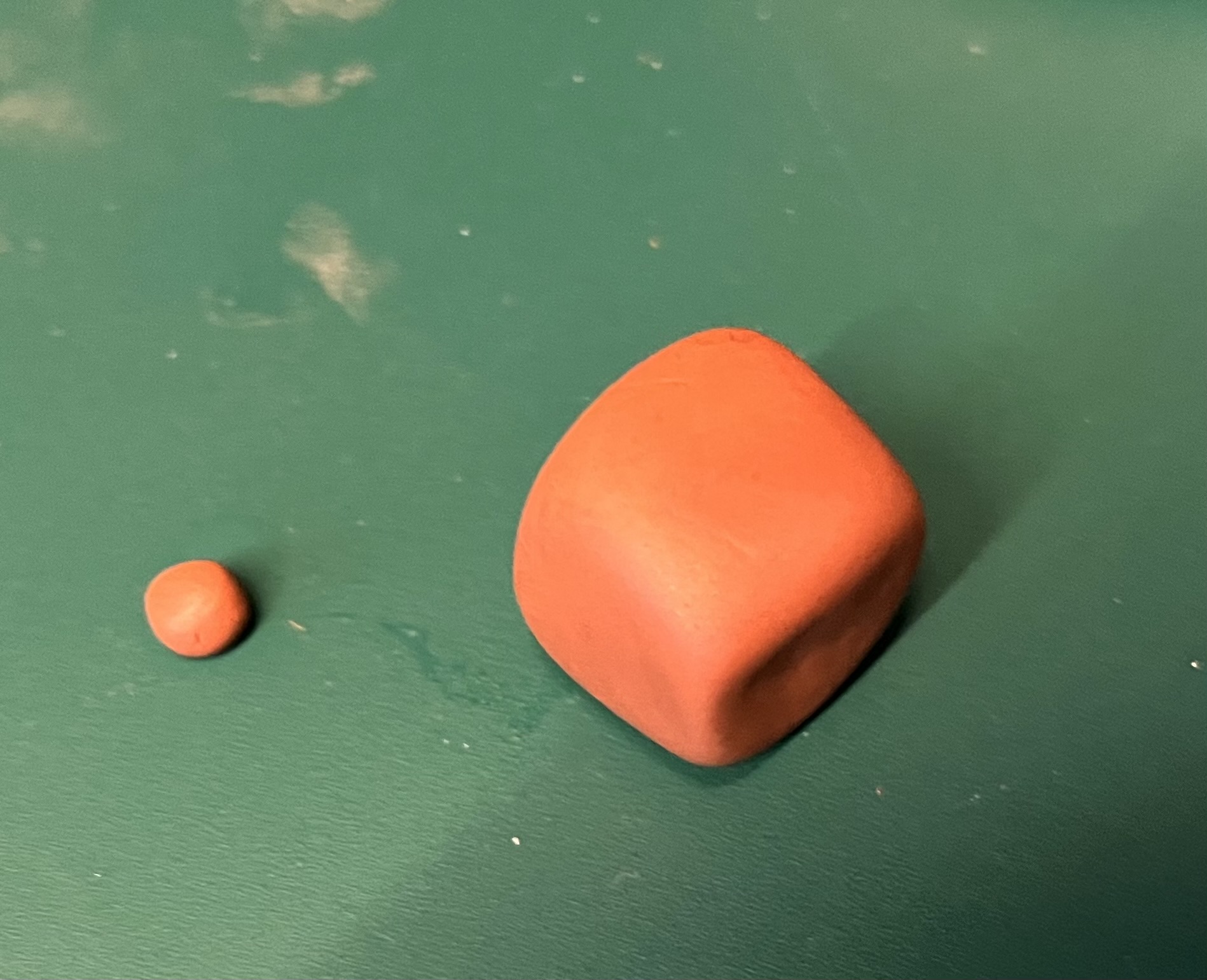
This afternoon, I asked my youngest son to sit down and work with me for a little while as I tried out one of the activities I had in mind. I asked him to treat the raw medium as if he were an archeologist who had time-traveled from the future. I asked him to bring out of this medium an artifact, and with that artifact to tell me something about the future world that he had envisioned.

I simply listened because I didn’t want to impose my interpretation on what he shared.

As his artifacts, he brought back with him a model of a cell and a pill designed to attack bad cells. He found this pill in the office of a family doctor and what it told him was that it was a medicine that was readily available and accessible for anyone who needed it. In his future world, incurable illness and disease no longer existed. 

By thinking of it in science fiction terms, my son is able to time travel back from his ideal future to share with me a story of what is alive inside him today, without the pressure of performing a perfect story or crafting a perfect artifact.

It doesn’t have to go anywhere. It doesn’t need to be published (although I did end up asking him if I could share it here and he said yes.

I realised that what drew me towards creating and giving workshops was in the connection that came from these kinds of sharing. It’s not important whether people end up publishing or not. What’s important is the stories that are shared and the space that is made for these stories. It’s also the wonder that happens when participants discover that there is space for what they have to share.

What can we do to open doors to story? It’s a question that I carry with me. In doing so, I hope to create space and make space for all those stories waiting to be told.

Blessings and peace.

Quick update and an invite

The update:

My family and I are in the middle of quite an intense season. Early 2022, I was diagnosed with stage 3 uterine cancer. Because the cancer was aggressive, we did not know what to expect, except that I needed major surgery and possibly more things after that. I had a complete hysterectomy in March 2022 followed by 27 sessions of radiotherapy and we hoped that that was that. Unfortunately, in the second half of 2022, we discovered that we were not done.

At that time, we were offered two options, take part in a clinical trial which offered the possibility of immunotherapy which isn’t standard treatment yet for ovarian cancer in the Netherlands, or go the traditional route which was chemotherapy and more chemotherapy. We opted for the clinical trial, got lotted in for six rounds of chemotherapy which seemed to have a hopeful result, except the results weren’t enough and my values just kept dipping so we had to keep postponing almost every other session. After six rounds, my oncologist looked at the results and decided to move me from the chemo arm of the trial into the immunotherapy arm of the trial.

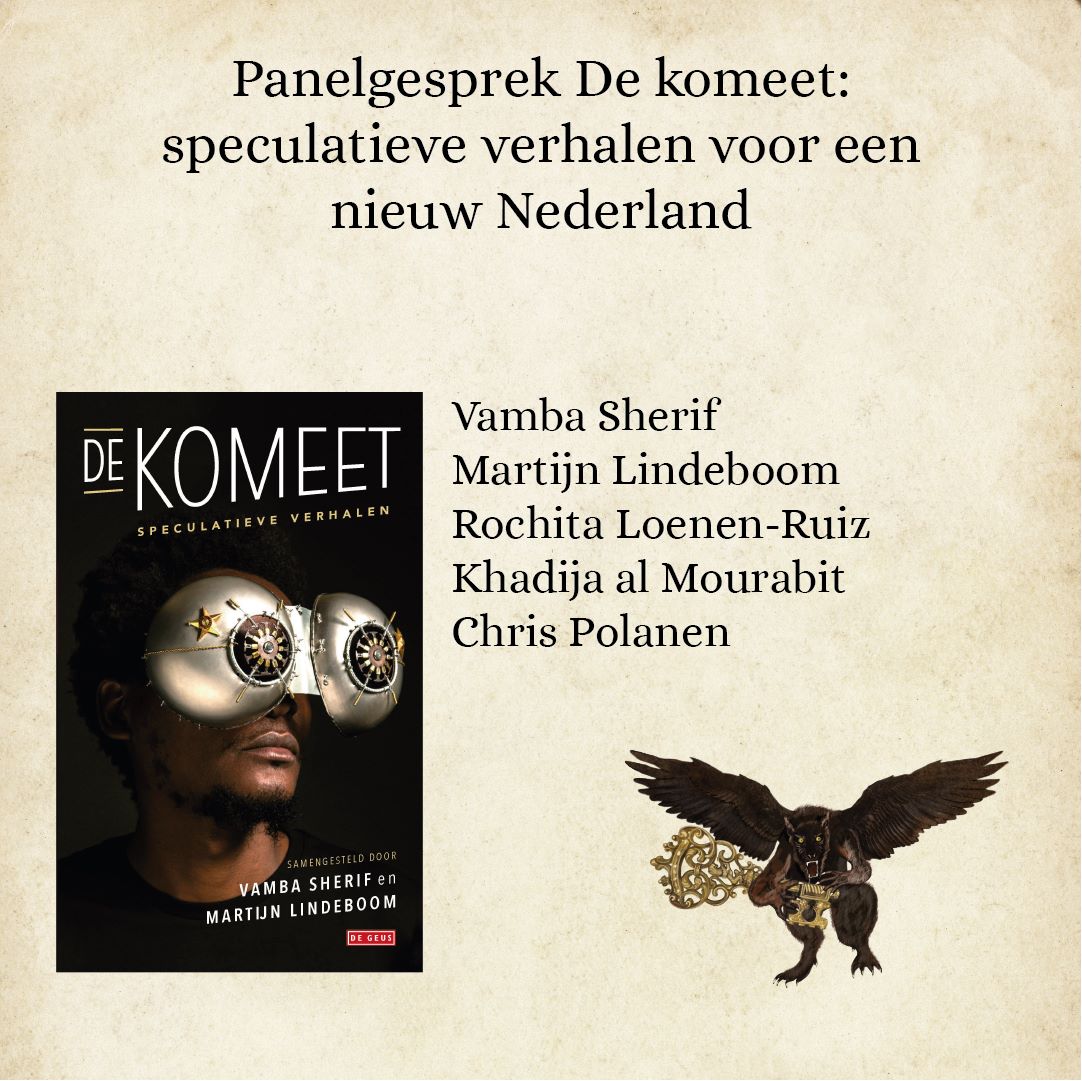
In the midst of all these things, I somehow managed to send off two short stories–one for New Suns 2 (which I have been dreadful at promoting since chemo-brain is a real thing) and one for a Dutch anthology titled De Komeet. Hymne van de Overlevers is my first Dutch story ever and I am thankful for the patience of my editors and thankful to my awesome friend, Marielle who went through the final edits for me when brain fog meant I couldn’t even remember what my story looked like and couldn’t keep my characters names straight. (She thinks she did a minor thing, but trust me, it was major for me.)

My final round with chemotherapy was almost three months ago and I am waiting for immunotherapy to start. I have a tumor in my armpit which creeps me out a bit and we hope that with immunotherapy, this tumor will be brought under control. We don’t know if it will ever go away, but I am quite healthy (aside from this thing) and interestingly, the chronic hypertension for which I took daily meds to keep under control has been miraculously cured. I am no longer hypertensive. I just have cancer. A disease which I abhor utterly since I have lost a number of friends to this disease already. I hate cancer and I am sure God hates cancer more than I do.

In the meantime, my hair has started to grow out and thankfully the brian fog is less of a problem. I believe I can properly talk about my work again and recently, I have contemplated writing again. As usual, the question is: where do I start?

The fight against cancer is an ongoing one.

Where I’ll be at:

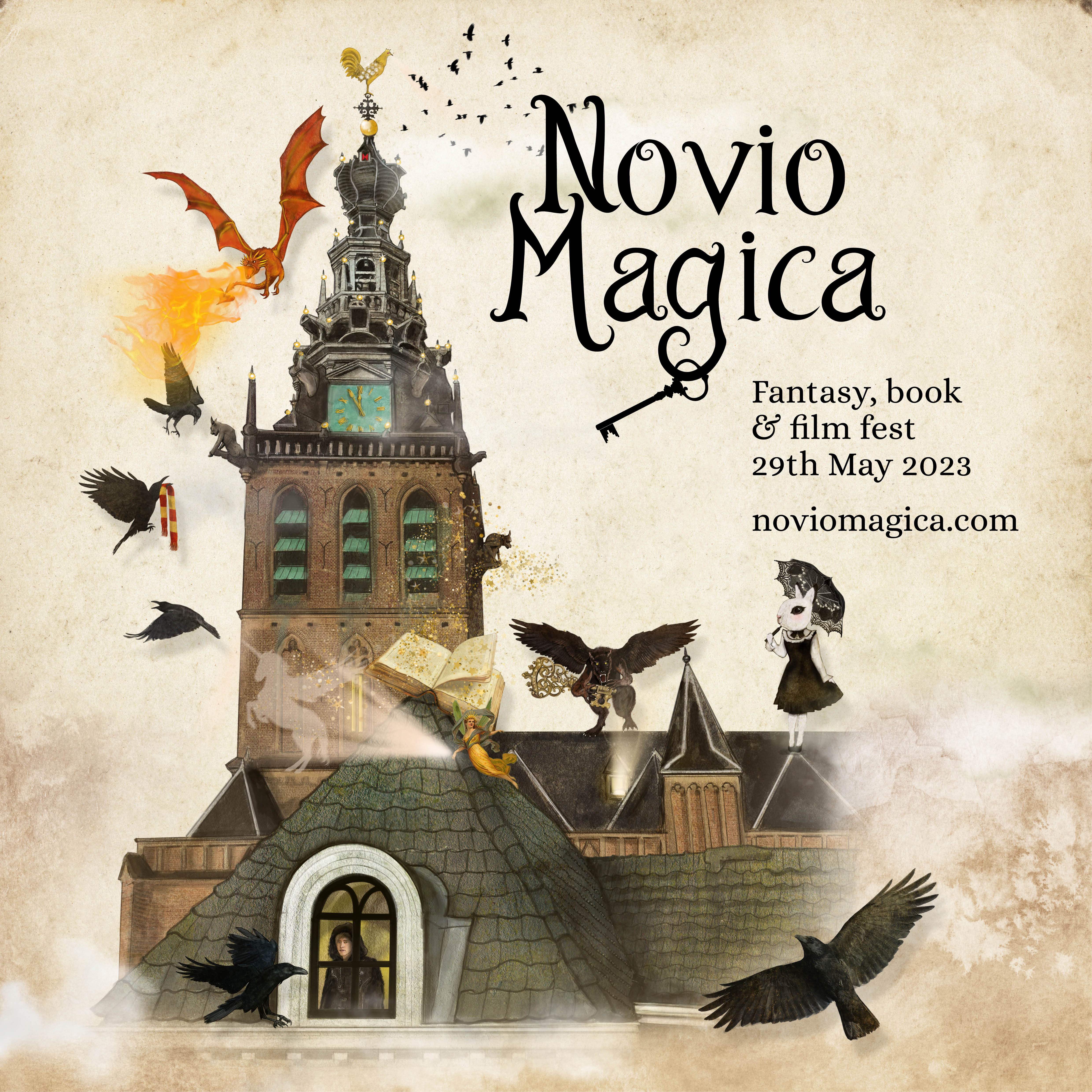
I have said yes to a number of things related to De Komeet. On May 29, I will be in Nijmegen doing a panel together with other authors at a convention called Novio Magica. It feels like forever since I’ve done anything related to science fiction and fantasy and I confess to feeling a bit shaky–it’s also been a while since I have been anywhere that isn’t hospital or church related, but I am looking forward to it. If you happen to be in the neighbourhood, do drop by and say hi.

How cool is it that they made a poster and my name is one of the names on it.

(*making a correction to this entry as the literal translation is uterine and not ovarian)

It’s finally happening

I sit here on the eve before the first day of a workshop series I’ve been working on for quite some time. Thanks to the WereldMuseum Rotterdam and to Dona Daria, the workshop I’ve been dreaming of will finally become a reality. Tomorrow, will be the first day of a three-day workshop for BIPOC participants in Rotterdam and I am looking forward to it with anticipation.

In preparing the final schedule for the workshop days, I’ve had to refine and narrow down exercises. Creating exercises that will be doable for participants who are a mix of people who might have done some writing before and people who have always thought of creating stories as being something not for them for innumerable reasons, has been a challenge. And I am really thankful for my partner, Hodan, who’s given me such great feedback and encouragement throughout the process of putting the workshop and the schedule together.

I still don’t know what the class will look like exactly, but the programme includes a mix of individual and communal work, and a mix of spoken, written and visually expressed work. I’ve used different elements of this workshop in different environments with different groups and now I’m eager to see what will happen when these elements are used and applied together over the span of three days. Perhaps the most challenging aspect of this workshop is the multi-lingual aspect, but I will cross that bridge when I get to it.

Most important to me is to let the participants experience how much fun it can be to engage with story on their own terms. That is what I’m keeping in mind as I wind down for the night.

I just had to quickly write about it because it’s finally happening.

Oh yes. We will have fun.

History and myth-making

I’ve been thinking a lot about history and myth-making as I work on another piece. Edouard Glissant’s work inspires me a lot and it feels like the universe is working to bring various readings across my path that are in conversation with the work of Glissant.

Rolando Vazquez’s Vistas of Modernity enriches my engagement with Glissant’s work and vice versa and I can’t recommend Vistas of Modernity enough. While I was reading Vistas of Modernity, I found myself moving back to some passages from Glissant and then returning again to Vistas. In my head, it felt like there was this rich conversation going on between these two thinkers. There’s a lot to process and a lot to think about and I feel like rushing to make a post on it would not do any justice to the work. But definitely, anyone who’s interested or who is engaged in decolonial work would benefit a lot from looking up Glissant’s work and Vazquez’s Vistas of Modernity.

While reflecting on these two works, and while working on the new short piece, I found myself thinking about the relation between music and mathematics: about algorithms and improvisations: about waveforms and spacetime. A lot of times, I feel like a chicken scratching at the surface of concepts where comprehension lies just beyond my reach–like that word that you know is waiting to be uttered at the tip of your tongue, but you just can’t vocalise it yet.

The new piece is me working on concepts that intrigue me. It’s also influenced by the idea of history, re-membering (as Rolando writes it) and myth-making.

All these thoughts tumble together to inform the practice I am developing when it comes to the workshop practice. The idea of employing various mediums and ways of creating or re-membering or un-remembering history….these are things that I feel are key to the work and are necessary to what we want to achieve with the Invitation to Dreaming.

The hungry mind led me to Epistrophies: Jazz and the Literary Imagination by Brent Hayes Edwards. I’ve only cracked the book open, but in the introduction there’s a passage that captured my imagination. Here, the author writes that: “Oral history’s importance lies not in adherence to fact, but in its departure from it, as imagination, symbolism and desire emerge.”

I think on how we can sometimes get stranded or blocked by the idea of story not aligning with empirical data and I’ve been thinking too about how a lot of history is told from the viewpoint of the conqueror or the coloniser.

Anyway, this is because I find myself rather obsessed with the question of the use of speculative fiction in the work of decolonisation.

A beloved friend of mine spoke of this kind of writing as a form of exorcism and the more I think on it, the more I love how this resonates with the idea of myth-making and how important it is for us to recognise that the myths we create are not subordinate or less important but are rather of equal value and equal importance. Do we even need to explain why it is important to us? Do we even need to make everything comprehensible or transparent?

Glissant in Poetics of Relation writes this: “For more than two centuries whole populations have had to assert their identity in opposition to the processes of identification or annihilation triggered by these invaders. Whereas the Western nation is first of all an “opposite” for colonised peoples, identity will be primarily “opposed to” — that is a limitation from the very beginning. Decoloniality will have done its real work when it goes beyond this limit.”

I think then to myself that the capacity to think beyond data and to think outside the box, to imagine beyond what is presented as “these are the facts” are tools which help in the work of decoloniality. Myth-making, the de-linking of the personal and the empirical, the creation of tangents and speculations, the ability to think outside of time.

My mind works away and picks at process and about how to bring these ideas into the workshop practice. How to encourage new and aspiring artists to bring this kinds of concepts with them into their core work.

Again, I find myself thinking of points of origin and how starting from the self, meeting the artists at where they are in that moment is an essential part of the work. Histories, stories, songs and other creations which are personal to us are also linked to the wider world. Family stories are where myth-making starts. Family histories are part of our personal myth-makings too. Beyond the personal portraits, beyond the familial, we see the world as a backdrop. How is that family myth set within the world around it? How do we create myths that originate from our selves? What’s important is that these myths come from us. From creators whose voices have often been elided–the sound you miss or skip over–like jazz creators, we must improvise. We create and bounce off each other’s words and worlds, we mix and play to create myths that sound like and belong to the self. They don’t have to adhere to an existing narrative, they belong to their selves, just as we belong to our selves.

There is a lot to think and reflect on as I think of this and as I consider on how to bring that into my practice.

To you who are on the journey, sing your songs, write your myths, dance your dances.

She’d always known space had shape and form of its own. It wasn’t always visible, but it was there. Now, its patterns and undulations were visible to her. She could see it curving around to accommodate her sire; could see it flowing and moving to accommodate static instruments, to accommodate her/self/; and now, she could see too how it lent itself to shadows that took on a form of their own as they came to stand beside her sire. 

-From To the Tune of the Wild Ones-

Starfish, trees and time

A lot of recent conversations have had me thinking a lot about time and about how the way we experience time is not the same for everyone. For instance, time for trees move quite slowly whereas time for humans moves very quickly.

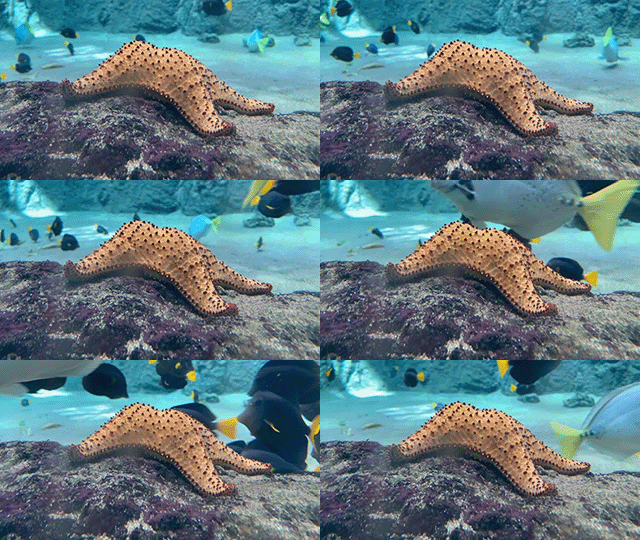
I thought of sharing a gif of this time lapse clip of a starfish with fish as it expresses my thoughts on the difference in the how we experience time.

The starfish doesn’t seem to move when viewed in real time, but on the time lapse clip, the slow and small movements come into view while all around, fish dart about in quick motion.

I was talking about this today with my eldest son. About how time moves differently for everyone and how while we might like to think of time as moving at the same speed for everyone, it’s not like that for all beings. Perhaps, just as with the starfish gif, some of us may already be in the future while some of us are still sitting in the past or deliberating in the present. (This is of course very science fiction but I still want to hold that thought as I figure out stuff for the piece I’m working on.)

Basically, what I wanted to say was how while we are in the moment of living our lives, comparing ourselves to others is useless. Comparing our trajectory to another person’s trajectory isn’t productive or fruitful because time moves differently for everyone. As I said to my son, what’s important is to think about what you’re doing in this moment. Are you taking care of yourself? Are you nurturing your connections? Are you creating space for others? Are you thinking of what you are doing now in this moment?

Ultimately, our lives are our most important work of art. Whatever speed we move at is not as important as how we move in it.

Here’s an excerpt from the current work in progress:

“You’ll see,” Una said when Mahari had drawn closer. “Time unfolds differently for everyone, Mahari. You should understand this by now. After all, Iranira’s work called to you. You’re not here by accident but by design.”

“I don’t know about that,” Mahari said. “I’m not as gifted as you are.”

Una made a clacking sound and Mahari realised that the other cepha was laughing.

“What?” Mahari said. “You’ve got this amazing ability that no one else has. How am I supposed to compete?”

Una emitted more bubbles, the pattern on their skin shifting and changing as they gave themself over to amusement.

Mahari stopped and stared at the unusual sight. Like this Una was attractive. They were no longer plain skinned. Whorls of light seemed to ebb and flow all over their body.

“You children,” Una said when their composure was restored. “Oh, you children. It’s always the same with you youngsters. When will you understand that it’s not a competition?”

To you who are on the journey, never be afraid to dream.

( edited to add credits for the gif which was created by and belongs to Peter van der Post. Used with permission. )

rounding off the sessions and looking to the future

Summer break is upon us and so I rounded off the writing sessions with a promise that we would return to them once the summer holidays are over and the new school year begins.

Right before the break, I invited a group of kids (the youngest was 8, the oldest was 14) for a short writing session. I had initially done this to accommodate a request to include an 11 year old in the writing sessions but considering the age gap, I thought it would be better to try and see if we could gather together a group of younger kids and see what happens.

We did a one hour orientation session on zoom and I found myself quite inspired and mind-blown by the work the kids did in that short hour. For this session, I decided to conduct the class in Dutch. My reasoning being this: while the children are all bilingual, English is not an automatic second language for everyone. Also, as I said to the kids: we live in The Netherlands, you go to school in The Netherlands, and so everyone in the session understands Dutch.

I did provide the children with the option of writing either in Dutch or in English (whichever feels most comfortable). It surprised me to observe how kids switched between both languages, although there were at least two who opted to go for Dutch. After the class, I asked the kids if this was something they’d like to do again and to my surprise, they all said yes. (A part of me wishes I could read one or two more languages, so this might be my next personal project.)

I’m taking time to think and reflect through the lessons learned during the period when we were having the sessions. I’ve also purchased a number of books which I hope will help me as I move forward. One of the books I’ve recommended to my older youngsters is Kiini Ibura Salaam’s “Finding your Voice”. It’s a collection of essays that I recommend no matter where you are on the journey.

As the busy season is coming to a close (I’m rounding up sessions with another student tomorrow), I find myself reaching for works I’ve had on my reading list. I’m reading Edouard Glissant’s Poetics of Relation and find myself in wonder. I have been nudging a very dear friend with text messages of: you should read this because this is just wonderful. I’m grateful to people who’ve pointed me in the direction of work done by thinkers I otherwise would not have known of. I’m eyeing another Glissant book on amazon, but will finish this one first or I might find myself switching from one to another without ever finishing anything.

Another book I recently purchased is The Anti-Racist Writing Workshop: How to Decolonize the Creative Writing Classroom by Felicia Rose Chavez. This book was recommended by Vida Cruz and so I look forward to reading it and absorbing it in preparation for the next season.

Reflecting on the past few months, I’ve been thinking of how developing a workshop is also part of process. I’ve been richly rewarded by the interactions had with the youngsters and as we continued along on the journey, I thought of this as us developing a practice together. We move from one stage to the next, learning more and more about our own process of creativity.

For the last session with the youngsters, I asked them to create visual images depicting their process. I asked them to use pen and paper instead of the computer. The resulting sharing was really fun.

We recognise each other in our process, how we become enthusiastic about an idea, proceed to work it out, think we suck, go back to working on the idea, procrastinate, work on it some more, and then at the end wonder if we made the right choices. It’s a recognisable cycle and we had a good laugh about that.

After the summer, I am planning a longer and more outlined trajectory of how to proceed from the point where we stopped. I know the kids enjoy the meetings. They tell me that they enjoy the writing too. But for the next trajectory, I want to incorporate a number of practices–to encourage the kids to embrace and try other disciplines as well. I believe that being multidisciplinary enriches the work.

I also think that something has changed in my perception of myself and my work. I’ve stopped thinking of myself as just a writer. I can’t explain it. Somehow, it feels like stepping outside a box into an unknown space where anything and everything is possible and while there is this sense of ‘I don’t know yet’, it also makes me feel lighter and joyful. Less burdened with a certain expectation.

To those who journey into the world, exploring what is new and unknown, embracing the act of creation, may you always see beyond the leaf.

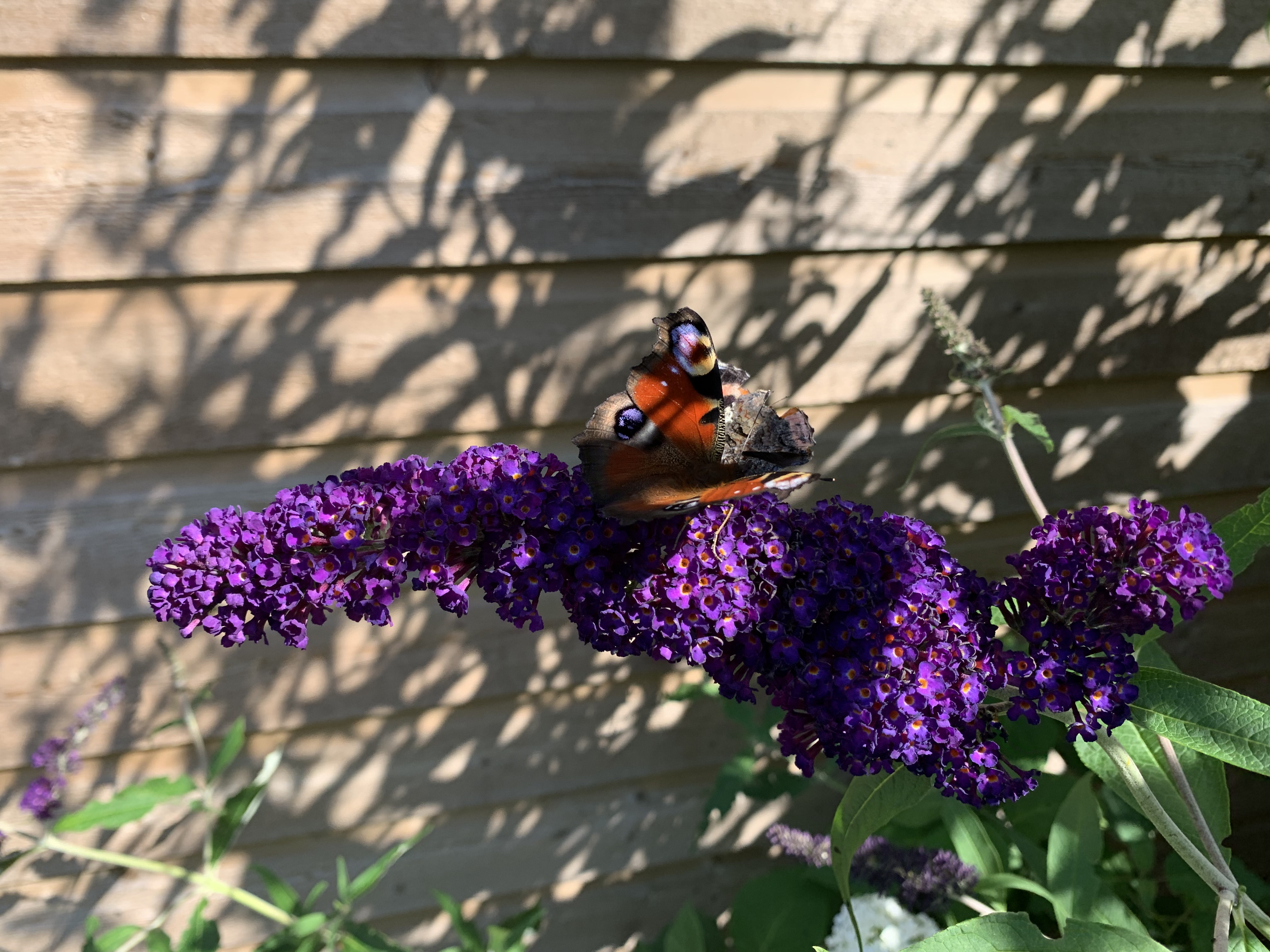
(image copyright by PvanderP, used with permission. Purple flowers with sun and shadow and a butterfly perched on the bloom.)

Envisioning Other Futures 2020

Tomorrow marks the start of Envisioning Other Futures, the Other Futures science fiction workshop.

Out of the applicants, we’ve selected 12 participants to take part in this first edition. It feels like a beginning, like a promise of things to come. I look forward to the workshop, to working together with, and to seeing what our participants will bring into the world.

The announcement with the names of the participants is here.

In preparation for this workshop, I’ve been digging back through my notes. Rereading Octavia Butler’s works–Furor Scribendi, Earthseed, Speech Sounds, Bloodchild.

Reading Octavia’s Earthseed, I find myself going back to that refrain:

All that you touch

You change.

All that you change

Changes you.

The only lasting truth

Is Change.

God

Is Change.


I’m holding onto these words and I am remembering.

On the road to recovery

A lot of things have happened since my last post on this blog. I am slowly but surely regaining strength and energy again. Not as quickly as I want to, but there is progress. I consider it a gift that I have a wonderful mental health carer and that social services considers my situation one where I am in need of more support. Recovery would have been slower than it already has been otherwise.

These past weeks, I’ve been working hard on the extended story set in the world of the Body Cartographer. I had originally intended this story to be one novella, but it’s grown far beyond the minimum length. So far, I’ve completed work on part one which is comprised of 17700 words. An immersive and cathartic experience. I had to laugh a bit because just this month I attended an event at the American Book Center featuring Jeff VanderMeer, Ann VanderMeer and Thomas Olde Heuvelt.

Jeff talked about the process of novel writing and how when he’s immersed in a novel, he’s so engaged with it that even food becomes an afterthought. At one point–close to the end of part one, I had to stop because it was time to prepare dinner. I opened the fridge and stared at emptiness. I had forgotten to pick up groceries and so I had nothing to cook. Thankfully, eldest son offered to go for groceries and that evening we had french fries for dinner.

Then there was the time I wrote a scene replete with food goodness. After writing it, I was so hungry, but we only had Chicken Tonight. At least it was warm and there was steamed rice, but I would have rather had the dish I was writing about. It happens.

After finishing part one, we went off to grab ice-cream and cake, and when I came home, it was to find a message from Jaroslav Olsa, who is the Czech Republic ambassador to the Philippines. Harinuo’s Love Song, which appears in Alternative Alamat, was picked by PLAV’s team of editors for translation and inclusion in an upcoming edition. To say I’m gobsmacked is an understatement. I mean, I’ve been working towards resuming work on the translation project, but I never dreamed I’d have work getting translated into another language. How cool is that? 🙂

This afternoon, I did a bit of tweeting after I came home from speaking at the International Women’s Day celebration held by an organization I do volunteer work for. It was a lovely celebration. I spoke about the challenges we face as migrant women in the Netherlands and the effect of being uprooted. That we exist in a structured society that is meant to favor status quo but we are not without means and it is possible for us to think of strategies that will allow us to grow and to thrive in this environment.

I’m struck by how the conversations we have around the structural challenges migrants face, mirror the conversations we have around the structural challenges that marginalized writers face. It’s not exactly the same, but these two things speak to each other and strategies that work within one structure could also work within the other. The important thing is to see which ones work best and to find the support we need to thrive and take hold of our dreams.

It’s also been made clear to me that in conversations around race, we often fail to consider nuance. That race is not a black and white conversation. It’s more complicated than that.

This week has been full of things that I need to digest and I don’t doubt that some of it will find its way into story. For the next two days, I’ll be taking a break before immersing myself again in the writing.

I am thankful for friends and for loved ones, for the kadkadua who continue to walk with me and who remind me of what it is that matters most.

Salamat.

**PS. I think nonny is a really cute word. It might show up in one of my works someday. 😉

busy week

It’s been a very busy week, and I’ve lagged behind again on quite a number of things. Next week, we’ll be updating the book blog with a review of Sunburnt Faces and with an in-depth interview from Shimon Adaf.

Adaf’s novel is a complex read and that makes it more challenging for the reviewer. Big sis says that this is the first novel she’s struggled with when it comes to reviewing. It’s not that the previous books were simpler or easier reads, but Sunburnt Faces owns a complexity that makes it difficult for the reader to sum-up.

As we discussed this book, I realized that while I, as a writer may look at the technical and craft aspects of the work, and while I am often intrigued by the process the author went through in putting this story together, my sister, who is interested in books because of what she simply enjoys reading will look at this story differently. It’s quite possible that we take away different things from it as well, and that to me makes this reading of a book and talking together about it to be a worthwhile exercise.

I find myself wondering to what extent the experience of writing and engaging craft affects our approach to books and stories. Already, I have become quite aware of my snarky nature when it comes to films (my eldest son refuses to watch a film with me unless I agree to shut up).

How about books?

That’s something that I’ll probably have to think more on.