All he wanted

I had grown so used to returning from trips to find the house in a state of chaos–dishes piled up in the kitchen, toys scattered about the living room…that sort of thing. On the flight back home from New York, I reminded myself that no matter what state the house was in when I returned, the kids had been cared for. It wasn’t that my husband didn’t want to keep house, he probably just didn’t mind the mess as long as the children were happy.

In a rare instance, I arrived at Schiphol to find husband and kids waiting for me in arrivals–most times, I would journey home by myself or would find myself sitting in Starbucks waiting for them to arrive.

I hugged my kids, embraced their father, and indulged in a little PDA.

My youngest son bubbled with excitement and begged for us to stop by a cake shop with pretty little petit fours on display.

Oh, why not? I thought.

They looked perfect for celebrating our reunion.

My sons took turns with my bag, our conversation was lighthearted and happy. They’d been to the town fair while I was gone. They had seen a movie. Youngest son told me he didn’t spend a single cent of the pocket money I gave him before I went to New York.

Back home, when I saw the kitchen window in the same state it had been when I left for New York. I was prepared to open the door to chaos. Except, I didn’t.

If you’re like me, there’s nothing more amazing than coming home to a house that’s spic and span. The toys had been kept away, the coffee table cleared. There were no dirty dishes on the table, no cups and saucers stocked up in the sink.

We worked so hard, my youngest son says.

And look outside, my eldest son prompts.

My beautiful new grass had been trimmed to the proper length.

See, my husband said. You can come and you can go wherever you want and do what you need to do for your art. You can be at ease. I will be here to take care of things.

In the week that followed, we had long conversations about art and art practice. I reminded him of his own art–the photography that he let lie, the writing he no longer excercised, his love of flight, and I told him that life was too short for us to be concerned only about practicalities.

I want us to change, I said. Life is too short not to pursue your passion.

I wanted the same freedom for him that he had given me.

As if they could sense the change, our children blossomed with joyfulness. We laughed a lot, we teased each other. My youngest son studied songs during the day that he sang as a welcome when his father came home. We talked about the future, what we would do, where we would go, how we would make it possible for us to travel more, to see the world, to explore and grow our various creative passions.

In New York, I had said to Janis, that I felt as if I was on the brink of change. I didn’t know what kind of change, but I knew it was coming.

I touch the rings that hang together on a chain around my neck and think of all the things I will miss.

I think of how he eased the stress of packing by making sure I had my chargers and adaptors and multi-plugs. Of how he would tick off a checklist of things I needed to take with me–my laptop, my phone, a camera. My passport, my tickets, my credit card, my toothbrush.

I think of the years–of how he gave me the freedom to venture out into the world and discover and become everything that I could be.

Did I love him enough? Did I make him happy? Did his heart rejoice when he came home from work to find me?

He loved you so much, a dear friend tells me. He was proud of you. He was happy.

We hug each other and hold each other close, my children and I.

We’ll make it, I tell them. We have each other. Your father would want you to have good lives. He worked hard. He loved us. He wanted us to be happy.
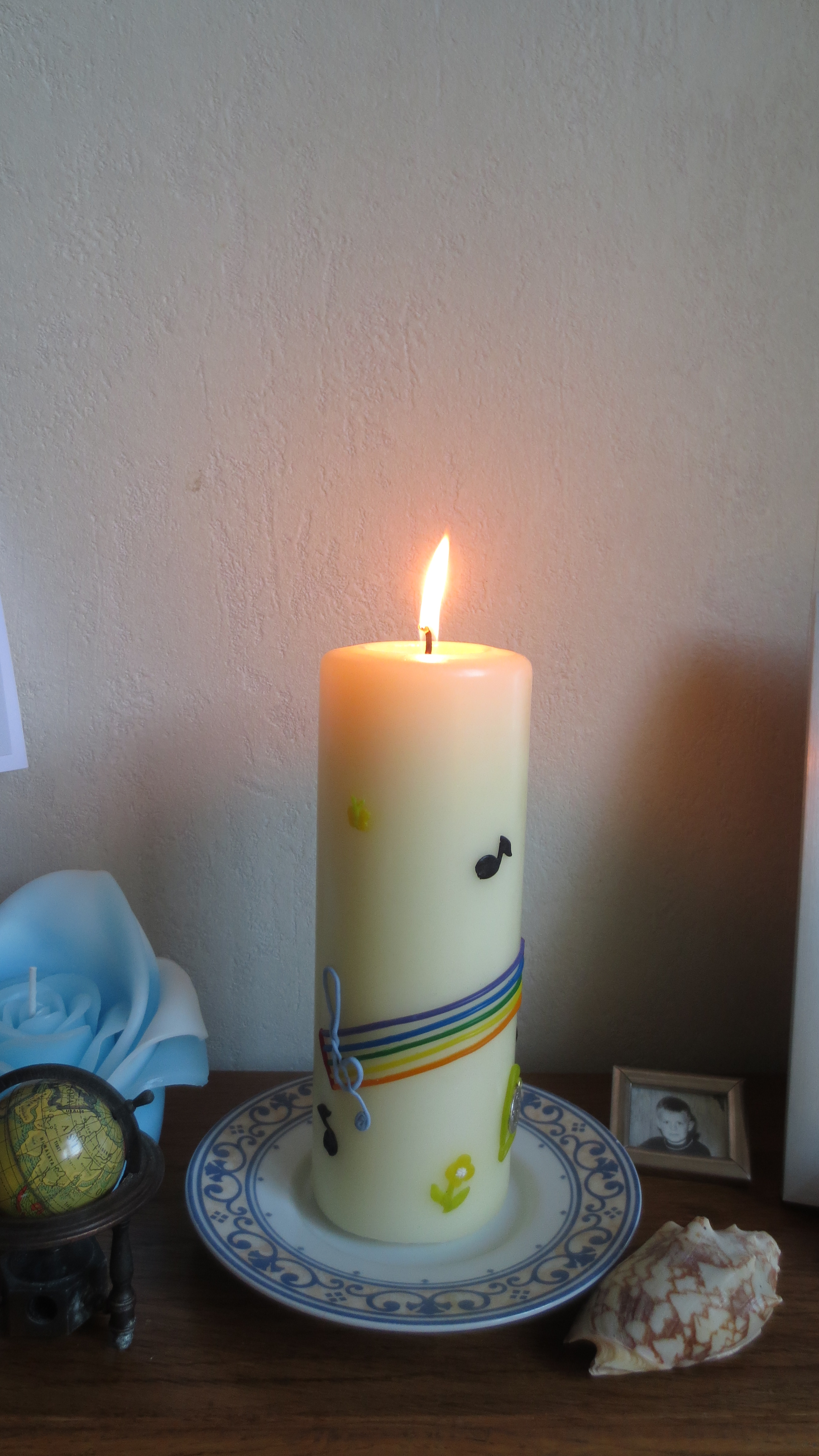
Once we were four

Loss is still too sharp, too fresh for me to write about remembrance. All through the day, we kept the candle lit. Because his presence is still here with us.

Yesterday, while waiting for the train, my youngest son said: “We used to be four waiting on this platform. Now, we are only three.”

Our favorite shops, the streets we walked, the museums we visited, the places we ate at–Once we were four. Now, we are three.

I watched my eldest son wrestle with a technical problem. What’s an HD cable again? The little things we take for granted take on gigantic proportions.

Who will build my legos with me? My youngest son asks.

Let’s go traveling, my eldest son says. He taps the floor with his foot restlessly. I understand the hidden message in his words.

If it were possible to leave this dream, if we could wake up in another place, in another time, would we find the one who has left us behind?

I am filled with an urge to bundle up my children and take them with me everywhere.

Instead, I remind them to go to bed early. I remind them there are classes in the morning. That each day is a fulfillment of the promises they made at their father’s deathbed.

You must be happy, I tell them. You must become the best you can be. This is what your father would want.

We hold each other when we cry. We hug each other and say: It’s okay to be sad. Our tears are like tiny lights that guide the footsteps of the dear departed.

We are surrounded by love. We are surrounded by light. We lighted the candle this morning, a reminder that these dark days will also pass. Time will come when our smiles and our laughter will no longer carry the echo of our grief.

Dia de los muertos

IMG_2538

Mijn Nederlander

Nederland

was koud

maar vol magie.

Op’t eerste gezicht

was ik

verliefd.

Lege

velden ontroerden

mij. Ik dacht,

Hier

zal ik

altijd blijven wonen.

Eerste impressies vervagen.

We vergeten.

Eerste

passie

wordt gewoon.

Steeds moet ik

onthouden

waarom ik

jou had gekozen.

van alle mensen

ter wereld

vond

ik

jou het

allerliefst, mijn nederlander.

*text from the announcement of our bereavement. My first and only poem written in Dutch using the hay(na)ku form. Today, we lighted a candle and said “See you later”. The departed do not leave us. They remain with us, in our hearts and in our memories. (The English of this text can be found in The Hay(na)ku Anthology, Vol. 2, edited by Jean Vengua and Mark Young. The Dutch version is better.)

Movements through grief

This is going to be a bit of a weepy blog for a while–the thing is, it’s just as if the world has been turned upside down. I move from being calm and collected and logical to being weepy and emotional and a total mess to I don’t really know what I am feeling. There is an absence where a loved one used to be.

My youngest son whimpers in his sleep. My eldest son, maintains a stiff upper lip. As for me–thoughts slip through my fingers and I find myself struggling to hold onto the thread of conversations. I don’t wish to burden others with my pain, with my grief, with my tears. Who do I share this agony with?

When people tell me that I am still young and who knows what will happen a year or ten years from now–I am struck dumb. I am still coming to terms with my sorrow. I am still trying to wrap my head around our loss. Does it get better after a year? Does the pain of loss diminish? Do we ever stop waiting for the key to turn in the door, for the familiar footstep, for the gentle greeting, for the words: I’m home?

Food tastes bitter. My sleep is interrupted.

I cannot imagine moving on. Right now, in this moment, it feels as if the world is standing still. The surface of my skin feels raw. I am an open wound.

Grief

My sons have lost their father. My mind is still trying to catch up with reality.

There are no words for grief.

Yes. I am thankful my sons knew their father. I am thankful for the years of life spent together. I am thankful that I didn’t break down and scream and wail when I buried my husband. I am thankful that I could maintain a facade of strength for my children.
I wake up at 4 a.m. wondering what happens next. What do I do now? What will happen to my children?
Someone tells me stories of sons who have lost their fathers at a young age–of how sons mourn that loss even into later life. They tell me there are moments when children will want no one else but their father. I understand this. I comprehend what people are trying to say. I understand, things will never be the same again. I understand that the future has become even more uncertain than it was.
Who will fill up that loss? How do I fill it up? How do I become father and mother at the same time?
My eldest son steps into his father’s shoes. He tells me: Mom, if you do the laundry, I will clean the bathroom.
He clears up the kitchen without complaint, puts away clean dishes, stacks the cups, cleans out the sink, takes out the garbage, vacuums the hallway, the stairs, the floors.
My youngest son breaks into tears.
I miss Dad.
We all miss Dad.
We never got around to fixing the kitchen windows. My eldest son’s room is half-done. Our hallway is clogged with boxes from the attic improvement that will have to wait.
People tell me I should be proud of my sons, that my children are strong, that I am strong, that we will make it.
I am filled with sorrow for my children. I am angry at life. I also know others have gone through this loss and made it.
All I want is for my children to be happy. I want my eldest son to laugh again.