Dia de los muertos

IMG_2538

Mijn Nederlander

Nederland

was koud

maar vol magie.

Op’t eerste gezicht

was ik

verliefd.

Lege

velden ontroerden

mij. Ik dacht,

Hier

zal ik

altijd blijven wonen.

Eerste impressies vervagen.

We vergeten.

Eerste

passie

wordt gewoon.

Steeds moet ik

onthouden

waarom ik

jou had gekozen.

van alle mensen

ter wereld

vond

ik

jou het

allerliefst, mijn nederlander.

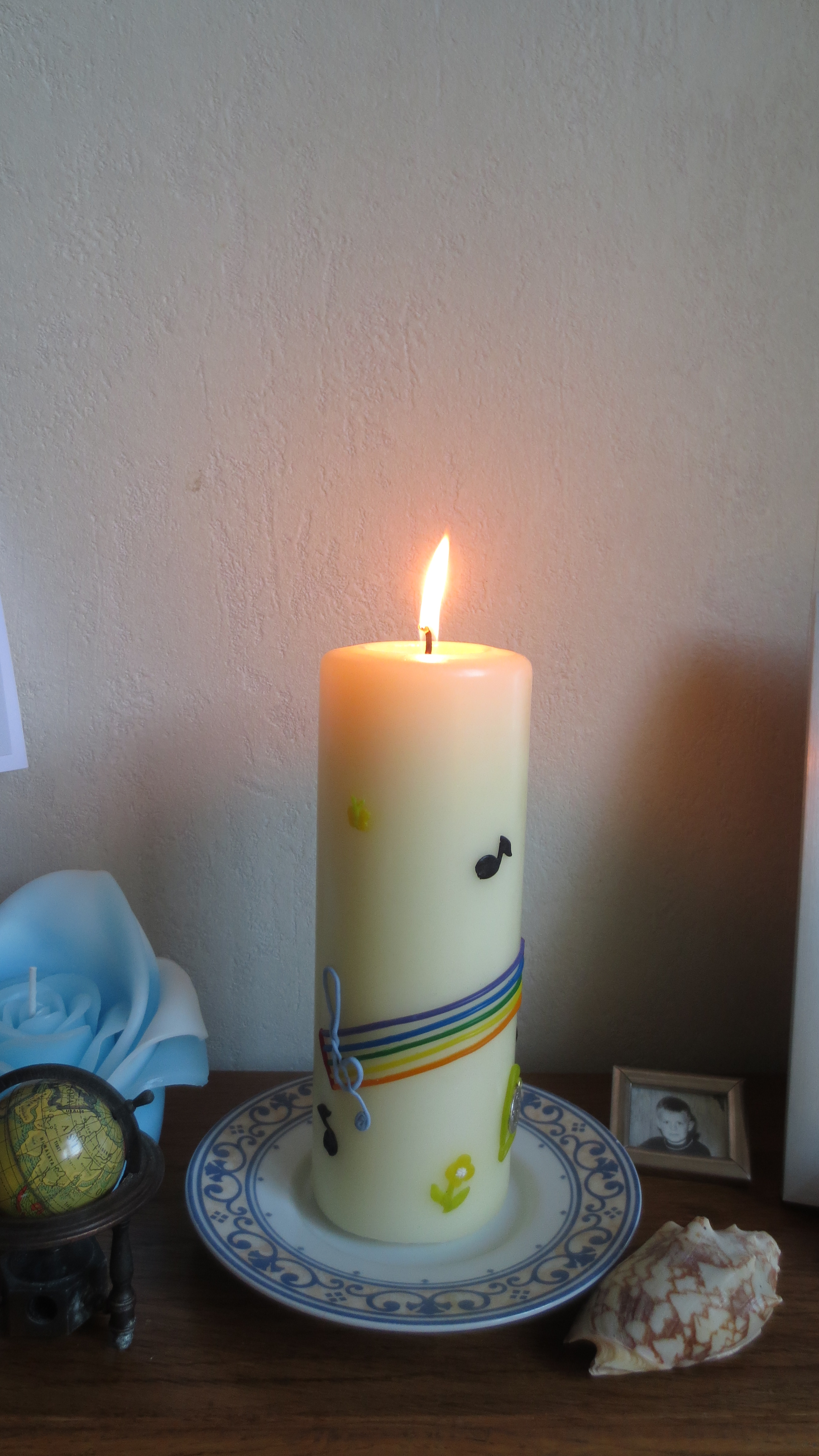
*text from the announcement of our bereavement. My first and only poem written in Dutch using the hay(na)ku form. Today, we lighted a candle and said “See you later”. The departed do not leave us. They remain with us, in our hearts and in our memories. (The English of this text can be found in The Hay(na)ku Anthology, Vol. 2, edited by Jean Vengua and Mark Young. The Dutch version is better.)

Note to the departed

Dear Jan,

Where did you put the car keys? And where did you hide the key to the trailer we rented for garden work?

Send me a sign. I swear, I won’t freak out if you decide to show up in one of my dreams.

Love,

Me

Movements through grief

This is going to be a bit of a weepy blog for a while–the thing is, it’s just as if the world has been turned upside down. I move from being calm and collected and logical to being weepy and emotional and a total mess to I don’t really know what I am feeling. There is an absence where a loved one used to be.

My youngest son whimpers in his sleep. My eldest son, maintains a stiff upper lip. As for me–thoughts slip through my fingers and I find myself struggling to hold onto the thread of conversations. I don’t wish to burden others with my pain, with my grief, with my tears. Who do I share this agony with?

When people tell me that I am still young and who knows what will happen a year or ten years from now–I am struck dumb. I am still coming to terms with my sorrow. I am still trying to wrap my head around our loss. Does it get better after a year? Does the pain of loss diminish? Do we ever stop waiting for the key to turn in the door, for the familiar footstep, for the gentle greeting, for the words: I’m home?

Food tastes bitter. My sleep is interrupted.

I cannot imagine moving on. Right now, in this moment, it feels as if the world is standing still. The surface of my skin feels raw. I am an open wound.

Still Alive


I don’t know how to answer

when people ask me how I am.

How am I supposed to be?

I am still alive.

I breathe.

I ache.

I move through the motions of being.

Words taste like ashes in my mouth.

I am  here.

In the land of the living.


Movements through sorrow

One of the messages sent to me says that the funeral was as beautiful as one can call such a sorrowful event beautiful.

After the death, there is no real time for grieving.  An undertaker must be summoned, papers must be looked into, one must decided how the announcement of one’s bereavement will look like. The mind is so occupied with the order of work–one realizes this is for the last goodbye.

I didn’t want a sorrowful burial. Rather, I wanted my sons to remember the joyful moments. That we were still able to have these years together–to know the man that was their father–to be able to know what it’s like to be accepted without complaint. To say goodbye to someone who accepted every aspect of who I am–who loved his sons unreservedly.

It was a beautiful fall day. The sun came out, the weather was mild, more than 200 people showed up. My heart overflows with thanks for the messages coming from all over the world, for the chain of support that reminds me that I am not alone, that we are lifted up on the hands of those we don’t see as well as those we see.

My beloved friend calls me and tells me of the stream of support. I want to weep.  Faces pass by us–old friends, new friends, neighbours who have become dearer, loved ones who become more precious–they have come to bear testimony.

My sons and I stand beside their father’s grave. I look up at the sky and watch the clouds and the changing colors of the trees. I am thankful even as I mourn.

Grief

My sons have lost their father. My mind is still trying to catch up with reality.

There are no words for grief.

Yes. I am thankful my sons knew their father. I am thankful for the years of life spent together. I am thankful that I didn’t break down and scream and wail when I buried my husband. I am thankful that I could maintain a facade of strength for my children.
I wake up at 4 a.m. wondering what happens next. What do I do now? What will happen to my children?
Someone tells me stories of sons who have lost their fathers at a young age–of how sons mourn that loss even into later life. They tell me there are moments when children will want no one else but their father. I understand this. I comprehend what people are trying to say. I understand, things will never be the same again. I understand that the future has become even more uncertain than it was.
Who will fill up that loss? How do I fill it up? How do I become father and mother at the same time?
My eldest son steps into his father’s shoes. He tells me: Mom, if you do the laundry, I will clean the bathroom.
He clears up the kitchen without complaint, puts away clean dishes, stacks the cups, cleans out the sink, takes out the garbage, vacuums the hallway, the stairs, the floors.
My youngest son breaks into tears.
I miss Dad.
We all miss Dad.
We never got around to fixing the kitchen windows. My eldest son’s room is half-done. Our hallway is clogged with boxes from the attic improvement that will have to wait.
People tell me I should be proud of my sons, that my children are strong, that I am strong, that we will make it.
I am filled with sorrow for my children. I am angry at life. I also know others have gone through this loss and made it.
All I want is for my children to be happy. I want my eldest son to laugh again.

Our Sorrow

My dear friend and partner and the father of my sons is no longer with us.

He had a cardiac arrest on the 17th and was admitted to the ICU at LUMC after being reanimated. However, too much time had passed between and he did not wake up from his coma. Today, he was released from life support. He went swiftly and quietly.

Our boys were able to say their goodbyes to their father yesterday and I believe he heard them and carried their words and their wishes with him as he crossed the river from this life into the next.

The love and the warmth of friends, loved ones and kadkadua has lifted me and given me such strength these past few days. Today, I am humbled to find out about the extent of support being extended to me and my sons. I am deeply deeply grateful. My heart is filled with thanks for the kindness and warmth extended to me and my sons.

His body will be buried on the 27th of October. His spirit lives on with us.

Things I learned: On Artistry and Art Life

Writer and storyteller, Rebecca Mabanglo-Mayor, shared a link on her blog to a speech given by Ursula K. Le Guin upon accepting the National Book Foundation’s Medal for Distinguished Contribution to American Letters. In this speech, Le Guin speaks not only of the need for visionary writers, but she also speaks of the need to discern between the production of a market commodity and the practice of an art.

At the end of her speech, Le Guin says that the name of our reward is not profit, it is freedom.

I think of freedom as I reflect and go through the notes and the memories that I have from New York and Janis Ian’s masterclass in artistry. Le Guin’s words resonate with the lessons learned from my time with Janis.

In New York, Laura and I talked about Janis’s commitment not only to her art, but also to taking hold of the business aspect of her art practice.  It was an aspect that she brought up a number of times and listening to Le Guin talk of freedom, serves as a reminder that whatever proceeds come from the exercise of one’s art–they all go back towards the artist being able to keep on practicing that art.

The practical truth of it is that we cannot exercise or develop our art when our energy is gone, when we are too tired or worn out, or when we our head is filled with worry.  I think of how I would never have finished or published the stories I have if not for being given space and time to practice my art free from the stresses and the tensions of daily life. I am grateful to my fellow practitioners–to the artists and writers who have opened their homes to me and who have so generously given me flights of freedom.

Freedom.

To be able to practice our art in a space and time when we are free from thinking of anything else but that practice is a vital and precious good. The writer cannot live without writing, and practicing art means we must be able to center ourselves on the work most of all.

Which then leads me to a question Janis Ian asked repeatedly in various sessions:

“Who among you wants to be famous?”

In thinking on that question, we are forced to recognize that fame does not equate into freedom, fame is not the same as success.  Indeed the boundary between fame and notoriety is so thin that it’s easy to cross over without realizing it. Rather than fame,  I value more the freedom to practice my art, and the knowledge that I have remained true to my vision.

Because, as Janis Ian reminded us, no one else has the vision that we have; and while there are many things in this life that can be faked, talent and art can never be faked.

Even as she said these things, she reminded us too that talent is not enough. The artist must do the work–must master their craft. If talent is a spirited horse, craft is what will ensure that your talent will not run away with you. In the course of the week, Janis continued to emphasize the need for artists to grow and add to their skillset (what we also call our toolkit). As artists,  we need to be constantly developing ourselves.  Being equipped with a wide range of skills makes us capable of answering to the call of opportunity.

I think of these things and I think to myself–the sky is unlimited.

#

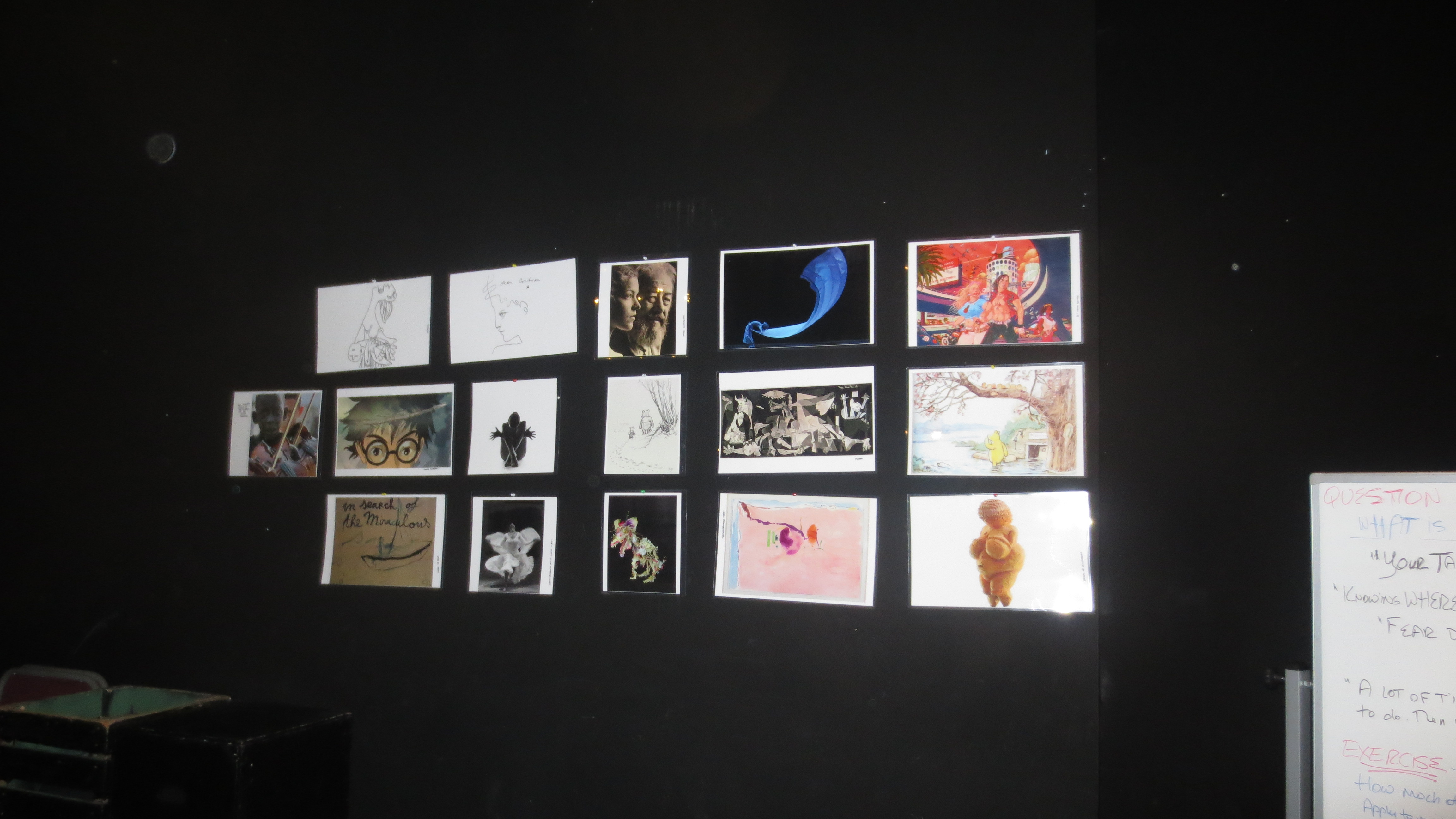
One of the interesting features of our week was what Janis called the Museum Wall. At the end of the week, we were asked to answer the question: What does all great art have in common? I’m sharing the image of the wall here. You answer the question.

IMG_2421

For the record

For self-care reasons, I’ve requested that my name be removed from any publicity connected to The SEA is Ours. I’ve written the organizers to say that I will honor the perk that I offered in support of the fundraiser ( a criticque of a piece up to 8000 words ), but I have stated that I don’t want my name to appear on the page anywhere. I am making a note of it here, in case people wonder why my name has vanished from the fundraiser page and also to assure the person who took my perk that I will fulfill my word.

I wish the authors all the best and am thankful to the editors for their understanding.

In-between post

Today, I decided to share an excerpt from the memoir I worked on when I started writing again. Rereading it, I realize just how clearly it describes what happened to me–the slow erosion of self, the gradual erasure and subsuming of who I was to the personhood of the man I married–because, as my mother told me: it is our duty as wives to submit to our husbands.

In time, that erosion of self led to a complete forgetting of who I was and what mattered to me.

During one of my first sessions with my therapist, she asked me if I could name anything that I liked doing before I married and moved to the Netherlands.

Tell me, she said. What are the things that you enjoy.

The only thing that I could name and that I could cling to was writing. It was as if I had forgotten the self who lived before I came to this country.

Before I came here, my world was filled with life and art and sound, music and dance and song and laughter; discussions and debates over the dining table; books and words and loud speculations about the future.

I learned to hide those things because Dutch folks don’t like loud voices, because the way we laughed at home is considered unseemly here, because grown up people do not dance, do not indulge in fancy–not in this small town where I live in.

Today, I am engaged in reclamation. I have colored my hair–not an atrocious color, but still scandalous enough and I am wearing my colorful clothes.

I call my eldest son, Kuya (Filipino for older brother). I laugh and dance with my youngest child. We chatter, we make noise and we don’t care if the world shakes with the sound of our cheerfulness.